
I’ve probably spent more time with Chuck Lorre than almost any other producer in the 21st century, and I’m including the ones I’ve actually worked with. He’s arguably been the prolific creator of repeatable comedies in that span, especially THE BIG BANG THEORY, which my ex and I discovered just before it began its nearly endless string of nightly reruns on TBS and quickly began to make it appointment viewing for one of the few half-hours of a daywhere verbal abuse was put on hold. To recover from the other eighteen or so waking hours where such a moratorium wasn’t in effect, I’d medicate with marathons of other Lorre hits which thanks to the aggressive and barter-hungry team at Warner Brothers Television were ubiquitously available at all hours of the night. TWO AND A HALF MEN. MOM. MIKE AND MOLLY. Even his earlier Carsey-Werner works like CYBILL and GRACE UNDER FIRE when they’d turn up on obscure zombie channels looking to capitalize on his name.
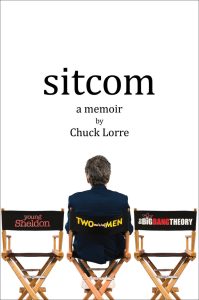 So when Lorre finally decided to write his own story, the wryly titled SITCOM (he loathes the term) that was released last week, I dug into what little remains of my bank account to pony up for it. It’s clearly written from the purview and perspective of a self-admitted twelve-stepper leading a meeting, filled with self-effacing testimony of a complicated past that led him down many a dark road en route to an enormously successful professional life that still couldn’t offset a host of personal failures that he fully owns. I’ve been in that position and indeed in such rooms many times before so I probably can recognize these patterns better than most. From my own experience, there’s both frustration and catharsis that takes place almost simultaneously with such a process. Both are clearly evident throughout this breezy and revealing read. Lorre pretty much admitted that in an interview he did with THE ASSOCIATED PRESS’
“I started out, I did not want to do this,” Lorre admits regarding the decision to write his book. “I didn’t see any reason to do it. A dear friend kept pushing me that the story of this journey to where I am now was worth telling.”… “Writing down your experiences gives you distance and perspective,” Lorre said. “It allows you to laugh at your past and maybe understand it a little better.”
As any creative with his level of success is entitled to do, he takes immense pride in how much success he’s had with his hits. We gain some new insights and perspectives on those–including his frequent clashes with network executives that almost kneecapped them before they had a chance to air. He does not hold back on his clashes with the likes of CBS czar Les Moonves who fought him tooth and nail on casting decisions like Melissa McCarthy as Molly–CBS wanted a hotter, thinner actress merely struggling with weight–and Kunal Nayaar as Raj Koothrappoli, who masterfully completed the Core Four of BIG BANG with a unique combination of representation, alignment with every exaggerated quirk of Penny, Howard, Leonard and Sheldon. He also chooses to pull no punches on his dislike for many of the talents that were his own choices–the already well-known clashes he had with the toxic Shepherd, GRACE’s Brett Butler and Roseanne Barr that dominated his earlier years, and, of course, his consternation with the even more self-destructive Charlie Sheen that ultimately lead to his character being written out of the last third of 2 1/2. But on top of that he also surprisingly unloads on MOM co-star Anna Faris, who like Sheen didn’t quite make it to the end of their own series and apparently was dealing with her own demons. Lorre cattily hints at that as was shared by VARIETY’s Michael Schneider:
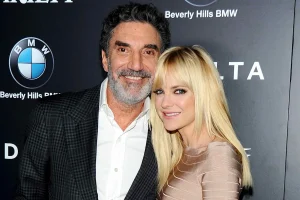 (A)s the years went by, it became apparent that my initial reluctance to hire Anna was, in fact, correct. After six years, she left the show for mysterious reasons that were not mysterious to anyone on the show.”
Faris has responded via social media and the ever-dirt-chasing Ryan Coleman of ENTERTAINMENT WEEKLY with her own ninth step:
“Yikes. Yes, I read a few things. I really didn’t see that coming. Of course it hurts. Chuck gave me a job I loved, and for seven years I never took a day of it for granted. I’m proud of what we made together, and nothing changes how grateful I am for those people and those years”…“I’ve been sober for a year and a half. I was on a show about recovery and then I lived it. Now I’m healthy, I’m working, and I’m happier than I’ve been in a long time. If anyone reading this is where I was, I hope that’s useful. It gets better. I’m proof”.
Yet he’s far and away hardest on himself–pointing out with almost gleefully brutal honestly at the series of forgotten short-orders, busted pilots and failed scripts that preceded his CBS triple play of the early oughts. Resurrecting his ever-present vanity cards that gave DVRs extra workouts in freeze-frame mode when they’d air within the closing credits of his series, he triggers dormant memories with titles like FRANNIE’S TURN, NATHAN’S CHOICE, DIRTY GIRLS and VENUS ON THE HARD DRIVE (twice) as testimony to “the secret of his success”. I’ll add to that list his somewhat longer-lived B POSITIVE which I had had my own reasons to muse about. We also learn a few more what ifs such as that Al Pacino was the original choice to be the lead before Michael Douglas was cast as the flawed veteran lead in THE KAMINSKY METHOD, his self-described labor of love for Netflix which we learn was his own form of confessional therapy and, post-ex, became my most recent form of self-care via Chuck Lorre comedy. He also recounts significant periods of drug abuse, alcoholism, three failed marriages and a decade as a Scientologist from which he was allowed a rare escape because, as he contends, he was too broke for them to want to keep. It’s this reflection on that experience that he also shared with Schneider that had me coming away more of a fan of his than ever:
It was embarrassing to me that I burned a decade of my life up in that thing. Seriously, 10 years of living in this artificial bubble. I can wallow in regret or I can choose to recognize that even that was a step that had to be taken to get to where I am.
 The roads I’ve traveled haven’t been quite as dark nor as dead-ended as his, but they are also not unfamiliar. People I know personally who have worked with Lorre have referenced him both as genius and asshole. Lately such adjectives are regularly ascribed to me as well. Maybe that’s why I couldn’t put my device down until I completely finished SITCOM. and I kinda think you might not be able to, either. There’s probably more of Chuck Lorre within a lot of us than we might admit.
Until next time…