It was most def one of THOSE days for me yesterday, and that’s not just because a reality check on my excuse for a bank account revealed that despite a momentary blip of hope it will be nay impossible for me to afford even the most spartan of excursions to simply see my best friend and her family for the holidays. So amidst that sort of personally devastating backdrop the last things I needed to read about were two more shining examples of how time and the industry I was once a significant part of have blithely marched on leaving folks with traditional skill sets in the dust.
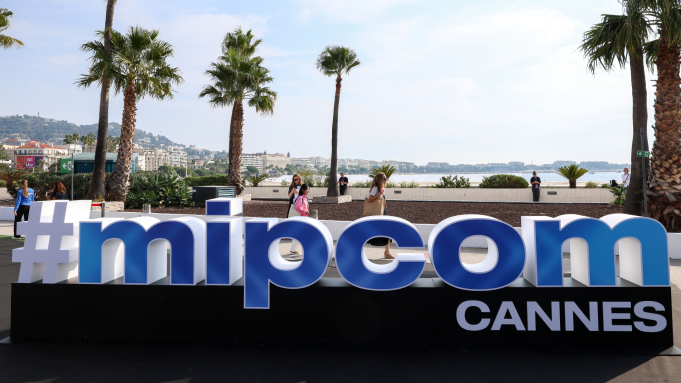 The first came with the recaps of MIPCOM, which once again took the global media elite to the South of France for face-to-face meetings that historically have helped determine what we eventually see on our screens. Deal-making that used to be exclusive to networks, platforms and content that often involved the reporting and skewing of quantitative and qualitative data from the four corners of the Earth that necessitated the attendance of folks like moi. It produced some memorable experiences that I’ve previously waxed nostalgic about.
Per VARIETY’s Jesse Whittock, the confab itself was a success by traditional measures, but her ebuillience contained a sobering warning that what made it such has been a seismic shift as to who and why the demand for three-figure side dishes has accelerated:
 MIPCOM Director Lucy Smith this morning called this week’s TV industry event “the biggest shift in a generation,” as she announced attendance numbers and plans for MIP London in 2026. Smith said “just over” 10,600 delegates from 107 countries had attended the market this week, with 88 out of 350 companies exhibiting doing so for the first time.
Numerous players from the branded content and creator economies have be presented, adding a different flavor to the atmosphere. Smith said the new players had made the market feel “energized.” At a press conference on the penultimate day of the event, she added: “This has been the biggest step change in a generation for MIPCOM. We’ve brought the Creator Economy into the heart of the market, welcomed YouTube for their first major presence at the market, and staged our first brand funded content summit in BrandStorytelling which alongside a resurgence of sales and distribution activity has made for an energised market.”
And fellow Penske filer Lily Ford of THE HOLLYWOOD REPORTER doubled down on Smith’s remarks:
Everyone wanted to be YouTube‘s friend at MIPCOM this year. The Cannes TV market was entirely upended by the presence of the content behemoth which, as a major presence on the Croisette for the first time in its 20 year-existence, became emblematic of creator-driven success — the future of entertainment production.
The creator economy was, of course, MIPCOM 2025‘s headline focus. Influencers quite literally ran the show: the London-based After Party Studios introduced The Nella Rose Show, France’s superstar content creator Inoxtag was a MIP headliner and Tubi showed off its episodic “Creatorverse” platform. Swathes of social media stars, including sessions with Twitch streamers, sports influencers and heads of digital media studios, speckled the lineup with talks on how to do creator content right.
Added Ford’s colleague Scott Roxborough:
The shift was mirrored by several high-profile partnerships in the creator space, led by old-school TV giants including the BBC, Fremantle and Banijay Entertainment.
Banijay used the market to unveil its latest push into creator-led sports entertainment, launching FC Failliet/Finesse (FCF), a professional Dutch soccer club co-founded with digital creators Ilias Vietto, Aimane Charbon and Kleine John. The team, developed through Banijay’s Southfields label and NXT division, streams its matches and content online, drawing more than 22 million views to date.
BBC Studios also expanded its creator-focused operations, announcing new partnerships with YouTube’s head of global partnerships Pedro Pina to co-develop content that blends digital-native formats with BBC’s production infrastructure. Both deals signaled a broader convergence between traditional production and creator-driven storytelling.
This is hardly news to those who have embraced the preachings of the likes of Evan Shapiro, who declared the streaming wars over months ago and for those who grudgingly accept the Nielsen gospel that, content definitions be damned, YouTube is far and away the most-viewed source of content anywhere. But to see this manifested in a market that has traditionally been dictated by so-called “mainstream” players to the extent that it was was likely shocking for those who saw the autumn pilgrimage to the Croissette to be a birthright and a tradition.
Ford pointed out a couple of shining examples of folks who have already gotten and embraced this message. And to her credit she cited credible research as the impetus:
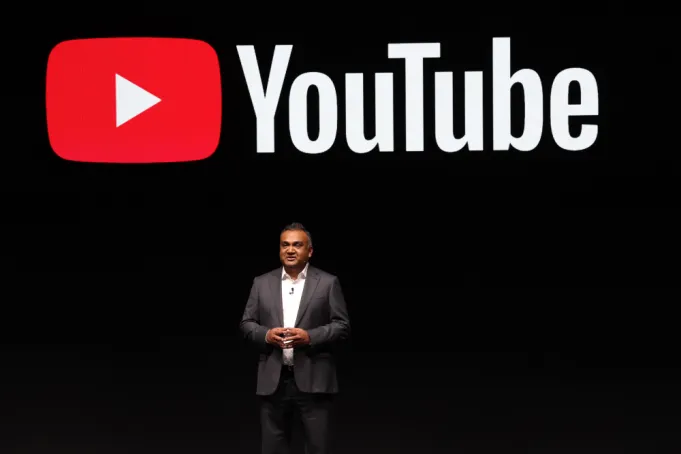 Pina echoed the sentiment that with fandom comes power and that makes creator input a necessity. This word, fandom, then began popping up everywhere. And YouTube, marketing itself as the global hub of fandom cultivation, became queen bee. For good reason: Little Dot Studios’ Tarif Rahman said when talking to 14 to 44-year-olds online, 85 percent describe themselves as a fan of someone or something — 73 percent of those fans run to YouTube first for that content. But why? “The platform is just made for them,” said Rahman. “Fans get lost in niches. When you watch a YouTube video, you can always see a recommended video, a suggested video, a playlist. You’re just being pushed down a niche, and you continue to see more and more content that is related to your online IP.” This then morphs into its own community and Little Dot — specializing in digital video production, distribution and monetization — capitalizes on the frenzy
But amidst this encouraging use of research, a topic most near and dear to my heart, came this nugget which a trusted longtime colleague amplified on his LinkedIn that conveys that those supplying those crucial responses may not necessarily be actual human beings. Another veteran observer, MEDIAPOST’s Joe Mandese, reported on his eye-opening experience earlier this week:
The first use case I came across was how big media and marketing research suppliers are starting to use AI to create synthetic respondents — AI-generated proxies of real people — to create panels for survey-based research that is faster, more cost-effective and — this is the important part — possibly more accurate and with less inherent human bias than panels comprised of actual people.
Recently, I got a chance to see another method of using AI to synthesize human experiences that may be even more profound for media and marketing research than simply creating synthetic respondent panels. It was during the Association of National Advertisers recent Measurement and Analytics Conference in Chicago, where Realeyes Chief Growth Officer Max Kalehoff made a joint presentation with Nielsen of their “Vision AI” product integration, which combines Realeyes’ massive database of human consumer experiences with Nielsen’s trove of marketing and media outcomes to help advertisers and agencies predict actual outcomes of their campaigns before they happen.
 Simply put, Realeyes is a research supplier that utilizes computervision technology observing how real people engage with advertising and media exposures and then correlate it with performance outcomes brand marketers are aspiring to achieve — usually sales lift.
Basically, he came right out at the ANA conference and said Realeyes product is a synthetic: an extrapolation of a massive database of real human experiences.
Nearly 19 million people, across every conceivable market, culture, language, demographic and psychographic group you might imagine, captured watching ads on screens representing real world media experiences on mobile, desktop and TV.
My esteemed colleague was cautiously supportive when he shared Mandese’s revelations:
The main question is whether synthetic research can truly reflect the unpredictable ways people behave in real life. What do you think? Can AI really replace human insight in research? My answer is “NO,” but it can and will help us as the technology gets better. And honestly, I’m excited to see what comes next. I would love to take a survey and then compare my results to those of my “Robot Persona.” Do you know who can help me do this??
What I learned after a couple of follow-up exchanges is that the short answer is “nope”. As the evolving MIPCOM focus demonstrated, the desire for breaking with traditional checks and balances is so intense that to even sound a cautionary note is a red flag. When market researchers who are still employed are under intense pressure to bring down costs the opportunity to save on the expense of recruitment is far too tempting to dismiss.
I’ve preached for decades that a defining skill set of a valuable researcher is asking the right people the right questions in the right way at the right time. We’ve already found ways to artifically manipulate the latter three qualifiers–heck, even I’m adept enough at Copilot and ChatGPT to do that. Now we’ve apparently landed on a way to manipulate the final frontier. Are we even needed at all any more?
Ever the salesman, Kalehoff attempted to keep hope more alive in his concluding remarks to his one-time comrade in arms MandeseL
“AI on its own can go rogue and having the human database keeps the AI in check and allows the models to evolve to changing sentiments or patterns,” he explained, concluding: “You know, humans change over time.”
Anyone who grabbed a slice at Le Pizza this week knows that all too well, sir. And after a day like yesterday I’m equally convinced. Just not in a positive way.
Until next time…