I can’t say I’m either a connoisseur or a huge fan of country music. My first exposure to it was when the struggling New York City radio station that was home to the Mets made an ill-fated decision to introduce the genre into the country’s largest market, somehow believing there were enough people who had relocated from smaller ones to support it. What WHN Radio quickly learned was apparently one big reason these folks left in the first place–they hated it. And when disco became the rage, any hope of capturing them was gone for good.
But by that time, I had gone away to a small upstate college town whose musical tastes were far more rural. It was also an era when Charlie Daniels and Pure Prairie League were becoming more mainstream in appeal, and the bar closest to campus embraced what at least we thought of as honkytonk, particularly when last call came around. Us downstaters would try to taunt our more rural buddies with how silly and simplistic we found country music to be–through our cheap beers, we’d argue “Any schmuck could write country!”. But when our alternative was Donna Summer orgasming to a strobe light we didn’t have much to stand on for our side of the debate. So I at least tried to become an appreciator if not a fan, especially when during my travels I would consistently be upsold on how creative and thoughtful the lyrics were by comparison and how emotionally complex those that created them with were. With as low a bar as they had to overperch, I bought into it to an extent.
With that background, I was more disappointed than surprised to learn what this past week vaunted to the top of those charts, as PEOPLE MAGAZINE’s Jack Irvin informed us earlier this week:
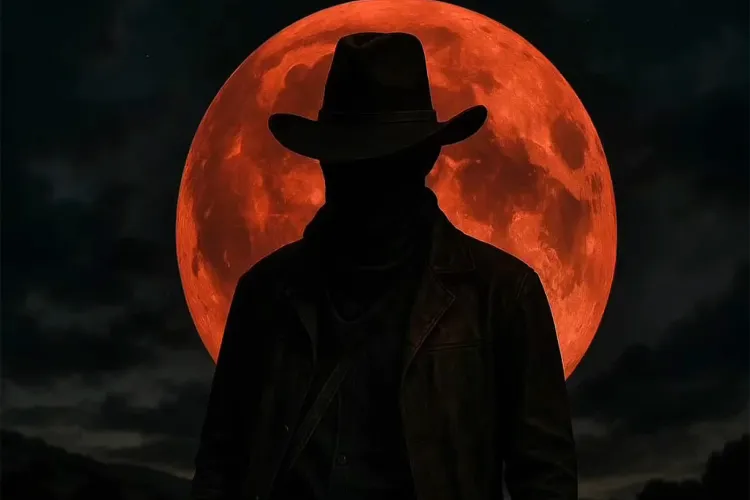 Who is Breaking Rust? The No. 1 song on the Billboard Country Digital Song Sales chart for the week of Nov. 8, 2025 is “Walk My Walk” by Breaking Rust, a seemingly gritty track featuring a raspy vocal performance of lyrics from the perspective of a “rough” and “raw” man who “ain’t selling my soul for a seat at your table.” Breaking Rust, however, is not a real person at all. “Walk My Walk” is a song created using artificial intelligence by someone named Aubierre Rivaldo Taylor, according to credits listed on Spotify.
In addition to topping the Billboard Country Digital Song Sales chart, “Walk My Walk” currently sits in the top 10 of the all-genres chart on iTunes, while Breaking Rust’s Resilient EP is in the top 10 on the platform’s albums side. Breaking Rust also boasts over 2.3 million monthly listeners on Spotify, where “Walk My Walk” has over 3.6 million streams to date.
It completely disproved the lesson that songwriting and research could have a common confluence of values that I learned in Nashville three years ago when with the help of a top-notch human artist I and my fellow convention-goers crowd-sourced the creation of what we thought could be a country hit in its own right. But that was, of course, before AI entered the picture.
And it’s not just country music that’s being affected by this phenomenon, as BENZINGA’s Jordyn Moder reported on Thursday:
 AI-generated music has secured a foothold on Billboard’s prestigious charts, with at least one AI or AI-assisted artist appearing in each of the past four weeks.
Among the AI entities making waves is Xania Monet, an AI avatar developed by Mississippi songwriter Telisha “Nikki” Jones using the AI music generator application Suno. Another digital performer, Juno Skye, was created by producer Nguyen Duc Nam and markets itself as an “AI-powered artist.”
Record labels have shown increasing interest in signing nonexistent performers, with Monet reportedly sparking a bidding war among multiple companies last month, says Billboard. Some labels extended offers reaching $3 million for the AI avatar, according to Dexerto.
And that’s particularly alarming for the entertainment industry as a whole. We had just begun to recover from the shock we had earlier this fall with the discovery that the rising star of young, attractive Tilly Norwood was indeed deepfake, as TODAY’s Scott Stump man-splained:
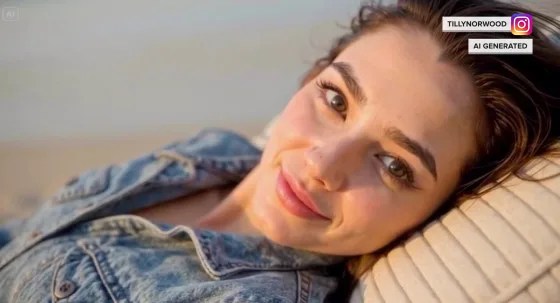 Tilly Norwood has become one of the most divisive actresses in Hollywood — and she’s not even a human being. The AI-generated actor was created by Eline Van der Velden, a Dutch actor and comedian who said at a tech event on Sept. 27 that a number of talent agents are interested in signing Norwood, according to Deadline.
And as anyone who has a social media feed has likely noticed or late, those “viral videos” of morbidly obese gluttons filling up entire trays at a buffet while screaming at police officers “I PAID FOR DIS!!!” are little more than examples of SORA 2 which are fake, fake, fake as well. But at least with video and images, the concept of “AI Slop” is easier to discern. When my own feed was dominated by an alleged “candid shot” of the 1969 Mets celebrating their World Series victory in front of what clearly was the Citi Field scoreboard that at that time was 40 years from its debut we could breathe a sigh of relief that at least for the moment a fully AI-generated movie was not a reality. But as any expert will tell you, that’s not all that far off, either. And in audio, it’s arguably already here. As PARADE’s Gabriela Silva reminded her readers re WALK MY WALK yesterday:
Many may wonder how Spotify hasn’t taken down the down under its AI protection laws for artists. According to Spotify, both Breaking Rust and Defbeatsai are “verified” on the platform. The song is also not mimicking or plagiarizing any artist, seeing as the singer and its vocals are generated to be “original.” It’s also likely that fans have never noticed “Walk My Walk” was even AI-generated in the first place. The song’s deep, guttural drawl is seamless and perfectly paired with the song’s minimalist use of instruments. By all accounts its sounds and gives the same feeling as listening to a real person singing a country song.
If I’m a musician, I’m probably both mortified and scared. All the more reason methinks that a recent proposal I received for a competition series that involves human composers competing for contracts for sync compositions, the library backbone of any studio, that would elevate the art and the artists by making them personalities with rooting interests is a damn good and timely idea. And I for one would be motivated to put my face out there, because as you can see Breaking Rust just can’t.
And that need becomes more and more urgent as the tools to create become more prevalent and the barriers to access are diminishing. You know how I know? While groggily researching this musing, I landed on a site called Suno, which prompts users a la ChatGPT and Sora to create custom songs with a couple of mouse clicks and a wish list. Even this schmuck could create this.
You’re on notice, Breaking Rust.
Until next time…