
 You might not be surprised to learn I couldn’t give a rat’s patootie about the latest affront to ‘Meruka, the new look for Cracker Barrel. I’m about an hour’s drive from the nearest one in my area, my most recent experience with one several years on a trip to Georgia resulted in yet another painful night of stomach discomfort and having perused their website just morning, I’m astonished that they somehow think a “weekend Southern Fried Chicken” that looks like this –and all but screams that a decent amount of what purports to be chicken is really bone and breading–is somehow worth $17.49 before tax and tip.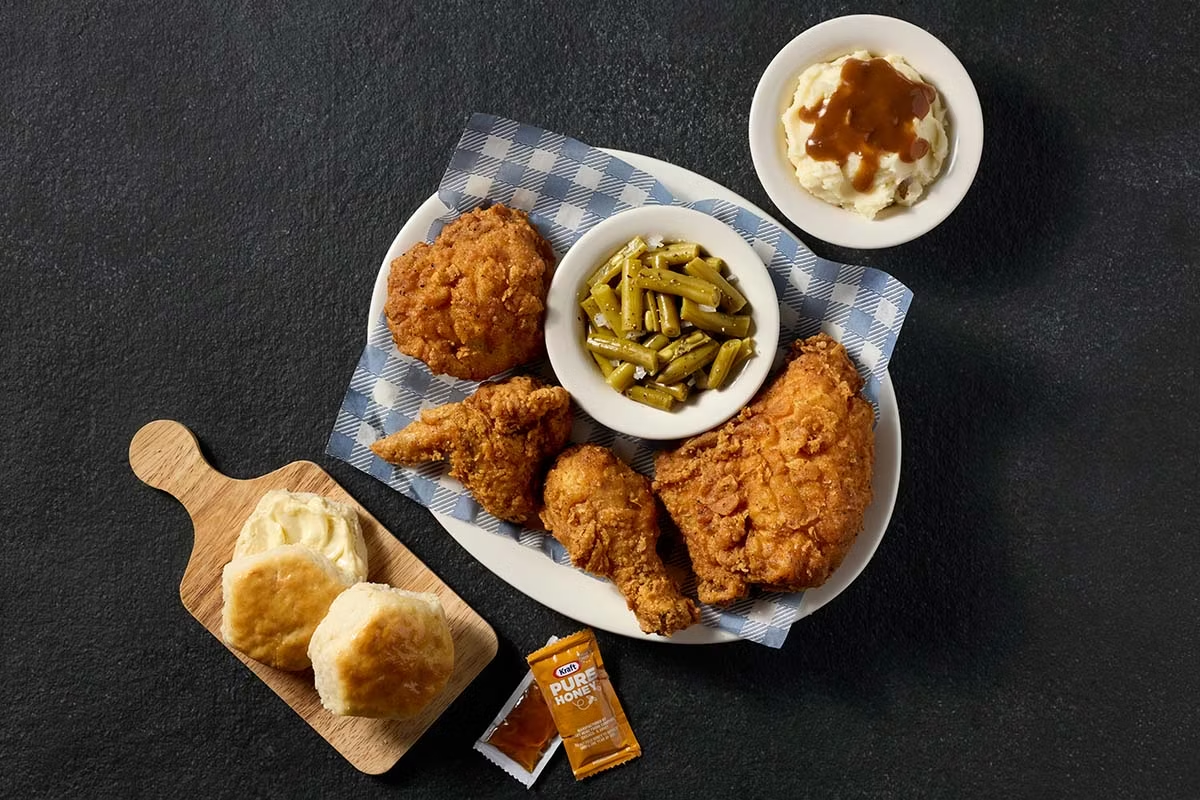
But the sort of willful ignorance or at least diminished attention to what your existing audience wants and informed knowledge of what your aspirational audience responds to that seems to be underlying the narrative of this latest distraction is much in line with the kind of failures I’ve been part of in my own industry, and for that reason alone I’m even more disgusted by what Cracker Barrel is offering up now that just its food.
At the center of this is a rollout of a new logo that, suffice to say, hasn’t been received all that well by its purported “gold card” customers. As the NASHVILLE TENNESSEAN’s Jordan Green and Diana Leyva explained in a piece for USA TODAY on Friday:
Following the launch of the new design, many Cracker Barrel fans took to social media to express disappointment, with some calling on the chain to change it back. According to a news release, the new logo is “now rooted even more closely to the iconic barrel shape and word mark that started it all.” The updated visuals will be displayed across menus and marketing materials.
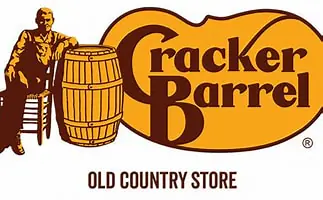 “Put the grandpa back on the logo,” read one Instagram comment. “I won’t go back till you switch the logo to the old one,” read another, while one user on X called the change “brand suicide.” “The new rebrand took the feeling away,” one person wrote on Cracker Barrel’s Instagram. “Cold and sterile.”
The rebrand also garnered a response from some conservatives, who suggested that the new logo is politically charged. “WTF is wrong with @CrackerBarrel??!” Donald Trump Jr. said in response to a post on X that implied the logo may be motivated by diversity, equity and inclusion efforts.
I’d caution that for as easy as it might be to dismiss The Boy King’s commentary as opportunistic snark, he may very well be representative of the demographic sliver of both high income and lousy diet that a chain like Cracker Barrel can rely upon. And based on the background of the CEO that’s behind this initiative, I’d offer there’s an awfully strong likelihood she’s not. Here’s how RESTAURANT DIVE’s Julie Lippman described her when she was appointed to the position a couple of summers ago:
 Cracker Barrel has appointed Julie Felss Masino as its president and CEO, succeeding Sandra Cochran, the company said in a press release Tuesday. Masino has about two decades of experience working with restaurant companies, most recently serving as Taco Bell International president for over three years. In that role she oversaw the growth of the division to over 1,000 restaurants across 32 countries, according to the press release. She also spent two years as the chain’s North America president, according to her LinkedIn profile. While at Taco Bell, she partnered with franchisees and teams to open over 800 new units across the U.S. and internationally.
Most of Masino’s restaurant career was spent at Starbucks, where she held several positions over 12 years. Her roles included interim CMO of Starbucks China, VP of strategy Americas and EMEA, VP of global beverage and VP of global merchandise and packaged food. She spent her early career with various retail companies including Godiva, Coach, J. Crew and Macy’s.
So an impressive number of recognizable brands to be sure. But the majority of her top-level experience was outside the United States entirely, let alone concentrated in a particular section it where Cracker Barrel’s footprint is concentrated, and virtually nothing in the fast casual world where you’d be hard pressed to find anything resembling a success story in recent years.
Perhaps then one shouldn’t be shocked to see Masino staunchly defend her “strategy” given that kind of experience, And as the TENNESSEAN duo reported, she’s taking to whomever will shove a camera in front of her to stand up for her approach:
Despite recent online pushback against the renovations, Cracker Barrel CEO Julie Felss Masino said in an Aug. 19 interview on “Good Morning America” that “people like what we’re doing,” USA TODAY reported. “Cracker Barrel needs to feel like the Cracker Barrel for today and for tomorrow – the things that you love are still there,” she said. “We need people to choose us, and we want people to choose us.”
OK, Ms. Marino, I sense your passion. But who exactly are these people who “like what we’re doing”? Where is this anthromorphic “need to feel like the Cracker Barrel for today and tomorrow” coming from? They’re certainly not coming from your current customers, judging by the news on how your efforts are playing out on Wall Street, a point Green and Leyva were quick to report:
When the market closed on Aug. 20, shares were valued at $59.02. However, they took a sharp turn midday on Aug. 21, when stock values had dropped to $50.76. By close on Aug. 21, the values had recovered slightly to $54.80 a share.
But as they quickly added, they’re likely not even coming from recent customers:
While this may seem like a major hit for the company, it’s not the lowest shares have been for the organization this year. The company reached a high in late January, when its shares were valued at $64.98, but they soon began to drop and hit a year-low of $35.11 in early April.
And as Lippman reminded her readers, those rejections were happening way further back:
The company posted same-store sales declines of 39.2% during the company’s fiscal Q4 2020. Cracker Barrel’s pandemic fortunes reached their nadir in that quarter, with revenue falling to $495 million.
At a time when that part of the country was much less likely to completely abandon the concept of going out to eat–Lord knows hot summer nights, outdoor dining and comfort food fit right in with vaccine skeptics–those losses cannot be fully dismissed by the word “pandemic”. And long before a logo refresh was even being thought about.
 I’ve been through a couple of logo refreshes of in my times, and they’re an awful lot of time-consuming and expensive work. I oversaw the final steps of an FX rebrand that began when the irreverent FOX SPORTS guru David Hill snarkily dismissed its original look as advertising a “p–sy network”. For several years the capitalized F was seen as the equivalent of “growing a pair”. At least among the same set of “wes” that Marino seemed to reference.
 And during my last days at GSN our marketing team was turned over to an aggressive and uppity veteran of such high-esteem competitors as Discovery and the Hallmark Channel, whose first call to action was to deploy her team into an overhaul of both the on-air and off-air look. As she explained during one of her earlier meetings, the success we had had with introducing original programming “needed to be accompanied by an appropriate look to remind everyone of our success”.
 But in neither case did we uncover anyone–and yes, research WAS done in these situations–who even anecodotally made reference to our “look”. And no one even noticed the FX refresh until the likes of THE SHIELD and NIP/TUCK became successful–more than five years after the de-p–sification of the logo.
And as an astute marketing executive I once worked with remarked during a multi-network initiative dealing with on-air identification as HD began changing the look and size of a screen, “no one has ever changed a channel to or from any network because of a bug”.
I am certain the same holds true for folks deciding where they want to eat.
I’d love to hear Marino at least try to reference what regular customers of competitor chains she targeted with her brand refresh and what even their intent to dine at Cracker Barrel was. I’d love to hear her describe any significant differences in age and/or frequency she noticed among her existing customers. I’d love to hear if any new menu items and/or price points were thrown out in any of these alleged discussions with the “people who like what we’re doing”. You know, the kind that McDonald’s and Starbucks are actually in the midst of rolling out.
At a time when I can get fried chicken wrapped in a tortilla or within a jalapeno pocket–without bones–for substantially less than anything on the Cracker Barrel menu, I might be interested in what’s driving them to indulge in those anything-but-MAHA atrocities.
What I can’t help but conclude is that this isn’t “woke” per se, it’s just another arrogant executive putting their own set of values and beliefs out there and insisting they’re somehow representaive of the folks they actually do need to choose them. And shareholders and ultimately employees pay the price for such ‘tude.
And that’s enough to make me even sicker than Cracker Barrel chicken.
Until next time…