I’m hardly the target demo for sequels of scripted dramas with outsized support from African-American audiences. But when one has personal connections to a couple of them such as I do I find a way to channel my focus group mentality and try to put myself in the mindset of those to whom these would be more relatable to. Are they authentic in their storytelling, do they create characters and storylines that resonate and is this a world that I wouldn’t mind revisiting? No, I’m not budgeted to do the actual process these days, but I’ve got enough experience with them–and I can read social media comments–to get to the point where I’m not totally incapable of getting a better handle on them than most.
I’ve been a supporter of the SNOWFALL franchise that FX quietly got six seasons out of. For one, it was one of the last new works from John Singleton, one of the more impressive personalities I met on the Sony lot and for whom the theatre where a majority of presentations are held is now named for. The episodes I saw had a combination of street grit, high-stakes confrontations and compelling acting–feelings echoed by VARIETY’s Allison Herman earlier this month:
“Snowfall” thrived where many series of similar origin failed. But it did so quietly: “Snowfall” didn’t win awards or mint breakouts beyond lead actor Damson Idris, but after premiering in 2017 — before the launch of Apple TV or Disney+, and an eternity ago in Hollywood years — the crime show steadily grew for six seasons before concluding in 2023, a rarity for an original drama these days.
It’s support and interest for these niche worlds that rank high on the lengthy list of qualities I admire greatly about my one-time FX colleagues, and thankfully enough of them are still around and have enough clout to support a spin-off, which is what dropped–word chosen carefully–when Herman wrote her review. Her colleague Tanya Fedak admirably teed it up when the project was announced in June:
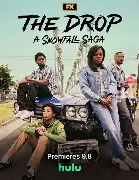 “The Drop” follows the events of “Snowfall,” a FX series exploring the crack cocaine epidemic in LA.
 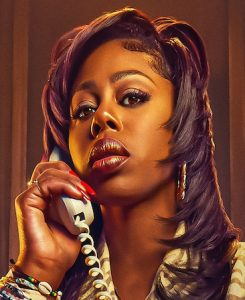 Gail Bean and Isaiah John return as their characters Wanda Bell and Leon Simmons.
 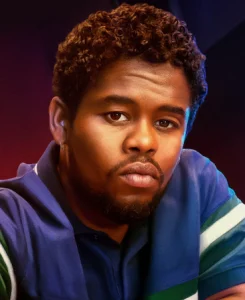 “Wanda starts the series driven by the clear belief that West Coast rap has the power to reshape American culture. She will work to put together a ragtag group of geniuses and lead them to the realization of all their dreams. To do it, she must navigate the dangerous overlap of music and street politics, pulling in those closest to her including her cousins Lamar Kinsey (Asante Blackk)
 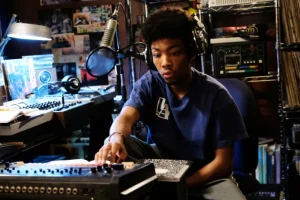 and James Kinsey (Peyton Alex Smith) and pursuing volatile local rapper Artillery (Simmie “Buddy” Sims III), who is already in a tangle with law enforcement. Her internship with former D-boy-turned-label-owner Darryl “DG” Grant (Brandon Mychal Smith) creates opportunities but also deepens tensions between Wanda and Leon, who has vowed to leave the streets for good and chase down his own atonement through his free legal clinic. As ambition, loyalty, and survival collide, how much is everyone willing to risk in order to build something lasting in a world that threatens to pull them down?”
It’s not a world I necessarily know, but one one can’t help but be intrigued about–especially when it’s so meticulously recreated. Celebrating it and drawing me in was the omnipresent Instagram narrative of co-executive producer Sal Calleros, who has repeatedly posted BTS images of how much attention was paid to the choices of signage, store brands and vehicles–not to mention the venue choices of local streets whose houses and surroundings haven’t changed a whit since the 90s. Think of it as ONCE UPON A TIME IN SOUTH L.A. Full disclosure: long before he became a prominent showrunner on the likes of the SNOWFALL franchise as well as Apple’s well-received SILO and our mutually beloved Sony hit THE GOOD DOCTOR, Calleros was my tortured executive assistant at FX while another pretty good show set in Los Angeles’ toughest hoods, THE SHIELD, was taking shape. He took the opportunity to pick the brains of the creatives working furtively on such nuances while also honing his own experiences growing up navigating them. All of that comes out beautifully with THE DROP–it’s arguably one of its strongest points.
 So yeah, you’d best believe I’m rooting for Sal as much as I am Wanda and Leon, because I know it’s more than possible to rise from the depths of harder-scrabble surroundings to creative prominence. I didn’t grow up in an area that was necessarily as dangerous but it certainly had similar overtones of dysfunctional families, occasional violence and yeah, lots of drug traffic. In hindsight, I probably wasn’t as aware of it as I should have been. The protagonists in THE DROP certainly are, and it leaves me wanting more.
I can’t say I was anything even close to as enthusiastic about what I finally saw with last night’s debut of S.W.A.T. EXILES, the sequel which we mused about at length earlier this month which Starz premiered last night. I was already skeptical given what I knew about how and why it got made at all–much more due to business opportunities, favors and the unrelenting passion of the face of the rebooted franchise Shemar Moore. Again, there are folks involved–Moore included–that I have histories with, some of them even positive. So as I expressed at that time I was indeed hoping–perhaps against hope–that EXILES was actually going to show it merited the two-season commitment that Sony’s determined sales staff was able to extract from its global partners and the friends in high places they cashed in on domestically.
I’m just not seeing it in the premiere I endured last night. SCREEN RANT’s Cher Thompson was apparently in mind meld with me when she posted her review earlier in the week: