
I don’t have any kids, which I’m told both by folks who have them and especially those who knew my ex-wives I should consider to be a blessing. More often than not, I’ve questioned if their counsel was merely apolegetic or perhaps far more of a reflection that they thank the stars that I didn’t procerate with either of the women who they unilaterally saw as incapable of raising themselves, let alone a child.
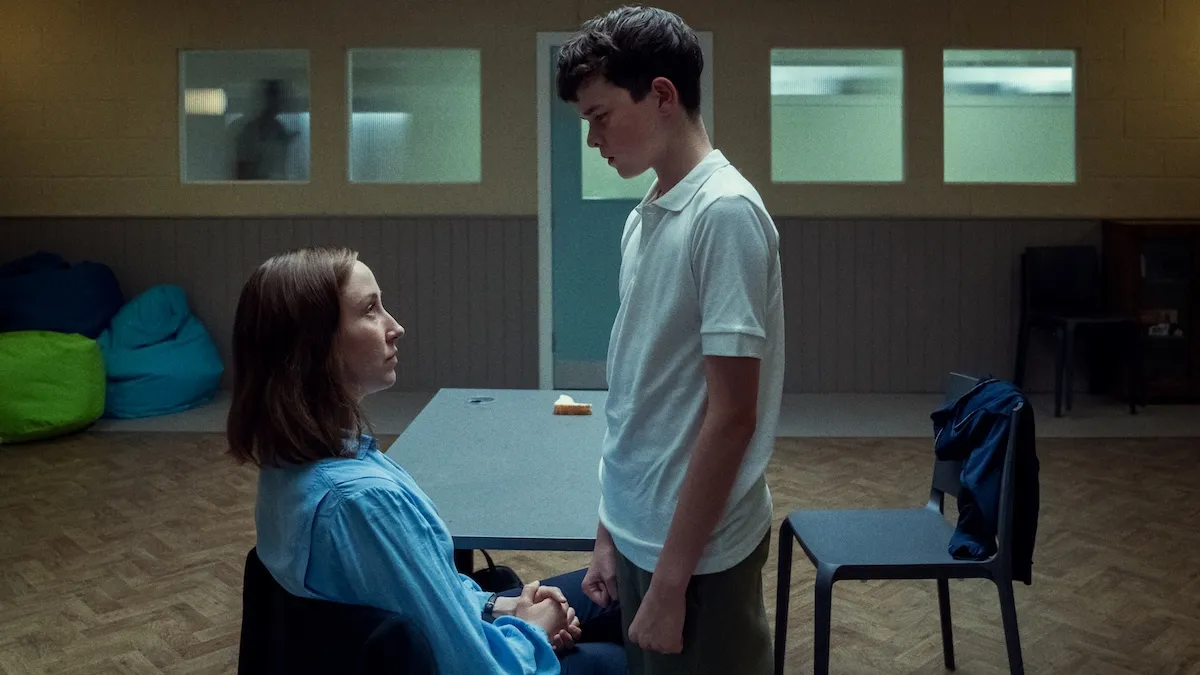 But after watching the burdgeoning Netflix hit ADOLESCENCE this weekend, an achievable goal even for a non-binger like me since it’s just four one-hour-ish episodes, I’m more inclined than ever to understand that they were expressing some of their own emotions about the challenges of being a parent, especially once one gets past the sweet spot of having gotten through the terrible twos and early development into the years where they may have felt they had more control over their children’s lives, let alone their own.
ADOLESCENCE is a scripted series import, so I suspect none of my friends have had anything close to the actual experience which serves as the plot for the series, as GOOD MORNING AMERICA’s Angeline Jane Bernabe describes it:
The show, which premiered on Netflix last week, is a gripping four-part drama series from the United Kingdom that explores the loss of adolescence and the complexities of youth. The series, in which each episode is filmed in one take, follows 13-year-old Jamie Miller (Owen Cooper), whose world is turned upside down when he is arrested for the murder of a teenage girl named Katie, who went to his school.
“This is a show about a kid who does the wrong thing and causes great harm. To understand him, we have to understand the pressures upon him,” (co-creator Jeremy) Thorne told the BBC. While the series isn’t based on a true story, (co-creator Stephen) Graham — who portrays Eddie Miller, Jamie’s dad in the series, in addition to being a co-writer — told Rolling Stone UK that he drew inspiration from the several real-life incidents that happened among youth in the U.K., specifically several incidents that involved the stabbing of teen girls.
The show’s first hour pretty much shows the process of how Jamie Miller is identified, processed and arrested–standard fare for a lot of procedural dramas. But as CNN’s Harmeet Kaur detailed, it’s the second hour that truly sets the tone and a huge reason why it’s difficult to treat this viewing experience in a similarly disposable manner:
Detective Inspector Luke Bascombe (Ashley Walters) is at a secondary school to investigate why Jamie… allegedly killed his classmate Katie. Based on their Instagram interactions, he assumes the two were friendly, if not romantic. That is, until Bascombe’s son — also a student at the school — tells him he’s got it all wrong.
The seemingly innocuous emojis that Katie commented with on Jamie’s Instagram were actually a coded form of bullying. The dynamite emoji represents an exploding red pill, a reference to the manosphere. The 100 symbol is another manosphere nod, alluding to a theory in those circles that 80% of women are attracted to 20% of men.
In other words, Katie implied that Jamie is an incel. It’s a dizzying realization for Bascombe and the other adults — who are clearly clueless about the pernicious ideas that kids in their care are exposed to and how that permeates their lives.
And as Thorne further revealed, there’s a lot more that’s revealed about today’s world regardless of geography once that onion begins to get peeled:
The ideas behind incel culture are very attractive because they make sense of a lot of things: feelings of isolation, low self worth, feeling unattractive. They tell you that there is a reason why the world is against you: Because the world has been built from a female perspective, and these women have all the power. (These ideas suggest that) you need to better yourself, get in the gym, learn how to manipulate and learn how to harm.
And in a world where the likes of Kyle Rittenhouse are praised, the leader of the free world is wildly cheered at college wrestling tournaments and the employees of DOGE are traipsing through the offices and institutions that determine our own lives and fates, knowing the roots of what has created a culture and a demography significant enough to make a difference is something that can’t–or at least shouldn’t–be ignored.
Nor can the choice of how the series was shot, which VULTURE’s Nicholas Quah took particular notice of:
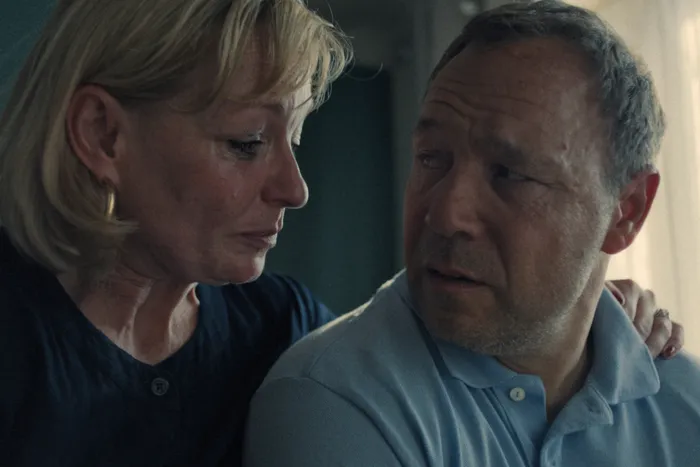 Each of Adolescence’s four episodes, all directed by Phillip Barantini, are structured as one-shot takes, and so the first chapter unfolds as a meticulous accounting of what happens as the boy, Jamie Miller (Owen Cooper), is processed at the police station: fingerprinted, medically evaluated, and assigned a lawyer. As the camera coolly observes the system at work, it lingers on Jamie’s vulnerability and terror; we’re reminded that this is still a boy who wet himself when the police broke down his door, who’s still young enough to be instructed by his father, Eddie (Graham), to eat his police-supplied cornflakes. Genre expectations are such that you might expect the series to linger within the question of whether Jamie did it, but by the end of the first episode, Adolescence removes any ambiguity. His interrogation by officers Luke Bascombe (Ashley Walters) and Misha Frank (Faye Marsay) culminates in the revelation of security footage that captures him stabbing his classmate, a girl named Katie Leonard, multiple times with a kitchen knife. So, Jamie is undoubtedly the killer, and to the extent there’s a mystery, it’s the slippery question of why.
And the viewer is taken on that journey in the back half of the miniseries, which if it impacted me as much as it did I strongly suspect parents felt an even stronger connection to and therefore a lingering reaction. As Thorpe concluded to Kaur:
The really gratifying thing has been parents who’ve watched this show with their kids. Even (UK Prime Minister Keir Starmer) actually talked about watching the show with his 16-year-old and 14-year-old. Close friends have said, “You’ve prompted discussions with me and my kids that I’ve never had before.” That’s the best review you could possibly get.
And THE WRAP’s Loree Weitz backed up that anecdotal evidence with hard, concrete proof that there’s a lot of folks out there everywhere that are likely having those discussions:
After debuting its four hour-long episodes on Thursday, March 13, “Adolescence” scored 24.3 million views through Sunday, March 16, making the limited series the most-watched TV show on Netflix during the week of March 10.
The opening weekend viewership for “Adolescence” outpaced that of other recent Netflix original series, including “The Night Agent” Season 2, which debuted to 13.9 million views, and “Zero Day,” which debuted to 19.1 million views during the week of Feb. 17. Likewise, “Running Point” scored 9.3 million views in its first week on the streamer.
And with attention like this, I’m confident that this is a tail of viewership that isn’t about to suddenly wane.
 I’m hoping against hope one dad in particular might find some time to watch. Lord knows he could use both the schooling and distraction.
Until next time…