
When I saw that Barry Diller at long last had chosen to share his life story with the world it caught my attention. After all, when your ex-boss and ex-roommate writes a book the very least one can do is at least put in an order for an advance copy.
No, Barry and I didn’t have our own real-life version of THE ODD COUPLE, though in hindsight I suppose he had a lot of the characertistics of Felix Unger, save for the sinuses, and I know I’ve got a lot of Oscar Madison in me. But we did share an executive suite at the FOX Television Center in Hollywood, the renamed Metromedia Square that housed our local stations’ small executive team and studios and where he was spending an increasingly large share of his time at the behest of Rupert Murdoch, who demanded he figure out ways to make our newscasts appealing to the increasingly younger demo that he was bringing to primetime in front of it as the FOX network began to take off. It was not one of the tasks he particularly embraced; he was not a fan of the Murdoch brand of journalism and he was never shy about letting anyone within shouting distance know that. But he was committed to at least trying, and if for no other reason than proximity he would use me as a sounding board for many of his often out-of-the-box ideas.
My particular favorite was when he paraded a guest around the KTTV newsroom taking copious notes. I was introduced to this person when they returned to his office as the set designer for BROADCAST NEWS, the exceptional comedy which his friend Jim Brooks had recently written for the movie division. I would frequently use that newsroom, where the station’s nightly newscast was now being shot as the era of eschewing studios had begun, as a shortcut to get to my office, so I developed a rapport with the talent and crew. On one memorable Monday morning I ran into the station’s male co-anchor in the adjacent hallway shaking his head. “Wait till you see what your roommate did to where I work”, he snarked. He opened the door to reveal that the hoods to the first generation PC terminals that were on every desk had been freshly painted in garish reds, yellows and blues, so as to match the bold backdrop that now adorned the area where the main cameras were stationed. “It looks like f–king Romper Room”, the co-anchor exclaimed. From that moment on the co-anchor was determined to move on, ostensibly to get back to his native San Diego (which he eventually did) but as much to find a work environment he wasn’t repelled by. Every time I saw him he’d regale me with yet another story of yet another half-baked idea which he and his news director would do their best to mitigate. On occasion they succeeded.
Barry’s reputation as a demanding and impatient taskmasker was well known and entrenched by the time I got to cross paths with him. In the revealing piece tellingly labeled OPINION which Maureen Dowd wrote for this past weekend’s NEW YORK TIMES she succinctly sets the stage for the challenge having such access to someone like him presented me:
 From a tender age Diller was a visionary of culture, and he later immersed himself in technology. He was ahead of the curve, ignoring naysayers and second-raters who insisted his innovations were impossible. As a wunderkind at ABC, he conjured the enormously successful “Movie of the Week” and the mini-series, airing “Rich Man, Poor Man,” “Roots” and “The Winds of War.” At 32, he was the youngest chief executive Paramount had ever had, and at a time when movies were vital, he turned out hits like “The Godfather, Part II,” “Saturday Night Fever,” “Grease,” “Raiders of the Lost Ark,” “Reds,” “Terms of Endearment” and “Beverly Hills Cop.” Working with Rupert Murdoch at 20th Century Fox, he midwifed a fourth broadcast network, which everyone thought was impossible, and spiced it up with shows like “Married With Children” and “The Simpsons.” (It is said that the rich, dastardly, bullet-headed boss, Mr. Burns, is inspired by Diller.) He only used his instincts, disdaining research data and dreading algorithms.
Hoo boy can I vouch for that. Barry’s impatience when he’d be presented nuggets from focus groups and surveys was omni-present; he’d never miss an opportunity to remind us that “research can’t tell you where you’re headed, and it can barely tell you where you’ve been”. He’d become particularly agitated when he’d come across ads and articles touting competitors’ sales points and would often tear them out of whatever publication he’d been perusing leaving them in a pile on my desk with a post-it note on top with a simple “?-BD” as his version of a request for my interpretation. I’m been told one of the biggest reasons he signed off on my moving over from the sales side of the company where I’d create my own versions of such bullsh-t to the buying side was because he felt I could make our local programmers smarter about falling prey to what he saw as odious sales tactics. He particuarly appreciated when I’d point out exactly how misleading and hidden the disclaimers that many of these stories used to make their statements were. You’d better believe any presentation that I knew would wind up on his desk had the methodology spelled out upfront, and in at least the same size font that the rest of it was in.
Having been a top executive himself at such a young age, it’s clear that he favored and empowered youth over experience. I was fortunate enough to be in that demo, as were many of my colleagues who were given the keys to drive the truck much more prematurely than those at other media companies. I was ever so briefly in his circle of trust, enough so that I was sometimes asked to take on some extracurricular assignments. Among them was entertaining some of his guests. On a memorable Sunday afternoon when I was catching up on things I had missed while traveling during the week (and, to be honest, to take advantage of the station’s satellite dishes so as to see a key Giants game), a sweaty Diller, clad in a white T-shirt and clingy purple satin shorts, poked his head into my office when he heard the TV and then ushered in his companion, a strapping blond Adonis in a tennis outfit.
“Steve, this is Brad”, he intoned in what Dowd so pointedly described as his sonorous baritone, the “Killer Diller” voice that intimidated and intrigued Hollywood for more than half a century. “I’m considering Brad for an internship, and I wanted him to learn a little bit about what we do. Would you mind spending a few minutes with him while I take care of a few other things?”. Well, when your boss’ boss asks you to do something, football takes a back seat.
I learned Brad had studied broadcasting in college before relocating to L.A. and was interested in perhaps becoming a newscaster. He asked a number of questions about why certain stories were chosen for five-part series and knew enough about “sweeps” to ask about why they existed and what else stations would do to get bigger ratings. He reminded me, at least intellectually, of myself in some ways. And then the tone, and his body weight, shifted.
“What’s he really like?”, Brad asked. He laid back on the deep guest couch in my office awaiting my response, reclining in a way that made it impossible to not notice that he apparently had gone commando on this day. It became obvious Brad was interested quite a bit beyond just an internship. Measuring my response verrrrry carefully knowing full well the likelihood it would be conveyed to Barry at some point, I said “He doesn’t suffer fools easily, and you’d best be able to keep up with him no matter what. But you’ll be hard pressed to find a smarter person anywhere in this city.”
A few weeks later, I went to see a showcase at a West Hollywood theatre that went on a bit later than my usual bedtime. I had parked several blocks from the theatre and my route took me past a notorious section of Santa Monica Boulevard known as “Boys’ Town”. On the corner at the intersection I needed to turn into to get to my car stood who was unquestionably the same blond Adonis whom I had spent several hours with answering questions with in my office. Only this time he was sporting eye shadow and high-heeled sneakers.
“Brad?”, I asked. When he realized who I was his face blanched. “Yeah, I guess that was the name I used”, he admitted. And then he began to tear up. “The night after you and I spoke was the last time I spoke to him”, he confessed. “He kept referencing someone who he had known who had hurt him that he clearly still had feelings for. And I honestly didn’t want to find out who it might be”.
Well, as the LOS ANGELES TIMES’ Christie D’Zurilla revealed in her piece last week, we apparently have the answer in print at last:
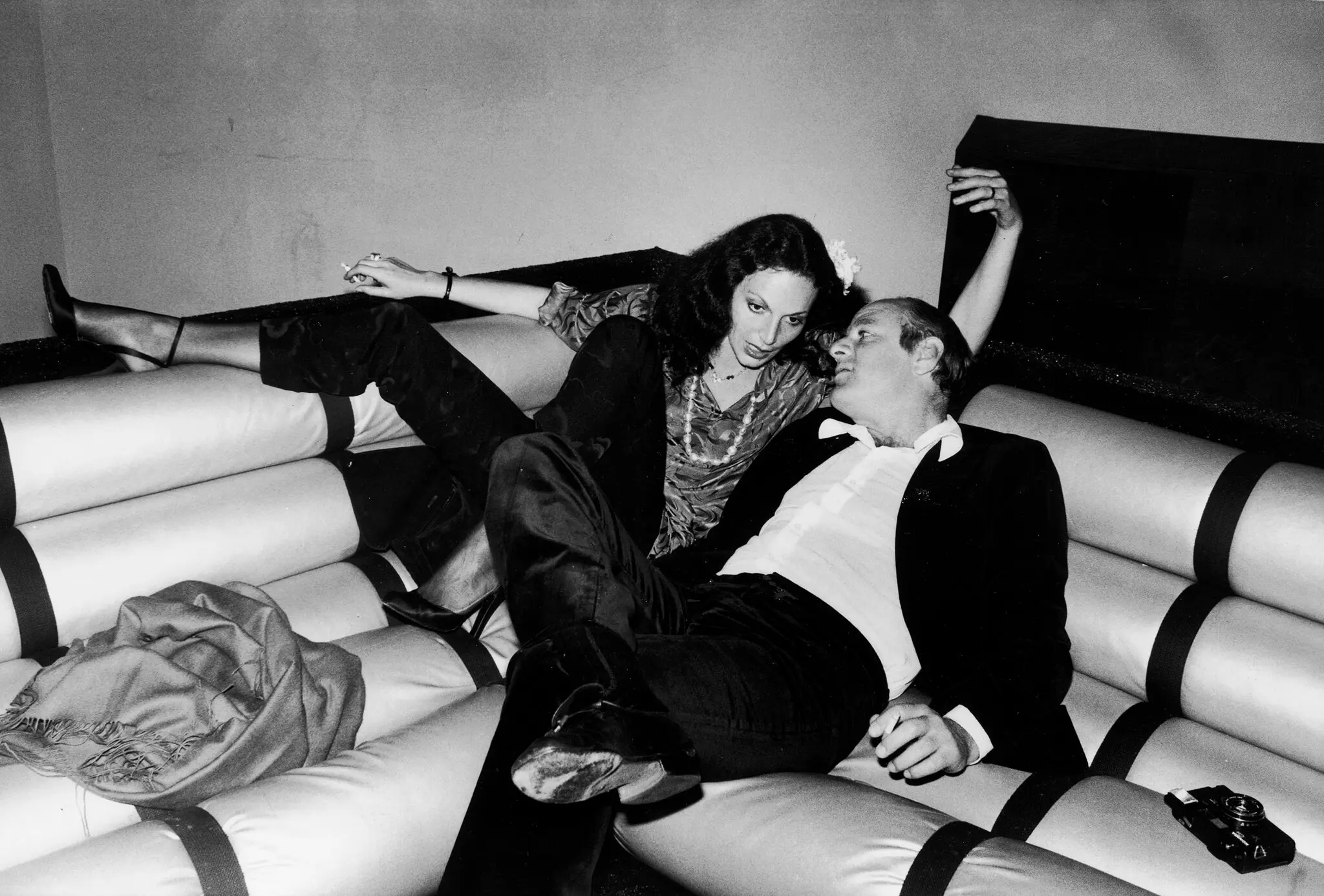 At 83, entertainment mogul Barry Diller is finally going public as a gay man while simultaneously explaining his happy, decades-long relationship with — and lengthy marriage to — designer Diane von Furstenberg. He writes about their awful first meeting at an event in 1974 where she dismissed him completely, then their fantastic second encounter at her apartment when she hosted a birthday party for agent Sue Mengers and he was a reluctant guest. He said he left knowing he would see Von Furstenberg again “and that nothing was gonna stop that.” He was 33 at the time.
After going like gangbusters for years, the Diller-Von Furstenberg relationship faltered in 1981 after she had a “momentary” affair with Richard Gere — something Diller said drew an overreaction from him. They were apart for 10 years, then gradually came back together until they got married in February 2001, 26 years after meeting for the first time.
I suppose in hindsight the fact that Barry had in fact played out what could be seen as a scene straight out of PRETTY WOMAN shouldn’t be all that surprising.
As Diller himself emphasizes in the various interviews he has given as his autobiography approaches release, he was as aware that just about everyone in his orbit knew his “secret”. When he hosted several of us at his magnificent Beverly Hills estate–the one he built around a beloved tree that he adored so much the living room was a circular cathedral with said tree walled off in the middle–his staff was unafraid to show the more curious of us his basement, where an “X” bench and some glistening chrome and leather toys could be seen even from the top of the stairs. I’m not so naive to not believe Brad, or whatever his name actually was, likely had a much more intimate experience there than did I.
But as those of us who actually knew him can attest, he’s an incredibly complex and accomplished person who has left an indelible and undeniable mark on this industry and the world. As he shared with CBS’ Tracy Smith on yesterday’s SUNDAY MORNING, WHO KNEW? has provided him a way to finally let a lot more than just those that were privilaged to be his underlings exactly why we have such intense and complicated feelings even decades later. With far more gratitude than astonishment, but undeniably with parts of both in the mix. His candor and unapologetic style is evident throughout the excerpts we’ve been privy to, and I’m certain the entire book will be filled with much more of both.
Sure, coming out is a big step for anyone, even someone as accomplished as Diller. His confessions of what he did by necessity to conceal it are riveting, and the catharsis he seems to get from this effort is heartwarming. As Smith shared with her audience:
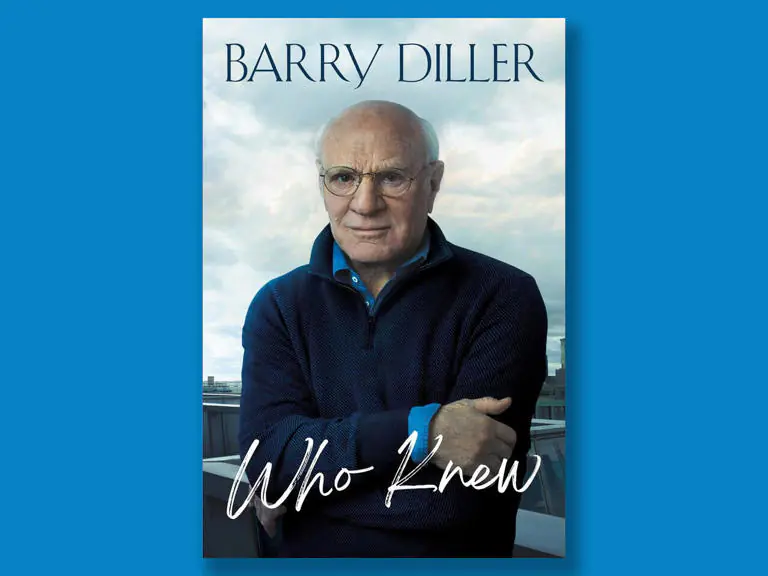 In “Who Knew” he names plenty of names, tells wild stories, and bares his soul about things he says he’d vowed never to talk about in public. In his preface he writes, “When I was young, I was far too afraid. I’m no longer that. And I’m too old to care.”
I look forward to the full journey, and I’ll thank him in advance for all of it. And somewhere, I suppose “Brad” might join me in doing so.
Until next time…