
Many of these musings come from something either inspiring or incendiary than happen in the normal course of human events –sometimes both simultaneously. Sometimes they come in droves, which means there might be a lag in just when I find enough time to articulate some sort of point of view that I believe will resonate enough to be worth sharing with you. Lately, much like our climate at least in this part of the world (truly praying for you, Florida), it’s been much more of a drought.
 But thankfully, I subscribe to someone like Evan Shapiro, and this morning he dropped a preview of the presentation he’s making later today at ADVERTISING WEEK NEW YORK, to those fortunate souls that still get to experience Manhattan in autumn when it’s most temperate–and at a time when both baseball teams are playing in the post-season, no less. Those guest lists used to include moi, and boy did I take full advantage of those opportunities. Shapiro was even fortutiously scheduled for the off day where neither the Mets nor Yankees would be scheduled for a home game, assuring no obvious distractions among attendees who share my mindset and priorities.
And it just happens to be yet another provocative and solidly conducted deep dive into how and why motivates media consumers and helps to explain why so many fewer folks from companies that deny these truths much like MAGAs deny climate change are attending conferences like this with their resumes in hand while they run into numerous former colleagues who mustered up the registration fee on their own (thousands of) dimes to network. Here, let him take over the wheel:
Recently, DirecTV commissioned me for a study on daily TV habits. I partnered with PCH Media to conduct a survey (with a sample size of 9,442 A18+), asking American TV audiences “How much TV do you watch?” …The question above might seem simple… until you think about just how many different TV and video services you have.
Over the last decade, the Media Industrial Complex has launched myriad services and platforms across a cornucopia of devices. Conceptually this is awesome – limitless content, anything and everything, everywhere and anywhere, all of the time!! In reality, it’s exhausting, frustrating, and paralyzing. The average consumer now has 100 unique logins.
Think about your own habits: Have you ever logged onto a streaming service, couldn’t find anything to watch; logged onto another service, couldn’t find anything to watch; logged on to another service, couldn’t find something to watch, gave up, poured yourself a beer/wine/bong hit and just watched Friends… again?
So the question: “How often do you watch TV?” is more complex and nuanced than you might think. To get to a set of actionable answers and insights, we asked specific subscribers and users of specific services how often they watch those services.
And then Shapiro launches into the meat and potatoes of his findings, which point in a direction that attempt to put into more practical context the self-serving data dumps that the likes of Netflix shove down our–and more specifically, Wall Street analysts’–throats that attempt to convey that streaming, and they in particular, have won the “war” for consumer attention. In terms of volume over wide swaths of time much as Netflix produces their dumps–six-month intervals reflecting total reach in millions of hours viewed. Using such parameters, impressive-sounding numbers are practically a given. But when one considers that by published estimates they’re dealing with a potential pool of 1.2 TRILLION hours in such a span across their global subscriber base, it’s easier to grasp the logic behind this contention:
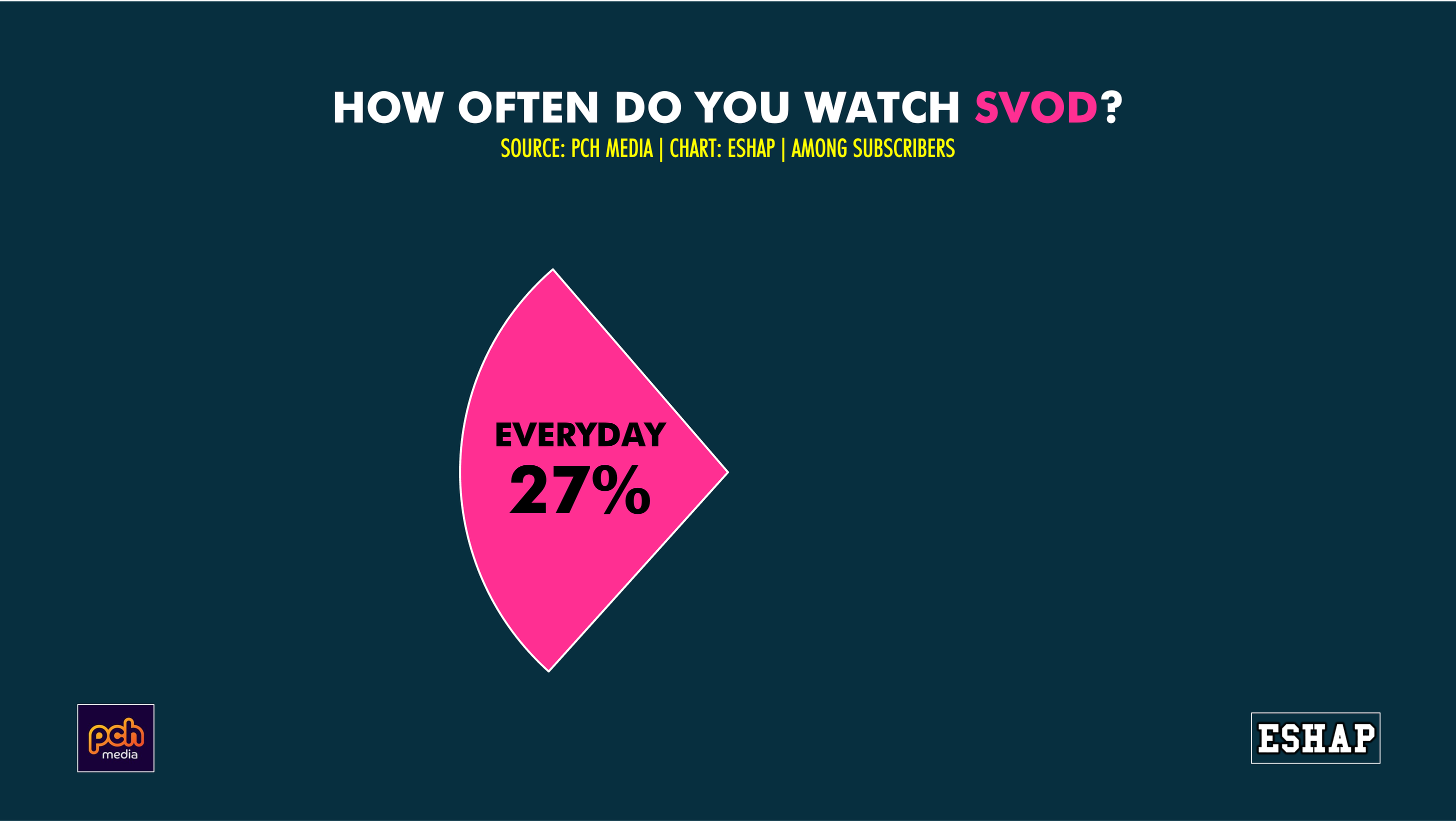 Turns out most users of many services watch periodically – once or twice a week – whereas most audiences use very few services everyday.
When you think about your own use of premium streaming platforms, it’s likely a once or twice a week thing. Usually on the weekend, often for a binge or a movie. This is the most prevalent use-case. This periodic usage is exacerbated by churn. How many of you have signed up for a premium streamer, specifically to binge one thing, then cancelled before the next billing cycle? Yeah, a lot of us do.
That’s why Antenna now reports that as many as 40% of new SVOD subs each month are Serial Churners – users who churn through three-to-six services a year.
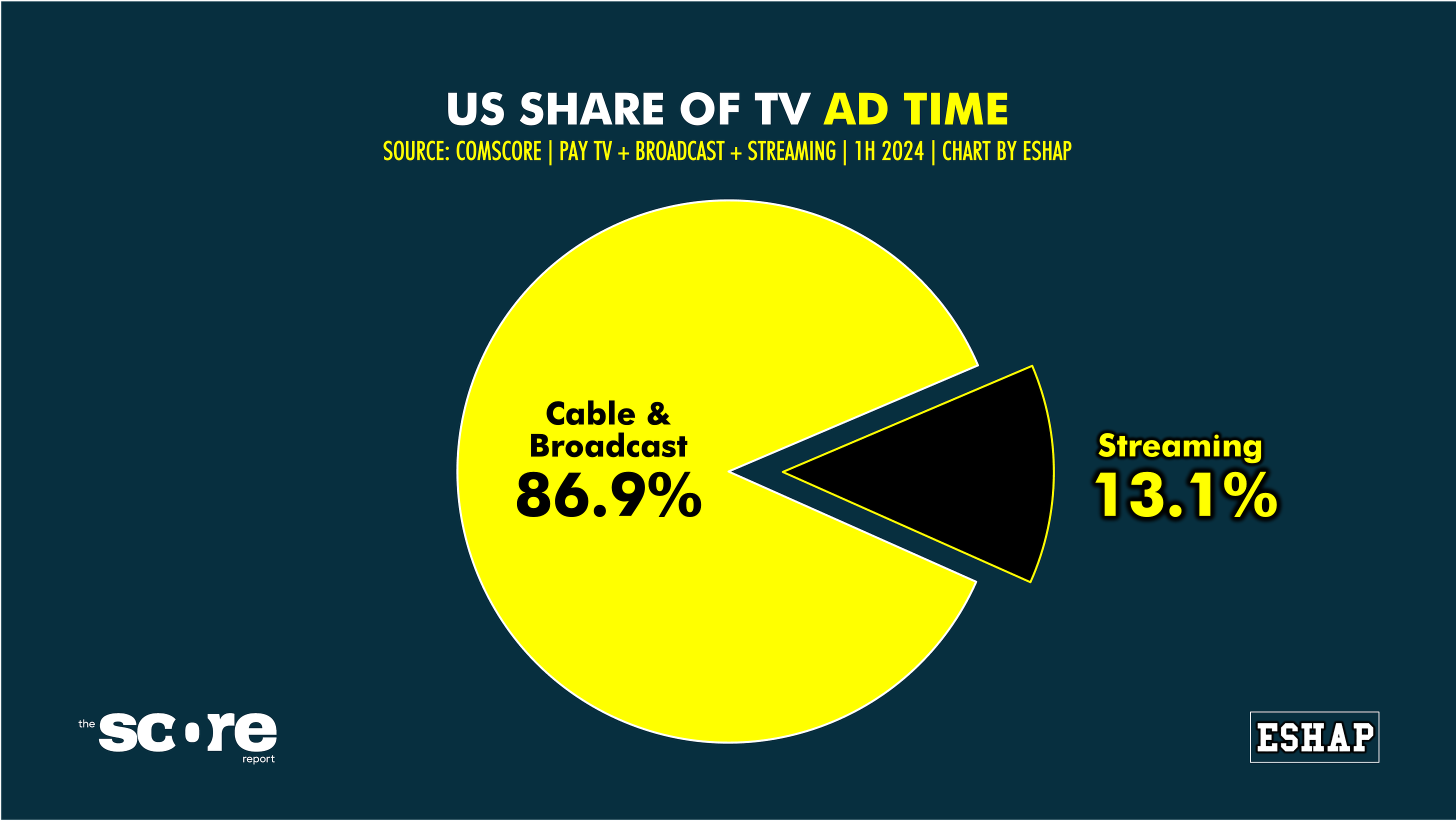 And therein lies the biggest challenge that streamers are faced with–subscriber attraction and retention, all the more significant as they hope to become more reliant on advertising. Shapiro’s already covered that topic in depth with his SHARE OF AD VOICE study that reinforces that a mere 13 per cent of the viewing of commercial content across all screens occurs on streaming services. And for an audience of advertisers who are most concerned with if their dollars are being well spent, that actually does matter.
It doesn’t help that the user experience of most of them is apparently a clusterf**k, either. Navigation between walled gardens is difficult and time-consuming, and if you’re in the kind of rabbit hole I’m now in with ESPN+, which my request for a password with a one-time code to be e-mailed to me has now been ignored on more than 20 requests, you reach a point where you’re fed up. So guess who’s not gonna watch hockey online this winter until they figure it out, and how much less ESPN will be getting from this household in the process. I’ll do my viewing on DIRECTV, thank you very much.
Sure, as Shapiro concedes, DIRECTV paid for this study, and when companies do that they often do so with an inkling that the results will be self-serving. But that’s because THEIR proprietary data focuses as much on customer satisfaction as usage, and their ease of navigation has held up far better over the years than their willingness to send a human being to your home to figure things out for you (that privilege is now $100 if you want to initiate it, BTW, a fact I just learned yesterday).
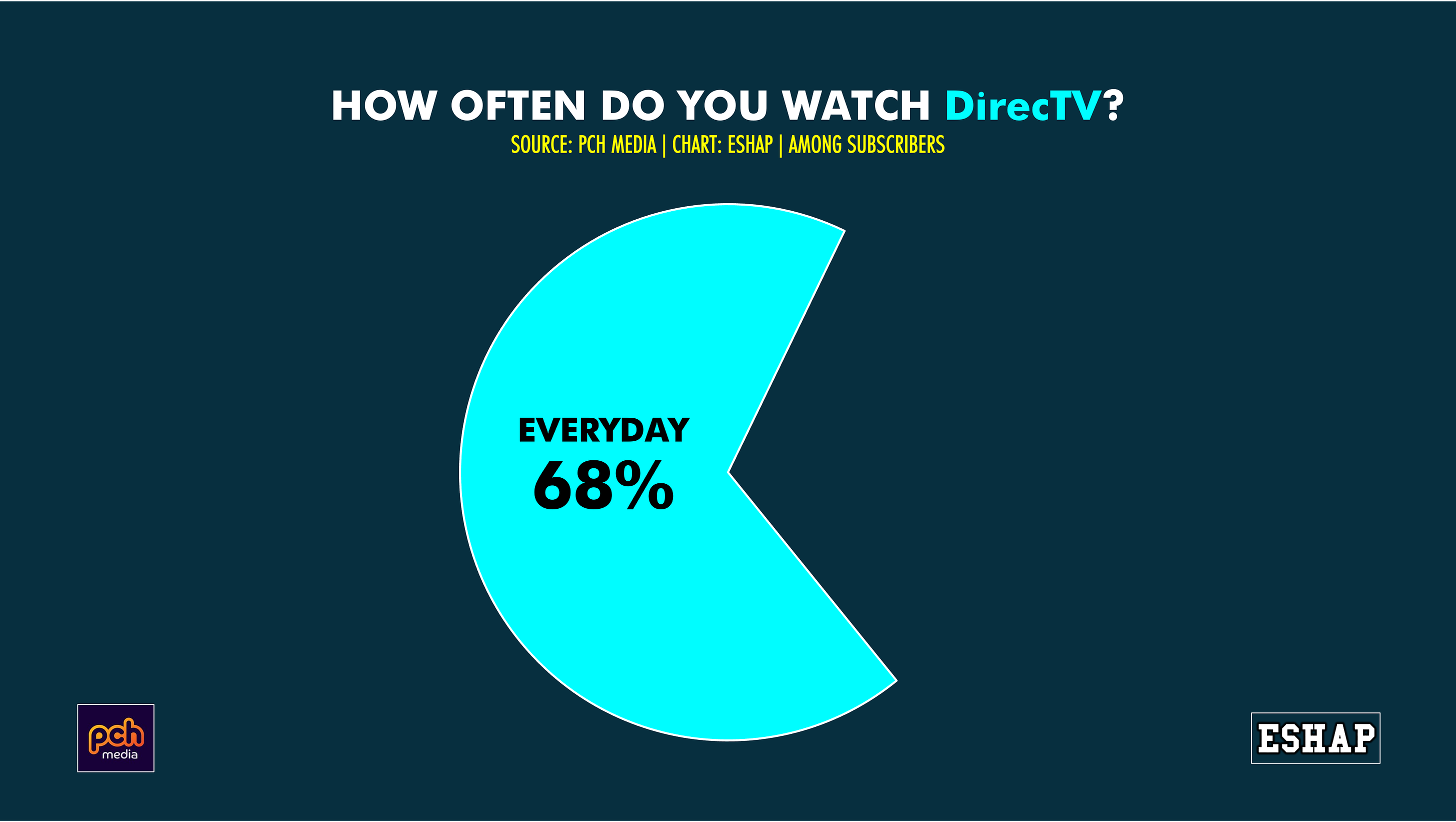 And yes, the usage rates he quotes are not only self-reported, hence all the more likely to be inflated, but they’re of their respective subscriber bases. So don’t make the mistake of thinking that two-thirds of all of us use DIRECTV. But it is nevertheless impressive that about one and a half times the proportion of DIRECTV’s subscribers effectively treat it like a utility as opposed to those who Netflix and chill, Max and relax, or Prime and sublime.
I know I probably spend more time fanboi-ing Shapiro than most, and I suppose I should have done a deeper dive on my own reconnaissance. Believe me, when I had his resources and opportunties, I did. Which makes me all the more appreciative he still can, and even more wanting to urge you to become a subscriber of his. yourself. And with studies like this that save my hide and get me thinking, you can all rest assured he’s not losing me anytime soon.
Besides, he’s an unapologetic Philly fanatic, and I have no doubt being in New York today in the wake of his Phillies’ ouster from the playoffs yesterday afternoon he could use the positive reinforcement of some new followers.
 You’re welcome, Evan. #LFGM.
Until next time…