
Look, I’m not a wholly unsympathetic person. I get this has been a rough week for Elmo, let alone some his friends in whatever alternative universe of the mind you choose to place him in. When the theme would ask “Can you tell me how to get to Sesame Street?”, my kneejerk reaction was typically “Microdosing?”
When the week started, we got this somewhat bizarre breaking news which THE LOS ANGELES TIMES’ Alexandra Del Rosario did her best to not break out into hysterics to report:
 It seems Elmo’s world recently included vitriolic racist, antisemitic and foul-mouthed social media posts. “Sesame Street’s” perpetually 3½-year-old mascot caught his social media fans off guard over the weekend as he seemingly traded in his wholesome tweets on X for hateful posts, including calling for violence against the Jewish community and others using lewd language to demand that President Trump release Jeffrey Epstein’s “client list,” alleging he was involved in the late financier’s sex trafficking operation. The obscenity-laden posts shared Sunday went viral, with screenshots also making the rounds. As of Monday morning, the posts had been scrubbed from Elmo’s page.
And then as the week wore on, Elmo and other iconic PBS personalities were used as sources for sympathy as the braintrust from his networks and NPR did their absolute best to avoid the seemingly inevitable outcome that resulted in this sobering but not unexpected report from THE HILL’s Miriam Waldvogel late yesterday:
Congressional Republicans voted to strip more than $1 billion in funding from the Corporation for Public Broadcasting (CPB) this week, a move that could force local radio and television stations to consolidate, cut services or shutter altogether, particularly in rural areas. The CPB is a publicly funded nonprofit that subsidizes more than 1,500 NPR, PBS and local radio and television stations across the country. Congress has typically earmarked $535 million annually for the corporation. The rescissions bill headed to President Trump’s desk would claw back funding for the next two fiscal years.
We’ve mused about this previously in the context of exactly what prompted this action–the presence of what is perceived by Elmo’s buddy as overly biased journalism. In that musing from a couple of months back, we highlighted some incontrovertible facts about exactly how popular such efforts as the PBS NEWSHOUR and ALL THINGS CONSIDERED are relative to other content on their networks, and urged that those entities perhaps consider how much they drive their donations and underwriters. The database exists to at least get some breadcrumbs of truth from it or can at least be easily used as a resource to conduct such objective research to accurately answer it. It’s pretty clear that such an exercise wasn’t done, or if it was the results may have actually been consistent with the cold hard numbers we dug up.
We instead got sob stories from folks in rural areas and news deserts who painted a truly bleak picture of what they expect will now happen, including one that Waldvogel amplified that had been the subject of a recent episode of the New York Times’ typically brilliant THE DAILY:
Walt Gregg manages KUHB in St. Paul, Alaska, located on a small island in the Bering Sea, and KCUK in Chevak, Alaska. He said the stations will be forced to close by next summer if the CPB is shut down. “Without them, that community doesn’t have anything,” he said. “There’s no local TV, there’s no local newspapers. Some of them barely even have internet, still to this day.”
And in the wake of events this week his senator took the opportunity to plead his case to a still wider audience , as reported by NBC NEWS’ and
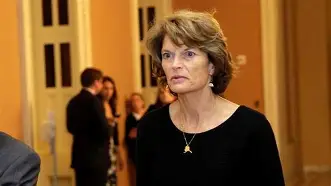 When a magnitude-7.3 earthquake struck off southern Alaska on Wednesday, officials were concerned about a potential tsunami. It was local public media that helped relay a tsunami alert, Sen. Lisa Murkowski said.
But now, looming GOP-led funding cuts are concerning media allies that local public broadcasters would be forced to downsize or shutter, damaging news operations and hurting locals’ ability to get timely emergency alerts like the one issued in Alaska. “Their response to today’s earthquake is a perfect example of the incredible public service these stations provide,” Murkowski, of Alaska, one of two Republican senators to oppose the cuts, said Wednesday on X. “They deliver local news, weather updates, and, yes, emergency alerts that save human lives.”
If nothing else, making that statement a few days after casting the deciding vote that made the One Big Beautiful Bill the One Big Medicaid Destroyer might have earned Murkowski a hall pass from burning in hell for eternity, at least in the minds of some of her constituents. And she’s absolutely correct in reminding people that LOCAL journalism matters on public broadcasting entities.
But national? Particularly in areas that have far more pressing matters to deal with than the antics of MTG or Cory Booker?
In that aforementioned DAILY piece Gregg revealed that only a quarter of his programming schedule is devoted to NPR content. So to him the lack of a show like ATC would be far less consequential than those who used Elmo and emotion to beg to keep things status quo.
It’s ultimately up to folks like NPR’s Katherine Maher and PBS’ Paula Kerber to determine how to deal the cards they are dealt. Even with clawbacks they still have access to way more dollars than entitiles like Gregg’s will ever be able to generate locally. Maybe those national newscasts that clearly don’t mean that much to their actual viewers could be sacrificed so that local news efforts in news deserts like this might continue to exist?
And in the case of PBS in particular, they have another source of revenue–one they’ve been able to take advantage of by squirrling their way around little nuisances like federal laws for decades. PBS’ own website devoted an extended piece on this very subject by Madhulika Sikka a few years back:
“Why do I see exactly the same commercial (Farmers insurance) on pbs…as I see on regular commercial tv…? I thought that one of the strengths of public television was that it was not beholden to any particular commercial interests…have you sold out and are no[w] on the slippery slope that leads to mediocrity?”
That’s a question we received from viewer Art Renn.It’s a reasonable question. It sure seems like what you see on PBS looks the same as what you see on commercial television.
I’ve had some illuminating conversations with Talia Rosen, PBS’s Assistant General Counsel and Senior Director of Standards & Practices, who walked me through the considerations for accepting “underwriting” or “donor acknowledgements.” Here’s my effort to explain some of the questions you may have on this issue.
It looks like an ad and feels like an ad, why isn’t it an ad?
 Well firstly, the law is explicit that “no public broadcast stations will make its facilities available to any person for the purpose of broadcasting any advertisements.”
There are very specific FCC regulations around the kind of language that can be used for messages that air on PBS. Nothing qualitative or comparative in language is core to the rules governing acceptable copy. Among the words that have been punished by the FCC include – beautiful, dependable, inviting, gentle, more, soft, excellent.
Rosen acknowledges that the standard can be somewhat fuzzy, particularly in the work of her office scrutinizing the use of adjectives because they can most often be qualitative and comparative. A movie trailer can’t say something is “Oscar nominated” or a “Golden Globe winner” because that is inherently comparative. And, Rosen told me, “The interesting thing about the comparative prohibition is it’s not only about comparing to others, but it’s also comparing even to yourself. No form of comparison works.” You can’t say that you have a “new and improved model” or that “this year’s is better than last year’s.” Even the term “free” is prohibited, as in “free wifi.”
And, unlike an ad you’d see on a commercial station, there can be no call to action. No imploring audiences to “buy now” or “call today.” The most a spot can do is direct the audience to “learn more” from a website.
With all due respect to the creative approach to language and nuance, if it walks like a duck and quacks like a duck, it’s a duck.
When maturing and strong-signaled PBS stations and the expansion of Nielsen meters resulted in enough of a ratings presence for the likes of Chicago’s WTTW, San Francisco’s KQED, South Florida’s WPBT, Boston’s WGBH and Pittsburgh’s WQED to regularly show up in overnight ratings reports with superior ratings to many fledgling UHF independents they brought in folks who sold these “donor acknowledgements”–aggressively in some cases. I worked extensively with many local sales managers who reported losing significant business on our commercial stations to these efforts, enhanced by the aura of some sort of “public service”.
 It’s clear that there’s enough gravitas and good will–and in many cases audience–to keep Elmo and Big Bird–not to mention Daniel Tiger–going despite these cuts. Not to mention the merchandising piece of it all for their producing entities. That’s an option that the PBS Newshour will never have. I can’t imagine much of a market for a Yamiche Alcindor action figurine.
At the risk of still another round of redundancy let me remind all involved in this handwringing that no matter how unfair or draconian the latest round of what so many consider fascism in action you may perceive Congress’ latest act of fealty to be, your JOB is to make lemonade out of lemons, even if you have to make a few less quarts. Had you made such a call based on actual data and feedback before you gave Karoline Leavitt yet another chance to girl-splain this you in her typically bitchy manner you might have been able to spare poor Elmo yet another traumatic expereince.
It’s a world of hard choices. Start making them. Read a few more e-mails from your actual donors. Read your ratings resources. I can help and I bet Elmo would be willing to be my assistant. I’m told he’s learning to read.
Until next time…