
It’s quite likely Ted Sarandos has been at his current job longer and done it better than you. VARIETY! took special note of his silver anniversary year by making the Netflix czar a cover boy of this week’s issue and gave him the conquering hero treatment in the process. It took a two-on-one approach from both Matt Donnelly and Ramin Setoodeh– not to mention the artistic and accredited photography of Art Streiber–to pay him homage, and if you happened to be among the fortunate who have seen their stock prices improve +52.6% over YAGO levels as of this morning, you’re probably thinking he deserved his own statue in front of the historic Egyptian Theatre in Hollywood that the company recently purchased and restored for those big in-person events like Greta Gerwig premieres and yes, this interview.
And while the majority of the interview was a victory lap that those who aren’t employed by Jay Penske were quick to dismiss as the equivalent of Newsmax-ish fluff of a favored leader, our friend Rick Ellis of TOO MUCH TV did compliment what he felt was a particularly revealing share on how Sarandos approached what in hindsight was one of his more significant decisions in recent years:
 The most insightful part of the discussion was this discussion about the Netflix it had with Marvel:
That deal included “Daredevil,” “Jessica Jones” and “Luke Cage.” Do you think the TV shows that Marvel is producing for Disney+ are successful?
I think they are. I mean, I don’t know because they don’t release any numbers.
On our shows, we were dealing with the old Marvel television regime, which operated independently at Disney. And they were thrifty. And every time we wanted to make the shows bigger or better, we had to bang on them. Our incentives were not well aligned. We wanted to make great television; they wanted to make money. I thought we could make money with great television.
What did you learn from that experience?
You want to work with people whose incentives are aligned with yours. When people are producing for you, they’re trying to produce as cheaply as possible. My incentive is to make it as great as possible. That’s a lesson that I take forever. As producers, whatever [Marvel] didn’t spend, they kept. So every time we wanted to add something to the show to make it better, it was a fistfight.
This was an interesting insight, because it pushes back against the conventional wisdom about the deal. That Netflix didn’t understand what it had or was unwilling to spend the money required for the shows.
In the case of legendary and proven IP that despite ownership was willing to explore alternatives to Disney (ask the folks at Sony how they feel about having SPIDER-MAN in their camp), Sarandos can claim executive privilege. And considering how even mediocre execution was able to call attention to the fact that they were pivoting from being a more convenient version of Blockbuster Video, the numbers back up his eagerness to literally throw money at a problem.
But mere hours before the Sarandos story was dropped, fellow Penske filer Winston Cho recapped this nugget for THE HOLLYWOOD REPORTER:
The Justice Department has charged Carl Erik Rinsch, the director of 47 Ronin who struck a deal with Netflix to make a sci-fi series he never delivered, for defrauding the company out of $11 million.
In an indictment filed on Tuesday, prosecutors for the Southern District of New York said Rinsch spent funds meant for the show in risky securities trades. He then allegedly used millions of dollars in profits from the investments to sue Netflix for further payments to finish the show and purchase luxury goods.
Netflix, which declined to comment, wasn’t identified by prosecutors as the defrauded company, but the indictment refers to White Horse, whose script was acquired by Netflix, reported The New York Times. Around 2017, Rinsch began filming the series about a scientist who invents a humanlike species that turn against their creators. He completed six shortform episodes of the series using his own money and investments from various production companies, which were then used to pitch studios for funds to finish the first season, prosecutors say.
In 2020, Netflix sent Rinsch an additional $11 million in funds at his request to complete the series, according to the indictment. It was meant to be used for various pre and postproduction projects, including paying crew and editing footage that had already been shot.
Exactly what Rinsch had done to justify even asking for that kind of money is an open question, especially when one looks at his body of work which Wikipedia tersely recapped as follows:
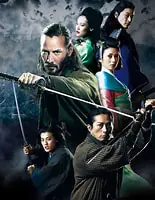 Rinsch made his feature film directing debut in 2013 with 47 Ronin, a fantasy adaptation of the Japanese historical epic of the Forty-seven Ronin. It starred Keanu Reeves, Hiroyuki Sanada and Rinko Kikuchi.[6][7] The film had a production budget of $175 million[8] and was received poorly both critically and commercially.[8][9] Following 47 Ronin, Rinsch went back to directing commercials.
Creative executives often champion going out on a limb to support the vision of fellow passionistahs. Wiki suggests the degree of passion that Rinsch had about this particular project:
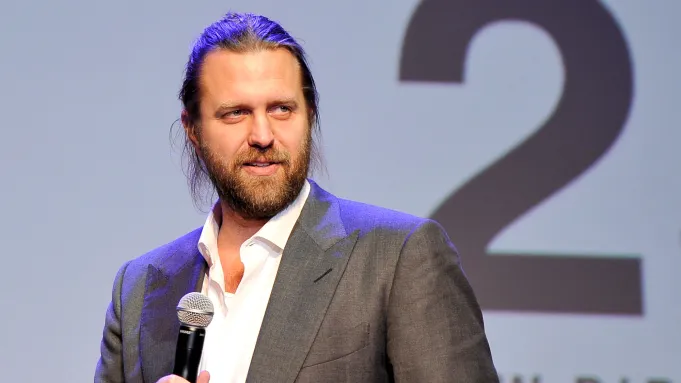 Rinsch and his wife Gabriela Rosés planned a passion project for their next work: a science-fiction series about an artificial human-like species called “Organic Intelligent” which are created to provide humanitarian aid around the world and face conspiracies in the background that create conflict and an apocalyptic showdown.
Sure sounds like a project that seemed to resonate with the times in 2020. And given how much Netflix was benefitting from a world in lockdown and little new linear television worth watching at the time–not even live sports–let’s just say Rinsch’s timing for getting what to someone like Sarandos is a rounding error was optimal.
The TIMES’ Danielle Kaye gave vivid detail of how Rinsch took more than a little advantage of found opportunity:
Netflix canceled the development of the show in early 2021 after Mr. Rinsch’s behavior turned erratic. In texts and emails to Netflix executives, he claimed to have discovered Covid-19’s secret transmission mechanism and told his wife, a producer on the show, that he could predict earthquakes and lightning strikes.
After Netflix informed Mr. Rinsch that it had decided to stop funding “Conquest,” he went on a spending spree with the show’s remaining production money, living out of five-star hotels in California and Spain and buying a fleet of luxury cars and high-end furniture. He said the cars and furniture were props for the show, but the arbitrator, Rita Miller, a former Los Angeles Superior Court judge, ruled that none of the purchases were necessary for the production.
And as Cho added as practically an afterthought, some of those bucks also went to pay lawyers for his divorce.
I guess Roses was a prop for the show as well?
Funny how in an lengthy interview where per Donnelly and Setoodeh no topic is off-limits there wasn’t even an editor’s note about the story that had been out in the ether that just happened to break the day that the Sarandos fluff piece was being finalized?
You don’t suppose that perhaps the fact that Netflix has spent literally hundreds of millions of dollars in advertising in Penske publications attempting to curry the favor of voting Academy members for Oscars, Emmys and especially Golden Globes might have something to do with it?
Nah, of course not. After all, throwing money at a problem tends not to make a difference in the end result.
Just ask Carl Rinsch.
Until next time…