
NOTE: This also appears today on our sister site Double Overtime. Please visit it regularly for coverage of sports of all sorts plus occasional essays on business and technology.
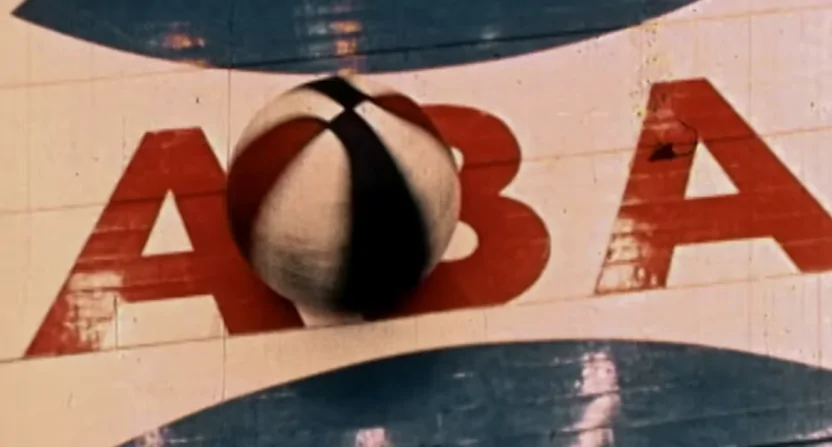 You regular readers (and I’m hoping there may indeed be a few more of you each time I make this passive-aggressive plea for engagement since the metrics I have access to seem to indicate that seems to be the case) probably know I’m a sucker for favorably reviewing anything that touches upon seminal moments in my life. Since my love of professional basketball dates back to the year that the American Basketball Association came into existence the four-part documentary-cum-love-letter to it, SOUL POWER, that dropped earlier this week on Prime Video is now the latest beneficiary of my emotional largesse.
To grasp why this resonates so much to me let me take you back six decades. The NBA of 1967 was anything but the global and cultural behemoth that the NBA of 2026 is. It was just undergoing its second expansion in two years to bring it up to a whopping 12 teams with the addition of the Seattle Super Sonics and the San Diego Rockets, which if nothing else meant that there would occasionally be some new late-night programming to counter THE LATE SHOW that my father would be blindly drawn to. Since the home games of the mediocre New York Knicks were never televised on local TV, that was a big deal. I was allowed to stay up late to watch those telecasts as well as those against the Lakers.
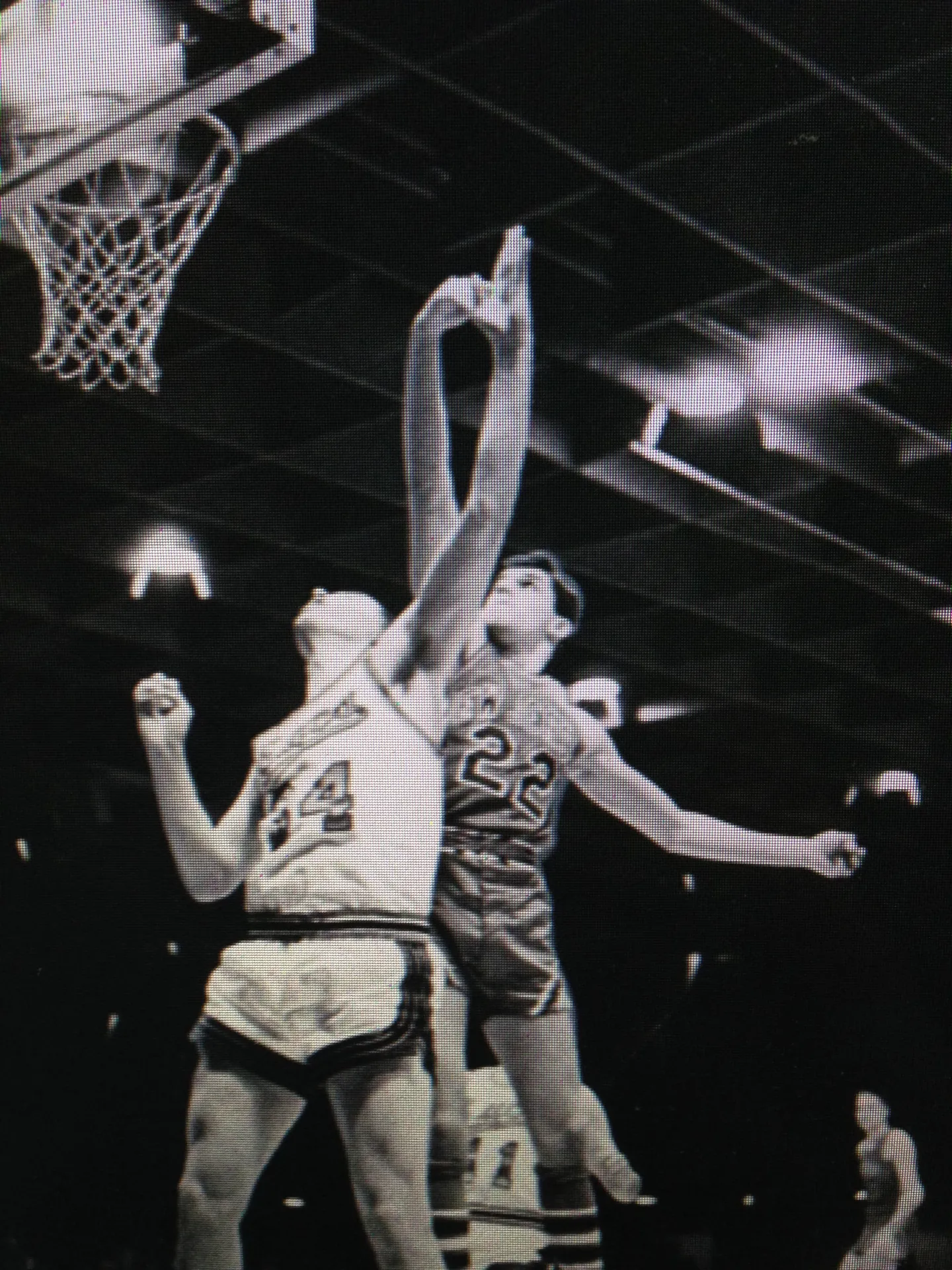 But the majority of my early fandom was via a table radio that inexplicably sat on top of our eat-in kitchen’s refrigerator where all of their home games and the majority of their road games were being covered by a young Marv Albert. who on radio demonstrated far greater ability to paint a picture than those who only knew him as a TV announcer might otherwise know. The kitchen was basically the only room in our bandbox apartment that provided any sort of refuge from the tumult elsewhere, including my infant sister and my perpetually arguing parents. That radio became my primary source for sports entertainment on most evenings, and that included baseball season as well. The pre-Miracle Mets were relegated to a tinny country music station out of Hackensack, New Jersey, WJRZ 970, which was just down the dial from the Knicks’ WHN, so I basically toggled between those two signals all year round. That station picked up a basketball team in the fall of 1967 that I had never heard of which turned out to be the New Jersey Americans.
  And since they seemed to be playing games practically every night the Knicks weren’t they immediately earner parity in my heart even if the league itself–and certainly the Americans–were struggling to establish recognition and credibility with anyone else.
To me, the Americans were essentially the Mets–the underdog that played in the shadow of the established and more urban team that at the time wasn’t very good themselves. An excellent piece authored (appropriately) on Independence Day 2022 by PRO BASKETBALL HISTORY BLOG’s Bob Kuska does a wonderful job of meticulously detailing that forgettable season. If you listen to the theme song you’ll notice similar cadence and tone to the iconic MEET THE METS:
I was too young to realize the station and the song were about the only two things the Americans had in common with the Mets. But the ABA itself was a whole ‘nother story.
As AWFUL ANNOUNCING’s Michael Grant informatively framed in his preview peice from Wednesday:
The NBA would not be the entertaining league it is today without the ABA. The 3-point shot, the Slam Dunk Contest, and the overall joyful aesthetic of professional basketball were all innovations pioneered by the upstart ABA….Soul Power: The Legend of the American Basketball Association aims to educate and remind fans of the ABA’s influence on the modern game. There is material here that younger viewers might not know and that older viewers may have forgotten. Through interviews with former ABA players and coaches and archival footage, viewers will see the pomp and pageantry. The ABA wasn’t just another league competing with the NBA. It showcased a different lifestyle on and off the court, putting a premium on fun.
Indeed, one of the most compelling qualities of the series is how the producers seamlessly intermingle the storytelling with clips of the surviving players, coaches and executives watching what appear to be dailies on screens and devices, taking them back decades and leaving them both wide-eyed and misty-eyed. The children and grandchildren of those no longer with us are even more blown away by the theatrics and talent those grainy videos and even still photography showed. Among the show’s producers is the rapper Common, who we learn had a grandfather, Lonnie Lynn, that briefly played for the expansion Denver Rockets. (Yep, there were actually two teams that debuted that year with the same nickname). That general connectivity and, well, common ground, is beautifully and artistically shot. And fortunately, he has some equally passionate partners who helped him with the specifics.
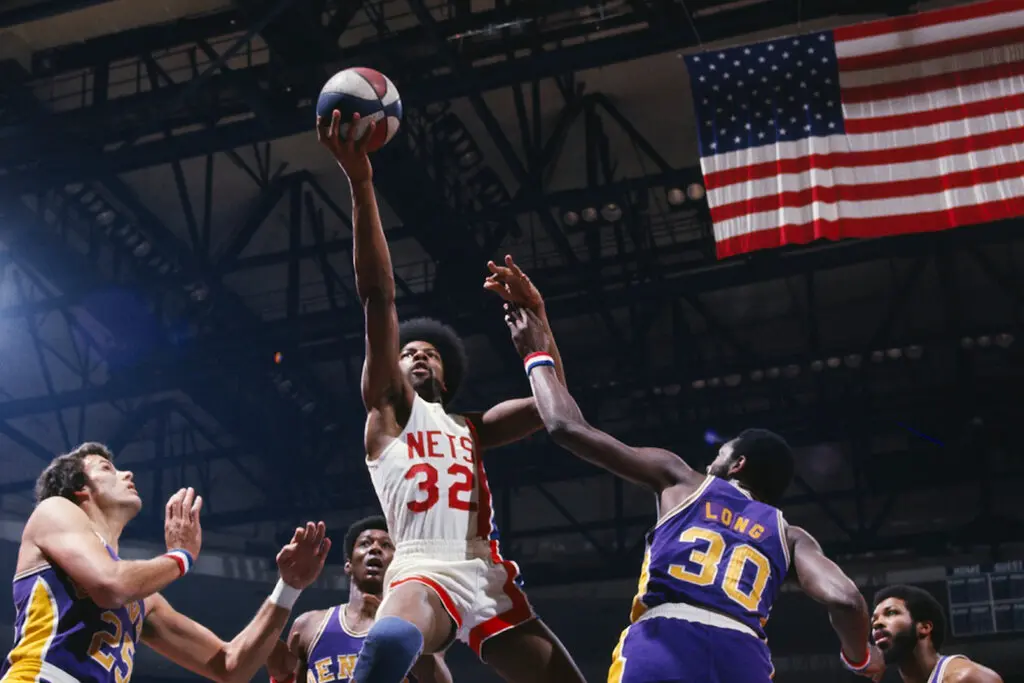 Among them is the legendary Julius Erving, whose Hall of Fame career was primarily spent as a Philadephia 76er but who prior to that pretty much carried the ABA on its back as a New York Net. Those Long Island-based Nets eventually became the true equivalent of the Miracle Mets in large part thanks to the talents of efforts of “Dr. J.”, winning two of the league’s final three titles and establishing a beachhead in the then-modern Nassau Coliseum, mere minutes from where Erving grew up. Erving described his own deep feelings to the NEW YORK TIMES’ Stuart Miller:
We knew in our hearts we were as good as the N.B.A. teams. It’s big to share that with the public. And the negotiations that went on between A.B.A. and N.B.A. in terms of the merger is one of the key things in basketball history that was forgotten about.
Also the A.B.A. lives in the N.B.A. today, no question about it. There’s the 3-point shot and the three referees and extra lines in the way stats are recorded. But there’s also the spirit of the A.B.A. game, spreading the court, running the ball, the faster pace of play.
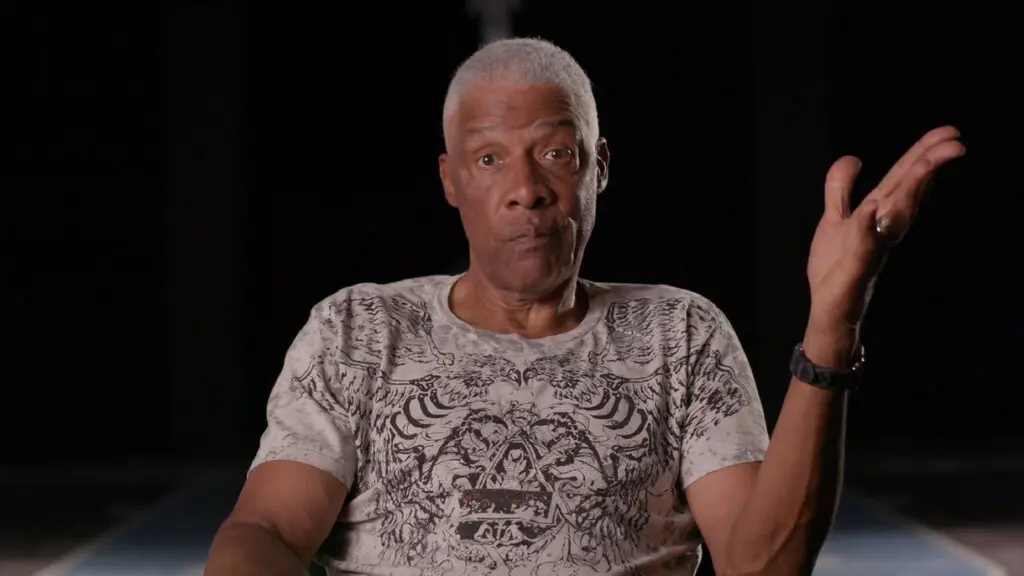 “I’m all A.B.A.,” Erving said. “Anything associated with the league, I’m there for it.”
Erving’s rise to superstardom in New York, which coincided with the beginning of the Knicks’ now 53-season championship drought, is a significant part of SOUL POWER’s later episodes. It was clearly a driving force in what attracted Erving’s creative partner to the project and how he has positioned it to appeal to today’s target audiences:
While Kenan Kamwana Holley was shooting his documentary series “Soul Power: The Legend of the American Basketball Association,” he asked basketball players what they knew about the long-defunct A.B.A. “We had young N.B.A. players like Tyrese Haliburton and RJ Barrett send us videos talking about what the A.B.A. means to them, and they all started with Dr. J,” Holley said. “We went to courts around the country like Rucker Park in Harlem and the court in Los Angeles where they made ‘White Men Can’t Jump.’ And when we asked players about the A.B.A., they all said, ‘Dr. J, Dr. J, Dr. J.’”
Erving may be the more familiar personality and story, but to me what was equally compelling was a segment featuring an almost-forgotten pioneer which Grant summed that up with appropriate reverence:
Soul Power acknowledges many contributors, including Ellie Brown Moore. In 1973, the then-33-year-old Moore became the owner of the Colonels, making her the first woman to own a pro basketball team. She appointed the first all-female board of directors in pro sports history. Moore was also credited with increasing ticket sales and attendance.
 And led by the transformational Artis Gilmore, perhaps one of the few players anywhere that could match Erving’s talents, they captured the league’s second-to-last title, a story Ellie Brown Moore was all too eager to share with the producers via meticulously kept half-century-old scrapbooks. She’s absolutely riveting as a stoic octogenarian looking back; the fact we learn she died in December 2024 makes this all the more poignant.
Yes, before there was Jeanie Buss, there was Ellie Brown Moore. Before there was LeBron there was Dr. J. Before there was Shaq there was Gilmore. Before there were the Heat, Jazz, Pelicans, Timberwolves and Grizzlies there were the Floridians, Stars, Buccaneers, Muskies/Pipers and Tams/Sounds. Common, Holley and Erving, along with fellow executive producer and longtime NBA coach George Karl, make sure you the viewer know it. Karl is also a cancer survivor who has been luckier than many of his fellow ABA alumni, who we learn in the final segment were ultimately denied health coverage and pension benefits after just four of the remaining seven teams were absorbed into the NBA. We are reminded that it was more of an extortion than a merger; those four teams were each forced to pay a $3 million fee to the older league as an “entry fee”.
The pain, anguish and suffering of those all-but-forgotten professionals ultimately attracted the attention of a young Indiana Pacers fan named Scott Tarter, who helped establish a non-profit organization called Dropping Dimes that offered financial assistance to those players and in some cases their families who could at least then provide them with a respectful burial. It ultimately helped push the NBA to finally provide pensions to the ABA players and has helped to thaw some of the obvious bitterness that still exists with many of the others who are brought back into the spotlight after decades of obscurity in SOUL POWER.
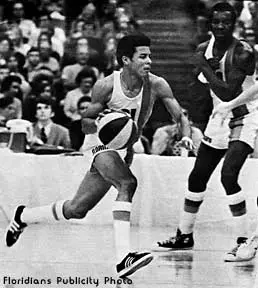 It’s storytelling like this that allows me to forgive the mistakes that somehow were overlooked in the final cut, which I’ll concede means more to me than most. I provided consult for an Apple TV documentary on the history of LGTBQ+ influences on television where I cleared up some confusion and misstatements on small details like exactly when Paul Lynde did and did not appear on THE HOLLYWOOD SQUARES. I’m pretty sure I’m one of the few who noticed or would even care about he fact that when its was highlighted that the Miami Floridians beat the Washington Bullets in an early inter-league exhibition game that helped the ABA prove it was indeed competitive it was really The Floridians beating the Baltimore Bullets. And they completely missed any reference to my beloved New Jersey Americans, incorrectly listing the New York Nets as one of the charter members of the league.
But that’s only because I’m as much in love with the ABA as those that actually were a part of it. And I’ll be willing to drop a dime of my own that after watching SOUL POWER you’ll be that much more inclined to feel the same way.
Until next time…