
NOTE: This musing also appears today on our sister site The Double Overtime. Please visit it regularly for coverage of sports of all sorts plus occasional essays on business and technology.
Yes, I’m well aware it’s still very much winter and football season, and if we needed any reinforcement of that three of the last four games we’ve seen this week were unqualified edge-of-your-seat classics that I would bet my last dollar (and, as you know, that’s perpetually on the table) will deliver record audiences for their respective carriers and windows when the data is finally released. But in the backs of many minds–and I dare say front and center in at least a few of yours–is the delicious reality that we’re also less than a month away from the three words that reignite childhood especially in colder climes. Pitchers and catchers.
 That means the start of major league baseball spring training, and with that shortly after the resumption of more than seven months of near-daily games, especially for those teams who are fortunate enough to have had dedicated regional sports networks carrying them for now the better part of the last four decades. When they first evolved on a market-by-market basis as cable expanded it was a true fan’s wet dream–no matter how meaningless or in what time zone, there was a game on TV. It helped grow and eventually regrow the game’s popularity and, more importantly, eventually increased the amount of revenue teams were able to produce from the rights to those games. Many chose to use this windfall to invest in free agents that improved their lots and ultimately the attractiveness of those teams’ schedules to fans and advertisers alike–those that didn’t merely lined their pockets and took that as a win.
Ah, but as cord-cutting and tiering have become increasingly ubiquitous the RSN model began to fracture, and that was especially accelerated once my former employers at FOX decided to sell what Rupert Murdoch consistently and mockingly referred to as the “middle of the paper”. Once they found Disney as a willing buyer for all of their entertainment businesses save for FOX and FOX News, Disney was obligated to sell these networks to comply with conditions set forth by the U.S. Department of Justice. Sinclair wound up as the winner at just about the time when erosion began and streaming became a priority. They eventually pivoted to ill-fated partnerships and rebrands with gambling-centric companies; first Bally’s, and now FanDuel. That’s all well and good perhaps for basketball and hockey which draw younger audiences. For baseball, not so much.
And there you have why this news that broke late last week wasn’t as much a surprise but an inevitability. Per Philip Swann, a.k.a. THE TV ANSWER MAN:
Nine Major League Baseball teams have decided to opt out of their TV deals with the RSN (Regional Sports Network) company Main Street Sports Group which owns FanDuel Sports Network. That’s according to an article by The Associated Press which quotes MLB Commissioner Rob Manfred as saying the league is prepared to broadcast the games of the nine teams during the 2026 season on MLB TV. The teams are the Tampa Bay Rays, Kansas City Royals, St. Louis Cardinals, Atlanta Braves, Cincinnati Reds, Detroit Tigers, Miami Marlins, Milwaukee Brewers and Los Angeles Angels.
And as THE ATHLETIC’s Evan Drellich expounded:
When Main Street was in bankruptcy from 2023-25 (and known at the time as Diamond Sports Group), deals were terminated but ultimately reworked. Termination of the deals does not preclude those teams… from returning on renegotiated agreements…By exiting their existing contracts, the MLB teams are attempting to safeguard themselves from the possibility Main Street files for bankruptcy, which would limit how clubs that hold contracts with Main Street could maneuver.
These nine teams have a few things in common. For one, they represent smaller markets and/or fan bases without significant national footprints. That means they’ve been disproportionately reliant on the fees that FOX eagerly paid them in their heyday when their stellar affiliate negotiators commanded top of the card subscriber rates that helped FOX grow their overall cable network portfolio. I worked hand in hand with these expert deal-makers and there were masterful at how they used timing of key events like Opening Day to bring MVPDs to their knees, dragging along the likes of FX and more forgotten networks that I got the chance to work with along with them. For another, they for the most part represent sellers and laggers in this winter’s crop of free agents. Without the assurance of those rights fees from Main Street, let alone the spectre of a player’s strike that could very well result in a shutdown of some sorts before the 2027 season, these teams are especially reluctant to make long-term investments of consequence.
From the fan’s point of view, Manfred attempted to quell panic and rumors as Drellich further reported:
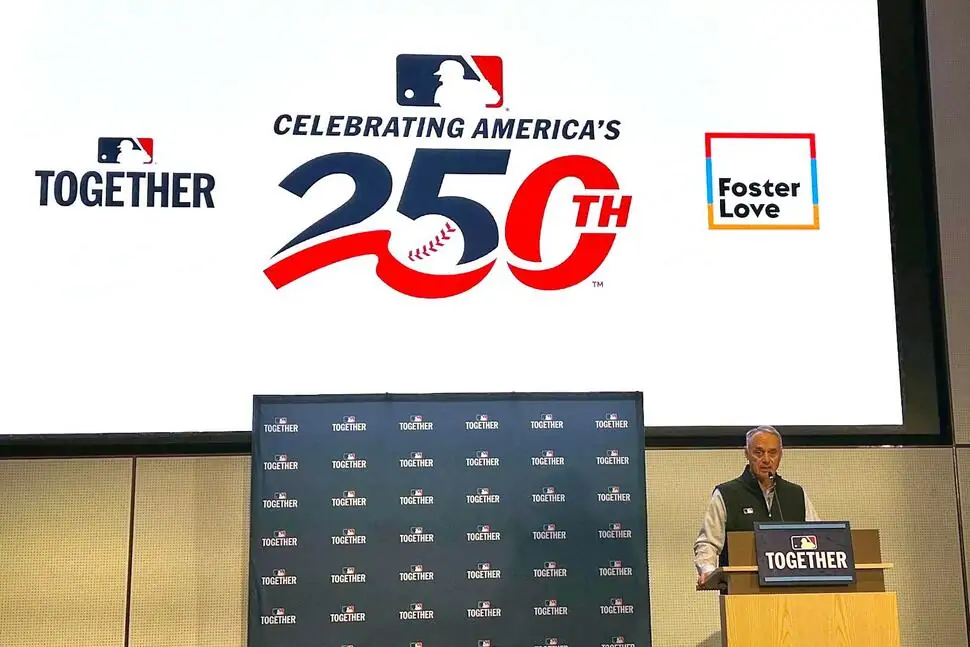 Major League Baseball commissioner Rob Manfred told reporters Thursday in New York that the league is in position to take over the broadcasts of any teams if needed, and that the goal is to maximize revenue. “Our focus, particularly given the point in the calendar, is to maximize the revenue that’s available to the clubs, whether that’s MLB Media or third party,” Manfred said, per the Associated Press. “The clubs have control over the timing. They can make a decision to move to MLB Media because of the contractual status now. I think that what’s happening right now clubs are evaluating their alternatives. Obviously, they’ve made significant payroll commitments already and they’re evaluating the alternatives to find the best revenue source for the year and the best outlet in terms of providing quality broadcasts to their fans.”
And as said AP story highlighted:
“No matter what happens, whether it’s Main Street, a third party or MLB media, fans are going to have the games,” Manfred said Thursday… MLB took over broadcasts for San Diego in May 2023 after Diamond Sports Group missed a payment to the Padres and added Arizona that July. Colorado joined MLB’s distribution in 2024, and Cleveland and Minnesota in 2025. Seattle is being added this season and possibly Washington, which is leaving the Mid-Atlantic Sports Network.
If you happen to be a fan of those teams, you probably haven’t been all that impacted save for having to learn a new channel position should you still be old-school enough to have not yet cut the cord. The teams have been able to pretty much replace their distribution footprints and a couple that are not fully aligned with MLB have reinstated components that they had in the more formative days of the RSNs where a package of games have pivoted back to broadcast stations. Their NBA and NHL counterparts have been even more aggressive in that back-to-the future approach; for the first time in decades over-the-air duopoly independents in Los Angeles, Dallas, Miami and Seattle are carrying significant slates. But they are doing so merely to maximize audience and reach; without the guaranteed carriage revenue, they’re nowhere near close to whole. Which also means they’re not exactly racing to make deals to help their own fortunes, and that’s left many of them at competitive disadvantages in their respective leagues.
MLB is hoping to claw back those teams’ rights and have them as part of a more complete package which they can dangle in front of streaming platforms as they evolve their overall media strategy, the first seeds of which will take place this spring when NBC/Peacock rejoins their mix with a slate of predominantly Sunday games both day and night. But that’s not making these mediocre teams any more comfortable with their short-term prospects. And thus less than a month before the siren’s song of pitchers and catchers, there’s a dark cloud hanging over these franchises. As Drellich revealed:
Barry Jackson reported in the Miami Herald on Thursday that Main Street missed a payment to the Marlins. Main Street was known to have missed a payment to the Cardinals last month. A person briefed on FanDuel SN’s contracts confirmed that multiple MLB teams have not received scheduled payments. Sports Business Journal reported that Fubo has emerged as a contender to buy Main Street. Main Street has been in talks with DAZN, but that deal seems a long shot, SBJ reported.
AP added kerosene to this particular hot stove item:
Manfred said local media provides more than 20% of industry revenue. MLB and the players’ association for 2024 allowed discretionary fund distributions of up to $15 million each to teams whose local media revenue had declined since 2022 or 2023, but they did not reach a similar agreement for 2025. “We are not providing financial assistance right now,” Manfred said.
Don’t think that reality check is not making the potential of a delayed season in 2027 all the more possible.
After a record-breaking year where baseball is enjoying more global reach and appeal than ever, it’s these first-world problems in what some dismiss as flyover states that are recreating many of the same fractious and disruptive overtones that the sport saw in 1994, when the nuclear option of cancelling the last third of the regular season and then the World Series itself was invoked. The Montreal Expos never recovered from that, and it took the steroid era to create enough of a false flag to reignite interest once the players finally returned the following spring. In hindsight, it was a black eye for a sport that relies more on its history and longevity than others’, and whatever short-term gains those statistical anomalies produced with a younger generation haven’t stuck. We who are more seasoned, and those who have kids in travel leagues, may still be around, but look around more urban environs and try and tell me that with rare exceptions if Gens Z and A are sweating these possibilities as much as we may be.
It’s complicated to be sure, and while I’m confident enough that baseball is ultimately strong enough to survive, I can’t say I’m not fearing some sort of long-term impact that will impact the competitive balance in a manner akin to what we’ve seen in college football. The rich get richer; the middle class endure; those teetering on the edge contract. For those of us with a lifetime of addiction, we may be willing to put up with it. For those not so afflicted, this could give you ample reason to drop it like it’s hot.
Until next time…