
Jay Penske, publisher extraordinaire and NASCAR nepobaby, has recently made headlines of his own again, at least via the few objective media journalism sites he doesn’t already own. MEDIAPOST’s Ray Schultz published as succinct a recap as possible on the site’s PUBLISHERS’ FORUM yesterday:
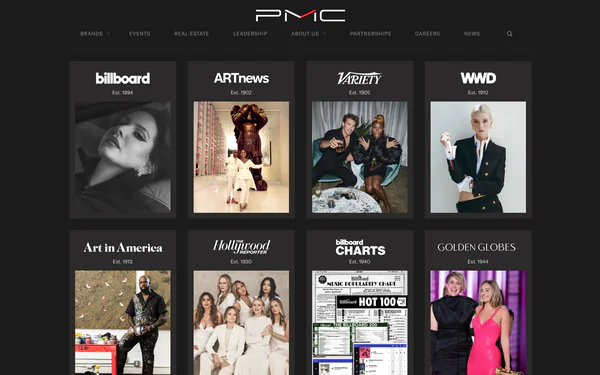 Penske Media Corp. reportedly has warned offsite workers that they must return to the office for at least four days per week or risk termination. A memo sent last week by owner Jay Penske gave employees until October 4 to decide whether they will comply. But those who do not will be eligible for severance benefits, Status reports.
Penske owns such publications as Billboard, Rolling Stone, Variety, The Hollywood Reporter and Deadline. “At a time we need to be solving problems faster, we find ourselves foregoing quick ad hoc brainstorming meetings, taking longer to find workable meeting times, and seeing uneven engagement from remote participants,” Penske said, according to Status.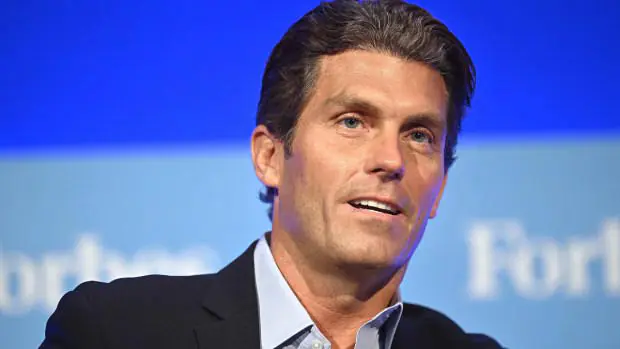
But the way that a more direct arch-rival, THE WRAP’s Ross A. Lincoln, reported this earlier this week clearly seemed to strike a few nerves that he couldn’t avoid interjecting:
Remote workers across Penske Media Corporation will soon be forced to make a major change to their lives, or lose their jobs entirely, as owner Jay Penske has ordered all employees to work at least 4 days per week at one of the company’s offices starting in October…Indeed, according to (Status owner and head writer) Darcy, an FAQ attached to the memo explicitly states that those who refuse will be eligible for severance benefits, indicating the company already expects there will be refusals.
The mandate also appears to affect not just staff working for the larger PMC but at all of PMC’s publications and brands. These include Variety, The Hollywood Reporter, Billboard, Rolling Stone, Deadline, the Golden Globes and South by Southwest. Many Penske properties do not require staff to work on site at all and employ people who live nowhere near Los Angeles, New York, Austin or Miami, where PMC maintains offices.
Representatives for PMC didn’t immediately respond to a request for comment from TheWrap.
Probably because they were all in a staff meeting.
And Lincoln did his best to interject what he perceives to be objective, conclusive research into his ra–er, report, dredging up an eight-month-old FORBES magazine from a contributor named Bryan Robinson, Ph.D., whose byline description remnds he’s the author of Chained to the Desk in a Hybrid World: A Guide to Balance:
 A new research study from Bospar, the “politely pushy” PR firm, finds that remote jobs are best for a business’s bottom line. Bospar partnered with Reputation Leaders and Propeller Insights to explore the impact of remote work.
Bospar commissioned Propeller Insights to conduct the groundbreaking December 2024 survey of 1,051 American employees. The findings reveal significant productivity and business advantages of remote jobs, showing that working from home delivers superior business outcomes while benefiting the planet and improving work-life balance. Key findings are below:
- 61% report being more productive working from home.
- 34% maintain equal productivity levels at home versus in office.
- 5% report lower productivity at home.
- 87.5% have established dedicated home work spaces.
- 81.4% report improved work-life balance.
A companion study by Reputation Leaders found significant business risks for companies mandating office returns:
- 73% of consumers would be less likely to purchase from companies requiring full-time office work.
- 63% would be less likely to apply for jobs without remote job options.
- 60% believe companies should encourage remote jobs to reduce environmental impact.
Companies enforcing mandatory return-to-office policies face clear risks to both employee productivity and market position,” states Laurence Evans, CEO of Reputation Leaders. “Our research shows that workplace flexibility has become a key driver of consumer behavior and brand reputation, with many Americans ready to vote with their wallets against companies that force office returns against employees’ will.”
I’m not even going to dignify Evans’ uppity statement with the kind of nuanced rebuttal that would usually probe exactly who those consumers are, how they were surveyed and how the questions were worded. My educated guess is that it was done online, used minimal (if any) counterbalancing representing what those respondents do for a living and whether they themselves are remote workers and were so before the pandemic provided the aha moment of the century for so many struggling and economically frustrated people.
Indeed, if my Threads timeline is any indication, plenty of those respondents were incensed enough by this Penske mandate that they yet again dredged up vitriolic defense of their freedom, citing everything from their issues with child care to the fact that they were hired as remote workers somehow meant to them they compromised on salary. And plenty of anecdotal testimony that would have made that otherwise stark Reputation Leaders survey at least a bit more digestible.
I don’t dismiss those kinds of issues are real and merit real discussion and collaboration. My most recent corporate employer Sony utilizes a concept steeped in Japanese culture called Kenko as a guideline for how it treats its employees. Their website devotes a section to mental health and wellbeing that was in place even pre-pandemic. I personally utilized many of them, including the free therapy. We even had several catered lunchtime presentations to announce new global initiatives. Kenko is treated very seriously at a successful Japanese company.
I’ve made my own take on this quite clear before, because this isn’t the first time this seminal discussion has reared its head at media conglomerates. Back in early 2023 we mused about how Disney’s draconian declaration that a renewed expectation to actually put on clean pants and tear one’s self away from a computer screen had been so traumatizing and triggering for its employees. I made it clear then and I’ll reiterate now that I’m strongly in belief of a hybrid approach with reasonable flexibility. I concede I worked for a company that catered to those with the kinds of legitimate issues that so many huers and criers are raising in the wake of Penske’s RTO. Were I in his employ, I’d be channeling my efforts into pressuring him to at least offering those kinds of services for those truly impacted rather than bitching and moaning that the unique freedoms that the pandemic offered up shouldn’t have an expiration date.
And for anyone who has indeed gone back to an office where they spent more time than not on their computers with only an occasional procedural meeting to break up the isolation and monotony, you’re more than entitled to push back on schlepping back. My last several months at Sony were spent in such a predicament, particularly after our department was put into the hands of an overwhelmed and detached superior who had minimal interest in anything I was doing or reporting and did his absolute best to make me uncomfortable and detached enough to want to resign. Now you know why I was taking liberal advantage of those Kenko benefits.
But for those who are so dug in on what they consider “work/life balance” privilege and think the kind of bullsh-t that Dr. Robinson posits as gospel, may I present some more recent findings from the WORLD ECONOMIC FORUM’s Shuvasish Sharma for you to parse while you’re on your Pelaton or walking your dog:
While fully remote workers report more engagement and enthusiasm than their in-office peers, they also experience higher rates of stress, loneliness and emotional distress. According to Gallup’s ‘remote work paradox’, the absence of daily social connection and navigating tech advance alone can take a toll, especially over time.
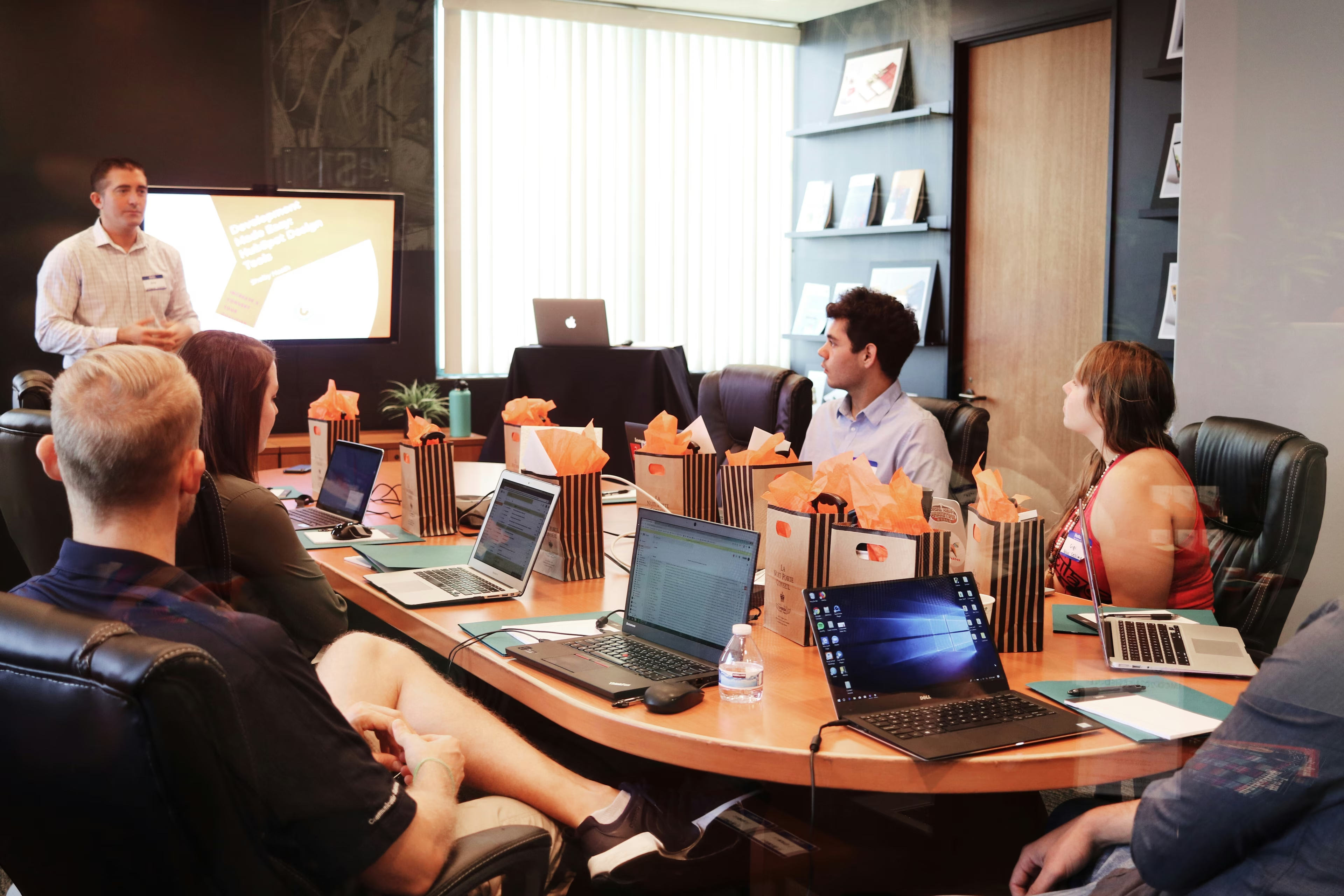 A recent survey of 25,000 Europeans found hybrid work best for psychological health and innovation, but the key is flexibility. McKinsey highlights six practices for successful hybrids, including clear norms, regular in-person time and building trust.
Call me a purist and a generational fuddy-duddy, but at least my eyes and ears are willing to consider findings from companies with the pedigrees of Gallup and McKinsey, let alone a survey with a five-figure sample size.
Bluntly, my feelings on this are admittedly more emotional. I didn’t often have the most harmonious home life during my professional career; I’ve never had the love of a family or even a pet waiting for me. My work connections meant the world to me; they provided me with a reason to live on many more challenging days. I know I’m not alone with such feelings. I never asked anyone to become their friend outside of work; whenever that happened it happened organically. Where I work now I’m aware those relationships exist among other employees. For a variety of reasons, there’s little hope I would ever be invited even to lunch. I operate in an ironic void of isolation despite my requirement to interact with people for a living. For that reason alone I miss what I once had.
I don’t think it’s much for anyone who is part of a team to at least occasionally show up in three dimensions and spend a little quality time interacting with folks like myself. I know I’m nowhere near as adorable as your pet and I can’t offer the comfort of a Stanley Cup filled with kombucha to make your work day go by any quicker. But what does it say about me when you don’t think I’m worth even a few minutes of your precious time at least a few days a week?
Maybe the way Jay Penske went about all of this is triggering. Maybe the fact that Lincoln’s skewed reporting included this closing nugget that perhaps reflected an ever deeper-seeded fear:
Penske also referred vaguely to so-called artificial intelligence, writing that A.I. is “driving unprecedented changes and challenges in our industry,” and, he added, “we are living through one of the most dynamic periods in media and publishing history.”
Sobering, perhaps, but indeed a reality. Maybe the best way for someone as marginally talented as Lincoln to maximize his chances for continued employment would be to show up in person on occasion to reinforce that he’s a better option than ChatGPT? Certainly articles like this aren’t moving the needle in his favor.
 And as a reminder, for as lazy and unproductive as the guy who was rummaging around those other Penske files may have been, at least he actually showed up at the office.
Until next time…