
If you happen to be one of the unfortunate many who have recently been impacted by layoffs at streaming-centric companies–or fearing you will be next when the next rounds are announced in the coming weeks–you may be at the point where you’re searching for some sort of rational explanation why this is happening. Look no further than TOOMUCHTV.com, whose proprietor Rick Ellis has been on a burner of a streak of late akin to that of his beloved Minnesota Wild. This week alone he’s covered several hot topics that when taken together go an awful long way to explaining why YouTube has effectively replaced TV as the default video destination, even for us seasoned folk that never thought that would be the case.
 Last night Ellis’ newsletter focused on the latest STATE OF PLAY study from Gracenote, a report that I’ve come to respect since it’s issued by a Nielsen subsidiary and is now in its fifth wave. With a sample size of 3000 spread across the globe and controlled for demographic skews, it’s one of the more trustworthy survey studies one can find. His hotter takes were provocative:
Streaming viewers are increasingly frustrated with the effort involved in finding something to watch, with more than seven in 10 saying they want a single guide covering programming across all their subscriptions…The report found that 72.3% of respondents would like one place to browse content across streaming services, up from 66% in 2025. The figure rises to 78% among viewers aged 18–24, a significant increase from 58% last year. The findings highlight a growing problem for streaming platforms as audiences contend with an expanding number of services, increasingly fragmented content libraries and multiple subscription costs.
This on the heels of a couple of reports he authored the day before as to how a couple of more forward-thinking services who haven’t announced layoffs current or impending (at least lately) are doing their part to address this:
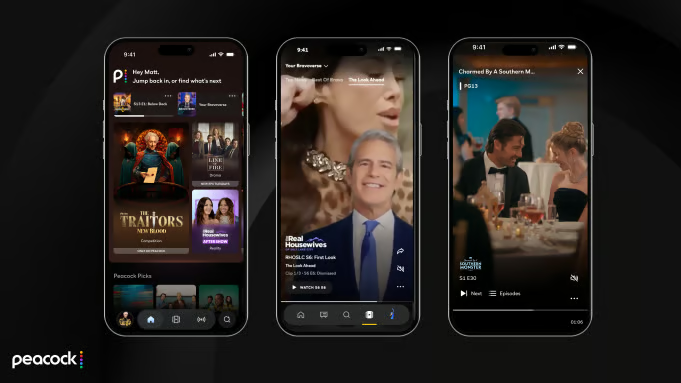 Peacock wants to become more than just a place to watch TV shows and movies. NBCUniversal is making a big push to turn its streaming service into an entertainment destination people will spend more time exploring on their phones…One of the biggest changes is an expanded focus on vertical video, the format made popular by TikTok and Instagram Reels. Peacock has already experimented with vertical viewing, particularly with live sports, but now plans to bring the experience to more programming, including live simulcasts of The Voice, NCAA basketball and golf.
Peacock is also making it easier to find something to watch. A new conversational AI search feature will let users search by mood, theme or even a general description of what they’re looking for, rather than having to remember a specific show or movie title.
That seems to be emulating the forethought that the braintrust at Tubi had engineered just before they lost their own internal battle for FOX’s favor in the wake of their closing on their shiny new toy called Roku:
Remember making a mixtape for a friend, carefully choosing the songs and putting them in just the right order? Tubi is bringing that idea to streaming, except instead of music, users can put together collections of movies and TV shows and share them with others. The free, ad-supported streaming service has launched a new feature called Mixtapes, giving viewers a way to create personalized playlists built around just about anything: a favorite actor, a particular decade, a movie genre, a mood or even a collection of guilty pleasures.
Users can create a mixtape from the new Mixtapes section on Tubi’s home screen. They can either describe what they’re looking for and let the platform’s AI-powered tools suggest titles, or build a collection themselves by searching for individual movies and shows.
If all of those chips that Jensen Huang has been hocking in between his extramarital affairs have done anything positive they’ve allowed a generation of frustrated consumers to literally take into their own hands what the gooey GUIs of the algorithm-driven platforms seem to have eschewed. People want immediate gratification but it has to be on their terms. Anyone who’s ever written or even spoken a wish list search into a search engine has already been conditioned to that being the first step toward finding it. The belief that a subscriber is either too lazy and/or stoned to take their platform’s recommendation blindly is becoming increasingly debunked. Not surprising, considering it’s from the same school of thought that once drove a researcher named Paul Klein.
The more seasoned of us familiar with audience research recognize that name from our college textbooks as the author of what was once considered to be the defining practice of the medium. His biography on THE TELEVISION ENCYCLOPEDIA explains for those of lesser vintage:
 In the 1960s, as the head of research at NBC,…Klein developed a theory of Least Objectionable Programming (or L.O.P., as it was generally known) to explain the behavior of audiences in the days when three behemoth networks ruled the television landscape. In a world of limited choice, viewers do not watch particular programs, he insisted; they simply watch television. Every day at the same time the number of television sets turned on is remarkably constant-regardless of what is on the air. Viewers do not select favorite programs, but settle for those they dislike the least in order to sustain the general experience of television.
But once independent stations began to mushroom, and subsequently cable networks were created, a viewer was no longer limited to satisfying their itch with simply whatever slop was being served up. Obvs that’s far truer today where a majority of viewing to anything other than breaking news or live sports is heavily skewed toward time-shifting. That’s a truth about specific programs, but it doesn’t speak to the human need for immediate gratification. When people are hungry, they have to eat. These days, that satisfaction gets increasingly filled by opening an app and clicking a few buttons for whatever discounted cuisine speaks to you first. If Peacock or Tubi can find ways to keep you engaged enough to stay in their walled garden to self-satiate, more power to them. Even if it’s the video equivalent of junk food.
Once again, Ellis delivered the receipts that back up such a conclusion, as this additional story from Wednesday demonstrated:
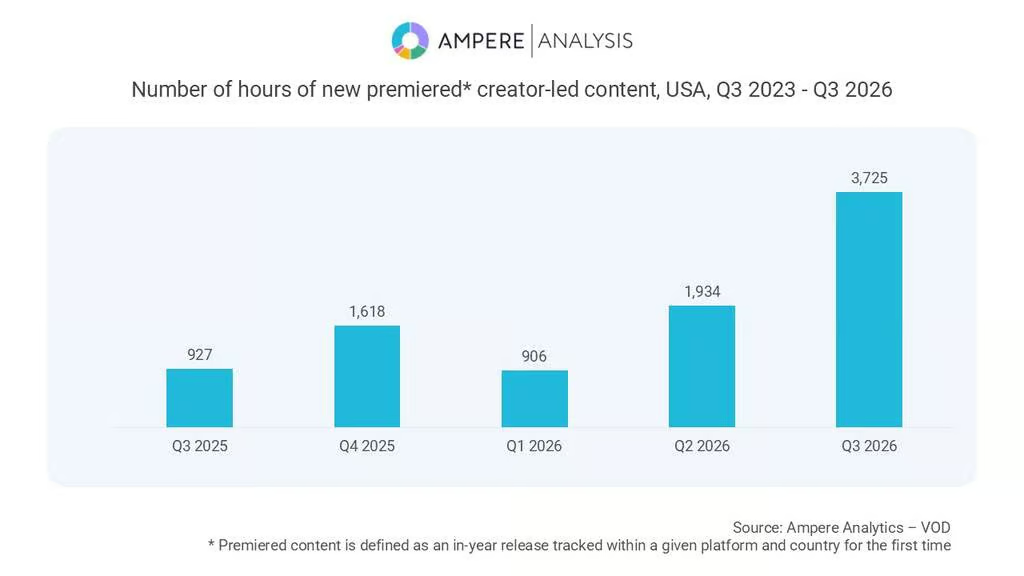 U.S. streaming services added more than 3,700 hours of premiered creator-led programming in Q3 2026, up from 927 hours a year earlier, according to Ampere Analysis’s latest research. Fox-owned Tubi accounted for more than three-quarters of the total.
Ellis also laid out a number of additional findings that are more than worth your clicking on to discover. It may not necessarily make your life situation materially better, but it should provide some immediate gratification for those otherwise seeking in vain some sort of sign from the universe that they’re still worthy, valuable talents.
Even our friend Paul Klein was able to find a second act once his theory was LOPped by others’–including the far more successful Brooklyn whiz kid Fred Silverman who ironically became Klein’s boss shortly after Klein went public insulting his decisions at what was then a top-rated ABC. Look what his biography went on to add:
He was a founder of the Playboy Channel in 1982 and served as president until 1984, when he left to create Hi-Life, a programming service designed to go beyond Playboy by offering sexually explicit X-rated films. When cable operators refused to carry the service, he criticized them and shifted his attention to an alternative form of distribution: satellites. In 1987 he founded Home Dish Only Satellite Networks, which supplied “sophisticated adult programming” aimed at hotels and the owners of backyard satellite dishes via such channels as the American Exxxtasy Channel and the Tuxxxedo Network.
Maybe there’s something to that immediate gratification thingy after all?
Until next time…