
Sure, plenty of TV shows have gotten cancelled in 2024, and many more arguably deserved to be. But to me, there were few that will–or should–be as fondly remembered as BLUE BLOODS.
If you’re not of a certain vintage or have an appreciation for good old-fashioned procedural cop dramas, you’re probably not someone who’s all that emotional about the fact that the show’s finale aired last night on CBS. Indeed, as THE WRAP’s Ronda Racha Penrice observed last night, it ended with about as much fanfare and surprise as when it premiered:
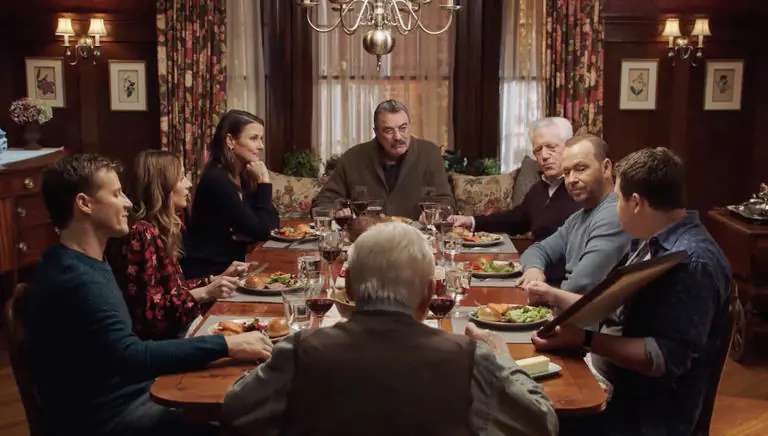 From the moment it premiered Sept. 24, 2010, and throughout its 14 seasons on CBS, “Blue Bloods” distinguished itself as more family drama than police procedural. Its series finale, which aired Friday, stayed true to that concept by honing in on a heightened case for the cop family involving a notorious gang leader joining forces with other gangs to orchestrate violent hits around the city in a play for amnesty, rather than a grandiose send-off or flashback-driven series reflection.
That may have been as much because the folks who had been most consistently associated with that episode, along with the 292 that preceded it, were apparently quite determined that episode 293 was not going to be the last. As VARIETY’s Emily Longaretta reported yesterday:
Ever since the news broke that Season 14 of the police drama would be its last, Tom Selleck, Donnie Wahlberg and more members of the cast have been vocal about wanting to continue. It’s been five months since filming has wrapped… but it hasn’t sunk in for either of them that the show is over. Wahlberg chokes back tears throughout the interview, as Selleck admits he’s not sure what’s next.
“I can’t figure out why they didn’t start streaming it, do 10 episodes a year. But I’m not the boss. Everybody wanted to come back. And I think with this cast, it would have been a gift for the audience,” he says. “I don’t make those decisions. I’m prepared to celebrate and commemorate this show, but I’m still getting used to it.”
They’re all still getting used to it. Filming the finale didn’t even feel real. The last scene filmed, ironically, was a funeral. But it was the second to last scene – the family gathering around the dinner table one last time – that had everyone in tears.
And it was those signature Sunday dinners that underscored virtually every episode that distinguished this cop drama from the myriad others that have been produced before and since, which, as Longaretta continued, is how someone with the storied track record of Selleck wound up with a return engagement on the network that launched his stardom more than 40 years ago when he had female Baby Boomers drooling as the dashing Thomas Magnum, a far sexier Hawaii-based private eye than either Steve McGarrett or Tracy Steele was. (As my bestie often says, if you don’t recognize those names, Google them.)
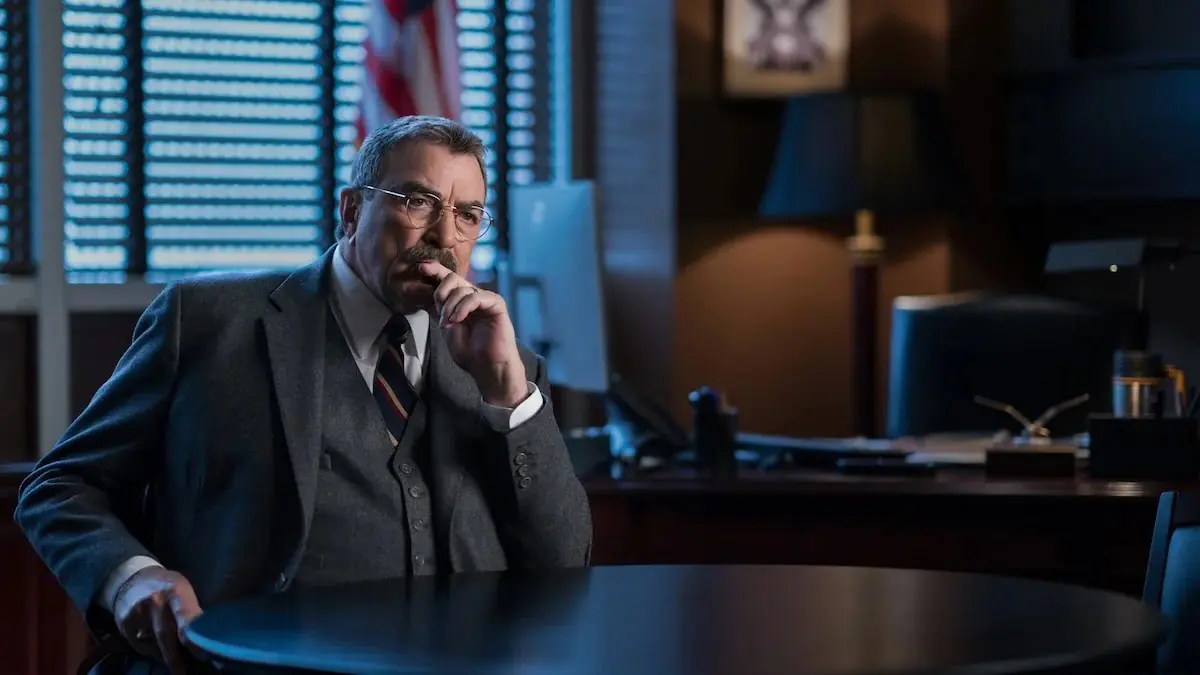 Selleck met Wahlberg once before filming the pilot episode in Toronto. The day filming began, he met Bridget Moynahan (Erin Reagan) and Will Estes (Jamie Reagan), and they were all set to be a family. It wasn’t easy – but one thing was clear: The Reagans belonged in New York City. So, it was time for everyone to relocate.
Selleck had made a commitment to his family in Los Angeles but agreed to travel back and forth. “It was worth commuting for 15 years every two weeks,” he says. The Reagan dinner scenes, in which every member would join together at the table, were extremely important to him; it’s a scene featured in every episode.
Through the years, many big conversations have happened around that table, both during filming and outside of it. “Blue Bloods” has been on the air through three different U.S. presidencies and is a show about a family of cops; of course, there have been conversations about politics. And some of the Reagan family members have opposing views.
“They don’t all meld with each other just because they’re family. I think there was always a respect,” says Selleck, who also believes in keeping his personal stance on politics to himself. “I can only answer for me but blowing your own horn about your own personal issue… why do you want to piss off half the country? We’re actors.“
Fortunately, this show had a champion that knew not only who Thomas Magnum, Steve McGarrett and Tracy Steele were, since he had been in the business since the days of the original HAWAII FIVE-O and HAWAIIAN EYE, let alone the original MAGNUM, P.I. If you didn’t happen to know who that was, the show certainly did, as ONE CHICAGO CENTER’s Cody Schulz observed last night:
It seems only fitting that after the show’s final scene came to a close and the credits began, CBS used the finale to pay tribute to a beloved member of the Blue Bloods family.
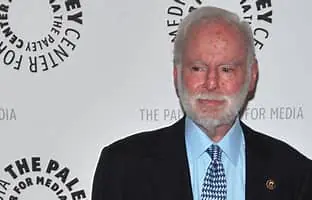 In loving memory of our founder and mentor Leonard Goldberg,” read the dedication card that ran at the end of the series finale, “End of Tour.”
The dedication card was designed to honor the late Goldberg, who sadly passed away five years back on December 5, 2019, at the age of 85. While his name might not immediately ring a bell among fans because he was not a member of the cast, Goldberg played a key role in creating the show we’ve come to know and love over the years.
Not only did Goldberg serve as an executive producer on the show across its ten seasons up until his death in 2019, but he’s also the driving force that led to the creation of the show. More than a decade before the show came to CBS, Goldberg had pitched the idea to CBS and he was the one who pitched Tom Selleck in the role of Commissioner Frank Reagan. As a member of the CBS Board of Directors, Goldberg was one of the biggest supporters of the show and it’s quite possible the show might not have found a home at the network and created a legacy as one of the best shows on the air.
And as Wahlberg expounded to Longaretta, he’s acutely aware he owes his own arc to them:
In 2010, CBS almost passed on the police drama. “They did 10 pilots that year and it was the last one they picked up, but also the highest testing one they did,” Selleck recalls, sitting across from Wahlberg for our interview. A large reason he believes it was greenlit – legendary producer Leonard Goldberg.
“Tom and Leonard were two titans in television. Sorry to embarrass you, Dad,” Wahlberg adds, looking at Selleck, who has played his father Commissioner Frank Reagan on all 14 seasons. “I think their reputations, talent and commitment to excellence got the show a chance.”
Not to mention the fact that you had decision-makers involved who actually understood and valued research as part of a decision-making process. A fact I personally learned from Mr. Goldberg himself when he was making the rounds around the lot upon his appointment as the president of 20th Century FOX shortly after I was elevated to the head of studio research. While his name was immediately recognizable as the one-time partner of Aaron Spelling on such classics as CHARLIE’S ANGELS, STARSKY AND HUTCH and yet another police procedural, THE ROOKIES, many of my colleagues were dismissing him as merely a figurehead being given a home by one of his prize pupils and biggest clients at ABC, studio chairman Barry Diller. Diller had been widely and perhaps justifiably described as a cutthroat and demanding executive with little loyalty or patience for colleagues he believed weren’t up to his level of intelligence. But he saw Goldberg as a mentor and savant who still had a lot to offer.
When Goldberg entered my office and gave me one of the firmest and warmest handshakes I’ve ever received, I felt like I had truly made it. I was shaking hands with a freaking legend! He then sat down in the small guest chair by the door entrance. He beamed and said “I started out in research myself. We used to create the overnight grids by hand and mimeograph them to get them into the executives’ hands by no later than lunch”. By then we had progressed to the point where computers delivered them electronically in a neat grid-like format and we had enough time to prepare a narrative for what had gone down–one we prepared via a typewritten and xeroxed memo. (It was THAT long ago.) Goldberg was impressed.
He then asked detailed questions about what our shows’ biggest obstacles, both numbers and sentinence-wise, were. He assured me his door would always be open and that I should consider myself a member of the studio family. I considered it one of the defining moments of my still-emerging career.
So I’m not surprised that what turned about to be the last major series Leonard Goldberg helped shepherd turned out to be his longest-running ever. It outlived not only him, but a fairly long-running remake of HAWAII FIVE-O. Not to mention dozens of other CBS dramas.
And the impact of how and where off-network shows could be sold must be considered part of BLUE BLOODS’ legacy as well. When it premiered, it was merely a stable and steady force in a less competitive time slot. It had been a long time since Friday at 10 PM mattered much; MIAMI VICE had been off the air for more than two decades by then. But as BLUE BLOODS’ audience stabilized through the 2010s and into the 2020s, not falling below 10 million average viewers until its 12th season, the balance of the industry saw erosion. For many weeks in recent years, particularly as obsessions with demographics that were fleeing broadcast television itself proved to be futile, BLUE BLOODS was among the top ten network shows.
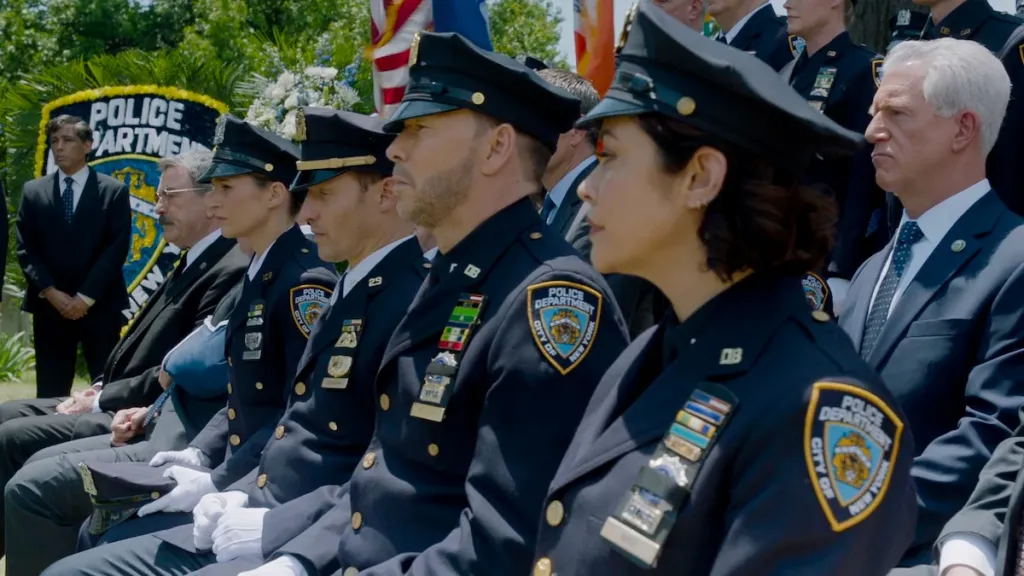 The show’s problem was that an overwhelming majority of those viewers were old. For a large portion of its run BLUE BLOODS had the oldest median age of any scripted network series. Even at a time when successful one-hour dramas were commanding record seven-figure per episode license fees from aggressive cable networks and even streamers, BLUE BLOODS was largely ignored. So instead, the Paramount sales force decided to sell the show wherever and however they could. It was simultaneously released in staggered rerun windows to several different broadcast and cable networks, local broadcast stations and even a struggling little business called Hulu. It has enough volume to merit its own FAST channel on Pluto, which is a priority business for the incoming Paramount Global management team. And at a time when demography takes a back seat to other metrics such as buying power and engagement, all of a sudden BLUE BLOODS’s value has appreciated.
While there are still discussions of spinoffs and companions, as is the Paramount way for everything even close to successful of late, from YELLOWSTONE to CRIMINAL MINDS to SEAL TEAM, despite the passion that Selleck and Wahlberg have the likelihood isn’t great. Indeed, Selleck is already committed to a new installment of his JESSE STONE movie franchise for the Hallmark Channel, an outlet where the fact he turns 80 next year isn’t that big a deal.
Besides, when one looks at the relative track records of all of those spin-offs, there’s a consistent trend of underwhelming performance even when critical acclaim is received. And the ability to produce enough volume to matter is all but gone.
Seems like we’ll have to be content with warm memories of how television success, and for that matter family, used to be defined. The next time I actually get to sit down at a Sunday dinner, I’ll raise a glass of something to Leonard Goldberg for helping me–and millions of viewers–remember that.
Until next time…