
Tonight in the legacy basketball capital of America (what, you never saw HOOSIERS?), Indianapolis, Indiana, NBA history could be made. The Oklahoma City Thunder are one win away from winning their first-ever title at the expense of the Pacers, who themselves have already doubled the number of Finals wins the franchise had prior to this season. No self-respecting Oklahoman would dare count the one the franchise technically won in 1979 as the Seattle SuperSonics, and unless you wanted a 20-pound salmon tossed angrily in your face at Pike’s Market, you wouldn’t dare bring tonight up to any one in the state of Washington, either.
1979 also happens to be the last time someone with a surname other than Buss wasn’t in control of the Los Angeles Lakers, the team that those Pacers lost all but one game of that lone previous Finals they had heretofore participated in. But yesterday afternoon that changed, and all but assured that no matter what happens tonight, or, for that matter, Sunday night should the Pacers force a seventh and deciding game back in OKC, this will be the seminal NBA story for quite a while. Per the hometown TIMES’ Dan Woike:
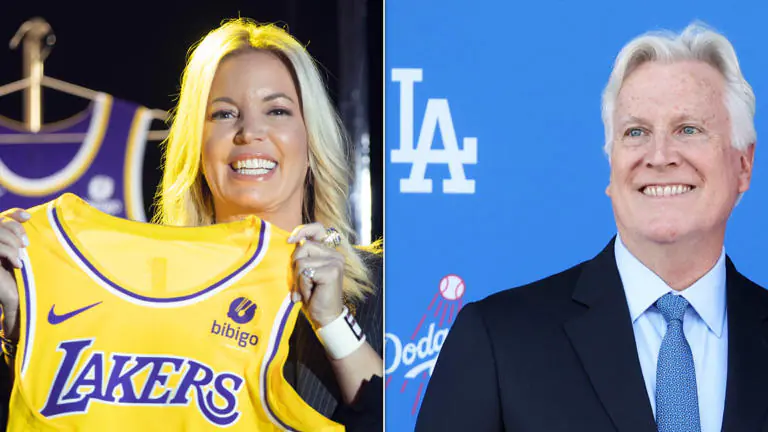 The Los Angeles Lakers, a family-run business since Jerry Buss purchased the franchise in 1979, will be sold to Dodgers controlling owner Mark Walter and TWG Global, according to multiple people briefed on the deal. The deal is expected to occur with the Lakers’ valuation being about $10 billion — a record for a professional sports franchise. Walter will now lead the city’s two premier professional sports teams. The sale will end family-run control of the Lakers, who have achieved incredible success — 11 NBA championships earned by some of the league’s most iconic figures, including Kareem Abdul-Jabbar, Magic Johnson, Shaquille O’Neal, Kobe Bryant and LeBron James — under Buss and his children’s leadership. The sale was viewed as a massive surprise in NBA circles.
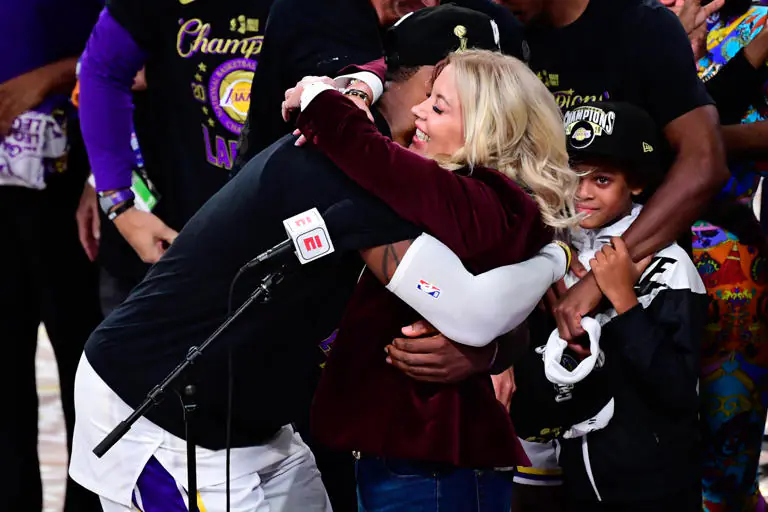 Perhaps that’s true in the circles that Wolke travels in, but true insiders would contend that the seeds were planted in 2021 when Walter bought a 26% minority share of the team mere months after the Lakers and his Dodgers both emerged as COVID year champions in abbreviated seasons that somehow both concluded in October. That bubble title, though slightly tainted, was a crowning achievement for Jeanie Buss, the accessible and adorable heiress that emerged from the family drama that dragged the team into the bottom reaches of the league in the wake of patriarch Jerry’s 2013 death, a period most Lakers fans would soon forget. The gambit of investing in an aging Lebron James, one of the few free agents that was open to taking on the considerable task of restoring the Laker legacy, paid off handsomely. But it became increasingly clear, particularly as this decade has evolved, that the road to another one keeping status quo would be increasingly difficult. As Woike more deftly noted:
In March, Bill Chisholm purchased the Boston Celtics from Wyc Grousbeck for $6.1 billion. Mark Cuban sold his control of the Dallas Mavericks late in 2023 for $3.5 billion. And earlier that year, Marc Lasry sold the Milwaukee Bucks for $3.5 billion. Grousbeck and Cuban were two of Jeanie Buss’ closest confidantes among league ownership.
And as YAHOO! Sports’ Vincent Goodwill observed, in this day and age, in practically any industry the concept of a family business is becoming downright archaic:
The teams that have changed hands over the last 10-15 years aren’t the mom-and-pop shops from the David Stern era. It’s venture capitalists, private equity, and even sovereign wealth buying into the Washington Wizards a couple years ago. The franchise valuations and operating costs are through the roof, which means you better have your own capital outside of the NBA. Nearly half the NBA’s franchises, a whopping 14, have changed hands since the 2011 collective bargaining agreement. That has given way to monumental television rights deals, and it has become more than trendy to own an NBA team. It’s become very smart business.
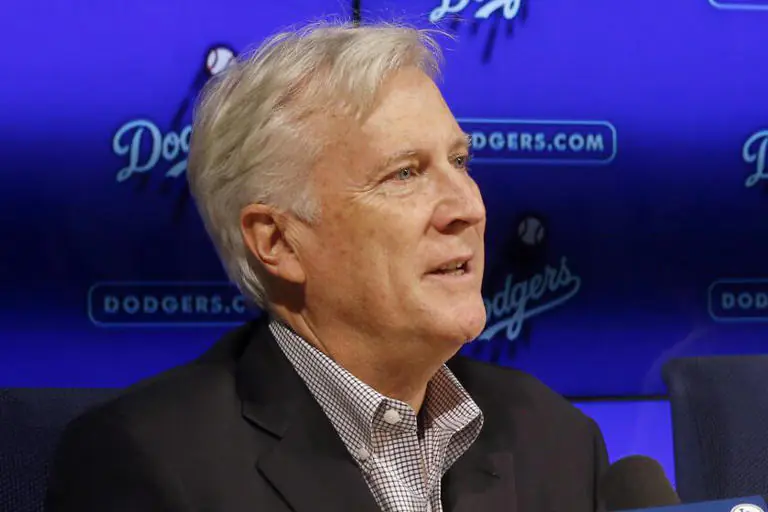 Walter has done quite well by any barometer, as Woike rattled off:
Walter was a relatively anonymous billionaire in 2012, when (Laker legend Magic) Johnson and (Turner Sports veteran Stan) Kasten were the marquee partners in the purchase of of the Dodgers for $2 billion, then the largest price paid for a Major League Baseball team.
Critics scoffed at the purchase price, but Walter and (TWG partner Todd) Boehly then negotiated a record $8.35-billion local television deal with Time Warner Cable. Sportico this year valued the Dodgers at $7.73 billion and estimated that they generated $1 billion in revenue last year, highlighted by the global economic boost they gained from signing Shohei Ohtani to a record $700-million contract.
The Dodgers also won the World Series last year, their second championship and fourth World Series appearance in the last eight years. In the 13 seasons since Walter and his group bought the Dodgers, the team has posted a winning record every year. In that same 13-season span, the Lakers have one championship, one NBA Finals appearance and six winning records.
And sorry, with all due respect to the good people both on the court and in the stands in Indianapolis and Oklahoma City, anyone who thinks the NBA wouldn’t rather have the Los Angeles market–especially a well-financed version of it–playing this month would be somewhat naive. Adam Silver’s spin notwithstanding, even with an exciting and competitive series these Finals have still not broken the 10 million barrier in any of the first five games, and it’s practically a statistical impossibility the average will do so even with materially higher numbers tonight and possibly Sunday. And there’s still way more money to be made with TV ratings than social media engagement.
So adding him and his resources to the mix can only be seen as a positive. If the precedent he set with the Dodgers holds, the assurance that Jeanie Buss will be around for the foreseeable future should be taken at face value–HUFF POST’s Kelby Vera noted that Jeanie Buss, who became the team’s president after her father Jerry Buss’ death in 2013, will continue her role as the Lakers’ representative on the NBA’s Board of Governors, sources told ESPN.
And while unlike baseball the NBA has recently instituted salary caps with aprons that set significant penalties for those that overspend in a manner akin to how Walter and company have with the Dodgers–adding assets like pitchers Blake Snell and Japanese stars Yoshinobu Yamamoto and Roki Sasaki to the payroll without batting an eyelash–Woike notes there are ways that his presence can help Buss add new arrows to her quiver to help attract new generation talent:
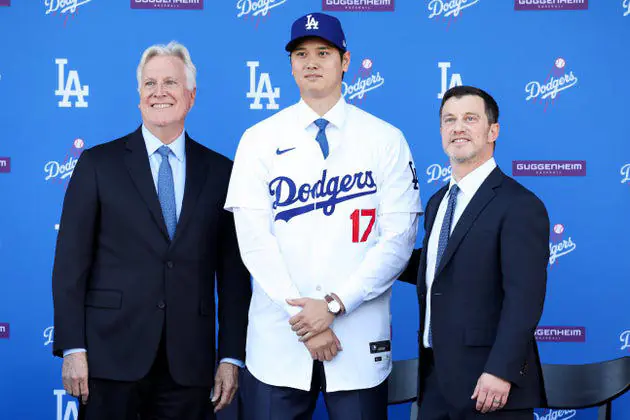 Under Walter, the Dodgers have not only raised their payroll to record levels but invested heavily in areas that they believe help deliver a winner, from a vaunted analytics department to dietitians for their major and minor league players and expanded clubhouses with the latest in hydrotherapy. The owners also have invested more than $500 million into renovating Dodger Stadium, adding modern amenities to a 63-year-old ballpark.
Anyone who set foot in the Clippers’ spanking new Intuit Dome, within walking distance of the still-standing Forum where Daddy Buss built the first iteration of the Laker dynasty, and compared it to the now outdated and name-reviled Crypto.com Center will tell you that some refreshing would do their downtown palace some good. Investing in modern technology to help keep James in his 40s and Luka Doncic healthy despite his work ethics will go a long way toward keeping them here and contributing–this summer they are both facing significant contract extension decisions that having someone like Walter in the house will at least minimize the chances that either could walk. And having all of these pieces in place will certainly make the Lakers an even more desired destination for future free agents and trade partners.
Besides, as tbe ironically named Goodwill added, the rest of the league is likely to see the Lakers in a much more favorable light given this nugget:
The average NBA franchise value is $4.4 billion, according to Forbes in November. The $10 billion number will only increase that, as well as the expansion that’s expected to kick off pretty soon.
And the rest of the sports world will also be thanking the likes of Walter for setting this new bar. The Dallas Cowboys are currently valued at just over the $10 billion number the Lakers just sold for. Don’t think Jerry Jones’ heirs aren’t making the same mental notes that Jeanie Buss clearly did, especially with Pops well into his 80s and the Cowboys’ Super Bowl drought now entering its 30th season. Hal Steinbrenner is probably a little more jazzed these days as well, knowing the $7.8 billion tag on his Yankees is likely to go up even further as well.
So having an eleven-figure number attached to a professional sports team sale may be headline-making news today. But the likelihood of it becoming more commonplace going forward is clear. And we may just get back to a point where the games themselves will be seen as a bigger story.
Until next time…