
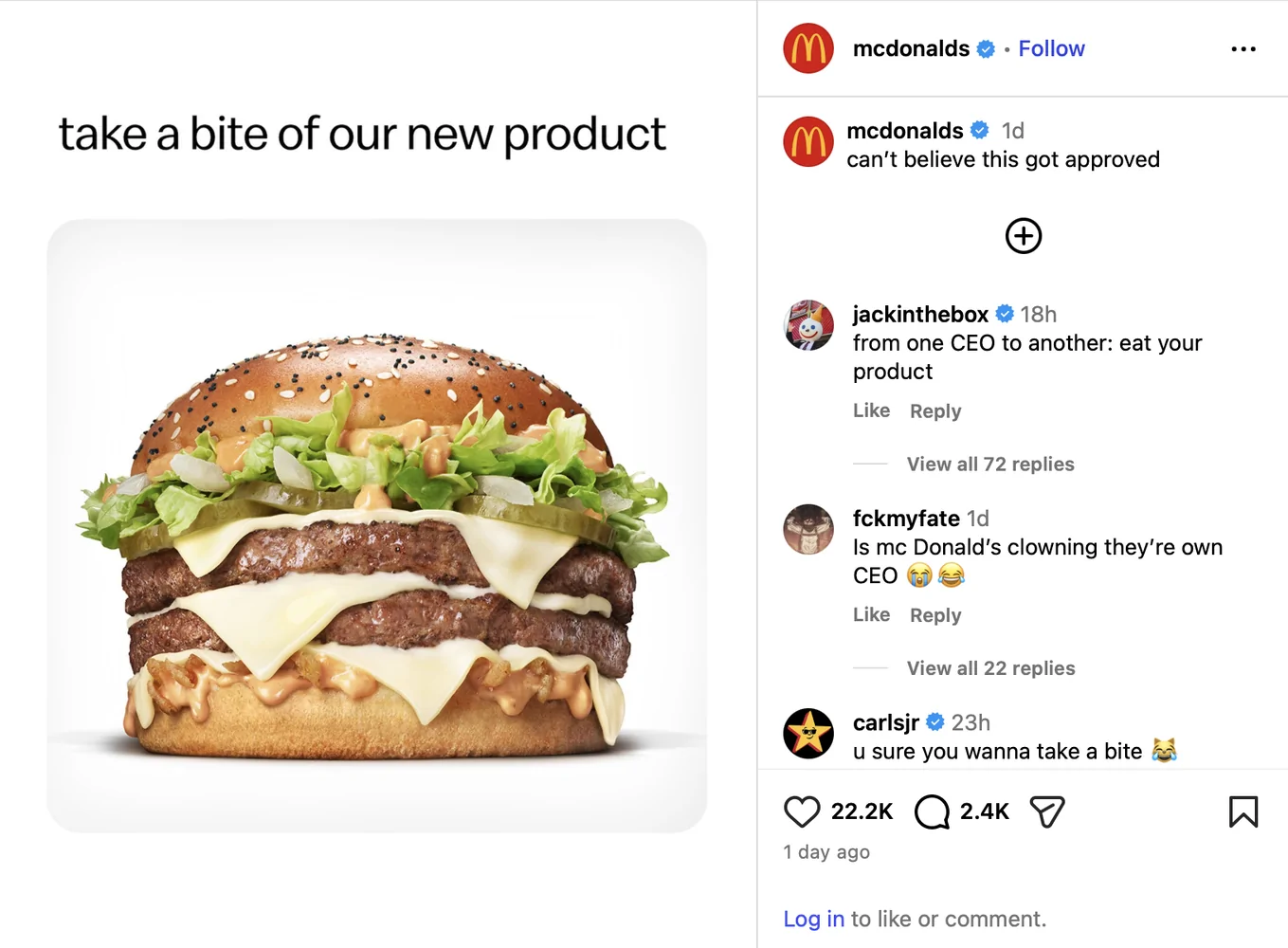
 I’m having yet another frustrating and exhausting week so far, and it doesn’t look like it’s gonna improve any time soon. So I definitely wasn’t paying attention to what in the world of fast food lovers was a seminal moment earlier this week when McDonald’s technically introduced what had supposedly been a huge European hit, The Big Arch, to the U.S. at large. But thanks to my buddy’s raging hunger attack that demanded I drive through what turned out to be a early test store in my old neighborhood I already had the opportunity to try one for myself. It pretty much left me with the same end result that most of the other stuff on its menu does these days–a half-hearted satisfaction going in, and regretful and quite odious reactions going out. Thankfully, my buddy was generous enough to pick up the tab, so I didn’t have buyer’s remorse to boot.
But apparently the rest of the free world is now weighing in; a quick Google search comes up with literally hundreds of influencer reviews, and I haven’t even gone down the rabbit holes of Instagram and Tik Tok. They seemed to take their lead from the current head of the company who has apparently gone mega-viral by accident by what is being ridiculed by many marketing experts as a backfire almost as powerful as the one his burger caused with me. Witness the nuanced take from FAST COMPANY’s Sarah Bregel that dropped earlier this week:
(I)n an Instagram post that’s blowing up the internet, company CEO Chris Kempczinski appears less than thrilled to be eating one himself.
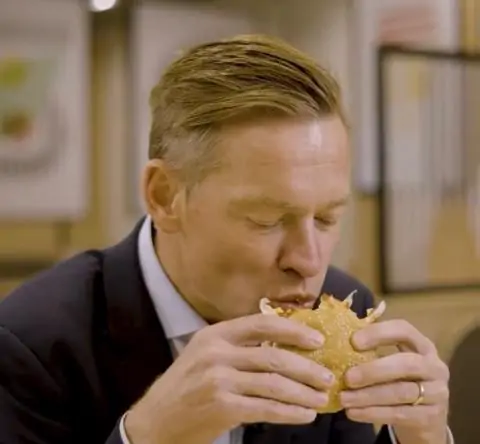 “This is something we have tested already in Portugal, Germany, Canada,” Kempczinski tells viewers. “I love this product. It is so good. I’m going to do a tasting right now, but I’m going to eat this for my lunch, just so you know.” After the CEO introduces the burger, he comments on how big it is and wonders “how to attack it.” Then he takes one bite, which users have called small enough to call Kempczinski’s genuine enjoyment of the burger—which he repeatedly refers to as a “product”—into question.
The video was posted to Kempczinski’s Instagram account a month ago, but found new life over the weekend on platforms like X and TikTok, with many users wondering if it’s “intentionally cringe” and saying that Kempczinski looks “uncomfortable” and “like he’s gonna hurl.”
“Dude’s 1000% vegan,” one X user commented. “It’s giving Squidward trying a Krabby Patty for the first time,” replied another. “Asking this guy to eat a McRib is going to be like watching an episode of Fear Factor,” remarked one X user.
Other users leveled more substantial business criticism. “Going direct only works when it’s authentic,” one user wrote, before listing other issues with the communication. “Really kills the mood if it feels like the CEO’s blinking in Morse code.”
And to that point, let’s just say that I’m seasoned enough to know how influential other CEOs have been in endorsing their–ahem–product.  Frank Perdue seemed to really love his chicken. Tom Carvel made an ice cream cake mold that doubles as both Whale and Santa a demand product in my house.
 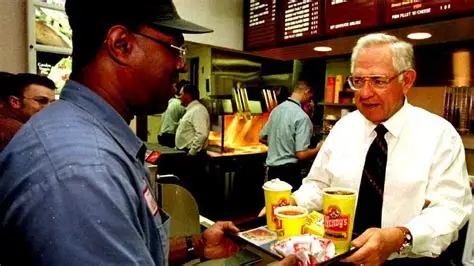 Dave Thomas actually seemed to really like the hamburgers named for his daughter, cringe though that thought may be.
But as far as the other “criticism” goes, I tend to take my leads from folks far more qualified than rando posters to Elon Musk’s cesspool. And one such shining example that I trust implictly is what’s be offered from my former Sony colleague Ann Glenn, the self-titled “URL Girl” whose impressive resume also includes stints running social media efforts at Warner Brothers and WGN. And her nuanced take that she shared on her LinkedIn and Substack feeds is arguably worth your time and attention more than a Big Arch itself:
Unpopular opinion: The McDonald’s CEO burger video might not be a mistake. It might be the strategy.
 Most people are reacting to how uncomfortable it feels. But my take might be a little different.
Right now, rage bait is one of the most powerful engagement drivers on social media. We see it everywhere: posts designed to trigger people into correcting something, arguing with it, or reacting emotionally.
• “Prove me wrong” posts
• intentionally bad cooking videos that waste food
• outrageous relationship ultimatums on TikTok
• absurd political opinions
• people deliberately breaking common, unwritten social rules
The internet is wired to react to things that feel wrong.
So here’s the interesting part. If the CEO had posted a normal video happily enjoying the burger, it probably would have passed through the feed unnoticed. Instead, the awkward bite triggered thousands of comments, stitches, memes, and reaction videos.Then the original video was taken down, but not before it had already been downloaded, reposted, and shared everywhere. And now, despite all the criticism, everyone knows McDonald’s has a new burger.
And as an equally auspiced commenter with the cryptic name David B.W. noted in his observations, once again actual numbers back up her take:
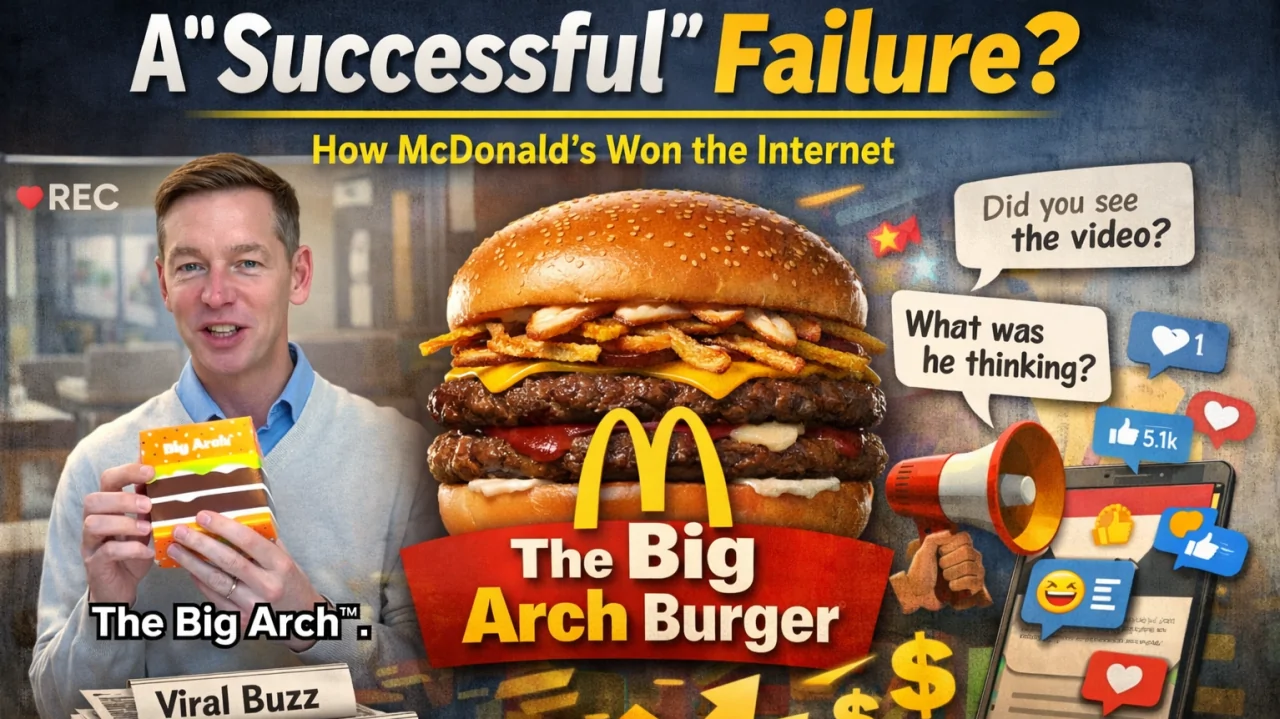 The clip surpassed 4.5 million views, earned coverage across every major outlet including Fox News, NBC, TMZ, AdWeek, Fortune, and Crain’s Chicago Business, and even prompted Burger King’s North America President to post his own response video – a competitor essentially gifting McDonald’s even more earned media.
And notably, the vast majority of those conversations don’t damage the brand. They humanize it. They create relatability for one of the largest corporations in the world. That’s extraordinarily difficult to manufacture, intentionally or otherwise.
And think about this, doubting Thomases. Nowhere in this campaign, intended or otherwise, did McDonald’s offer any sort of financial incentive to try it or freebies to those who felt compelled to weigh in. Their heavy-up campaign–and trust me, I’ve watched enough sports this week to know this cold–revolves around its $5 McValue meal combo for its McChicken, 4 piece chicken nuggets, fries and a Coca-Cola in a glass the chain hasn’t used since I was a kid. The last time I succummbed to that temptation my stomach responded almost as well as it did to my Big Arch experiment.
Think about how many $9 (or higher) burgers they sold to those who might have visited for an actually affordable “meal” that they otherwise probably wouldn’t have sold had Kempczinski’s de facto spit take not been, as so many of those naive eager-beaver millennials that Ann and I tolerated would crow to us, “trendinggggggggg”. The cost-benefit analysis would seem to weigh heavily in his favor.
And while I won’t likely be repeating my one-off indulgence any time soon since I’m hardly the target demo even if my compromised guts were more cooperative, I’m of the belief that a significant amount of those that try it will come back for more. If nothing else, it’s nowhere near as spicy or hot as the most recent fast food trends have been. You won’t catch me even sampling something like Hot Honey Snack Wraps or Ghost Pepper Wings in my lifetime. That’s about as ringing an endorsement as I’m capable of giving. But maybe you can stomach this better than moi. If so, remember folks like Ann Glenn already knew that you would.
Until next time…