
I am often forced to chortle at some of the degree of consternation that many current media pundits eschew when they lament and chastise the degree of what they see as data manipulation by various streaming services in their attempts to make it seem like their platforms are having more success and impact than they are. Recently, THE TOWN’s Matthew Belloni conducted a telling and insightful conversation on his Spotify podcast with Bloomberg’s Lucas Shaw, a frequent guest, where they justifiably took Netflix’ Chief Content Officer Bela Bajaria to task for taking a victory lap when she offered at a recent industry conference that she deserved praise for data transparency, particularly at a time when writers (and, short of a miracle, soon actors) are demanding more complete information to be better informed as to exactly how much they are being shortchanged by these platforms for the actual popularity of their work.
To be sure, for a little more than a year Netflix has provided via its website a weekly set of Top 10 rankings, both for the most recent week and over a period of time, both globally and territory-specific, that is based on its massive subscriber database, reportedly 58 million U.S. and 230 million global households. Unlike Nielsen, Netflix’ data includes all devices, not just connected screens, and is providing such data in a timely manner, unlike the ridiculous holdback of several weeks that Nielsen insists is necessary to provide what they contend is a more accurate lens into cumulative viewership, not merely the immediate impact of a recent drop. Netflix has provided the ability to at least something on both counts.
Well, yesterday, as if on cue from Belloni’s throwdown, Netflix’s latest data dump included a number of game-changing alterations that trade publications touted, including THE WRAP’s Kayla Cobb’s terse report:
Netflix has changed how it measures its top shows and movies. Using these new metrics, the Jenna Ortega-hit “Wednesday” has overtaken “Stranger Things 4” for the first time when it comes viewership. “Squid Game” still ranks No. 1 across all English and non-English shows and movies with 265.2 million views.
 That change, while welcomed, isn’t that significant, as it merely adds what most good researchers have already done on their own–effectively add a demoninator to an equation that artificially weights the impact of content with more and/or longer-length episodes as being an indicator of worth. For the most part, these changes didn’t impact rankings except in more exaggerated cases such as the one cited in the writeup by VARIETY’s Joe Otterson. You can see that seasons shorter-0rder shows with significant global popularity like LUPIN and ELITE rank significantly higher in total views than they would when compared to shows like MONEY HEIST and ALL OF US ARE DEAD. (No doubt, statistics that certainly helped globalist Bajaria’s internal star to shine a bit brighter).
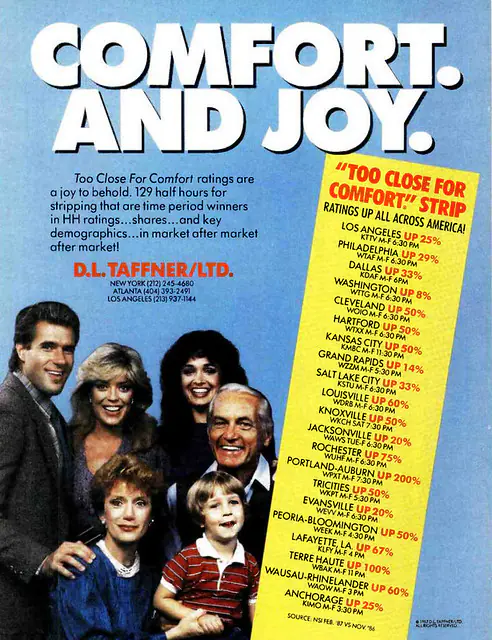 In the late 1980s, dozens of syndicated sitcoms competed for time slots and back-end viability among numerous aggressive studios and distributors. We’d use whatever angle we could to somehow make our shows seem more successful than fine print would allow. We’d quietly intermix competing ratings services and secondary ratings measurement periods to make our ads more inclusive. We’d play with font sizes in our qualifiers to make the necessary asterisks as unobtrusive as possible. I distinctly recall one particularly competitive year where I was able to somehow make the god-awful syndicated revival of 9 TO 5 number one in some multi-market mash-up based on a limited number of markets, concurrent with ads that proclaimed competitors number one in national rating and/or momentum over a somewhat similar period. And we’d all be able to get away with almost anything by adding an umbrella disclaimer.
 But as for as much as a step in the right direction as Netflix might like us to believe they took, I still wonder why they are arbitrarily stopping at 91 days. Yes, there’s ample evidence that long-tail viewing occurs on deeply populated streaming platforms. Every time data has become available that can reflect it, the industry has taken advantage of that to make numbers bigger. When Nielsen began releasing time-shift data as DVRs became more prevalent, “live-plus” data became the barometer that advertisers began to accept. Today networks all but disavow any overnight ratings data as irrelevant, increasingly moving to what is now a default of “live plus seven days” as a minimum. Some networks revisit season premieres after a month, touting “live-plus-30s”. When NBC slotted in a premiere episode of SUPERSTORE just after Thanksgiving of 2015 ahead of a much later-scheduled season, one that was initially optimally scheduled behind a high-rated episode of THE VOICE and in effect served as a barker over time, at the following spring’s upfront its veteran research czar Alan Wurtzel touted “live plus 119 days” data to demonstrate how great the network’s sitcom strategy was. Alan was very much a presence during our era of truth-stretching; so for as dismissive as one can be as to the relevance of any four month long tail viewership might be to anyone other than the producers of SUPERSTORE. he nor his network were incorrect.
 For example, Season 1 of “Wednesday” has an estimated 252.1 million views based on 1.718 billion hours viewed in the first 61 days of availability divided by its 6 hour, 49 minute runtime. This does not mean that 252 million people finished the series, however, nor does it account for anyone who rewatched within the viewing window. It was reported earlier this year that Netflix has a subscriber base of 232.5 million.