
You wanna know how to get my attention? Do something that involves my real hometown of Flushing, New York. The one that provokes the punchline “Good Idea” when one asks what one thinks of it .
During the summer, between the Mets and the U.S. Open, there’s ample reason to have a least of smattering of pride–even coming off a Mets season as unsuccessful as this one. Once October kicks in, not so much. And in recent years unless one is truly craving the best damn kosher pizza in New York City (shout out to Shimon’s!) or world-class Chinese food between the gloomy weather and the decaying roads and housing that haven’t seen updates since I first left you can pretty much have it.
I kinda suspect Awkwafina and I are sympatico with those feelings, only she’s actually in a position to do something about it. She was born Nora Lum, a scion of what to families like mine was restaurant royalty. I waxed nostalgic about our “connection” when she was in the midst of her previous two streaming projects, including her wonderfully sardonic Comedy Central series AWKWAFINA IS NORA FROM QUEENS that was filmed in many Flushing-adjacent neighborhoods. What we got there was a fictionalized version of herself with actors playing her influential and beloved family members. In her latest effort, AWKWAFINA: THE UNLIKELY COOK, we get the real Lum family and, as Refinery 29’s Rachel Choy wrote on the day the first two episodes of this dropped on Apple TV, it results in an even more engaging journey:
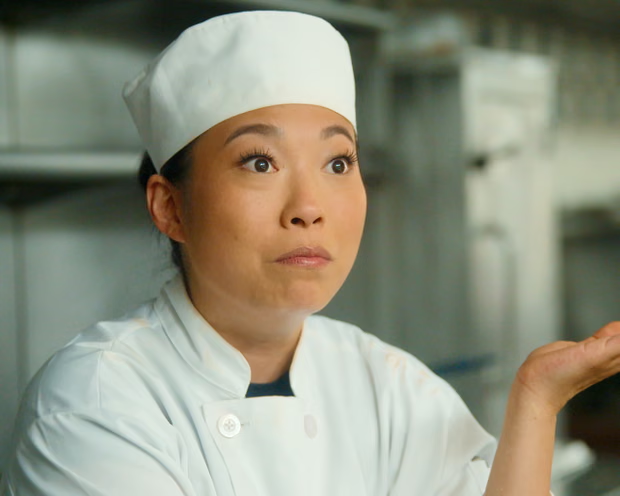 Her new show, Awkwafina: The Unlikely Cook, follows the comedian as she attempts to revive her family’s Cantonese restaurant, Lum’s, in Flushing, New York. And while it’s definitely played for laughs (she famously can’t cook and has no culinary skills), there’s a deeper reason for her foray into Chinese cuisine. The Asian-American actor has both Chinese and Korean heritage and is extremely close with her grandmother, who helped raise her. In a way, this entire journey is a love letter to her grandmother, her father, and their Chinese culture.
“There’s something extremely tangible and present about [food], while also feeling extremely nostalgic and also full of something bigger than us. I think it’s the only thing that you can consume that is a part of you,” Awkwafina tells Refinery29 Australia. When the Crazy Rich Asians actor first started her culinary journey, she didn’t feel like she could speak about food with authority, but soon realised the topic was a “great equaliser” of people. “If we can eat, we can talk about food,” she declares.
THE ASSOCIATED PRESS’ Mark Kennedy pointed out a few more reasons to join her:
Her family ran Lum’s, an iconic Cantonese restaurant in the New York borough of Queens that closed in the 1990s after four decades. Awkwafina’s plan to reopen the restaurant — as a pop-up for one night — sent her across America to find dishes to honor her past: To Texas to do her own twist on Lum’s barbecue spare ribs, and to Hawaii for a pupu platter.
Martin Yan, the first breakthrough Chinese TV chef, teaches her how to make chicken chow mein, and she learns to make Peking duck in San Francisco, first carefully plucking out the feathers by hand. “I love giving ducks Brazilians,” she jokes on the show.
The mission was to do something that would make her family proud, especially for her father and grandmother, who helped raise her when her mother died young.
I remember discovering Yan when his daily series was airing on all of things Canadian daytime television (Vancouver’s pretty damn close to Flushing for great Asian food) at about the same time I was finally in a position to treat my family to an occasional splurge at Lum’s. It was a tad pricier than our neighborhood joint that cherished my return from college knowing damn well my family’s bill was going to double, but well worth it. My dad lived for those barbecue spare ribs and I have a hunch he probably would have salivated over the version that she and fellow CRAZY RICH ASIANS star Jimmy O. Yang learned how to cultivate while traveling deep in the heart of Texas during one of the second episode’s more engaging moments.
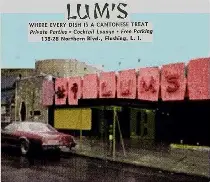 For me, nothing will be more connective than the emotional trek Awkfafina and her dad Wally–who I distinctly remember beaming when my usually quiet dad raved about his spare ribs–took to 138-28 Northern Boulevard, a few steps due east from when Main Street literally ended and where the Q 44 bus I rode in my youth would pass by on its way into the pricier areas of Flushing and the bowels of the Bronx. It’s an office complex now, as Wally explained, and for me a sobering reminder of what has become of our collective memories. They actually wound up schlepping up Main Street to the New World food court that has now become the destination for discerning Asian foodies around the Tri-State area. I discovered that when my dad was lying on his deathbed and I was parking in the nearby long-term lot to catch the 7 train into the city for work meetings. Their reaction seemed identical to mine. Great, but it’s not Lum’s.
Those without such specific connection will likely be way more in love with the first episode’s real scene-stealer. THE GUARDIAN’s Lucy Mangan echoed my thoughts:
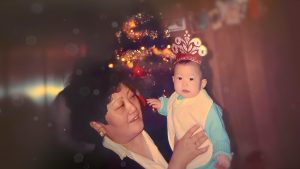 Her grandmother, Powah Lum, is 91 in the show, and although she doesn’t leave the house much, is still a force to be reckoned with. When Nora asks why Grandma didn’t teach her how to cook, Grandma has a simple answer. “Because you’re lazy.”
Choy added a couple of other reminders that had me chuckling:
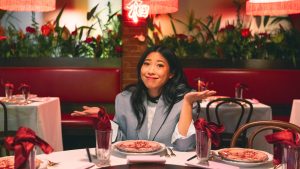 Grandma Powah sadly died just after filming, but she makes it to the opening night of Nora’s pop-up homage to Lum’s restaurant (“She’s a paid actor,” Nora tells customers, “but it means a lot”), with its walls lined with family photographs and menu full of the old favourites with modern twists. Grandma is a hard taskmaster, so the entire place waits with bated breath when Nora asks if she liked the food. “I ate a lot,” says Powah. “I am proud of you,” she says as she leaves. “All the time.”