
I fall into the demographic category where I arguably not only should be watching more PBS, I actually know what PBS is. I actually remember when it was first created, when the upbeat classic music of New York’s (well, at the time, Newark’s) Channel 13 was replaced by the synthesized tones that identified the network, which as the ever-trusty Wikipedia reminds began operations on October 5, 1970, taking over many of the functions of its predecessor, National Educational Television (NET), which later merged with Newark, New Jersey station WNDT to form WNET. In 1973, it merged with Educational Television Stations.[21][22][23]
 And years ago, I indeed landed on it a lot more often than most. My sister was a SESAME STREET and ELECTRIC COMPANY child; an impression etched enough into her psyche that the only TV she encouraged her own children to watch were PBS Kids staples like ARTHUR and THOMAS THE TANK ENGINE. She even spent some time as an employee of WNET, a subject that these days only gets passing mention in her household. And during my pre-cable college years the Syracuse PBS station provided me necessary counterprogramming options in a market yet to see an independent station–like many of its sister stations, it built on the success they had in their first network years with importing MONTY PYTHON’S FLYING CIRCUS to treat viewers to entire nights of British comedy–to this day I can still rattle off the schedule that featured FAWLTY TOWERS and THE TWO RONNIES. When I got to Los Angeles I got to know the fine team at KCET, housed in beautifully classic Hollywood studios that were the envy of my colleagues who were stuck with a cookie-cutter modern facility. And yep, when I could I coughed up contributions that got me plenty of tote bags–especially during pledge drives when the works of Ken Burns would be showcased.
Burns’ brilliant documentaries, defined by gorgeous still graphics and top-tier celebrity narrators, have been a staple of PBS for 35 years, and last night his latest effort debuted nationwide, an event which THE WRAP’s
 Sparking debate along the way, Burns has covered everything in America’s history from celebrating our national pastime in 1994’s “Baseball” to the otherworldly design that is our national parks in 2009’s aptly titled “The National Parks: America’s Best Idea,” even to the rebellious nature of our homegrown music in 2019’s “Country Music.” Now, 35 years after his career-defining portrait of a nation divided in “The Civil War,” Burns returns to the conflict that began it all with “The American Revolution,” a sweeping, six-part PBS docuseries that feels like a confrontation of how our country’s founding ideals were born, and how they continue to haunt us in a multitude of ways.
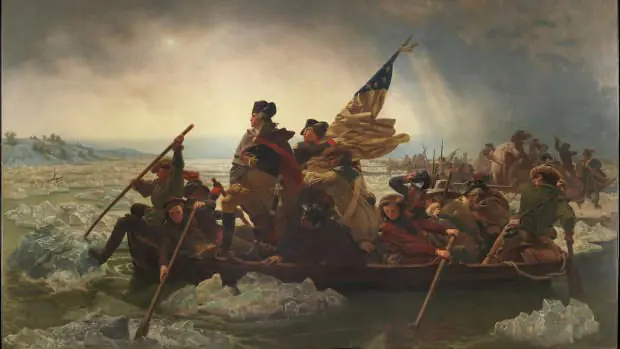 Premiering in time for next year’s 250th anniversary of the signing of the Declaration of Independence, “The American Revolution” bears the familiar hallmarks of Ken Burns’ style. Geoffrey C. Ward, a Burns staple, provides the richly textured script as narrator Peter Coyote anchors the story with calm gravitas. Oscar-winning performers Kenneth Branagh and Tom Hanks join a cast of voice actors, including Josh Brolin, Claire Danes and Matthew Rhys, to bring to life the letters, speeches and diary entries of the era. The result is an emotionally charged and meticulously detailed account that is deliberately slow-paced.
Watching it as a welcome relief from a remarkably dull Sunday night football game and a surprisingly tepid entertainment slate brought back warm fuzzies about how much I enjoyed Burns’ previous efforts, and how smart I felt after watching it. But the fact is that his support system has eroded greatly since those halcyon days. KCET is no longer a PBS affiliate and it has moved out of those glorious studios. Almost poignantly, it has most recently been home to the Church of Scientology. And as we’ve previously mused, PBS, and for that matter all public media, is more challenged than ever. A thin-skinned administration obsessed with eliminating what they have perceived is the leftist-leaning and sadly personality-devoid remnants of the once-groundbreaking PBS NEWSHOUR has chosen to gut funding for it and the local stations that often provide far more crucial lifelines than mere counterprogramming, especially in rural communities otherwise devoid of any local media of any kind.
I’ve not been particularly sympathetic of the current national PBS management who continue to ignore the reality of marginal ratings and refuse to sacrifice a polarizing program that they’ve not been able to defend draws enough from the omnipresent “viewers like you”, thus jeopardizing the production of undeniably brilliant and, indeed, donation magnet content like Burns’ series have proven to be. Which means the timing of THE AMERICAN REVOLUTION is ideal not only as a signpost for remembering our semiquincentennial but as a beacon for the possibility that public media might just survive for at least a brief part of the next 250 years ahead.
 And all that was not lost on the staff of one of the few other things I felt was worth watching last night, the 12th season finale of LAST WEEK WITH JOHN OLIVER. Oliver and company devoted the majority of that show to bring to light the plight that these stations are facing, using their own signature in-depth compiling of a variety of sources (as noted, many PBS stations have contributed to previous shows’ themes) to underscore exactly what a crossroads public media is facing. DEADLINE’s Natalie Oganesyan took note in her piece from last night:
The late-night host(‘s) main segment of the night (was)dedicated to government-funded free and independent public media, which has since been gutted by the Trump administration. Toward the end of the…episode, Oliver announced the show’s first-ever auction — with the help of guest Joel McHale — in support of public media, which will last until Nov. 24 and includes memorabilia for sale like a gigantic bronze cast of Lyndon B. Johnson’s testicles, Russell Crowe’s jockstrap from Cinderella Man and a Bob Ross original painting “Cabin at Sunset.”
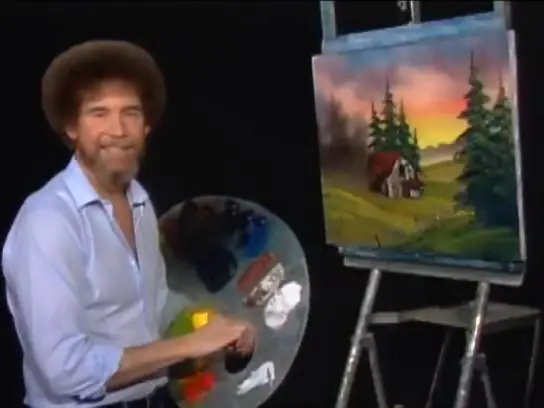 And as of this writing, it looks like the fund-raising efforts of the hastily compiled JOHNOLIVERSJUNK.com will bear significant fruit. The Ross painting alone has a top bid of more than $800,000, and there’s roughly another $400k that’s already attached to the other 63 items up for grabs. A little out of my league these days, but for the kinds of SES homes that Burns tends to attract, there’s likely something in this array that could be worthy of your tax deductible dollars. If nothing else, they’ve addressed one of my nitpicks about the quality of swag.
Until next time…