
Throughout my career I’ve been blessed with top-down support from the various chairpersons and CEOs I’ve had the opportunity to work with. Sometimes that didn’t sit all that well with the more thin-skinned folks that I actually reported into, but the nature of my responsibilities often put me into direct contact with their superiors and often they would get comfortable enough with me to eliminate the middle man when they would seek out my take on the information that ultimately determined their fates as well as ours. And in a world as cutthroat as the one I navigated being seen as an asset by the ultimate decision-makers was as close to job security as I was able to manifest. I certainly wasn’t golfing, clubbing,or sleeping my way to the top–or even the middle.
 So when I first joined the Sony family via Game Show Network I was fortunate enough to make a connection with the network’s president, David Goldhill, who I quickly learned was anything but a fan of game shows. But he was a huge fantasy baseball junkie and he knew many of the big wigs who I’d regularly beat out in our complicated and juvenile leagues, so he’d often invite me up to his suite for one-on-ones that were typically about 10 per cent network related and 90 per cent focused on whether or not to pick up a flash in the pan rookie on waivers. He also had a iron-clad bond with his boss, Sony CEO Michael Lynton. Their wives were even closer; frequently shopping and vacation galpals. I eventually grew comfortable and close enough to Goldhill where I could ask him about rumblings of turbulence and change based on rumors we’d pick up on from our corporate brethren about their overreactions to controversial shows we’d greenlight that would inevitably sift down to my gossipy colleagues and cause me outsized stress. He would laugh it off and said “All Lynton cares about is if we hit our numbers–he couldn’t care less about all that other crap. The man has no personality. Now, about that Tampa Bay closer…”
The few times I crossed paths with Lynton directly once I moved over to the Sony side proved Goldhill’s point. Unlike the more mercurial chairmen I had previously known–not to namedrop, but they included outsized personalities like Barry Diller, Rupert Murdoch, Ted Turner and Haim Saban–Lynton was quiet, aloof and snarky. He specifically was not all that keen on the guy that recruited me to his team, Steve Mosko, so the only time I even dealt with Lynton was the ever-so-brief period he insinuated himself in the TV business after Mosko’s ouster, which was accelerated by the revelations from many of the e-mails he authored that came to light in the wake of what became known as the Sony Hack. Unlike Mosko, he asked few questions, offered little acknowledgement of wins and would frequently appear distracted when my more passionate colleagues would pick up on information my team was often asked to present as framing for our massive staff meetings. When Lynton himself moved on several months later, no tears were shed.
So I’m actually fascinated that after more than a decade Lynton has authored a de facto mea culpa for that infamous incident, the first wave of it being a weekend edition headline story in yesterday’s WALL STREET JOURNAL. The headline and the first graf alone made this a must-read:
I Wanted to Fit In With Hollywood’s Cool Kids. So I Made the Biggest Mistake of My Career.
People often make the worst professional mistakes when they find themselves acting on their basic emotions. How do I know? I allowed it to happen to me. I considered myself a coolheaded executive until I made a choice that severely damaged my company and colleagues—all because I wanted to fit into Hollywood’s creative community—unleashing one of the worst cyberattacks in corporate history. It exposed the confidential emails of insiders and put my own family at risk.
 For those with short memories, the week before Thanksgiving 2014 went down in Hollywood lore as perhaps the most chilling since we quietly learned that each of the studio lots were in fact future targets for Al Queda jets–something about water towers being as iconic as the World Trade Center and the Pentagon. All because of a satirical farce that Seth Rogen took full advantage of a bidding war between frenemies–Sony Pictures’ determined top creative Amy Pascal and her Universal counterpart Stacey Snider, the details of which Lynton quickly offers up with the sincerity of a twelve-stepper:
(E)vidence suggested that the North Korean government likely led this attack as retribution and to quash the release of a film called “The Interview,” a Seth Rogen comedy about a bunch of journalists who make a screwball plan to assassinate the leader of North Korea, Kim Jong Un.
Eight months later, after it became clear that the North Koreans had hacked Sony, and after the studio had lost its relationships with many of its most important stars—including Will Smith, Adam Sandler and Angelina Jolie—I spoke to President Obama about the whole incident. Unsurprisingly, he asked the right question: “What were you thinking when you made killing the leader of a hostile foreign nation a plot point? Of course that was a mistake.”
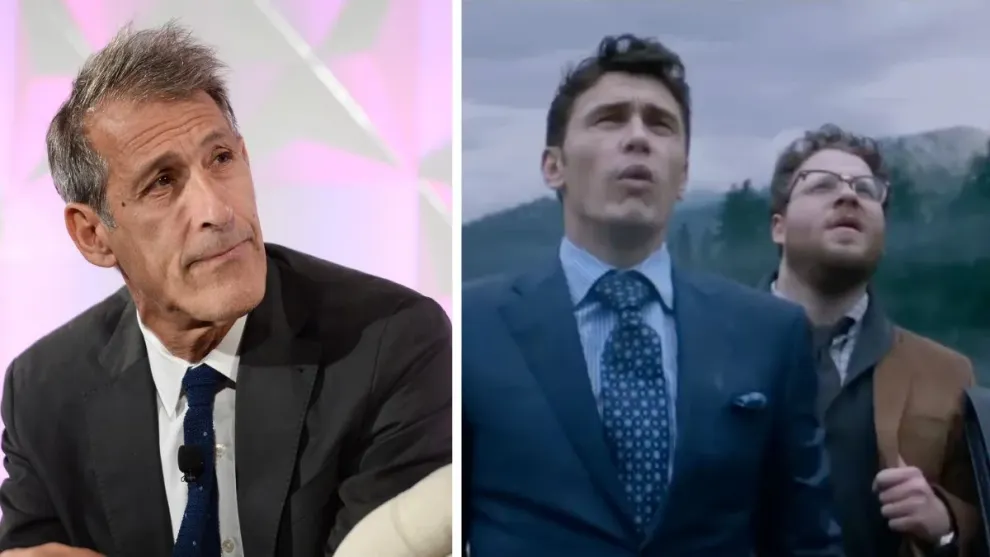 Lynton then goes to describe in detail what drove him to greenlighting the picture, and it’s both surprisingly introspective and relatable. It’s hard for even those who may not have held him in all that favorable a light–and I confess that includes me–not to feel a little empathy with this sort of post-script:
For many years I buried it all: the anger, the embarrassment, the shame, the pain my family endured. Now I have come to believe that the whole affair neither began with that ill-fated table read nor ended with my buried feelings. It ultimately came down to a basic human truth: our desire to belong leads us all to weigh heavily the opinions of others.
During the table read, I watched as all the other participants saw the script one way—brilliant comedy that built on previous successes of a particular genre. Just for a moment, I wanted to join the badass gang that made subversive movies. For a moment, I wanted to hang—as an equal—with the actors. I had grown tired of playing the responsible adult, of watching the party from the outside while I played Risk.
Judging by how even his so-called friends and subordinates referenced him, I can easily see how those “cool kids” felt about him. Believe me, I’ve had similar experiences and envious feelings. I still do. And as the clock toward the inevitable ticks louder and louder, it’s all the more difficult not to draw some sort of inspiration from Cameron Frye, Ferris Bueller’s best bud who eventually reached his breaking point after taking his far more popular and sexually active friend’s sage advice: Sometimes you just gotta say what the f-ck.
Cameron, of course, ultimately ran his dad’s prized classic car through a plate glass window (fortunately without him in it) and sent it hurdling several hundred feet into a ditch that adjoined their estate. Lynton didn’t physically destroy anything, but he certainly helped give more than a few careers a severe setback. The fact that he at least seems to own this can’t necessarily reverse the results, but if nothing else it should reassure those impacted he hasn’t exactly escaped unscathed.
He’s naturally putting this all into a book that drops Tuesday which he’s co-authoring with another mea culpist which its Amazon blurb tantalizingly describes:
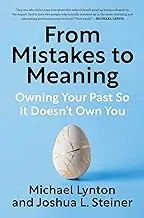 Longtime friends Michael Lynton and Joshua L. Steiner made mistakes that shaped their careers and lives, but it wasn’t until the isolation of the pandemic that they began to open up to each other about them… a private diary Steiner had kept as Chief of Staff at the Treasury Department became a focal point in the Clinton Whitewater scandal. As their conversation deepened, they searched for a book to guide their exploration, they came up empty. So they set out to write one themselves.
Through a revealing examination of their own stories and candid interviews with influential figures such as Karol Mason, Joanna Coles, and Malcolm Gladwell along with people from all walks of life, the authors unveil the hidden dimensions of mistakes and the universal struggle to move beyond them. Working with Alison Papadakis, Director of Clinical Psychological Studies at Johns Hopkins, they ground their observations in relevant research and unpack the difference between failures and mistakes, the stages of mistakes, and how it’s possible to break the patterns that lead to misunderstandings and shame.
Yes, I’ve pre-ordered it (Kindle version, natch) and I’d recommend you to do same. To be honest, I’m even more interested in Steiner’s confession, since I didn’t live through his story. As Wikipedia reminds:
 Steiner came into national news as a result of the Whitewater investigations where he testified before Congress on the contacts between the Treasury and the Clinton White House.[6] He testified before the Senate Banking Committee on August 2, 1994 claiming that he had made “misrepresentations” in his own diary.[7] He was quickly branded as “the kid who lied to his own diary” as his testimony was largely seen as an attempt to cover for the Clinton White House.[8]
One only wonders how Steiner’s story and degree of regret will mirror or contrast Lynton’s. And how much a template it might just be for a future book from, say, Pam Bondi or Howard Lutnick. You know, the kind of stuff that has all echoing Cameron Frye lately.
Until next time…