
You might only be familiar with the name James L. (or Jim or Jimmy, depending upon the era) Burrows from the opening credits of a tv comedy you’ve watched at some point. Chances are you’ve probably watched the same episode of some of them more than once–according to some of the statistics I’ve seen, some even dozens of times over the course of decades. And thanks to streaming libraries, you could be in any generation from Boomer to Alpha and at least have had the opportunity to see it–though I also know from the same stats a disproportionate amount of us usually click “skip credits” when we binge.
But the fact that so many people have collectively watched shows like FRIENDS and WILL AND GRACE–exponentionally more than who watched them when they were merely staples of NBC’s vaunted “must-see TV” lineup in their respective first-runs–not to mention the likes of CHEERS! and FRASIER for those of slighly greater vintage–makes what THE NEW YORK TIMES’ Glenn Rifkin reported yesterday all the more poignant:
 James Burrows, the genre-shaping master of the television situation comedy who was a creator of “Cheers” and directed more than 1,000 episodes of that show and other TV classics like “The Mary Tyler Moore Show,” “The Bob Newhart Show,” “Taxi,” “Frasier,” “Friends” and “The Big Bang Theory,” died on Friday. He was 85. His agent, Rick Rosen, confirmed the death, but did not say where he died or specify a cause.
Mr. Burrows earned a reputation as the “Steven Spielberg of sitcoms,” winning 11 Emmy Awards and receiving 47 nominations in a career that spanned five decades. In 1995, Bill Carter, writing in The New York Times, described him as “the man whose visual style and comedic instincts have helped create more comedy hits than anyone else in television.”
His body of work was massive and impressive. Burrows was also an executive producer of and the de facto champion of WILL AND GRACE, which enjoyed a second life from 2017-2020 following its original eight-year run. Co-star Eric McCormack, an obscure Canadian import when the OG version began nearly two decades before that, expressed the kind of sentiment and gratitude that so many performers both in front of and behind the camera expressed yesterday. Plenty of similar posts wound up in my social media feeds yesterday, including those from the likes of fellow directors, production assistants and executives whose names you most definitely do not know and are immaterial to this point–at some point if you had any position whatsoever in a company involved with the production of sitcoms, what Jim Burrows thought, said and did materially impacted your life.
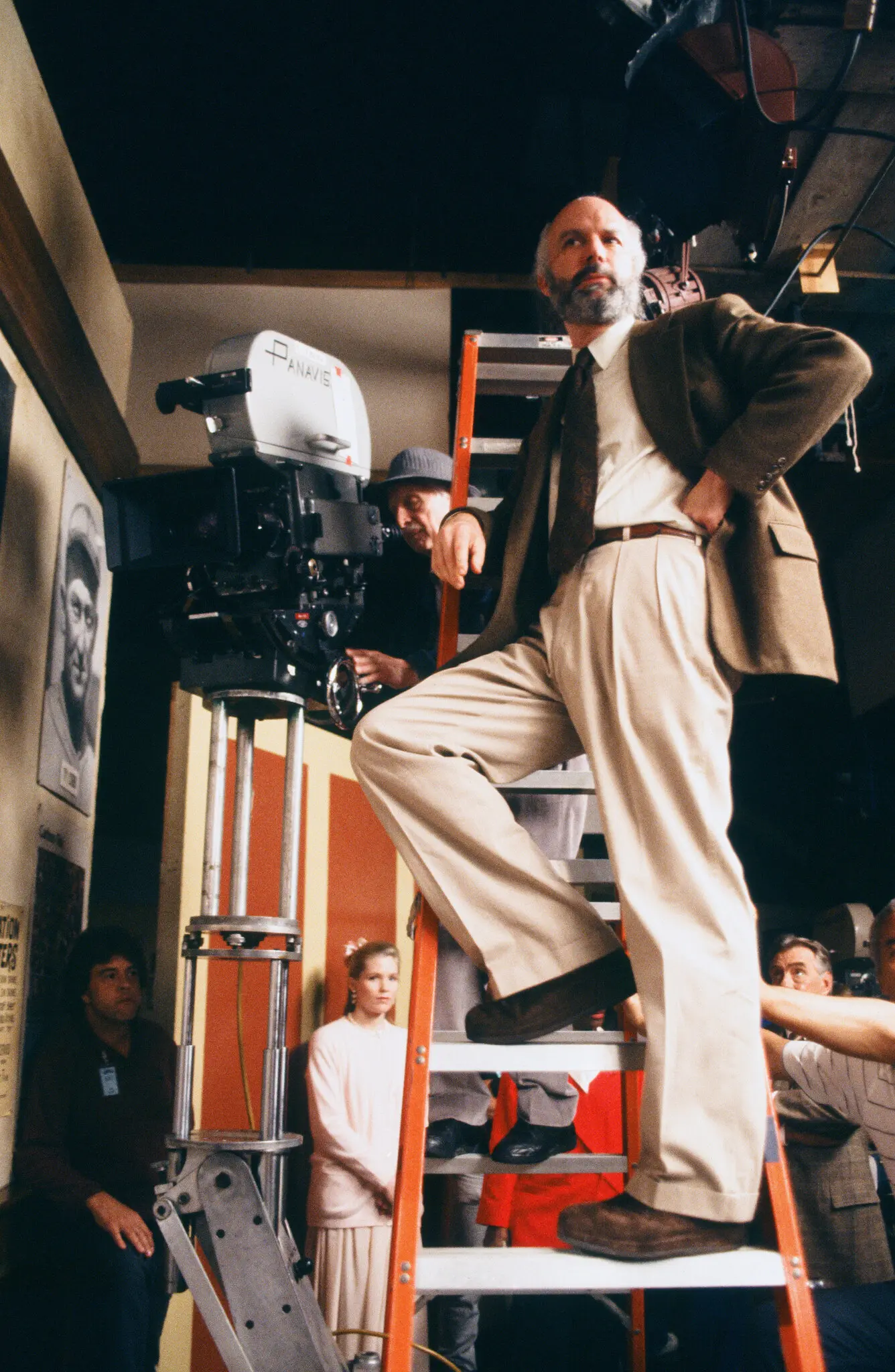 Even those of us who were merely involved with testing pilots knew our jobs would be more enjoyable and the results likely more favorable if the name Burrows appeared in the credits. Burrows was lovingly known as “the pilot whisperer”, particularly in the later stages of his career when he could pick and choose where he would work without having to make a commitment to any eventual series. GOLD DERBY’s Zach Laws ennumerated several of those more familiar launches yesterday, punctuating it with this spot-on observation:
Throughout his career, he became something of a hitmaker, the guy you called if you wanted your pilot to become a long-running series. Burrows elevated the multi-cam sitcom into an art form, through dramatic lighting, complex blocking, and utilizing a fourth camera to capture more action. But It wasn’t just his sense of pacing and timing that made him such a good director. He also had impeccable taste for material and talent.
He directed a staggering 75 pilots that eventually went to series in some form. The fact is that long-forgotten eventual failures like THE PRESTON EPISODES, PEARL, #H*! MY DAD SAYS and FRIENDS WITH BETTER LIVES would never have even gotten a chance to be rejected had it not been for Burrows’ unique ability to take what he was given, mediocre as it may otherwise have been, and wring enough out of them from test audiences to get executives to look more favorably at them than those that would produce similar results from less auspiced personnel. And the additional fact that these shows crashed and burned once Burrows had moved on to his next mercenary project underscores exactly how much his presence mattered in the first place.
THE LOS ANGELES TIMES’ seasoned Robert Lloyd drove that point home still futther in his appreciation piece from this morning:
Unlike the movies, where directors get the glory, TV directors sit lower in the hierarchy, below creators, producers and actors. In most series, which might employ several over a season, they are interchangeable — which isn’t to say they aren’t valuable, transforming words on a page into a four-dimensional living thing. But a director hired to helm a pilot, as …Burrows.., was again and again — almost as a lucky charm — helps set the tone for the series…. In some cases a director is a co-creator in all but title and union affiliation. A show might subsequently pass to later hands, but they’ll be honoring its established look and feel.
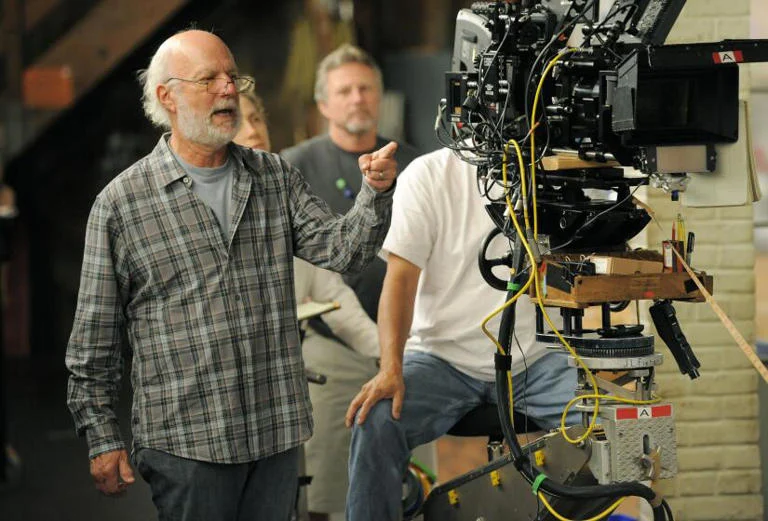 My personal contact with Burrows was a lot less than others’ but I did have the privilage of seeing him helm the series of Norman Lear’s live restagings of classic episodes of his works. Being able to see him in real time call the shots for LIVE IN FRONT OF A STUDIO AUDIENCE was being able to bear witness to a masterclass of timing, command and expertise that at least I had never seen before. Being able to see Mr. Lear in action even at his advanced age while he was sheparding the Netflix reboot of ONE DAY AT A TIME was memorable enough. Seeing the two of them exchanging notes and making changes on the fly while the rest of my colleagues stood back in both awe and anticipation–along with co-executive producer Jimmy Kimmel–waiting for their directives took that experience to a next level that will remain etched in my brain for the rest of my life.
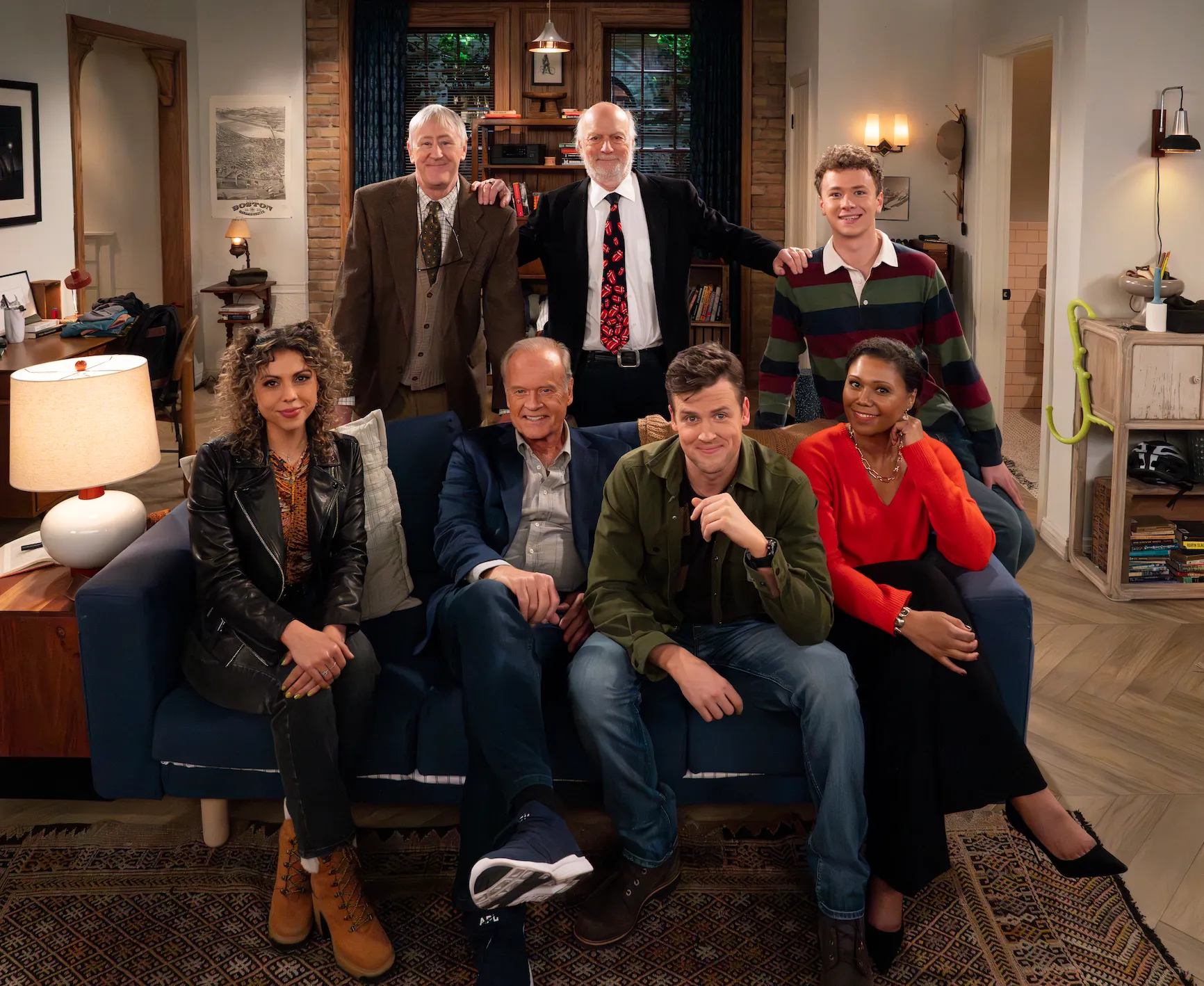 And I also got to see him in action in person during one of his final efforts when he took charge of an episode of the FRASIER reboot my long-time friend Tom Russo executive produced for Paramount Plus a couple of years back. Veterans of the original staff were quite critical of what they felt were rather tepid casting choices and plot lines, and I suppose the fact that the reboot fizzled out after two very modestly seen seasons would have them believe their second-guessing was right. You know who vehemently disagreed and had enough awareness of the other obstacles the show faced to dress those accusations down both pointedly and forcefully? Yep, Jimmy Burrows. And let’s not forget unlike a few of those other titles on his CV they did get a renewal.
I also worked closely with his nephew, FX comedy czar Nick Grad. Whenever anyone would accuse Nick of a being a nepobaby, he would remind anyone who would dare make that assumption that Uncle Jim was technically one himself. Lloyd was astute enough to make that parallel:
The son of Abe Burrows, who wrote or co-wrote the books for “Guys and Dolls,” “Can-Can” and “How to Succeed in Business Without Really Trying,” and co-created the radio comedy “Duffy’s Tavern” — set, like “Cheers,” in a bar, though the younger Burrows denied any influence — he’d been directing dinner theater when he had the idea to write to Mary Tyler Moore, whom he’d met on the set of a never-opened “Breakfast at Tiffany’s” musical. His stage experience (and his Yale School of Drama degree, presumably) proved eminently transferable to the proscenium reality of multi-camera situation comedy.
Nick would bring this up and challenge anyone to judge him on what he did on his own merits. The fact that he’s still very much an integral part of the FX team two decades later would certainly point to him being right. That was way truer in Jim Burrows’ case. And with new sitcoms–certainly four-camera ones in front of studio audiences–struggling to even be produced at all in a world where cost-cutting, attention spans, and the disparaities in what different generations define as funny all mitigating factors, the likes of anyone coming around to even come close to Jim’s track record of either longevity and/or halo effect is virtually nil.
Nonetheless, older sitcoms continue to find new generations of viewers and traction that assure that his legacy will endure, and once again Lloyd hits the bullseye with the explanation as to why:
What Burrows shows share — the ones we remember, at least, out of many we don’t — is that they’re fundamentally joyful. They lack cynicism. They’re expressive of their times without being showily edgy. They walk a line between freshness and familiarity, which makes one want to return week after week. They may push an envelope — “Friends” was something new, after all — but subtly…the basis of a body of work that has and will live on.
So do indeed hit play sometime soon, but this time don’t skip the credits. You should indeed know Jim Burrows’ name.
Until next time…