
I finally got around to watching the season premiere of SOUTH PARK last night, though thanks to the dozens of stories that popped up in my inbox I already had a pretty good idea of what it was about. The fact that I still had the ability to even access it all on Paramount Plus was seen as a victory unto itself, for given the amount of middle-finger-in-the-eye discourse going on between the principals in this matter one would think that someone would have issued an executive order to take it down from the platform post-haste. At this point, only a select few within the platform and corporation have any idea if it’s actually being significantly viewed, and in the wild, wild world of streaming even successful shows that don’t meet proprietary KPIs regularly get removed.
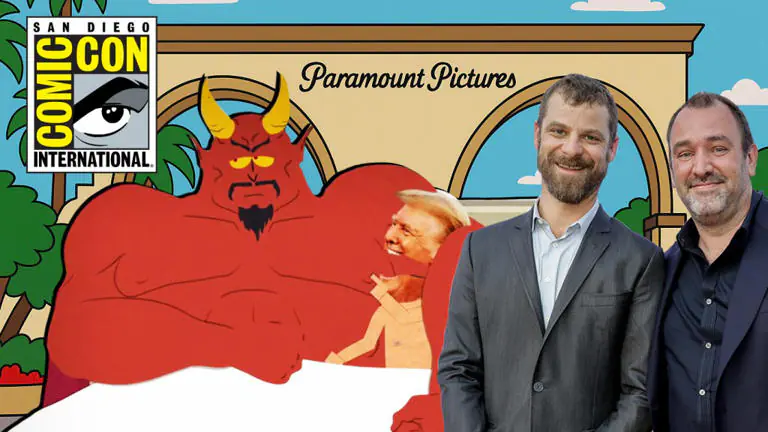 FWIW, I liked it, though not quite as much as perhaps those are weighing in are. I admit to a few chuckles and gasps at some of the more shock-worthy scenes, including the ones featuring a naked Trump looking for a fling to who clearly already claimed his soul and being rejected because of his–ahem–shortcomings. In my case, I found it a bit redundant yet a message that my own lens has been spot on. I’ve been calling him Fat Orange Jesus for a while, and in this episode, if you allow for the particular shade of Satan’s skin we see, we got all three of those mockings from the actual creators.
COLLIDER’s reliable Chris McPherson confirmed that the early qual/quant returns are decent in the update he dropped yesterday:
When South Park leans into controversy, it often lands right where it wants to — at the center of attention. That’s exactly what happened with the premiere of Season 27, which ignited a political firestorm while also scoring a strong 82% audience score on Rotten Tomatoes from over 1,000 reviews.
And our new favorite resource TELEVISION STATS, which per the fine print on its website takes into account an even wider swath that evaluates online audience activity and engagement across various platforms, including search, website traffic, and social media reported that as of yesterday morning South Park ranked as the #1 most popular show online and was the #1 most popular TV show on Comedy Central. The current engagement score for South Park is 96.25.
And thanks to the timing of this episode’s rescheduling due to the legal morass surrounding the library ownership which we’ve previously mused about, it allowed the creators to be front and center at this weekend’s San Diego ComicCon to have their own pulpit to directly respond to the critical acclaim of a couple of folks who are far too busy elsewhere online to weigh in. Per ENTERTAINMENT WEEKLY’s Emlyn Travis:
During a Comedy Central panel at San Diego Comic-Con 2025 on Thursday night, the comedy duo was asked by moderator Josh Horowitz if they’d anticipated such a strong reaction to the episode…. “We’re terribly sorry,” Parker deadpanned, before dropping his microphone to his lap and letting a prolonged silence settle over the Hall H audience. The premiere’s satirical depiction of the president drew swift condemnation from the White House, which blasted the “fourth-rate show” in an email statement to Entertainment Weekly earlier that same day.
The statement continued, “This show hasn’t been relevant for over 20 years and is hanging on by a thread with uninspired ideas in a desperate attempt for attention. President Trump has delivered on more promises in just six months than any other president in our country’s history — and no fourth-rate show can derail President Trump’s hot streak.”
I suppose when you’re taking your lead from someone who still thinks the only thing that matters is ratings one can draw those kind of misguided conclusions. And that’s still quite true when you’re looking at the economics, let alone the rhetoric and tone, of a broadcast network late night show fronted by a human with a coupla hundred other humans involved. But this is SOUTH PARK–an animated show with 323 other episodes produced over nearly three decades that are watched and rewatched by multiple generations, the sorts of attributes that carry far more weight in the streaming world. It’s a huge reason why the very same week that Paramount said farewell to late night talk shows and, in the minds of some, democracy itself, they plunked down $1.5B to bring SOUTH PARK fully under their umbrella in the hopes of driving adoption, engagement and discovery of the rest of the “mountain of entertainment” they have, and likely will expand upon as ex-Netflix superstar Cindy Holland finally takes full command of all things creative.
 And as anyone involved in animation will assure you, when you’re dealing with fictional two-dimensional pixels the leeway you’re allowed is much greater. The godfather of modern prime time cartoons Matt Groening is on the record via Citatis with this summative view:
The thing about a cartoon is, you can do whatever you want. The tightrope that we are walking on ‘The Simpsons’ and ‘Futurama’ is ‘How do you continue to surprise the audience, but make them good surprises?’ Not every surprise is good, but you want to continue jolting people.
And last February FILM’s Ethan Anderton published a lengthy reminder how that attitude holds up in a court of law:
“When You Wish Upon a Weinstein” now sits firmly as part of the third season of “Family Guy,” but it became an infamous installment after Fox axed the episode before it even aired. The episode in question finds dimwitted patriarch Peter Griffin (voiced by Seth MacFarlane) scammed by a man selling volcano insurance, something wholly unnecessary in Quahog, Rhode Island. After losing a bunch of money, Peter’s friends Quagmire and Cleveland suggest hiring a lawyer with a Jewish name to help him with his money problems. The entire premise is based on the stereotype that Jewish people are better with money than anyone else.
Fox felt the episode could potentially be viewed as antisemitic, and they opted not to risk any backlash from audience members who didn’t understand the intended humor behind Peter’s stupidity. The episode would eventually get a special presentation on Adult Swim in 2003, before ultimately airing on Fox in 2004.
But there was even more proof of the power of pixels in a second case involving this episode:
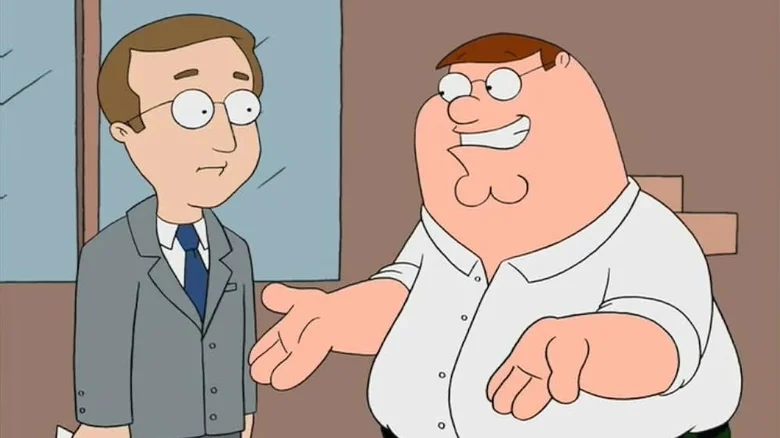 In “When You Wish Upon a Weinstein,” Peter Griffin sings a song about wanting someone Jewish to help him get back the money he lost in the volcano insurance scam. The song is titled “I Need a Jew,” but it’s very clearly a spoof of “When You Wish Upon a Star,” which is a no-brainer considering the title of the episode. In the lawsuit, the attorney for Bourne Music Publishers said, “If you listen to the structure of the lyrics, the song, the name of the episode and how (Peter’s) singing out the window to the stars, there’s no question they were using the song.” Yes, that’s true, and that’s because “Family Guy” was intentionally parodying the famous song, which is why the lawsuit didn’t amount to any real legal trouble a couple of years later when the case came to an end.
Basically, the lyrics were “strikingly different,” and the amount of the song used by “Family Guy” writers and series composer Walter Murphy “was no more than was necessary to conjure up the original work in order to make the object of the criticism recognizable.” Furthermore, it was determined that “the new song had no effect on the value of or potential market for the original song.” Those three factors were enough to cover the parody under fair use and get the lawsuit dismissed in favor of “Family Guy.” They didn’t even need to wish upon a star.
Hence, when you read how prepared Parker and Stone came to San Diego, you know they have both precedence and perhaps a Weinstein of their own in their pocket. As Travis chronicled:
Speaking at the panel, Parker acknowledged that the pair did get one note from their producers about the episode. “They were like, ‘Okay, but we’re gonna blur the penis,’” he recalled, “And I’m like, ‘No you’re not gonna blur the penis.’”
Stone added that they were able to find a loophole for the issue by putting eyes on Trump’s genitals, which subsequently turned them into their own character. “If we put eyes on the penis, we won’t blur it,” he explained. “That was a whole conversation with a lot of grown-up people for about four f—ing days.”
Parker interjected, “Because then it’s a character! It had to be two eyes. I don’t know why.”
Ah, but Trey, you most certainly DO know why. And that’s exactly why no matter how much whining and bitching may come from the FOJ camp you’re not in any imminent danger of being his latest cancellation conquest. You can’t sue something that doesn’t technically exist.
 And you might be able to provide some direction for the next move of your still-corporate cousin Colbert and his freaked out minions. While so many of them are literally taking to the streets and saber-rattling about how they will wreak revenge with what he does next, perhaps they should give a once-over to the results and financial statements from the division of his company known as Late Night Cartoons, Inc. In more supportive times, that division of Colbert executive produced three seasons each of OUR CARTOON PRESIDENT and TOONING OUT THE NEWS, shows that featured much the same attitude and guest list that THE LATE SHOW has relied upon–with a lot lower overhead and far less manpower. They didn’t succeed by the metrics and KPIs from linear networks like Showtime and Comedy Central, but both shows didn’t have a fully baked Paramount Plus to support them (the former aired prior to P+’s creation; the latter during its earliest and least-penetrated days). An animated reboot of THE COLBERT REPORT, featuring Stephen in the familiar and still-fondly remembered fictitious incarnation of a talent that would fit in with the TOONING OUT gang seamlessly, isn’t the worst idea we’ve dreamed up, is it?
Now, if on August 8th, after the announced closing date for Ellison, Holland et al to take over immediately results in Colbert being bought out of the remainder of his contract and Season 27 of SOUTH PARK pulled from the P+ portfolio maybe at that point the worst fears of those so heavily invested in all of this melodrama might then be realized. But anything short of that–and I’ve enough reason to believe what we’ve laid it points in that direction–should be seen as opportunity more than capitulation. I’d like to think more connected minds than mine are already on that case.
And if not, well, get out of bed already and start. We know a couple of big orange guys already have.
Until next time…