
You’ve probably heard the phrase that serves as the title of today’s musing at some point, whether or not you’ve actually worked in a field that emphasizes its utility and understanding. None other than Mark Twain is credited at least with the introduction of it into mainstream America, at least per Wikipedia:
 Twain popularized the saying in Chapters from My Autobiography, published in the North American Review in 1907. “Figures often beguile me,” Twain wrote, “particularly when I have the arranging of them myself; in which case the remark attributed to Disraeli would often apply with justice and force: ‘There are three kinds of lies: lies, damned lies, and statistics.'”[4][1][2]
Yet in a rather lengthy reply to a query about this fielded by the nigglers at Quote Investigator in 2022 a myriad of other possibilities to where this all started was unearthed, based on the seminal observation:
(T)here is no substantive evidence that Disraeli crafted this remark. He died in 1881, and the remark was attributed to him posthumously by 1895.
Feel free to delve into this unsolved mystery at your leisure; if you’re of the mindset that has ever dealt with this topic it’s entirely possible you will. But it might distract you from the more relevant point to this: it’s still going on, and no more so than in the wild west world of online measurement.
Thanks to the ever-diligent Alan Wolk of TV REV, yesterday I was pointed toward a piece dropped last week authored by THE VERGE’s David Pierce with the ominous and simplistic clickbait title VIEWS ARE LIES. And at the very outset Pierce, who brings a wealth of print and audio experience to battle, came out with both barrels blazing:
Views are the most visible metric on the internet. You can see, in more or less real time, how many views something got on YouTube, Instagram, TikTok, Facebook, and most other video platforms. X tracks views for every single thing you post, as does Threads. A view is the universal currency of success — more views, more fun.
But it’s all nonsense. Views are nothing. Views are lies.
 A “view,” in reality, is not a universal metric. It’s not really anything. It is whatever a platform wants it to be, which usually has no actual correlation to whether someone actually encountered and experienced a piece of content. You can just make the views whatever you want! And if you don’t like the way the numbers look, make views something else!
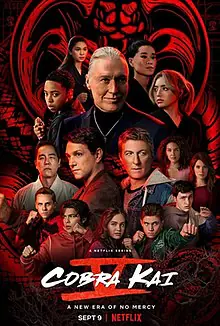
I was an early adopter of this feisty philosophy, and arguably once of its first victims. When Sony launched COBRA KAI it was one of the first scripted series to be sold to the then-fledgling YouTube Red, an initiative staffed by veterans of linear TV that ostensibly was to get the Google-owned platform into a broader video business designed to lure older farts like us into their walled garden. Indeed, the balance of the first season’s episodes were hidden behind a paywall, with only the first two generating any public-facing metrics. As Wikipedia further recounted, we were under the belief it was a runaway hit:
 The first episode, which was posted on YouTube for free along with episode two, had been viewed 5.4 million times within the first 24 hours.[90] While it was noted that the response had been, in part, a result of YouTube releasing the episode for free, it was noted by Cinema Blend’s Britt Lawrence that YouTube Red’s new series debuted to numbers that made rival streaming services take notice.[91] By October 30, 2018, ahead of the second-season premiere, YouTube was promoting the report that the first episode had then been viewed over 50 million times.[92] The first episode was No. 8 on YouTube’s list of ten top-trending videos of 2018.[93].
But as Pierce patiently pointed out in his piece, what we saw was little more than self-congratulatory spin;
YouTube is cagey about its calculations: it’s generally accepted wisdom that you have to watch 30 seconds of a standard YouTube video for it to count as a view, but if that’s official policy I sure can’t find it anywhere.
As we could even see in the far less impressive view counts for that second episode, it was evident that a significant number of those 50 million viewing the premiere were what we’d term “drive-by viewing”. Indeed, if one were to calculate a distribution curve for time spent viewing a linear TV episode premiere one would likely see a similar phenomenon. All of the promotion and algorhythmic manipulation in the world can only get someone to sample a show; the show itself has to be compelling enough to keep people around. And we simply didn’t have any evidence that was happening.
So when YouTube informed us that they were scaling back considerably on promotion for that second season, on their way to pulling the plug on YouTube Premium (the quick rebrand for YouTube Red) entirely, my staff was tasked with the unenviable task of developing a pitch deck that we piously hoped would change their minds. By this point several of the executives we knew at YouTube Premium/Red had been dismissed, so we had some inside baseball knowledge of their mindset. What we further learned was that the views of the episodes behind the paywall were merely in the hundreds of thousands. If one were to see that level of attrition from premiere to conclusion on a rated linear network, one would conclude the show was largely rejected. And I made the mistake of sharing that observation when asked.
Let’s merely say that was the last thing our impassioned and financially exposed team wanted to hear. They were convinced that YouTube was anything but the ideal partner, so the wheels were set in motion to move the show elsewhere at that point, a drawn-out process with YouTube essentially embargoing a show they didn’t really want just so a competitor couldn’t benefit from it. Netflix was creatively infatuated with the show and was feeding our executives with everything they wanted to hear that my team couldn’t tell them. And when it finally was able to be moved and the third season launch finally launched in early 2021 the news being trumpeted by the likes of SCREEN RANT’s Abdullah Al-Ghamdi were hitting my inbox with the subject line “Guess you blew that call”. Here’s how that piece began:
According to Deadline, Cobra Kai season 3 is on track to be seen by more than 41 million households within its 28 days. The series also cracked the top ten in Netflix’s trending charts in 85 countries and earned the number one spot in 28 countries. Counting all three seasons of Cobra Kai, 73 million households have watched at least some of the show. These stats make the show an immensely popular returning title, bested only by newer originals The Queen’s Gambit and Bridgerton.
Yet even that gushy a report came with this important caveat which it would seem my now-former colleagues may have somehow overlooked:
It is important to note that Netflix counts a view as whenever someone watches at least two uninterrupted minutes of a series or film. By using that metric, the service can more easily boost its numbers even though two minutes of watching something would be equivalent to channel-surfing.
And that’s a point that Pierce’s more recent piece found particularly galling:
Even the Hollywood types are being pulled into the vortex of made-up view counts. Netflix once clocked a view only after you’d completed 70 percent of something — which, I should point out, is the closest thing to actually tracking whether you’ve watched something of any metric we’ve discussed so far. Now, it only takes two minutes for Netflix to decide you’ve watched something. Netflix actually picked two minutes because it’s “long enough to indicate the choice was intentional.” First of all, no it’s not. Second, Netflix knows how much you actually watched! It just wants the numbers to be higher — around 35 percent higher than under the previous metric, Netflix admitted.
And as I had learned from numerous dealings with Netflix, view counts, regardless how they are defined, are only one of many key performance indicators (KPIs) that are used to determine whether a show is a success and deserving of renewal. And as Al-Ghambi further reported at the time, Netflix had a whole bunch of parochial investment in making COBRA KAI sound like a success:
The Karate Kid continuation also gets massive engagement online, with fans curious to know about how the dramedy’s many cameos were negotiated. Audiences also speculate heavily about missing supporting characters, such as Aisha, which is a level of investment most shows aren’t as lucky to achieve. Most tellingly, Netflix renewed Cobra Kai for season 4 months before the third installment. The decision is notable, given how the streamer has gained a reputation for favoring short runs for most of the series it greenlights.
So COBRA KAI eventually made it to 65 episodes and completed its first-run journey this past February with a five-episode coda to a three-pronged fifth season that had initially premiered last July. That’s a virtual eternity in the world of streaming originals, and actually gives the platform a somewhat decent-sized library to include in their walled garden. And at some point when Netflix finally reverse course as they often have on such heretofore verboten topics as advertising, live content and sports they may decide to allow its suppliers of original content to syndicate its shows in second windows to content-desperate stations and networks. The success that Universal TV saw with reruns of SUITS on Netflix has now allowed them to distribute them non-exclusively to their now stepcousin cable networks and a whole bunch of FOX-owned My Network TV-affiliated stations. If Sony isn’t already working diligently on such a plan themselves, they oughta.
 Because, as I learned the hard way the last time around, beauty is in the eye of the beholder. And yes, views ARE nothing. I don’t expect any of the thumbnail examples above to be around after seven years and 65 episodes.
Until next time…