
It wasn’t a physical hurricane that hit South Florida this week for a change, but in the media world, particularly those with any vested interest in broadcast television, it was the equivalent. The newspapers that still remain part of that ecosystem certainly covered it that way. The MIAMI HERALD’s
 WPLG-TV, known to millions in South Florida as Local 10 News, has decided to split from the ABC television network after a partnership that’s lasted nearly 70 years, the broadcast station said.
On Thursday, the station announced that after months of negotiations, ABC and WPLG-TV, owned by Berkshire Hathaway, could not agree to extend an affiliation agreement. ABC programming will be pulled from the station on Aug. 4. WSVN-7, shortly after the Local 10 announcement, said it will be the new ABC affiliate under a new, multi-year agreement made between Disney Entertainment, which owns ABC, and Sunbeam Television Corporation, which owns WSVN. Soon-to-be dubbed “ABC Miami” will broadcast on channel 7.2 beginning on Aug. 4.
And the SUN-SENTINEL’s David Lyons added still more context:
“After nearly 69 years, WPLG-TV and the ABC television network are breaking up,” the station said in a statement posted mid-afternoon on its website.
CEO and President E.R. Bert Medina informed the staff, which is based at the station’s Pembroke Park studios, “during an all hands meeting.” “We made a generous offer to ABC, but it became clear the two sides were not going to agree to a new deal,” Medina added, according to the WPLG article. The two companies’ old deal expired Dec. 31.
Medina…was less charitable about the strength and appeal of ABC’s content. He noted that television stations nationwide have engaged in “massive layoffs in recent years,” and his station would have been forced to follow a similar path if it agreed to pay “the hefty price the network was demanding.”
Medina indicated that the station would dedicate the money it paid ABC to local news gathering.
“Instead of sending our money to New York, we will keep it in our community and use that money to finance a massive expansion in local news and other local programming,” Medina said, according to the WPLG website.
 And for as seismic as this news may have been, I couldn’t help but smile warmly. Because if there’s anyone capable of forging a path for a Miami TV station to succeed without a traditional network affiliation in today’s landscape, Bert Medina is the guy. Because he already did it once before.
I first met Medina during an even more tumultuous time in South Florida TV history, a massive movement of network affiliations that evolved over most of the mid-to late 1980s when I was working my way up the ranks in syndication and eventually the FOX owned-and-operated stations. There’s a marvelous Wikipedia entry that chronicles what was known as “The Big Switch” that I would encourage anyone who wants to get a flavor of what the glory days of what is now a dying industry was like which involved just about every station of consequence in both the Miami-Fort Lauderdale and West Palm Beach-Fort Pierce DMAs EXCEPT WPLG.
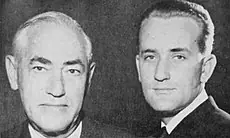 At the epicenter of this saga was WSVN, which had been the region’s primary NBC affiliate for more than three decades and was a family-owned business run by a maverick named Ed Ansin. Ansin felt blindsided when NBC’s then-owner General Electric wound up as the winner of an de facto auction of the market’s longtime top station WTVJ that arose when the investment firm Kohlberg Kravis Roberts, which had taken over WTVJ after the death of its founder Mitchell Wolfson. WTVJ and its powerhouse Channel 4 signal was seen as an industry crown jewel; it essentially served as CBS chairman William Paley’s window to the network when he’d be off sailing in the Caribbean and even after NBC had risen to number one in primetime thanks to the genius of Brandon Tartikoff WTVJ continued to deliver higher ratings outside of prime time. To NBC, this was business. To Ansin, it was treason.
Further complicating this was that the typical outcome of affiliation switches, the simple move of the orphaned network moving to the competitor, wasn’t a given. CBS had had discussions with the embattled ownership of the market’s most established indepedent, WCIX-TV, which importantly was the only VHF independent at a time when that still mattered. But WCIX had significant coverage issues in what was becoming the market’s growth areas in Broward County and parts north that were effectively shared with the rapidly growing West Palm Beach market. CBS engineered an affiliation swap there that would see them signficantly upgrade from what was then an afterthought UHF station in the relatively remote Fort Pierce to the market’s entrenched ABC affiliate WPEC–a VHF station itself.
What resulted was a dizzying period where all of these wheels were in motion and there were new programming opportunities occurring almost daily, exacerbated by the new station owners’ desires not to necessarily keep what would soon be their competition as strong or as consistent as it otherwise would be. And that was especially true for Ansin, who ultimately decided he would become the market’s VHF independent, which by this point also including the fledgling FOX affiliation–but with a much stronger and broader signal and a more established news product than WCIX was offering at the time.
If you’re confused, you’re not alone. And to help him sort it out Ansin relied upon a then young programming operations executive who had a strong background in research named Bert Medina.
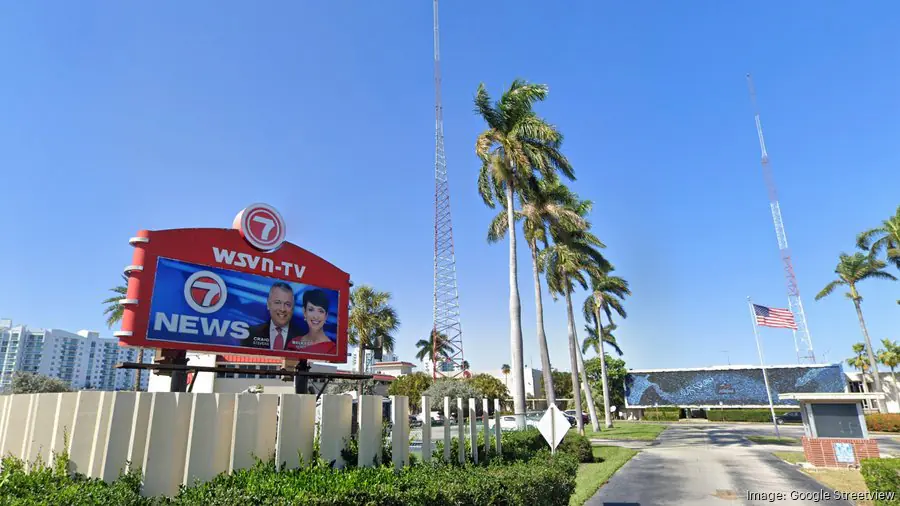 Medina was present in numerous meetings I was in with my syndication colleagues as we navigated the market, and he was eagerly adopted by FOX Programming Action Committee when WSVN became an affiliate. Their news programming, which took on an aggressive, tabloid-y pace and expanded significantly when NBC was dropped, caught the eye of Rupert Murdoch and his allies; therefore making it all the more crucial we had a strong rapport with the station’s personnel. I was a member of that committee via my responsibilities with the O and Os. Medina and I were kindred spirit with similar backgrounds and passions. We’d often sidebar where he’d open up about measurement issues with the two companies that were metering local television at the time, specifics I was deeply involved in during my earlier days at the rep firm MMT where I worked on numerous studies involving WTVJ. When my syndication colleagues were looking to optimally place A CURRENT AFFAIR into the market he and I exchanged many phone calls about our growing success; eventually Ansin chose instead to produce a similarly themed show locally, INSIDE REPORT, with Medina deeply involved in that show’s evolution and eventual attempt to be syndicated itself. By that time I was on the station side and was therefore a resource Medina could tap into to learn more about his now-competitor.
Because we knew how much the top brass adored WSVN we spent an awful lot of time courting their favor. Medina was especially popular. Several of my colleagues dubbed him “Funky Cold”–not the most likely nickname for someone as polished and non-rapper like as Bert. I think I saw him smile a few times nonetheless.
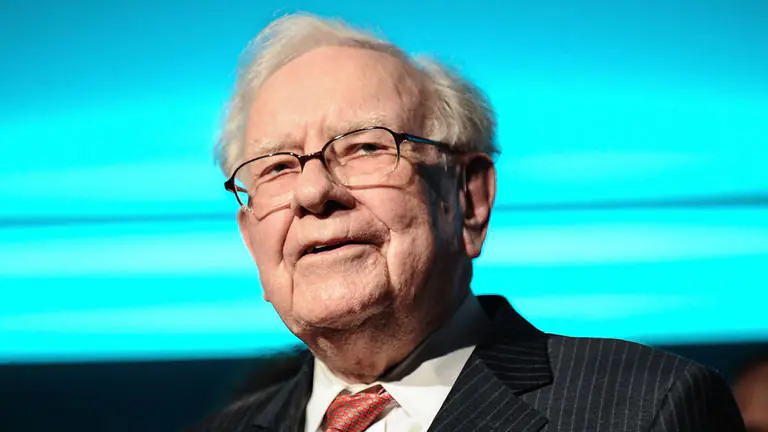 Flash forward to today. Now it’s a seasoned Medina, who returned home triumphant when prior WPLG owner Post-Newsweek made him the top dog in 2013 and was wisely kept by Warren Buffett when Berkshire-Hathaway opportunistically took over the station five years later, who’s once again working for a determined and principaled owner who doesn’t have the tsurris of dozens of other stations to be concerned about. And as THE HOLLYWOOD REPORTER’s Alex Weprin explained, Buffett’s presence in this saga can’t be ignored. At a time when the balance of the station industry is being led by cost-conscious moguls lobbying to sunset outdated station cap laws and consolidate resources, Buffett has both the capital and the insight to acknowledge and support the views which Medina expressed that Lyons reported on Thursday:
“Our job is to serve this community with news and local programming, that’s why we have an FCC license,” he said. “If we agreed to the ABC terms, that mission would have suffered.”
He criticized network television programming as a distribution model in decline. “The programming we get from ABC is no longer the same as it has been in years past,” he said. “Exclusivity, which is the core to our relationship, is disappearing. Even when ABC airs high quality programming, like the Oscars, ABC airs that same programming on other platforms. We no longer feel we are getting what we pay for.” Noting that a “majority of our staff” grew up in South Florida, he said the station intends to deploy them around the station’s own regional neighborhood.
More significantly, as an alumnus of the Ansin company now known as Sunbeam, he knows the playbook that did just that a generation ago as well as anyone, and he knows the–ahem–white areas of opportunity that WSVN may be missing.
Medina’s experienced enough to appreciate the irony that this time it is Sunbeam that is opportunistically grabbing the orphaned and arguably not South Florida-centric stuff. He’s also savvy enough to look at what they’re doing in Boston, where their one-time NBC affiliate WHDH now competes with a digital-0nly O and O that NBC created when it again screwed the elder Ansin (who passed away in 2020) over in 2016. WHDH, also a Channel 7, effectively duplicated the WSVN playbook but this time was able to exploit the coverage and ratings weaknesses of NBC Boston–which is essentially what Sunbeam’s ABC Miami effort will be.
Anyone who lived through The Big Switch will put this move into context and will calm any fears or concerns that a younger generation might have. Thankfully for WPLG they happen to have a President and GM who’s ideally suited for the task. Programmers with strong research backgrounds do make the best leaders. Even if we can’t rap.
Until next time…