
One of the few positives about my ex’s family was her infatiguable grandmother, who effectively was the glue that held its disparate dysfunctional members together for all but a handful of the 100 years and 1 day she graced this Earth. While she physically deteriortated over the years I was blessed to know her, her mind stayed sharp, keen and curious. She would pepper me with questions about my week’s worth of schlepping cross-country, sometimes for four sets of focus groups in four different cities in four days, when we’d pay our regular Saturday morning visits to her. She knew my itinerary better than I did–on particularly groggy mornings when the nondescript hotel I was awakening in didn’t otherwise identify it, I’d sometimes call her to double-check my location (this was before GPS and yes, she was a very early riser).
So I say with sincerity that I very much respect those even more seasoned than moi, especially those who are at least attempting to stay engaged, relevant and forward-looking. And in the ever-changing world of buying and selling media, there’s no better example out there than one Ed Papazian.
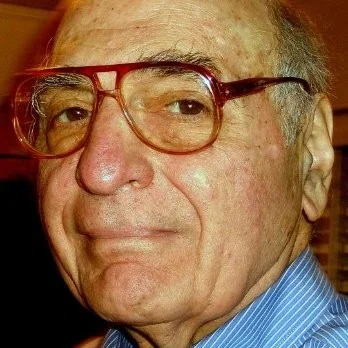 Papazian is a regular commenter on my LinkedIn page, not that I’m all that unique in that claim. He seems to weigh in on just about everyone else’s whose opinions and insights I regularly follow–often he’s the only one who even offers his thoughts. And when you read his CV, you begin to understand why:
Ed Papazian started his career at the large U.S. ad agency, BBDO, in 1955 and was a keen observer of the evolution of TV from a media researcher’s perspective as well as that of a time buyer and TV programmer. Along the way, Ed launched the switch from set usage to viewer ratings, pioneered the first TV attentiveness studies, created one of the first computerized media selection models, initiated early cross channel media audience studies, developed new ways to evaluate TV show appeals, and introduced mindset analysis as a way to describe program audiences. He is still active as chief writer and president of Media Dynamics Inc., a well-known media publishing company and consultancy.
Ed also confesses that he became disenchanted with how agencies were choosing to value media research and walked away from his executive position more than 50 years ago to hang out his own shingle. Now I would never pry as to someone’s actual age, but a career now more than 70 years in would suggest that he’s not only been “retired” longer than many of those who are attempting to carry out negotiations have been alive, the world of television barely existed without his detailed and curious mind picking it apart and holding it accountable. You do the math. I find the fact that he’s not only actively engaging but making strong points in mid-2026 downright remarkable.
So when he decided to release a book that somehow manages to chronicle in detail this remarkable media life you bet I found enough spare shekels to download it (I lack both the patience and the funds to go true old school with a physical copy). Here’s how he hyped it on his corporate LinkedIn page:
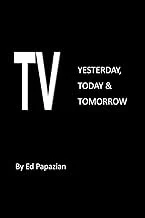 It’s called “TV: Yesterday, Today & Tomorrow,” and it’s available exclusively on Amazon. Ed’s book begins with “Yesterday,” covering TV’s evolution from the early days when sponsors controlled many of the broadcast programs, to the cable era and now, the rise of streaming. It then moves into “Today,” where he discusses TV’s rating fragmentation; problems with audience measurement; the importance of attentiveness indicators; why the upfront persists; how TV time is sold and bought; how advertisers now look at “TV;” and how TV ad campaigns work and are measured. Finally, the book closes with a look at “Tomorrow” and the many factors that will play a role in the future, with some interesting predictions.
To be sure, it’s anything but a breezy read. Papazian does spend a disproportionate amount of time on the “yesterday” portions, at times drifting into overly detailed recollections of upfront negotiations from more than sixty years ago. The idea of choosing particular shows and networks to sponsor based upon how many stations were in one’s lineup and what percentage carried “in pattern” is nowadays wholly irrelevant given the ubiquituous availability and co-mingling of streaming viewership. It does explain why some antiquated telephone book-sized quarterly books that I was urged to parse at the outset of my career that would break out market-by-market viewership of network programming still existed, even though at that point those issues only mattered in daytime and late night. People like Ed needed and likely demanded their publication, and at least now after all these years I now know why.
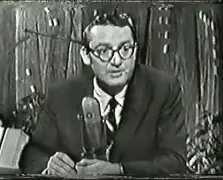 But when one looks a bit more globally at some of his war stories one begins to appreciate all the more the revelations that still have applications today. For example, did you know that for as much as Johnny Carson dominated late night television and set the gold standard for those that have followed him, his predecessor Steve Allen was actually a ratings flop despite the critical acclaim lavished on it then and now? With numerous defections and delays across an impatient affiliate line-up, NBC seriously considered abandoning the daypart before Carson’s predecessor Jack Paar–with a distinctly less comedy-driven format than Allen or Carson–was able to right the ship? Gives a little bit of credence to why today’s TONIGHT SHOW was stuck in third place until this month by two much more topical news-driven shows.
Even more relevant were the attempts Papazian spearheaded to move beyond mere ratings and focus on more qualitiative aspects such as socioeconomic status and attentiveness. The Simmons report, which Papazian was an early champion of, was a massive undertaking that involved a far more intense diary-keeping process than either Nielsen or Arbitron was seeking. Given the lack of technology available at the time, there were frequent debates about the level of accuracy these tomes revealed. I was personally involved in several come-to-Jesus discussions with ad sales executives of various vintages who intensely debated my employers’ continued support. Eventually the nay-sayers won out, believing that the advent of peoplemeters and multiple streams of data were as equally efficient and less costly in separating wheat from chaff. But now as we operate in an ecosystem the focus in keeping people within an app or a platform and away from competitors as long as possible, those sorts of metrics once again matter.
With the unique perspective of one who has more than seven decades of actual receipts that I suspect occupy a significant portion of his attic, Papazian reminds that a typical viewer is now exposed to expontentially more ads than ever but retains far smaller percentages of their messages. It means a tremendous amount of the billions of dollars invested in ad-supported content is wasted, which makes alternative forms of marketing much more attractive to those who fuel the fires. For all of you out there that continue to cry in their beers when number one shows get cancelled for what you continue to obsess are purely politically motivated reasons, I strongly suggest you invest a few minutes in some of the points Papazian makes, particularly in his disproportionately small Nostradamusian “Tomorrow” chapter. You might actually find yourself finally considering that there can be more than one truth–and if one actually did projections, they’d become all the more self-evident.
 I honestly have no idea how this will all pan out, though the cynic in me that sees the dark ckouds of M&A and AI gathering overhead is inclined to be anything but upbeat. But I do look forward every day to waking up to some new revelation that might amend my thinking. It’s pretty clear than Ed Papazian still has that mindset as well. Just like another inspiring ex-colleague of mine, Norman Lear. And my ex-grandmother-in-law. I guess I’ve got a lot of roadway ahead. I sure hope Ed does as well.
Until next time…
Click here to purchase your copy of TV: YESTERDAY, TODAY AND TOMORROW.