
When alert after alert show up on my device that click through to yet another doomscrollable story on how media companies are choosing to solve their problems in ways that impress few and piss off many, I’m honestly overwhelmed with frustration. If these knee-jerk reactions weren’t throwing still more logs on the fire that is the media apocolypse that has cost so many people, including moi and hundreds of one-time colleagues, their careers and livelihoods, with lots more apparently pending, I might actually be laughing at how today’s decision-makers are motivated. Rather than introduce worthy products and innovations that people actually want, they continue to respond primarily to the demands of shareholders and pundits who have draconially determined that certain ways of doing business are toxic and offer not enough upside for them to support.
Take for example what went down with our old friend Yosemite Zas this past week, as BUSINESS INSIDER reported:
 Warner Bros. Discovery is separating its linear television business from its streaming business and film studios.
It follows a similar move by Comcast, which announced in November it would spin off all of its NBCUniversal cable networks except Bravo into a stand-alone company.
The new corporate structure will be complete by the middle of next year, WBD said. Unlike Comcast, WBD won’t spin its assets off into a separate company.
A new Global Linear Networks division will house TV properties like the Discovery Channel and CNN, while the Streaming & Studios side will be the home of Max and movie studio Warner Bros. Motion Picture Group.
“Our Global Linear Networks business is well positioned to continue to drive free cash flow, while our Streaming & Studios business focuses on driving growth,” WBD president and CEO David Zaslav said in a statement.
But as a companion piece from the same publication noted, this is literally a rearranging of the deck chairs on the Titanic:
- Are you still paying for cable TV?
- If so, consider that the people who own cable TV networks seem increasingly uninterested in hanging on to them.]
To be clear: WBD is not saying that it intends to ditch its cable networks, like TNT and Food Network.
Instead, it’s using hand-wavy language like “a new corporate structure designed to enhance its strategic flexibility and create potential opportunities to unlock additional shareholder value” to describe what it’s doing.
But to be super clear: The reason WBD is doing this now is so it can get rid of its cable operations in the future, perhaps by merging them with the cable TV spinoff that Comcast has planned for next year. And, just as important, because it wants to tell Wall Street that a breakup is on the table.
While this song-and-dance was making news, what was coming down from the mountaintop of one company WBD only wishes its stock prices emulated wasn’t exactly joy-inducing news either, as the LOS ANGELES TIMES’ very very busy Stephen Battaglio reported:
 Cord-cutters are again dealing with the reality of rising programming costs after YouTube TV told subscribers Thursday that their monthly fee will go up by 14% to $82.99 starting in January.
Needless to say, many dissatisfied customers took to social media after learning of another price increase to YouTube TV, the streaming package marketed as a budget-friendly alternative to the traditional multichannel services.
“I’m so glad that I made the right financial decision in 2018 and ditched my $89/mo cable package so I can now pay $83/mo for YouTube TV, $23/mo for Netflix, $16/mo for Disney+, $13/mo for Paramount, $15/mo for Prime, $10/mo for AppleTV, and $21/mo for HBO,” wrote Chris Bakke on X.
Many of the 8 million subscribers to YouTube TV depend on the service as a cost-efficient way to get live broadcast and cable channels to supplement their favorite streaming services such as Netflix and Amazon’s Prime Video. YouTube TV is especially popular among sports fans who have abandoned cable but still want access to live sports.
After YouTube TV posted information about the increase on X, readers added a Community Note to point out the price has risen 137% since the service was launched in 2017. The last price hike was in March 2023.
Even YouTube TV acknowledged that the rising costs may be too much for some of its members to absorb. The company posted a link on X to where consumers could pause or cancel their subscriptions.
In my mind, I’d see that as a window of opportunity for someone like Yosemite Zas, or perhaps the patsy he can cajole into taking his distressed assets off his grubby little hands.
But in the minds of the genuises he apparently has access to, his challenge is that there’s a generational divide between those who are distressed and those who are seen as the wave of the future–those for whom YouTube is defined as an outlet for content they want to see in the form they have been weaned on.
 This was a point being driven home on my LinkedIn feed by none other than Garth Ancier, a one-time president of networks now controlled by Zaslav and his counterparts at Comcast, yet still young enough to have had recent experience in the New World Order to share this telling nugget in response to a lament of a former colleague that was similar to, but far less nobly worded, than mine:
The media consumption habits of 18 year olds are now so fundamentally different from 54 year olds that, well, they scarcely overlap…and the behavioral “dashboards” we’ve all been privy to really drive that point home. (Example: I was blown away in 2017 when the weekly dashboards at Vimeo showed that for the first time ever more folks were watching long form content – longer than 15 minutes – on a phone screen through an app, than ANY short form content)
I really don’t know how informed senior execs are in this world, but I suspect “not informed enough”. I try to educate colleagues when I can…if they are intellectually curious. Most times I can communicate the basics, but getting through everyone’s brains that we can now target everyone in the civilized world by person…I usually get blank stares.
That revelation from Ancier took me to a revisiting of an even more recent attempt to attack that dilemna–Quibi.
 Yes, the very mention of that name is revolting to the investment community that gave its champion Jeffrey Katzenberg and his aide-de-camp Meg Whitman billions of dollars, tons of original content and incalculable gravitas to try and reinvent the wheel. But as THE VERGE’s Julia Alexander enumerated in detail in October 2020, at that time everything that could have gone wrong for that business did. Among her more click-worthy category headers
- Nearly all of Quibi’s shows were terrible
- People’s daily lives changed; Quibi didn’t
- If I’m on my phone, I’d rather watch TikTok
- And yes, the pandemic
I’ll tacitly add that the same obstinate Napoleon complex victim who orchestrated this was just behind the plan of attack for the Democratic National Committee in 2024.
So hey, Yosemite, maybe you might be able to do a little better? You’re still controlling your content flow, unlike Comcast, if for no other reason than your streaming services are far more dependent on them than Comcast’s. And the last time I checked, your originals are waaaay better than were Quibi’s. (For the record, the majority of them wound up on Roku, and I haven’t seen a damn thing from that camp about their popularity?). Maybe before you put the “For Sale” sign out on your lawn you could create a short-form content option for these brands that, say, a cable operator might be able to offer in a more turnkey manner? As a further inducement for those now lamenting both the cost and the navigatability of streaming?
And for anyone who may think this is just old school “ok Boomer” rambling, do consider the lesson that one old-school technology has taught us all this year,as START MOTION MEDIA’s Michael Zeligs observed this past week:
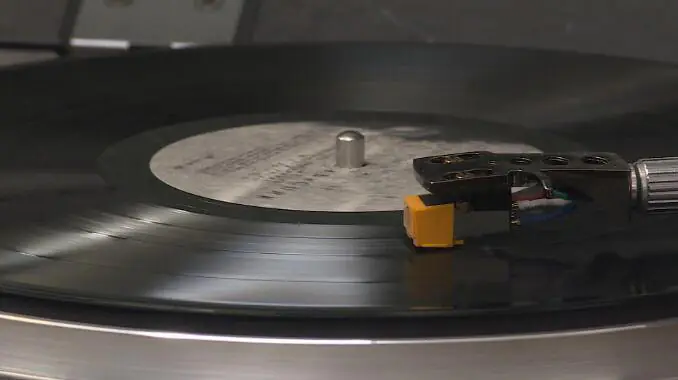 In a world dominated by digital downloads and streaming services, the resurgence of vinyl records in 2024 may seem as improbable as a pigeon commandeering a Tesla through the bustling streets of San Francisco. Yet, here we are, witnessing this analog anomaly swooping in like a hipster superhero. Recent years have witnessed a surge in vinyl production, much like the unexpected return of bell-bottom jeans. The Recording Industry Association of America reports that vinyl sales in 2024 are projected to reach record highs, with manufacturing plants ramping up production to meet the demand.
KFYR-TV’s Ariana Gonzalez added further evidence in a piece she released yesterday:
The vinyl revival can be dated back to 2007. A report published by the Recording Industry Association of America in 2022 stated vinyl records saw a 17% increase in revenues. Last year, for the second year in a row, vinyl record sales surpassed CD sales.
A worthy product with innovations that people want that’s actually growing a perceptually dead business sector despite what pundits have declared.
I would hope my astute colleague Mr. Ancier might agree that’s right in line with the counsel he’s attempted to impart, blank stares notwithstanding.
I look forward to a day where perhaps one or both of us might be taken a notch more seriously by those that think they’re building a better mousetrap. Do bear in mind if it wasn’t for folks like us who built these empires, none of y’all would be in the positions to screw them up as royally as you now do.
Until next time…