
There seems to be an awful lot being written of late by just about everyone who even thinks about Netflix. There is an overriding reason for all of that, as THE MOTLEY FOOL’s Daniel Sparks pointed out when the stories began to crop up last week:
 Netflix (NASDAQ: NFLX) reports second-quarter results on July 16, and it does so from an unusual spot: the business keeps growing, yet the stock has been sliding for a year. Shares trade around $76 as of this writing, down about 42% from the high of $130.23 they set last summer — even as revenue, profits, and the company’s nascent advertising arm all keep climbing.
Netflix’s problem, if you can call it that, isn’t the business. In the first quarter of 2026, revenue rose 16% year over year to $12.25 billion, helped by membership growth, a price increase, and a fast-growing advertising business. Its operating margin, meanwhile, widened to 32.3% from 31.7% in the same quarter a year ago. The company has stopped disclosing subscriber counts every quarter, but it topped 325 million paid memberships and is now entertaining an audience approaching 1 billion people.
If results are this solid, why has the stock lost 42%? Two reasons. First, Netflix came into 2025 with expectations set impossibly high, and once its guidance stopped clearing an ever-rising bar, that premium began to unwind. Second, the company spent months tangled in a takeover fight. Netflix had agreed to acquire the Warner Bros. studios and HBO Max from Warner Bros. Discovery in a deal with an equity value around $72 billion, which drew a rival bid and a stretch of uncertainty — before Netflix ultimately walked away and turned to share buybacks instead.
So in essence Netflix is a victim of its own success and its own obsession for defining what we consider to be entertainment. Their singular goal seemingly has been to lure you into their walled garden and keep you fat and happy enough to be too lulled into submission to press your remote or even voice-command your screen back to the cold cruel world of infinite options–where YouTube reigns supreme.
I suppose kudos are in order when someone acknowledges a problem–although it’s debatable there really is one, if one objectively looks at how much they dominate their trad studio-driven competitors. But since Teddy Bear and his team are convinced there is, then they’ve opened themselves up to the kind of uncomfortable feedback I’m driven to offer.
Some of your choices clearly suck.
The news that they are investing in non-exclusive windows for many of the short-form franchises that drive time spent on rabbit holes, including the ever-spreading vertical video options that make TikTok and Reels the choice of a new generation, is to me a knee-jerk reaction at best. Witness the defensive stand that the byline-shy ECONOMIC TIMES quoted one of its architects taking as it rattled off the upcoming array of tiles and destinations:
The streaming giant has signed agreements with publishers including Penske Media, BuzzFeed Studios, Conde Nast, Hearst Magazines and People Inc. to feature a range of news, lifestyle, celebrity and how-to video programming…. The content — spanning episodes from around two minutes to 20 minutes or more — is set to begin rolling out on August 3 for subscribers in the United States, Canada, the United Kingdom, Ireland, Australia and New Zealand. The deals bring recognizable digital and print media brands onto Netflix’s platform, including Vanity Fair, Vogue, Rolling Stone, Bon Appetit, People and Variety. Popular series covered by the agreements include Vanity Fair’s “Lie Detector,” BuzzFeed’s “30 Questions” and Variety’s “Know Their Lines”.
“Members don’t just want to watch a show or film and move on — they want to keep exploring the stories and personalities they love long after the final credits roll,” said John Derderian, Netflix’s vice president of animation series and kids and family TV.
Yes, indeedy, John. Your members already ARE engaging with such content, just not within your measurable parameters. We know they’ve still got enough energy to occasionally navigate the net because there’s also plenty of other reporting out there that points out they’re not coming back to what you contend are your hooks at quite the rate you banked on. TV INSIDER’s Erin Maxwell summed that phenomenon up:
In a new report from Bloomberg, the streaming giant is finding it harder and harder to keep viewers coming back for more as the second seasons of its hit shows are losing their audiences at a record rate. According to the report, many series that were huge successes in their first season saw a significant drop in viewership when Season 2 premiered. Within the first four weeks of release, second seasons attracted between 30% and 70% fewer viewers than their first seasons…
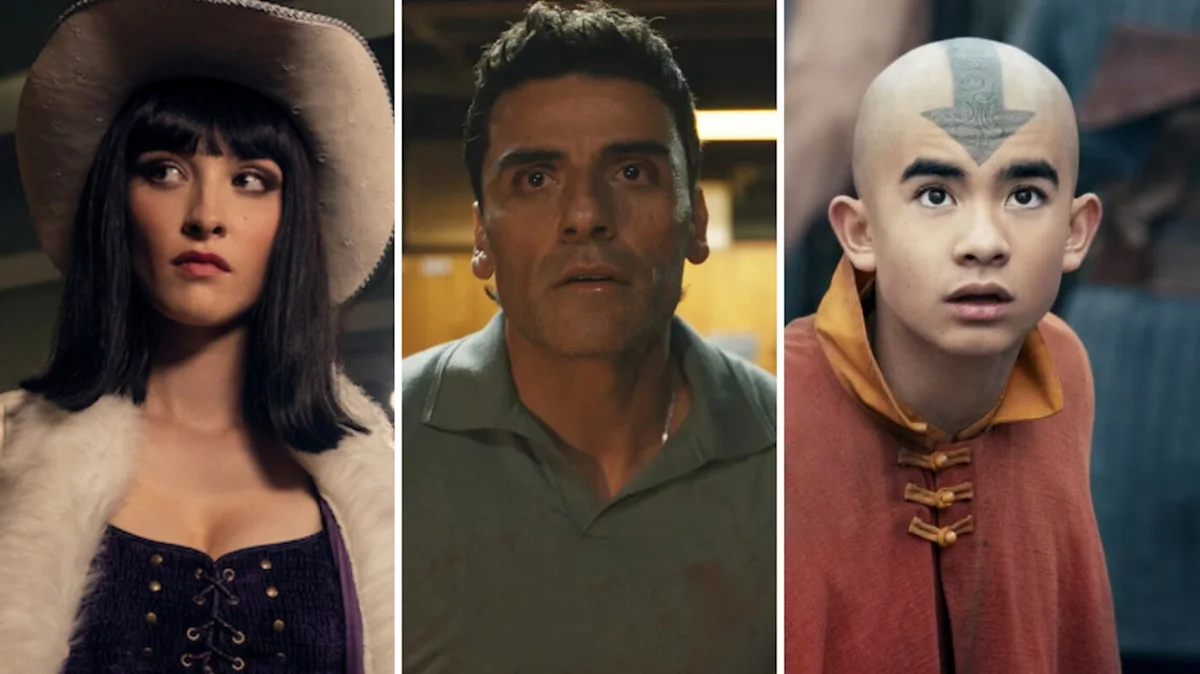
One of Netflix’s most-watched shows of 2023, One Piece, returned for its second season in March 2026 and saw a 30% drop, the smallest decline of any returning show in the report. Running Point and The Four Seasons both fell by 50%, while Beef, which returned in April 2026, dropped by 70%. The Night Agent lost 50% of its audience for its second season and another 35% for its third. The second season of Avatar: The Last Airbender, which debuted in June 2026 and was one of Netflix’s most-watched titles back in 2024, suffered a drop of more than 60% in its first week.
With news this delicious there’s plenty of doctors and those that play one watching TV who believe they have the smoking gun reason why this is happening. A quick Copilot recap reveals plenty:
 1. Long gaps between seasons
Netflix often funds a show for one season, then waits months to a year before deciding to renew. By the time a second season is written, shot, and released, close to two years have passed. During that time, viewers may have moved on to other shows, making it harder to reengage Techweez.
2. Shorter, irregular episode releases
Many returning shows now have 8–10 episodes split into chunks over months or even years. This breaks the binge rhythm Netflix built its brand on, and audiences may forget the plot or lose interest before the season finishes TV Insider+1.
3. Lack of strong word-of-mouth pickup
Unlike weekly releases (e.g., House of the Dragon), Netflix’s binge model doesn’t keep a show in conversation for months. Without ongoing buzz, viewers are less likely to return Techweez.
4. Marketing and promotion gaps
Some returning shows get little promotion, especially if they’re not tied to major events or holidays. This reduces awareness and makes it harder to draw back in viewers dendronva.org.
5. Viewer fatigue and content overload
With so many streaming services and shows, audiences are more selective. They may abandon a show if it doesn’t deliver quickly or if they’ve already seen similar content dendronva.org.
6. Creative changes and audience expectations
Some shows change tone, cast, or story direction between seasons, making them feel like a different show altogether. This can alienate loyal fans The Guardian+1.
All are, to an extent, valid. But there are caveats to most that I would like to believe someone within Netflix is grounded enough to consider.
The converse to the first point is also true–shows that have strong internal support and/or creator leverage manage to get renewed even before a season drops. Often that’s a result of creative dealmaking where second season escalators and talent schedules are pre-determined upfront, or the platform decides to split an order in the manner than point 2 notes. That was particularly true in the case of STRANGER THINGS, a franchise with an end date that Netflix did its best to kick down the table in order to delay the inevitable as much as possible. That makes for shorter and theoretically easier binges, which I suspect they believe their viewers still consider a plus. And yeah, Netflix considers completion rate as one of their chief key performance indicators that determine a show’s fate.
But unless Netflix has found a way to place a camera in their subscribers’ devices and actually checked if they’re actually watching, it’s all the more likely they are happening statistically and not necessarily behaviorally. When the first season of a show that gets dropped all at once performs well on that metric it is the same net experience as someone who buys a ticket for a movie and doesn’t walk out in the middle. They may have fallen asleep or were still waiting for their chicken fingers to be delivered to their seats. Not to be one of those Audiences Of One, but I know that’s happened to me several times. When a sequel or spinoff was released I sure wasn’t going out of my way to come back.
And since a majority of shows are greenlit without pilots, there’s rarely compelling evidence that these shows were all that launch-worthy in the first place. Yeah, execs gotta flex their chops and take a stand, and you can’t always be slaves to a bunch of schmoes you feed sandwiches to weigh in on what may or may not be fully representative of what the season actually will be. But ya know, Teddy, what you’ve been falling on your sword lately to endorse just ain’t cutting it.
We also learned later last week of a couple more darts being thrown against the wall that seems to be a nod to old school ways, as PC MAG’s Jibin Joseph reported:
(T)he streamer’s top executives have discussed adding live TV channels to increase the time subscribers spend on the app…These channels would continuously stream programs, shows, and movies from a specific genre, so subscribers wouldn’t have to spend time deciding what to watch. The move comes as services like Tubi and the Roku Channel continue to see rapid growth, the Journal notes…Another big change being mulled at the company is the integration of other subscription-based platforms, such as Peacock. Amazon’s Prime Video and Apple TV already sell subscriptions to competing streaming services through their own apps, and Netflix is now exploring the same, sources tell the Journal. The bundled services would appear as tiles somewhere on Netflix’s homepage, they add.
All of these spitballs seem almost sinister in their goal to trick viewers into artificially spending more time engaging, which has now become the default metric for determining relative success–especially since Netflix accelerated the industry into ceasing to report subscriber growth, deeming it outdated and irrelevant. Besides, much like we’ve seen with other new technologies, there’s a ceiling to how many folks you can convince to adopt it in the first place, so the story ceased being a positive one long before.
Does Netflix really have such disregard for the tastes of their chillers that they think lulling them into submission is the solution? Have they even bothered to look at the readily available data that would be able to empirically show what other services their viewers are watching–maybe even isolate a few actual shows of consequence in the process? It’s called a duplication study, kids, and while it may only be able to be performed on those within the Nielsen connected screen and change sample it’s a helluva lot more representative than the parochial internal data you obsess over and insist your clients accept as gospel.
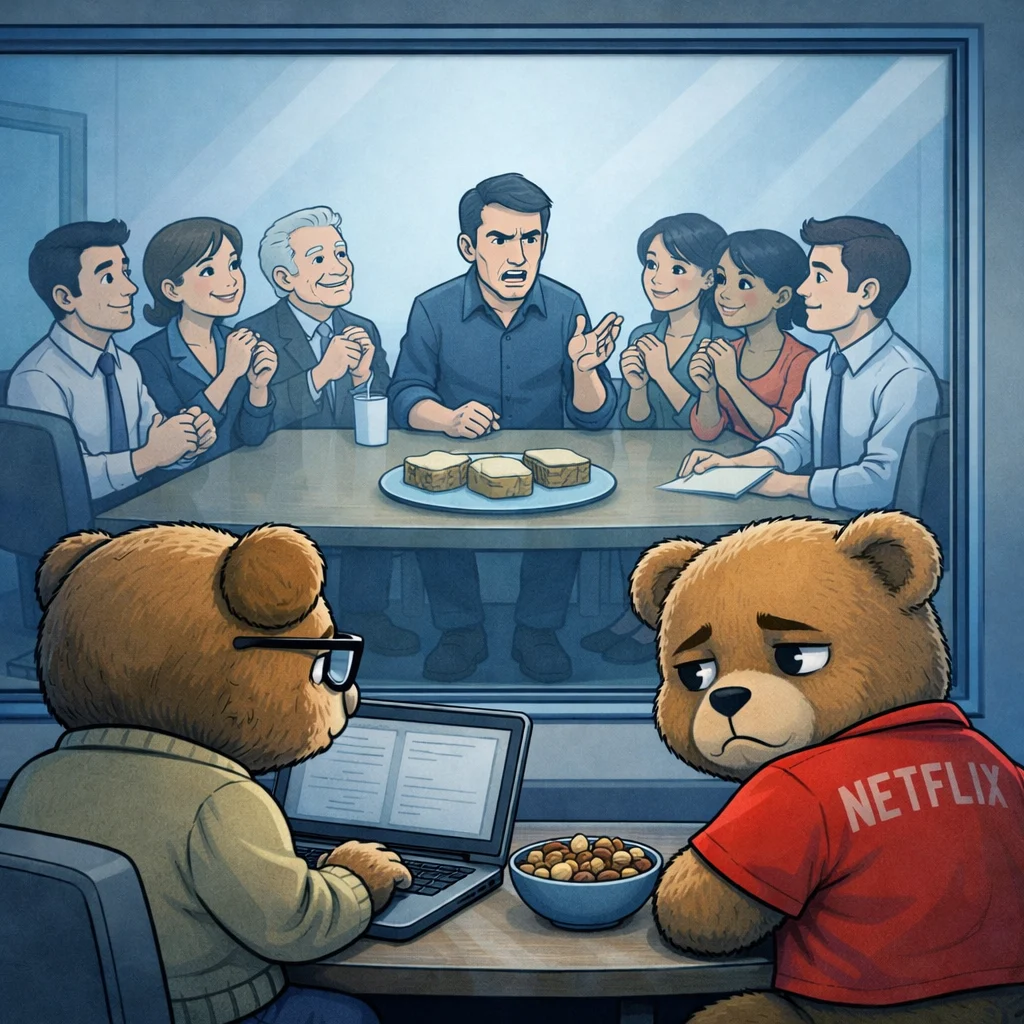 Or maybe you could directly ask a representative amount of them what those alternative choices and behaviors are when you’re showing them a pilot for a series you don’t shove down their throats all at once. We Luddite TV researchers used to do just that, and then we’d look at real retention rates of viewership and awareness over a period of weeks. You now have the ability to address your subscribers directly and even recruit them to remote test groups, thus sparing you the expense of Jersey Mike’s trays and schlepping to airports that I used to deal with. When was the last time one of your brainstorming sessions put that on your whiteboard?
You’re apparently open to going to back to the future to appease those nasty investors, Teddy, and your clock is apparently ticking. You and yours seem to be struggling for ideas. Hope you consider adding these to your considerations. No charge, for now.
Until next time…