
A fascinating bit of tenacious niggliness was dropped earlier this week by THE ANKLER’s Elaine Low that took a deep dive into what was trumpeted as a big win for striking creatives during the lost summer of 2023. As trade media’s most unapologetic tennis lover framed and reminded her readers:
When thousands of writers and performers picketed for months outside the studios in the dual strikes of 2023, they were seeking a range of changes from the studios — including higher minimum rates, foreign residual hikes and new rules for writers room sizes and employment periods. But all of these negotiation points tied back to one essential demand: giving WGA and SAG-AFTRA members fair participation in the streaming boom amid a rapidly changing ecosystem that they felt had left them behind. (“Mama needs a paycheck,” read a typical picket sign.)
The post-strike WGA agreement inked in the fall of 2023 promises bonuses of 50 percent on top of the standard residual to be doled out to credited writers of a streaming series that is viewed by 20 percent or more of a platform’s domestic subscribers in the first 90 days after it premieres. That’s $9,031 for each credited writer on a half-hour episode, $16,415 for a one-hour episode and $40,500 for streaming features with budgets of more than $30 million.
For the actors, that residual bonus is 75 percent, with another 25 percent going into a fund that is to be divvied up among other streaming series’ casts. While it wasn’t what SAG-AFTRA had initially fought for, the union said the bonus would be worth up to $40 million annually.
Well, thanks to the complicated, parochial and at times lackadaisical ways audience information for what started out as AVODs is released and obtained, it’s taken folks like Low and her equally detail-oriented colleagues this long to figure out who exactly came out winners in this battle. I bet you didn’t have on your punch card what her analysis revealed:
 After speaking to multiple sources familiar with the matter, I’ve learned of five series whose writers have been awarded “performance-metric bonus” payments: Netflix’s Bridgerton (Season 3), limited series Griselda (which earned star Sofia Vergara an Emmy nomination) and adventure fantasy series Avatar: The Last Airbender as well as Amazon Prime Video’s Fallout, a post-apocalyptic drama adapted from a video game, and Peacock’s Ted, the Seth MacFarlane comedy series based on his two hit Ted movies.
Low couches her conclusion with appropriate caveats; indeed, she confessed she relied upon her fastidious colleague The Entertainment Strategy Guy for the heavy lifting of plowing through both Netflix’s massive biannual data dumps and his compendium of weekly snapshots where he attempts to extrapolate long-tail conclusions. There was also extended speculation on whether or not this list might be augmented by, say, some relatively strong performance from a noisy yet limited venue such as Paramount+. Indeed, one of her theories is that creatives ought to be rooting for that be true and perhaps start looking for similar opportunities:
(I)f you’re a creative who is shopping your series around town, these initial results might make you look at smaller streamers with renewed interest. Sure, Peacock has only 36 million subscribers to Netflix’s 302 million, but you only need to get 7.2 million of those Peacock viewers to watch your program to nab that reward, versus attracting closer to 20 million domestic viewers on Netflix. (On a platform like Peacock, there are fewer competitors for space on the streamer’s homepage, to boot.)
But by that standard–and I would remind those who negotiated with such fervor to create this redefinition of what’s a big enough hit to merit compensation–you’ve effectively reduced those that actually have reached far more people to second-class citizenship.
If one were to apply the same concept of what is essentially total reach in a live-plus-89 window to broadcast television, a show would need to be seen by roughly 60 million viewers for its creative participants to get that payout. TV LINE’s Matt Webb Mitovich is fortunately one of the few who still provides regular updates on that dying world, and his most recent details on how likely such a threshold could ever be reached gave me ample pause.
 This season’s number one show on the number one network, TRACKER, is averaging 11 million viewers per episode. Reach is a more complicated calculation and involves a number of variables of time spent viewing thresholds and as his fine print confesses multi-platform viewership that Nielsen doesn’t always figure in. There’s also the reality check that the number of episodes available at any point to the average household varies by the availability of time-shifting and technology, not to mention the conditioning of most old-school viewers that binge-watching and catch-up viewing aren’t their preferred ways to process and digest. And since there’s rarely a direct correlation between this metric and ability to sell commercials it’s almost never a calculation that’s requested or conducted.
But I did get asked those questions by executives more curious than today’s crop, especially when heading research for a network that reached substantially fewer households than broadcast. When one was attempting to define impact and appointment viewing, being able to prove that, say, THE SHIELD was seen by a greater proportion of FX viewers than an episode of LAW AND ORDER was being seen by NBC’s viewers there was value in being able to make that statement. What we learned at the time was that it wasn’t as obvious an answer, because shows that have a more loyal audience are actually handicapped by the metric that has emerged as how the unions are rewarding their streaming viewers. That experience gives me great confidence that the likelihood of TRACKER, let alone any other broadcast series, is reaching 60 million-ish viewers in the span that the unions have defined as bonus-worthy, is pretty darn remote.
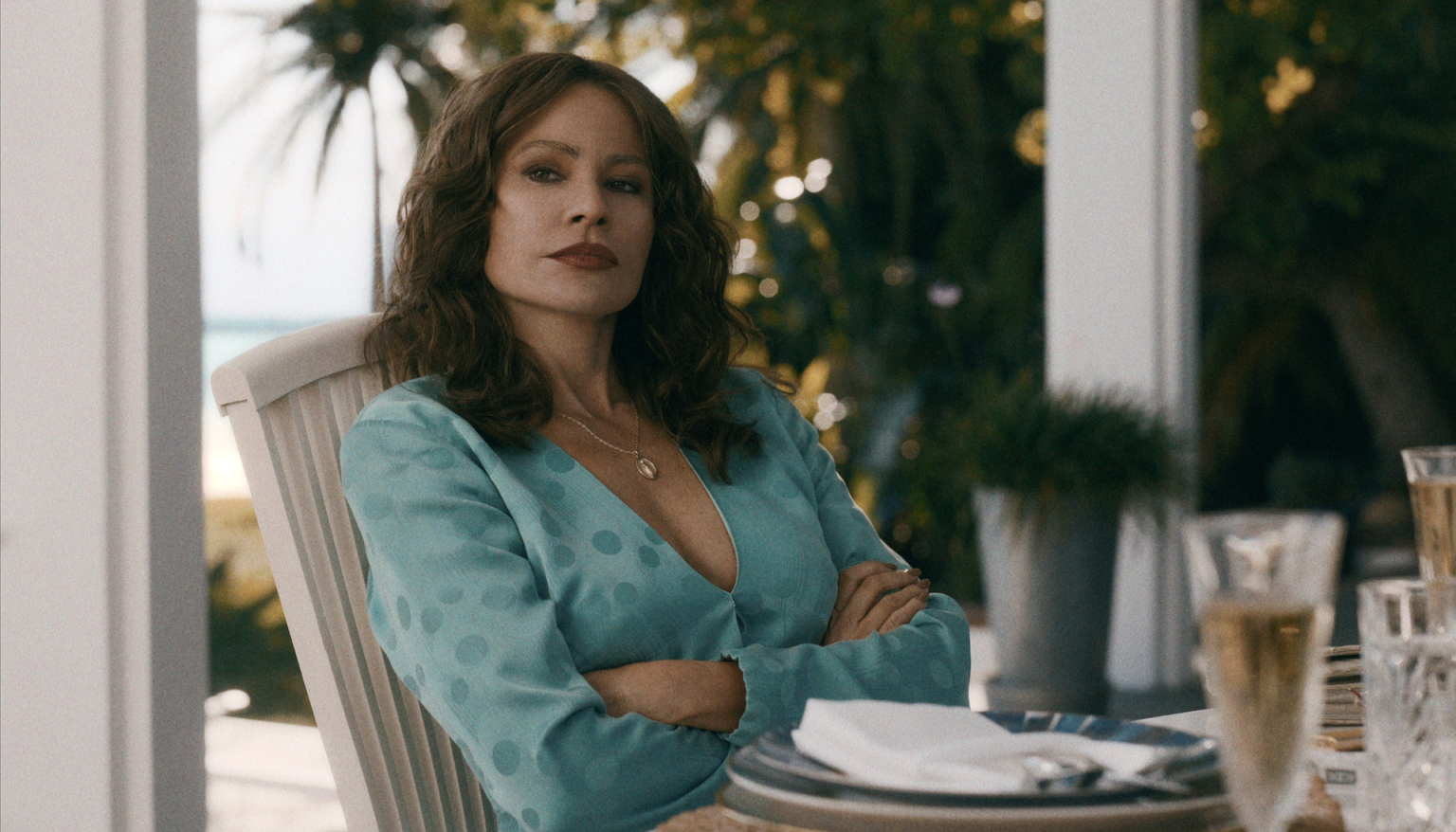 Which begs the question–exactly how valuable was FALLOUT to Prime Video and, certainly, GRISELDA to Netflix? Should those attached to those shows be rewarded so handsomely?
And shouldn’t the folks attached to what by any metric is far more popular than either of them whose likelihood for a traditional back end is severely limited by the self-defining windowing of today’s shows be entitled to some sort of reward? You know like the folks who did TRACKER, or any of those other scripted series on that Top 25 list?
Low goes out of her way to show that those who fought so hard for these spliffs are still feeling vindicated–and even a little defensive:
One senior-level writer of a popular series tells me he’d been expecting a performance-metric bonus payout that didn’t materialize — quite possibly because the show debuted on two streaming platforms at once, dividing ratings. Still, he doesn’t seem fazed, crediting the WGA’s residual increases — such as the foreign streaming residual hikes — for a massive bump in his year-over-year earnings. Taking a gander at his income statements, he says an Apple TV+ one-hour drama that premiered toward the end of 2022 earned him around $8,000 in residuals. A Disney+/Hulu drama that premiered at the top of 2024 has helped him earn more than $63,000 in residuals.
Not everyone has seen the same kind of pop. A showrunner of one of the five series noted above that qualified for the bonus tells me the performance-based payday was “better than nothing, but nowhere near traditional TV residuals.” “It’s a good start,” this person adds. “We got a foot in the door.
The Directors Guild of America — in case anyone missed it last year — retroactively made a similar “success bonus” (modeled off the WGA’s) a part of its three-year contract with the AMPTP, the group that negotiated on behalf of the studios. The DGA anticipated that the streaming performance bonus would apply to only a handful of series. “We expected it to be that way,” said the spox. “It’s nice for the folks who get it, but we always knew that in the overall residuals picture, it was going to be a small amount.”
For an industry still dealing with the reset that those strikes allowed studios and platfroms to engineer that have seen the number of shows produced drop dramatically and those that are shooting increasingly doing so outside Los Angeles, I can’t help but get a little red in the face at such post-mortem hubris.
At bare minimum, the WGA, SAG and DGA need to revisit the thresholds they were arm-twisted into agreeing upon in their quixotic quest to get back to work. As we’ve seen thanks to the efforts of Low alone, they were unrealistic goals to achieve the kind of overall impact their members were hoping for. And had they actually brought some readily available experience folks into their camps when this was being discussed who knew this perhaps these results wouldn’t be so surprisingly minimalist. Now that we’ve actually seen some tangible results–or lack thereof–maybe building such a case for the next round wouldn’t be such a bad idea? If a reporter and a “strategy guy” can do all this, imagine what research experts could do.
Until next time…