
For me, the summer of ’75 was my summer of ’42. No, I didn’t have a hot mom taking my technical virginity, but I did make some friends outside my usual circle of nerds for the first time when I earned the princely sum of $25 (plus tips) working as a counselor at the day camp I had attended as a kid. And one in particular who I somehow bonded with was a slightly older and therefore worldlier colleague who proudly wore a T-shirt with what first appeared to be Hebrew lettering that once you looked close would reveal itself to be a stylized messaging of “f–k you”. Plus, he was a huge Mets fan. We quickly became friends.
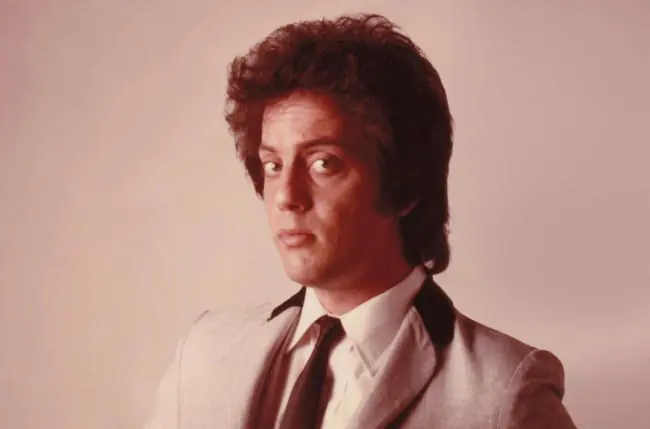 And what I came to learn through this worldlier older friend was his other passion–an undying love and appreciation for an then-emerging singer named Billy Joel. Sure, I knew who he was–even at this early juncture, his signature PIANO MAN had been a hit. But I was then (and yes, as I still am) much more into Elton John, who had by then achieved far greater fame with a broader array of tunes that would feature his exceptionally talented hands flailing over keyboards with almost superhuman dexterity. My new friend urged me to watch Joel in action if I truly wanted to see something special. He was nowhere near as ubiquitous and it was before MTV so I’d have to seek out obscure appearances on shows like MIDNIGHT SPECIAL or some PBS concert series. But sure enough, I was even more mesmorized by his stylings than I was by Elton’s.
My experience was addressed early on in the first part of HBO MAX’s documentary BILLY JOEL: AND SO IT GOES which dropped on the service Friday night. And INDIE WIRE’s Christian Blauvelt took note of how Joel explained what I saw–and even more importantly, heard–in the review he dropped earlier that day:
His “me against the world” demeanor is there in so many different ways through “And So It Goes.” One of the best is a TV clip from the mid-’70s when Joel disputes the idea that he and future touring buddy Elton John have much in common just because they’re both rockers who play the piano. He shows off the differences in their styles: Elton is very rhythmic in his piano playing, while Joel insists he himself has more of a “five-finger” approach, indicative of his classical training. It’s almost like that moment in Clint Eastwood’s “Bird” when Charlie Parker, bemused by the relative simplicity of rock ‘n roll, tries out a rocker’s saxophone himself “to see if it can play more than one note.
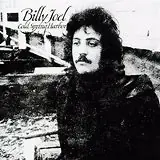 Joel was indeed as gritty and aggressive as John was flamboyant and over-the-top. But being a New Yorker who was certainly familiar with the Long Island towns of Hicksville and Oyster Bay where he came of age, I could certainly relate to his roots far more than I could of those of someone from England. And my friend would bring cassettes of his songs to help get us through our interminable bus rides on day trips to both educate me and calm myself. The PIANO MAN album which contained the majority of his hits was the most ubiquitous but even the underwhelming STREETLIFE SERENADE hooked me. My friend even convinced me to seek out the even more obscure first album he recorded in 1971, COLD SPRING HARBOR, recorded before his storied alliance with Columbia Records. I found an album hidden behind his others at a department store on–where else?–Long Island and I eagerly plunked down $13–otherwise known as half my summer wages–to scoop it up.
By the time I got to college and met a number of other Long Islanders who had grown up being less than two degrees of separation away from him, having actually been to some of the bars on the North Shore he played with his earlier bands and occasionally as a solo artist testing out new material even after his initial success, whenever they’d see COLD SPRING HARBOR in my collection my street cred shot up several notches. And at that point I began my own experience with him, going to see him perform live in several different cities as his career exploded with the phenomenal success of THE STRANGER, 52nd STREET and GLASS HOUSES, a triple play of number one albums released during my college years that established him as a Grammy winner, superstar and someone who even my nerdier friends came to appreciate.
Which is why I’m truly hoping those long-lost friends are enjoying AND SO IT GOES as much as I am–particularly at such an appropriate time for its release. VARIETY’s Addie Morfoot explained in her article:
Joel, a six-time Grammy winner and Rock & Roll Hall of Famer, initially wasn’t interested in making the 248-minute documentary. But according to Lacy, Joel’s management convinced him that “it was the right time.” It turns out his team was right. Last year, Joel’s 10-year residency at Madison Square Garden ended, and in May 2025, the singer, 76, was diagnosed with a brain disorder known as Normal Pressure Hydrocephalus. Despite his initial reluctance to make the doc, Joel doesn’t shy away from the dark parts of his personal life and career in the film. His three failed marriages, money mismanagement, and the singer’s checkered past with alcohol are all discussed in depth, making the series a refreshing reprieve from the glut of glossy music docs being released these days.
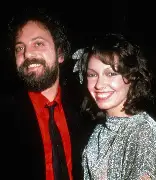 The part I’ve seen deals with all of that, and in particular how it relates to Elizabeth Weber, his first wife and his first real manager. Weber is prominently featured and is interviewed liberally in this portion, refreshingly candid and revealing a lot about Joel through her eyes that even ardent fans like moi never knew. Moorfoot’s reporting of how the documentary’s co-director Susan Lacy explained her presence is telling:
“We knew we wanted to interview all of them, but the tough one was Elizabeth. She spent 40 years not talking about Billy Joel – not mentioning his name. I mean, her son, who was with Billy for the first 16 years of his life, had girlfriends who didn’t even know that he ever had a connection to Billy Joel. That’s how separated they were from that life. So, it was not easy to get Elizabeth to participate. I had to really work hard on that. I told her that I wanted to tell her story. I said, “I think your story hasn’t been told. I think you’ve been misrepresented on social media. I think you’re a huge part of why Billy became Billy.”
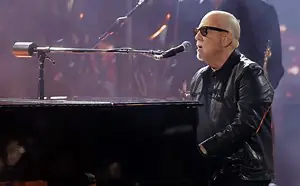 Part Two promises still more back stories of Joel’s challenged personal life, including his more public marriages with Christie Brinkley and Katie Lee. We also see insights and tributes from many of his peers and those influenced by him ranging from a peer like Bruce Springsteen to much younger influencees like Pink and Nas. Not to mention the balance of his catalogue which I was fortunate enough to see live on numerous occasions, most recently during his Madison Square Garden residency. There’s quite a bit of footage from the crowd’s perspective spliced into the storytelling, including some of those concerts where you see multiple generations of fans together swaying in tandem to the chorus of PIANO MAN or bopping along somehow able to keep up with the rapid-fire lyrics of SCENES FROM AN ITALIAN RESTAURANT. Yes, even after all these years we’re invested in the toxic relationship of Brenda and Eddie.
So you better believe I’ve already set several alerts for next Friday. I’m hoping my long-lost friend with the F–K YOU T-shirt has done the same. And so should you.
Until next time…