
Almost forgotten amidst the tumult and tug-of-war involving today’s CNN is that they still have a pretty darn good documentaries division that when given the space can turn it into a viewing destination as worthy as their sister network HBO. First Night and the fact that even Scott Jennings needs a break from eye-rolling his colleagues turned it into such a safe haven last night, even though the subject matter was to many as odious as Jennings.
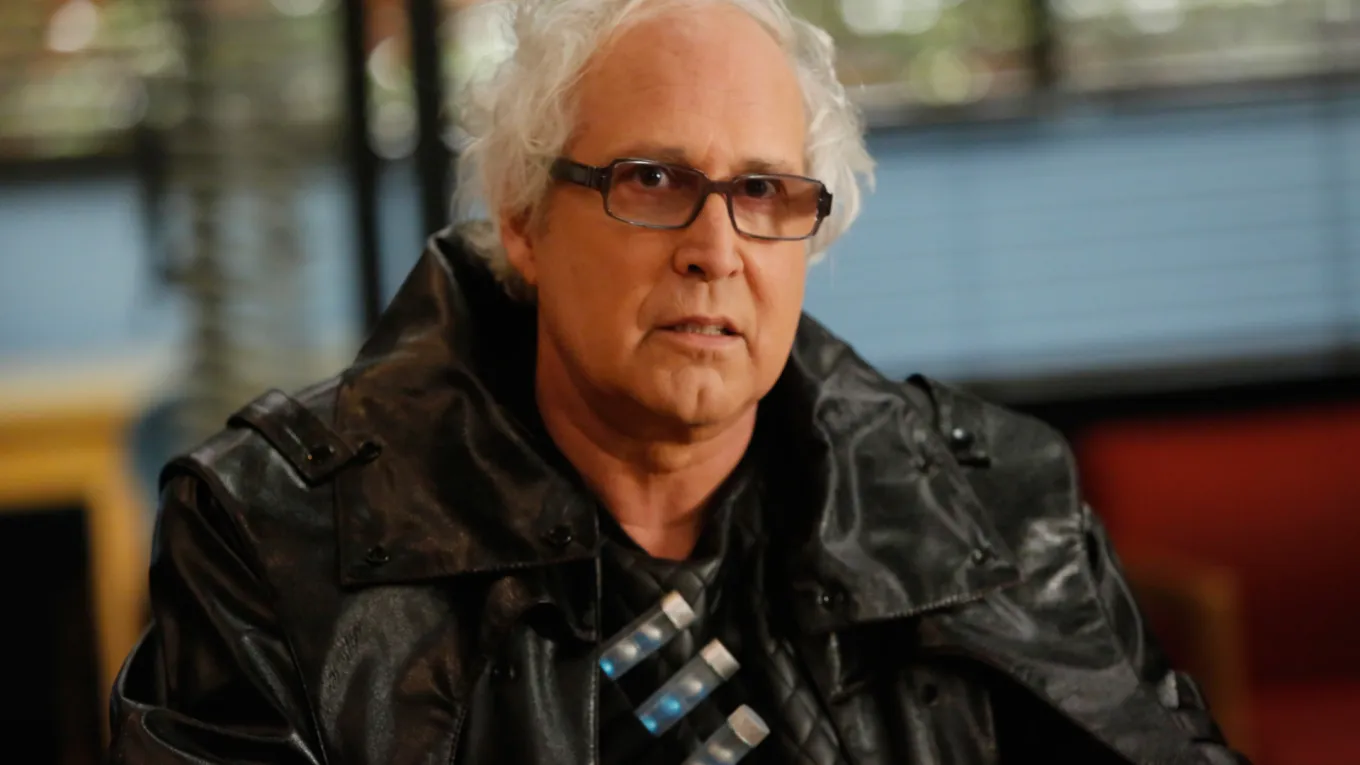 And many of those who feel that way–which includes a whole bunch of those who still identify as his friends–chose to join him in participating in I’M CHEVY CHASE AND YOU’RE NOT, which the network turned prime time over to last night. VARIETY’s Anna Tingley explained in her preview yesterday why I made a New Year’s resolution to view it:
Directed by Marina Zenovich, the CNN Films project arrives amid renewed scrutiny of Chase’s career and conduct, including his fraught exits “from Saturday Night Live” and “Community,” as well as personal health-related revelations, including that he was put into a coma for eight days during the pandemic after experiencing heart failure. The film — which traces Chase’s rise as a foundational figure of modern TV — includes interviews with dozens of the 82 year-old comedian’s personal and professional connections such as his daughter Caley Chase and “Community” creator Jay Chandrasekhar, who reveals in the doc that he was on set the night that Chase got fired.
The documentary is highly anticipated not only because of its long-awaited Hollywood revelations but also because Chase’s infamous attitude made the idea of him collaborating with a director — and letting go of all editorial control — feel like an impossibility. Until Zenovich came along.
“I’d never done an interview where someone was so rude to me,” Zenovich told Variety last month. “But I was so worried going into that first interview with him about how I was going to say to him, like, ‘Everyone thinks you’re an asshole.’ I thought if I did, he would throw me out of his house. So the minute he said that to me, I had a way in.”
“I wanted to figure out who was the real person behind the conflicted, guarded and somewhat fragile man we see on camera,” she continued. “What was behind the surface of his slightly intimidating superstar bravado? Was there any self-awareness there? Having interviewed Chevy at length, I have to say that yes, it’s all there – and a whole lot of pain and heartache too.”
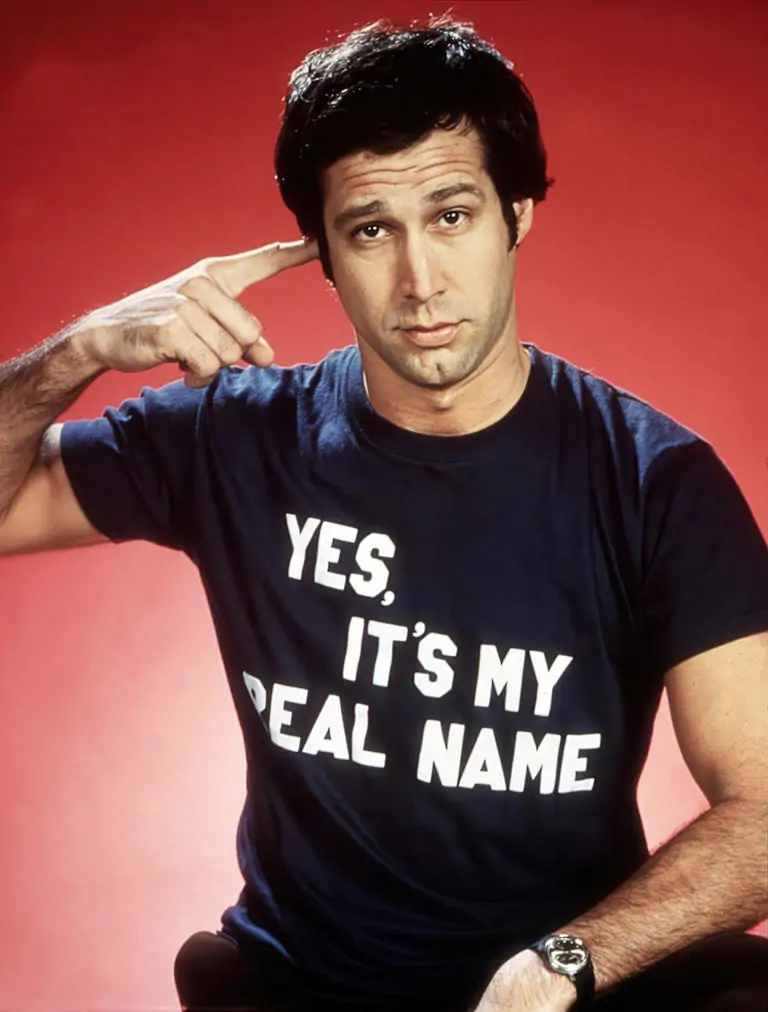 And we got that and a whole lot more, with a liberal sprinking of clips from Chase’s impressive body of work over the last half-century-plus that pretty much matches my own personal viewing algorithm. Of course, I loved him on the early days of SATURDAY NIGHT LIVE–perhaps not as much as the women who fawned over his classic good looks. But some of what Zenovich unearthed that preceded it–including mock concert footage featuring him and John Belushi jamming together–reinforced why he came onto the scene with such impact–so much that a far more forgiving audience than exists today was willing to accept someone who looked not a thing like President Gerald Ford wearing not a lick of makeup as his doppelganger. And as someone who can rewatch FOUL PLAY to the point of exasberating anyone who tried to join me with my cackling (I still can’t traverse the hills of San Francisco without exclaiming “Kojak! Bang Bang!”) and also someone that still finds Goldie Hawn adorkable even as an octogenarian, I totally get how someone like her could overlook his less desirable qualities and willingly jump his bones. I didn’t necessarily say I admired her choices, I just understood why she made them.
Especially after how Zenovich doggedly pursued an even-handed portrayal of good Chevy and bad Chevy over the two-hour length. USA TODAY’s Erin Jensen pointed out several reasons why he became such a complicated genius:
Chase’s parents divorced when he was around 4. His mother, Cathalene, remarried to a man named John Cederquist. He “had a flash anger,” Chase’s half-brother, also named John Cederquist, says, “and he could lash out with a single blow and no talk before or after. He did not take to anything that he perceived as insolence. Chevy was insolent.” Chase, now 82, remembers being slapped at breakfast by his stepfather; he says his mother was also abusive. In the documentary, Chase says he was raised by “an out-of-control woman, who I look back on, and I say I feel sorry for her. She had her own issues. Bad ones.”
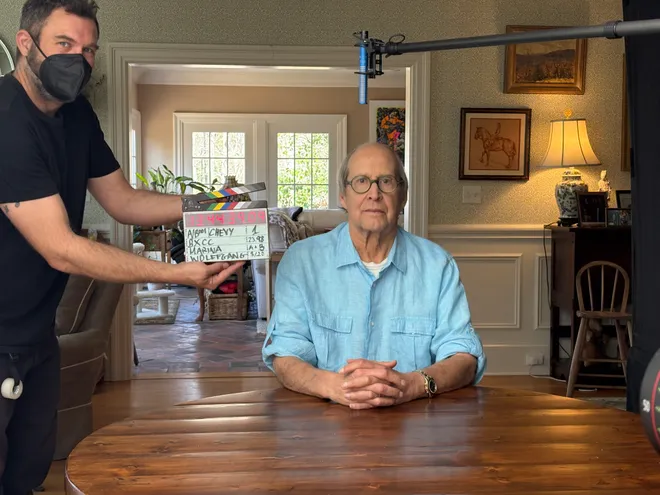 Wife Jayni says in the film: “The first time we stayed together, the first time I went to wake him up, he shuddered. And he explained, ‘Well, my mother would wake me up slapping me,’ from the time he was a little guy.” “Our mother was a bag of cats,” Chase’s brother John says, “certainly on the schizoid spectrum.”
(T)he actor also reveals how hurt he was when he wasn’t included in a sketch for February’s 50th anniversary of “Saturday Night Live” (he was a member of the show’s inaugural cast) and the impact of heart failure, which has affected his memory. The film also addresses his shadow side, which struggled with a reliance on cocaine and alcohol and had a “full meltdown” on set.
Despite these revelations, this isn’t a plea for sympathy by a long shot. And he sure didn’t get any from THE WALL STREET JOURNAL’s John Anderson in his review that dropped Wednesday:
A certain epithet that ends in “hole” is used about a dozen times in the first 15 minutes of this feature-length documentary, and no one familiar with Mr. Chase’s history post-“SNL” will be surprised. Few celebrities of his stature, short of Joan Crawford or Meghan Markle, have been the subjects of such a widely disseminated trashing, and in Mr. Chase’s case it all seems . . . well, not unjustified. The ugly stories told by fellow cast members, directors, agents and innocent passersby have been recounted for years, perhaps most notoriously in the history “Live From New York” by Tom Shales and James Andrew Miller. And very little that transpires between the current-day Chase and his director would belie the notion that Mr. Chase’s brand has gone down a hole of his own digging.
He claims not to remember, or to only vaguely recall, one of the more notorious Chevy Chase incidents, in which as a returning “SNL” host in 1985 he suggested that gay cast member Terry Sweeney play someone with AIDS, and that they weigh him every week. Mr. Sweeney has told the story; so has virtually everyone writing about Mr. Chase. He’s either being disingenuous in Ms. Zenovich’s interview, or is beyond the point of being a reliable source on his own life story.
Mr. Chase was the first breakout star among the cast of “SNL” was all about the arrogance of youth: He was never a standup comic (his disastrous late-night talk show of 1993 proved that), he was a slapstick acrobat and takedown artist. His laughs generally were created not at his expense, or that of his listener, but of some third party. When you do that as a purposely abrasive young comic, it’s one thing. To continue to do it in to your old age just emphasizes how mean it all is. Mr. Chase still tries to be funny here, sometimes desperately, and isn’t.
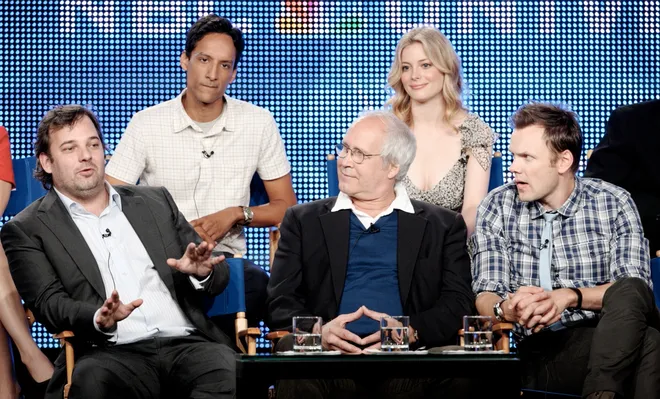 And I gotta tell ya, stinging as that summation is, it pretty much parallels everything I’ve heard over the years from a host of my former colleagues and friends who worked and knew him. He was a regular member of Barry Diller’s storied poker games and not a single person who I knew who was dealt a hand–including Barry himself–were complimentary. No one who endured his ill-fated six weeks as a late night talk show host for a stubborn FOX hell-bent on reclaiming late night after its initial missteps with Joan Rivers could recall any positive memory, starting with the focus group testing of the first episode that left otherwise optimistic executives silent–a pattern that continued every day the overnight ratings confirmed that Chase’s own post-mortem of the experience that he details in the documentary were spot on–“it was a disaster”. Nor were the Sony executives who tolerated his antics on COMMUNITY and defended Chandrasekhar’s version of how he acted. Plenty were still around when the show made a brief and ill-fated pivot to the long-forgotten YAHOO SCREEN service that was right up there in success with the more recent reboot of MAD ABOUT YOU on Spectrum. When several folks desperately seeking a renewal even as the Yahooligans were conceding their platform was doomed discussed ways to perhaps resuscitate Chase’s character–apparently something else that focus groups had contributed- showrunner Dan Harmon stormed out of the room. My only post-mortem reaction was to strongly suggest we start recruiting respondents more grounded in reality.
Yet when one sees the love and joy that Chase exhibits as a loving husband and father, and when one listens to the praise heaped on him by the likes of Dan Ackroyd, Martin Short and Ryan Reynolds that to her credit Zenovich made sure to include, it’s hard not to be a tad more forgiving. And when the story of how he was at death’s door only to rebound to this extent it’s that much more relatable to me. It’s that much clearer for a generation that perhaps only knows him from his on-screen legacies to grasp why he had such a hold on us as a younger performer and why he’s at last ready for prime time–if only for a one-night respite from political rhetoric.
That said, I’m glad he’s Chevy Chase and I’m not.
Until next time…