
I didn’t come to appreciate the brilliance of Ozzy Osbourne earlier in life as so many who are mourning the BLACK SABBATH fronter’s death yesterday at age 76 did. If you picked up anything from my musing about Billy Joel over the weekend, I wasn’t exactly the kind of music lover that would find his sound–or him–very appealing. I tended to be scared of folks who sounded so angry and seemed to rebel against everything I respected with the kind of determination I was wholly incapable of. And the only head I could bite off was that of a G.I. Joe action figure knockoff.
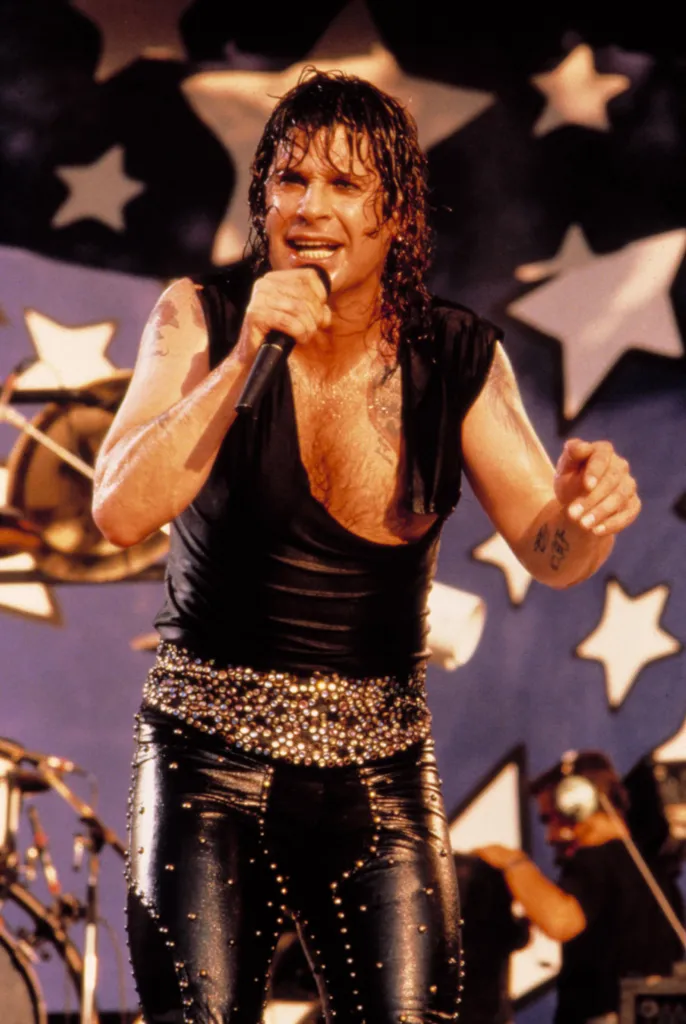 But I did get to become friendly over time with folks who embraced his music, in particular the hits that he authored after his unceremonious divorce from the group he helped found. There seemed to be a pattern with the upbringings of those who listened to heavy metal. Suburban-raised, Italian or Irish, athletic, from homes with anything but idyllic domestic environments. And access to a good set of headphones. In those kind of situations, Osbourne’s music was as much of a tranquilizer as it was a stimulant. And in extreme situations, they’d emulate their hero’s overreliance on drugs and alcohol to further escape their realities. I’m hardly one to admonish such behavior. I chose Wise potato chips and boiled ham from Waldbaum’s versus tequila and cocaine and wound up arguably as addicted.
Eventually, I became evolved enough through those associations to at least appreciate the artistry of top-tier heavy metal performers, and when motivated and sober Osbourne was at the top of that heap. DEADLINE’s Erik Pedersen captured that appeal succinctly in his story:
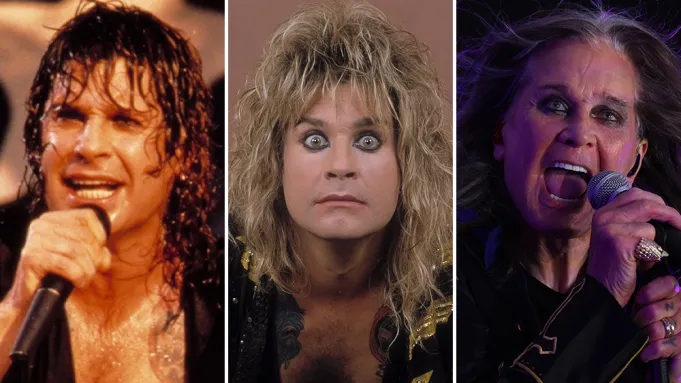 Adored by fans if often just tolerated by critics, Osbourne — “The Prince of Darkness” — and his singular, instantly recognizable voice drove Sabbath’s sludgy, dark, uneasy anthems, many of which were group compositions. He also had an engaging concert presence, traversing stages while clapping at the crowd and regaling them with, “I love you all!”
And as his fan base aged and matured at least enough to start their own somewhat less dysfunctional families, it was far less uncommon to see folks dress up in the kind of counter-cultural attire at Halloween parties while their kids were clad in whatever Disney princess or Marvel superhero garn that happened to reflect the personality of the moment.
It was that degree of connection and a desire to broaden the reach and breadth of what was once exclusively Music Television that ultimately made me much more familiar with Osbourne, an aha moment which former MTV executive Van Toffler related to VARIETY’s Michael Schneider yesterday:
 “We were deep in the throes of reality television in the early 2000s but I don’t think we’d ever had someone over 50 years old featured on any show on MTV in its history,” Toffler said. “We were looking to launch ‘Cribs,’ and we shot a bit with the Osbournes, and we all kind of looked at each other and just felt there is some wonderful, serendipitous chaos and insanity in this house that people would eat up. What a loving, dysfunctional, chaotic, musical family they were. And it just hit us to keep shooting, which went on for years.
When one considers what the Osbourne’s crib looked like–a massive mansion in the heart of the toniest part of LA–with a haunting father figure perpetually dressed in black, an over-the-top and equally bawdy mother, and a couple of kids doing their best to keep up and deal with it all–for all intents and purposes you had the Munsters or the Addams Family. That’s what I’d escape to when my parents argued. And to his credit, Toffler recognized that immense potential for Osbourne to reach a whole new level of popularity:
 “Ozzy had an allegedly sinister style and way about him, and you know, snorted a line of ants on a tour with Motley Crue and all the lore that all of us read,” Toffler said. “.People were scared shitless of him. You know, the prince of darkness. But he’s like a lovable teddy bear. I mean, we know who the tougher one was in that in that family, and it wasn’t Ozzy. So I think it just endeared him to people around the world… And then just getting to sit with him was eye opening and and quite wonderful over the years.”
I had no choice but to become familiar with this appeal, because as it turned out the immense success that show had threatened my very professional existence. Exactly one week before FX boldly entered the scripted drama world with THE SHIELD MTV launched THE OSBOURNES in the very same Tuesday 10 PM time period and with that double-edged sword siphoned off eight million viewers from whatever else was on at the time that we had spent months planning for. To say that my bosses and colleagues–and natch, moi–were concerned would be the epitome of an understatement.
But after a morning of hand-wringing once we had digested those massive MTV numbers we concluded that a) we were ideal counterprogramming to everything including this now-emerging genre that Toffler dubbed verite follow-doc and b) we’d push whatever opportunities there were to pick up as many of their viewers who would be channel-flipping once their half-hour show ended. We scheduled an encore telecast in the 11 pm hour and actually ran promos that referenced it toward the back half of the episode hoping to take advantage of what we dubbed “multiplex” viewers–the kind that would sneak into a different movie in another theatre midway through and then figure out a way to escape the gaze of an otherwise attentive usher to stick around for the opening half of the next showing. We actually carved out a sizable number of such addled viewers–hundreds of thousands at our peak–to help drive our overall average, and we also were able to take better advantage of time-shift viewing given the nature of the genre. THE SHIELD opened with a record-for-us four million viewers and far more critical acclaim. FX was more than able to co-exist with the Roman candle that the OSBOURNES series proved to be, as well as all of the similar series that they birthed.
Yet for as much as the pop culture figures such as the Kardashians and the Lacheys took the mantle of placing extraordinary people in ordinary situations–the Bizarro side of what made shows like THE REAL WORLD and SURVIVOR so successful–none had the unique appeal of Ozzy Osbourne as a protagonist. In a poignant article that brought together the emotional ties that LOS ANGELES TIMES entertainment writers
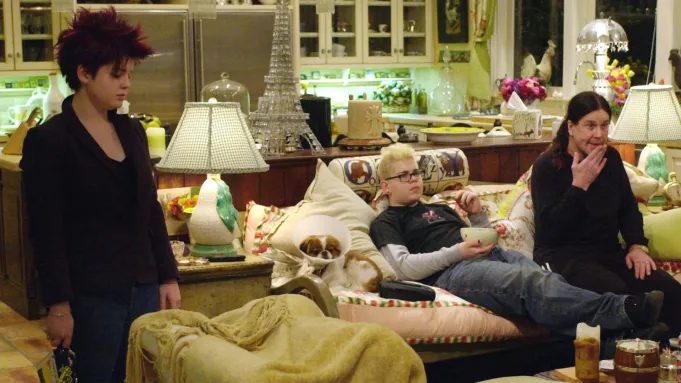 What made the show different was that it didn’t hide who the family really was: They were loud, they cursed, they screamed, they were different — but it was evident that they cared for each other very much. And it allowed us to see a new kind of TV dad, one who didn’t fit the mold. He was often shirtless, often exasperated by everything (which, now as an adult, I find very relatable), and the many bleeped obscenities in tandem with his stammering sometimes made him incomprehensible. And, for me — the child of an alcoholic who was all too familiar with the tangled emotions of loving my dad and hating his vices and the frustration of how quickly that pent up anger could dissipate the second he made me genuinely laugh, which was all too often — watching Ozzy felt like I was watching a version of my dad. He had his faults and he had his past, but he was lovable and he loved back. More than Danny Tanner or Cliff Huxtable or Dan Conner, in my chaotic reality, Ozzy weirdly felt like the most authentic TV dad.
And no matter what one may or may not think of his music, a lot of us can certainly relate to that. Ozzy Osbourne’s version of Jim Anderson certainly made Danny DeVito’s Frank Reynolds all the more believable as a TV father. So I guess not only did my professional career survive whatever threat he may have posed, but arguably it was enhanced by the success he achieved.
 Many thanks, mate. Today I’ll bite on something far healthier than I used to in your honor.
Until next time…