
Because of the inordinate amount of sources that I have signed up for breaking alerts with over the years, when it’s about the passing of someone famous I consider the number of them I get in a five-minute period as a key performance indicator of exactly how big a deal the subject was. Yesterday’s news was an all-time record on my watch–I got up to 12 before I stopped counting. It was close to the end of my self-imposed time limit, and frankly I was too busy saying “oh, damn” because this one sort of came out of nowhere. One of the first came from HUFF POST, which linked to this from and
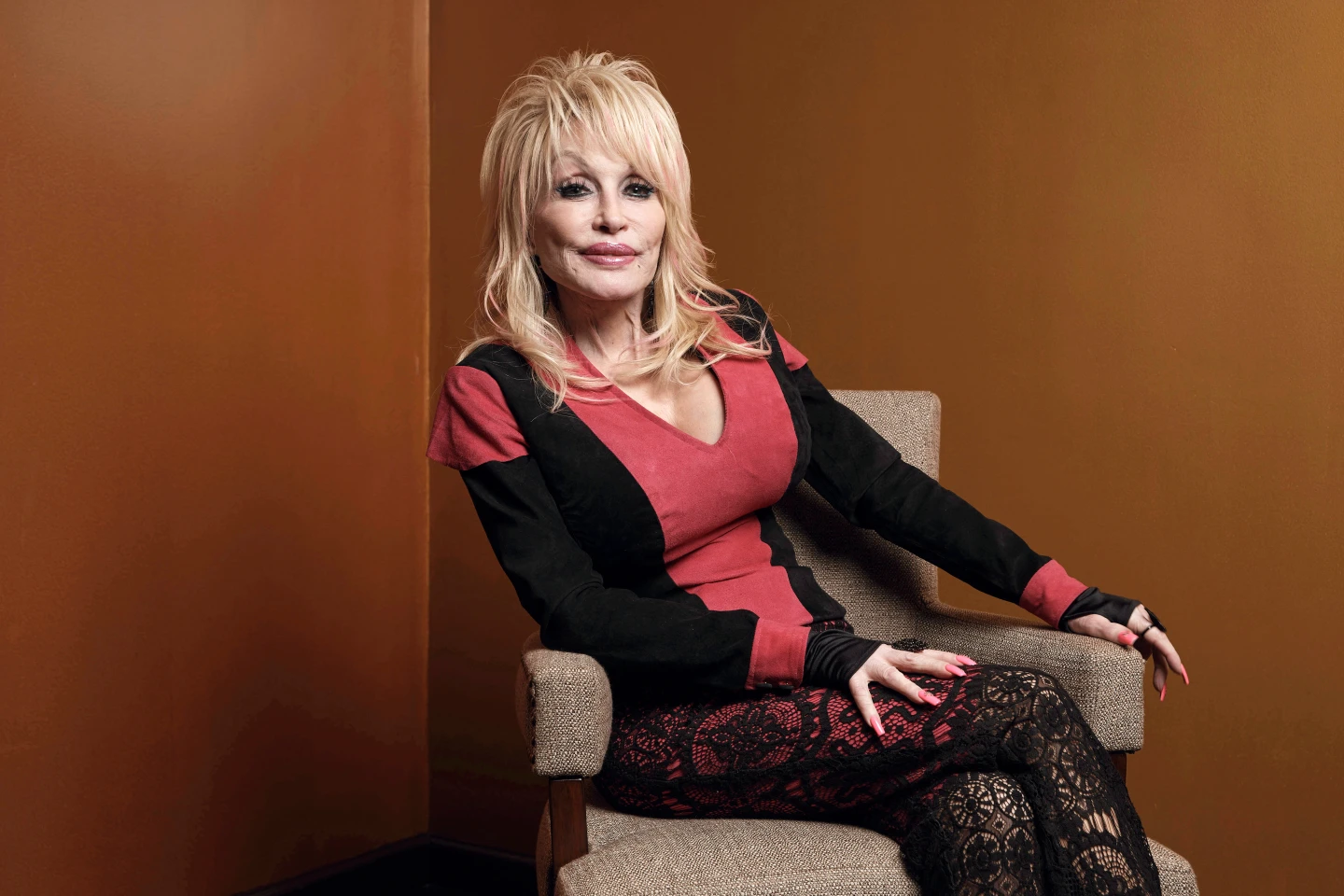 Country music’s patron saint Dolly Parton has died at the age of 80, her family announced in a video posted to her Instagram on Tuesday. “It is an honor, an honor that is mixed with absolute pride and great sadness, but sadness lies with us, not with Dolly,” her nephew and former head of security, Bryan Seaver, said while personally announcing her death.
“Dolly called me and said she wants to rest in a beautiful bed of plush cotton because after a life wearing heavy rhinestones, she finally deserves to be comfortable and have some rest,” he said. “Rest in peace, Aunt Dolly.” Her representatives later revealed she died after a “brief battle with cancer” at a hospital in Nashville.
The…singer-songwriter had been dealing with undisclosed health issues for some time, forcing her to cancel performances, including a previously postponed Las Vegas residency earlier this year.
THE ASSOCIATED PRESS’ Kristin M. Hall and Andrew Dalton supplied some truly impressive receipts to put her career and life in a true upper pantheon:
She wrote hundreds of songs, including classics like “Jolene,” “Coat of Many Colors” and “I Will Always Love You,” that totaled more than 100 million worldwide sales and more than 1 billion online streams. Parton, who plucked bejeweled banjos, guitar and dulcimers with her long fingernails during performances, was a generous philanthropist and successful businesswoman whose projects included a theme park in the Smoky Mountain foothills near her birthplace.
But as the duo further elucidated, she was outsized in every sense of the word:
Known for her curvy physique, massive blond wigs and skin-tight outfits that served her self-deprecating wit, she was among the most beloved personalities in music and beyond — the rare celebrity whose appeal transcended generations, geography and politics.
Their colleague Maria Sherman later penned a poignant and spot-on eulogy:
Larger-than-life at 5-foot-nothing, the country star, actor, philanthropist, entrepreneur and theme park enthusiast…transcended celebrity in rhinestones and fringe. She was embraced by fans across gender, race and class, embodying a mythology typically inaccessible to even the most influential historical figures…It’s hard to name a more adored artist — one who could deliver a perfectly timed dirty joke seconds before a folk classic of her own composition.
There are few inalienable truths: Everyone was born, everyone will die, and everyone loved Dolly Parton.
 Indeed, my social media timelines are flooded with such tributes, perhaps a bit too me-first in their tone. It did seem that practically everyone who posted had some decades-old pic and personal memory because if you had anything to do with TV in Nashville or Los Angeles at some point your paths crossed with hers. The closest I came was being an audience member at a coveted taping of her 1987 ABC variety show that represented one of the network’s biggest financial gambits in the genre since they threw more than $12 million at Jerry Lewis–including a thorough theatre revamp–only to see it go belly up ratings-wise in just three months. I was one of the rare New York-based fans of her earlier Nashville-based syndicated half-hour variety show that wound up airing on Saturday mornings where similarly rural-appeal shows such as HEE HAW and THE PORTER WAGONER SHOW–the latter being where she launched her televison career. But since they weren’t cartoons at a time when cable was still not available, I wound up a regular viewer.
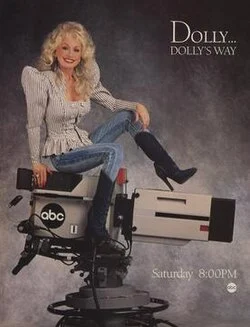 ABC threw more than $44 million at Dolly alone in an attempt to make her everything that Carol Burnett and Dinah Shore used to be. Earlier episodes were especially ambitious–filled with elaborate skits, guest stars and musical numbers that needed to pass Parton’s demanding creative approval. The taping I attended for a one-hour show that started around dinner time went well past 2 a.m. After some extremely encouraging early sampling–her debut reached nearly 40 million viewers–the novelty and energy eroded, and the ratings fell off a cliff. No broadcast network has attempted anything similar with any personality since.
I did have a few encounters with Dolly’s eerily similar-looking younger sister Rachel Dennison, who was tabbed by 20th Century FOX to play the Doralee role in the TV version of 9 TO 5. which Parton brought so much life and Me Too movement motivation to the hit movie that inspired it. 9 TO 5 was a study in corporate tenacity that was front and center amidst the marketplace rush to provide the rapidly growing universe of independent TV stations a pipeline of off-network sitcom reruns at a point when the three broadcast networks were moving away from it and those that did air them were rarely achieving sustained success. ABC struggled mightily through parts of three seasons and limped to a total of 33 episodes before throwing in the towel. I joined the studio just in time to bring to their portfolio the shockingly successful first-run syndicated effort SMALL WONDER, which tended to air in blocks with revivals of similarly short-lived but yet reasonably popular ABC alumni such as TOO CLOSE FOR COMFORT, WHAT’S HAPPENING!! and IT’S A LIVING. All of which were doing well enough to amass enough episodes to make them syndicatable. One of the first projects I worked on was how to have 9 TO 5 join those success stories.
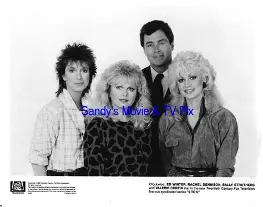 Plenty of tweaks in budget and casting were made to even make this viable at all, including the casting of Sally Struthers in a totally new role not seen in the movie as a de facto lead. Struthers’s Marsha McMurray Shrimpton replaced the Violet character started by Lily Tomlin and continued in the ABC series by Rita Moreno in an attempt to offer a refresh and, yeah, save money. The far more modestly priced Valerie Curtin returned to play Judy Bernly, the Jane Fonda role from the movie, after some questionable research pushed her out midway through the ABC run. But when we hawked it at conventions it was Dennison who was the most desired face–and then some–of our clients. In spite of the fact that she had a lot more in common with her sister’s bra size than her skill sets.
Because it was hardly the ideal demographic or plotline twin to SMALL WONDER, unlike our competitors we had to sell 9 TO 5 as a companion to other shows besdies ours–which meant they weren’t necessarily going to be coattails shows to round out an hour on the same station. As a result, the studio chose not to include any barter advertising in the originals. While it relieved us of the pressure of forcing a square peg into a round hole from my standpoint it made comparisons to those other shows who produced national ratings much more complicated. In a year where our NATPE theme was “FOX Is The One”–where my one and only task was to position every single one of our efforts as #1 in something–doing so for 9 TO 5 proved to be herculean.
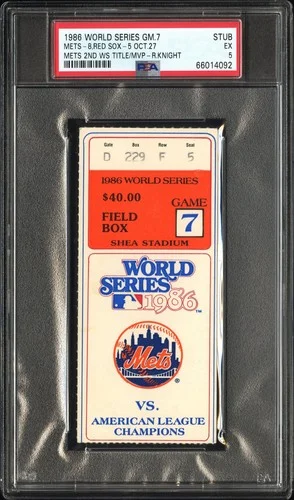 Without boring you any further with niggly details, let’s just say I spent every Sunday and Monday from dawn till dusk running dozens of reports from overnight markets where local ratings were available to allow 9 TO 5 to compete on a level playing field with the glut of first-run comedy competitors despite its lack of a national rating. Lo and behold, we were able to achieve our goal using the loose definition of an October rating period that only applied to the largest markets. And because these shows aired exclusively on weekends we were able to create a final story ahead of everything else in the marketplace. Why is that important? Because I convinced my superiors it was in our competitive best interest to get in front of all the fine folks in New York City who advised TV stations that 9 TO 5 was getting numbers and their clients should find a small amount of cash to buy it. That timing just happened to align with the Mets’ returning to Shea for the final games of the World Series. And yeah, I found a way to attend the rain-delayed Game Seven the night after our first rushed presentation and saw them win it all–an investment that four decades later only grows in value and foresight.
So that’s my very convulted connection to Dolly Parton–admittedly weaker than most. Though to me just as heart-warming and lump-in-throat-producing. To her, G-dspeed. And to both her and her sister–much like my since-cursed Mets, I will always love you.
Until next time…