
About 2200 machers both current and aspirational converged on Denver yesterday for an increasingly busy confab know as the Stream TV Show, which given that NATPE and Real Screen are history and Cannes isn’t in everyone’s budget has been positioned and poised to become all the more significant. Boy, did their bars and restaurants get a shot in the arm when they alit at DIA to headlines and alerts like the one that THE NEW YORK TIMES’ Benjamin Miller dropped:
 Fox Corp., the parent company of Fox News and the Fox broadcast network, is buying the streaming company Roku for $22 billion, a major deal that would make the Murdoch media empire a formidable contender in the streaming wars…The deal combines “the most valuable live content portfolio in video consumption with the pre-eminent streaming platform through which America watches it,” Lachlan Murdoch, the chief executive of Fox Corp., said in a statement…(I)f approved…(i)t would give Fox Corp. a foothold in more than 100 million households that stream content using devices powered by Roku, whose distinctive black-and-purple remotes are common in living rooms around the world.
And that set off a series of chain overreactions and opinions that all but called this out as yet another signpost that democracy has taken another body blow. I can’t begin to tell you how many supposedly informed and intelligent folk have connected this to the buying spree of David Ellison and his daddy that has resulted in swallowing two legacy Hollywood studios in order to achieve the ideological control of its news divisions. One more articulate and nuanced take was just dropped into my inbox as this muse was being composed by THE AMERICAN PROSPECT’s David Dayen:
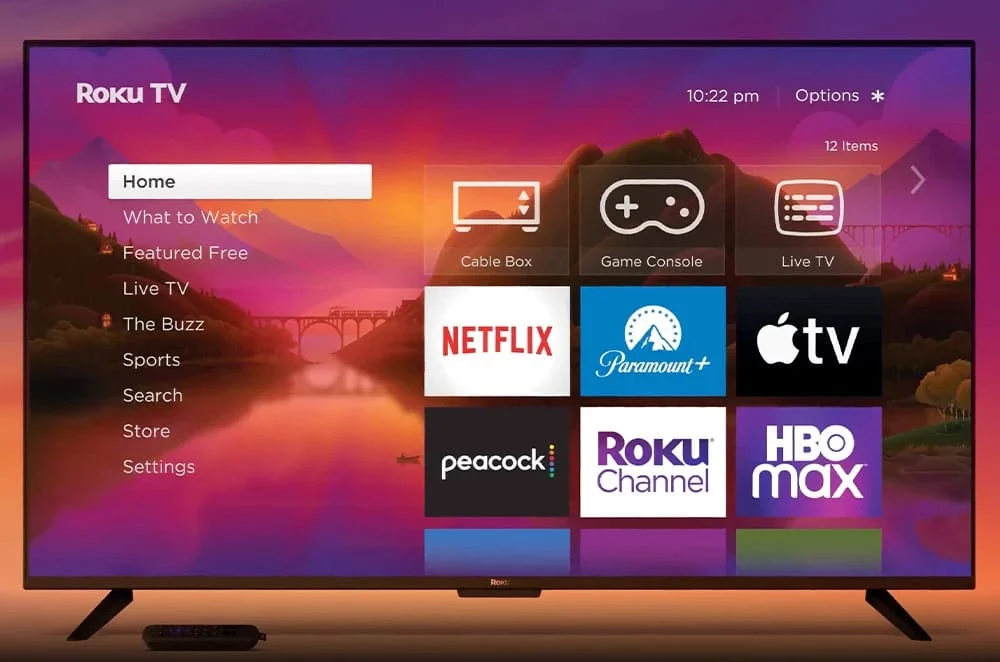 I have a Roku stick, and it’s a good service that turns your television into a reasonable facsimile of cable, with all of your streaming apps and other services in one place. Now, will the top of that Roku home screen be Fox News? Will Newsmax or MS NOW not be able to get their apps on the screen? Those are just a couple of possibilities resulting from Fox’s purchase of Roku, which should be viewed through the same media consolidation lens as Paramount’s acquisition of Warner Bros. Discovery.
This mirrored a ton of similar takes I’ve seen given both the timing and zeitgeist that this somewhat surprising turn of events occurred in. I would merely ask those Chicken Littles if you ever have spent any time working for any Murdoch or any experience with their pursuits that don’t involve a specific man baby who happens to currently be running the country. As someone who has, this deal actually is reminiscent of a few past pursuits that center around getting slightly higher up in people’s decision tree of what to think beyond what content might or might not incite them to.
Take yourself back to the late 80s and early 90s, when in the midst of a flurry of moves surrounding legacy print brands FOX acquired Triangle Publications from the Annenberg family, whose crown jewel was TV GUIDE–at the time still the dominant way for folks to learn about what’s on and where. But as cable and eventually satellite continued to mushroom to 100-plus channels the size of some of those regional editions would often resemble telephone books. Add to that the reality that with so many viewing sources making changes on the fly the accuracy of those listings became increasingly unreliable. So cable operators partnered with a division called Gemstar to create the scrolling grid that occupied the lower half of what was frequently positioned as a gateway channel. It was the equivalent of the table of contents and therefore a destination that practically every user would find their way to at some point. The upper half of the screen was dedicated to promotions and samplings of newly launching networks that hadn’t yet secured full distribution from systems. Operators’ internal data confirmed that in comparison to actual networks the monthly reach of this “barker channel” was superior to almost anything other than broadcast networks.
I worked on several projects with the management team dedicated to such ventures both then and in my later stint with the company when that barker channel had “matured” into the TV GUIDE Channel and there were attempts to turn it into a competitor to E!, which had become a standout in the Comcast portfolio and a Madison Avenue favorite with favorable young demographics. As technology advanced to the point where interactive guides dedicated to DVR recordings were rolled out the need for the scroll diminished, but for a period of time TVGC actually produced original shows that were relegated to the top part of the screen. Even stealing two of E!’s top personalities, Joan and Melissa Rivers, didn’t produce anything close to E!’s ratings (which as you know over time hasn’t aged well itself). But FOX did milk the scroll and the position to hype its own portfolio of channels in the quest to secure distribution.
But it was ultimately up to the likes of Time Warner, Comcast and Cablevision to make those calls, and suffice to say they all tended to give preference to their own flocks. Time Warner was particularly egregious in providing top-tier neighborhoods to its entertainment networks. On its flagship Manhattan system TBS was on Channel 3 and TNT was on Channel 12–essentially placing them in the same consideration set as New York City’s over-the-air station. How do I know this after all these years? Because even when FX finally was able to secure a deal after several years of hondling they “temporarily” found us a home on Channel 58. Our local market ratings in New York were a fraction of what we were able to achieve when positioned more equitably and/or higher up on the lineup in other cities. It took four years of even more intense and at times acrimonious negotiations–even as the national ratings and critical acclaim were undeniably growing–for Time Warner to finally relent to the thousands of e-mails they even conceded to us they were receiving and finally place FX on Channel 10. At a hefty cost of “promotional time buys”, to be sure. But that’s the way TV networks secure carriage and positioning, ideologies aside.
 When satellite was quickly providing even greater upside, FOX purchased the struggling DIRECTV from an overwhelmed Hughes Electronics. Immediately, FOX gained parity with those aforementioned MVPDs by having the third largest number of subscribers of all. They were in the midst of rolling out and rebranding their own channels. And it was a card that the legendary distribution team I worked with that produced numerous top executives of today’s ecosystem played as often as possible. You want the El Rey Network to replace an infomercial channel? K, give us something equivalent for FOX Reality in your 1-99 tier. It was liar’s poker at its best. But again, that’s how deals got done.
Far less successful was its various attempts to launch original programming of its own. Most notable was the “101” channel that sought to be the TV equivalent of something like FOX Searchlight. It provided a place for critically acclaimed but low-rated darlings like FRIDAY NIGHT LIGHTS and our own DAMAGES to extend their lives. They sure looked appealing in the mass mail brochures that the platform flooded mailboxes, physical and electronic, with. Even though you didn’t, I saw those ratings–and not just Nielsen’s incomplete ones. Suffice to say, they were not good.
 And still later on, the Murdochs’ obsession with home pages resulted in their ill-fated compromise purchase of My Space, outbidding the equally quixotic Sumner Redstone and Viacom to do. What’s almost forgotten is that they really wanted Yahoo! instead–several former FOX executives were embedded there and they knew the reach and frequency specifics to an even greater degree than Comscore was willing to publicly provide. They pivoted to MySpace instead, somehow believing that a home page for fledgling music acts that had personalization capabilities would be able to make up the shortfall. Worse yet, they thought that the branding could be affixed to the remnants of UPN and reignite that business. Anyone recall the first efforts of MyNetwork TV that included English-language recreations of Mexican telenovelas produced with non-union talent as close to the U.S. border as legally possible? If you do, you’re probably having trouble holding down breakfast yourself.
I know the Murdochs remember these missteps. Lachlan in particular, since he’s by definition much more detached from those ideological battles than his pops is, and unlike David Ellison he is nowhere near as invested in the fate of Israel or action movies. What remaining energy Rupert possesses at age 95 is being directed first and foremost toward his most recent gambit with the CALIFORNIA POST, and he’s still got his former on-air personality Steve Hilton ready to turn his adopted state red and (in his mind) hopefully help negate the reality that their failed mayoral choice Spencer Pratt has been reduced to a potential whistleblower–which will undoubtedly provide ammo for the crucial summer ahead.
So, sorry, not sorry, I’m not for a nanosecond gonna buy into the discourse that this is akin to anything involving Warnermount, CNN or 60 MINUTES. The matters at hand are much more focused on the opportunities to leverage the 3.0% per cent of all Gauge viewing and the robust purchasing and clickthrough metadata that Roku provides. TECH REPUBLIC’s David Curry touched on those:
(T)he deal combines Roku, which has 100 million subscribers on its ad-supported The Roku Channel video streaming service, with Fox’s Tubi, another ad-supported service with close to 100 million subscribers. Fox also gains control of the leader in the smart TV device market, with 32% market share in the US connected TV market ahead of Amazon, Apple, and Samsung, according to Pixalate. This brings in a new revenue stream for Fox, as a key distribution platform for TV shows, movies, and streaming platforms, and could allow them to promote their own programming ahead of rivals.
Yes, Roku has dabbled in original programming and similar outreaches to prestige failures a la DIRECTV, most notably an attempted revival of ZOEY’S EXTRAORDINARY PLAYLIST that thankfully ended in a mere one-off movie. But their Nielsen success has resulted from curation and grabbing attention of confused and addled grazers, with anyone and everyone willing to pay for such play. INC.’s Georgia Feirn relayed some thoughts that support such an approach:
 On an investor call, Lachlan Murdoch said it was “essential” that Roku remain open to outside partners. He pointed to Fox’s former ownership of Sky and Star TV as evidence that the company could distribute partners’ programming while promoting and monetizing its own. (Roku founder, chairman, and CEO Anthony) Wood said Roku already has policies and processes for allocating promotional inventory. He said the company intends to continue promoting both its own services and those of its partners… Yet their investor presentation identifies cross-promotion as a strategic benefit, potentially giving Fox an incentive to favor its own services and use Roku’s data to strengthen its advertising business.
And if that comes to pass, so what? Is it any different than Comcast giving the Golf Channel full carriage while relegating the Tennis Channel to a digital sports tier? I spent four months knee-deep in that litigation that ultimately went nowhere. Is it different than when Time Warner positioned its entertainment networks between CBS and NBC and the one that aired a lot of sports between the two New York City independents that carried baseball? Or when Home Depot positions its HDX brand of trash bags more prominently on a shelf than, say, Hefty? I’m sorry to say I have personal experience with that, too.
Were this years earlier and the elder Murdoch more invested, perhaps I’d give this hand-wringing a bit more attention. But Rupert is was George Steinbrenner was to the Yankees, and Lachlan much more like Hal. Fewer knee-jerk purchases, fewer emotional decisions. Maybe not as exciting nor ripe for headlines these days. But most def more nuanced, strategic and anything but political. Any thoughts to the contrary is, well, fake news.
Until next time…