
At the risk of being redundant (yeh, I know, so out of character), it’s been a challenging weekend. I can’t begin to tell you how many people I know personally are somewhere between depressed and suicidal as a result of Friday’s scrawl, and yep, I do know a handful that lit off a few extra illegal firecrackers in celebration of same. I’m almost being forced to accept all of this as S.O.P. and a sure sign of the first stages of grief, because that may people are actually reacting to all of this like a death in the family.
 But yesterday morning for the very first time I actually saw a quartet of folks wearing black shirts emblazoned with “POLICE ICE”, wearing tan gaiters and sunglasses to hide enough of their facial features that even those with obvious pimples couldn’t be IDed, dragging some poor schmo down the cleaning supplies aisle at my place of business. It ruined what my company expected to be a profitable day and cast a somber pall on the rest of the day. Attendance at the family event that ironically acted as catnip for these agents and cosplayers was down more than -50% from prior month, and store traffic at noon was at the level normally seen at 8 am on a weekday.
See, even though the events I saw with my own two eyes was arguably traumatic, I still always find a way to boil it down to hard numbers. Call it the curse of experience, or perhaps overcompensation. More than likely, a little of both. But being able to give that trauma context has given me the fortitude to at least get back to a point where I can muse–you may have noticed this one is being dropped a bit later than usual.
So honestly while I’m more sympathetic than ever to those who have been similarly impacted–in many cases far more directly–I’m even less inclined to allow those who have been whining and bitching nonstop with this almost feverish need to “not stay silent” pretty much since last November to flood my timelines with a renewed sense of learned helplessness and rhetoric. I don’t need to know what Hakeem Jeffries did to delay the inevitable and I sure don’t know what yet another expert is saying in reaction to the actions of the fealty caucus that knelt in prayer last Monday night ostensibly praying for guidance from some sort of higher power.
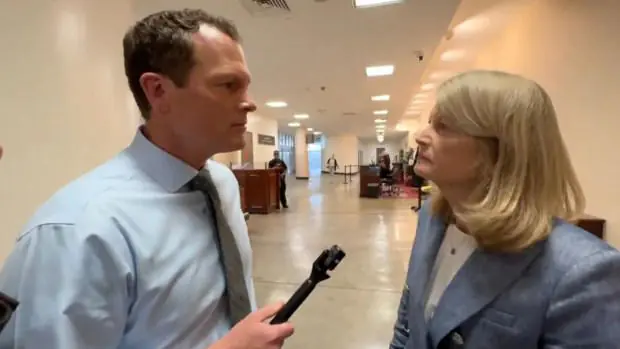 And I ABSOLUTELY don’t need to know how fervently you’re asserting that the soul of Lisa Murkowski will be committed to h-e-double-toothpicks as a result of what you perceive to be a spineless decision. You’re more than likely never going to know how that ultimately works out and even if you do, you’re far less likely to be whisked back here to share the results.
Get a grip, boys and girls. There’s more of them now than there are of you. It practically doesn’t matter why or how we got to this point. We’re there. They’re elsewhere. And absolutely nothing you’re doing or saying right now has changed a G-ddamn thing. What’s more, when you actually look into the soulless and zombied eyes of these zealots, their degree of resolve and passion is light years ahead of yours. Those with looser sunglasses revealed those truths to me yesterday. It’s scary. But it’s also enlightening.
But here’s the silver lining in this cloud. They may have done y’all a favor. Because now you actually have the ability to do a quantitative study over time with a baseline of data points that evolve from this moment forward.
Indeed, to some extent you already had it. A little more than a month ago THE INTELLIGENCER’s Ross Barkan imparted this:
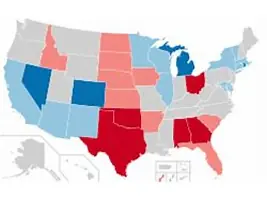 Catalist, the Democratic research firm, has released its expansive study of 2024, and it’s far more accurate and lengthy than the various exit polls dumped out in the aftermath of November. Through Catalist, the election can be properly understood. And its study contains both self-evident truths and genuine surprises for those who regularly take stock of American political currents. Trump won for a variety of reasons. He made far greater gains with men than women, widening the gender gap by a full 9 percent. A significant share of young voters swung to the right, with voters under age 30 dropping from 61 percent Democratic support in 2020 to 55 percent in 2024. The urban-rural divide is large, but Democrats bled out more support, relatively speaking, in big cities than small towns. If non-white voters still support Democrats in far greater numbers than Republicans, there has now been a decline in Black, Latino, and Asian backing for Democrats in three straight elections. Young men in particular gravitated to Trump, with support among young Black men dropping from 85 percent to 75 percent, and backing among young Latino men plummeting from 63 percent to 47 percent. At the same time, white college-educated voters backed Democrats at a slightly lower rate in 2024 than 2020, dipping from 54 percent to 51 percent.
And in the wake of Friday’s actions, the Reuters troika of
(P)olling data, independent political analysts and the impending retirement of two of the few Republicans who have been willing to challenge Trump tell a more complicated story about what American voters might have in mind more than a year into the future.
For one thing, Republicans appear to have their work cut out for them when it comes to selling voters on the legislation, which they say makes good on the campaign promises that brought them and Trump victory in 2024. Forty-nine percent of Americans oppose the bill, while only 29% favor it, according to recent polling by the nonpartisan Pew Research CentIer. Pew said majorities expressed concern that the legislation would raise the budget deficit and hurt lower income people while benefiting the wealthy. nternal Republican polling has also shown that even in districts held by the party, voters strongly oppose cuts to the Medicaid healthcare program for lower-income Americans and federally subsidized private health insurance, which the nonpartisan Congressional Budget Office predicts could leave nearly 12 million Americans without health insurance.
See that? Numbers. Lotsa them. This would be, in quantitative research parlance, week 0.
This is your collective call to action to take this moment in time to study the sample characteristics of these baselines and replicate them with a tracking study covering the area, issue and/or market segment of your choice. Schedule regular samplings of this sample, building in enough of a sample buffer to allow for a mimimus of sample fatigue and/or overeducation, between now and November 2026. Yeah, it’s a significant commitment. But you’ll be quite likely to get a volume discount.
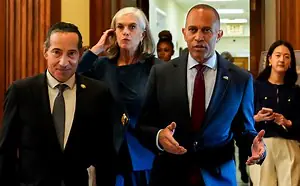 And please, don’t anyone whine about the investment of time and cost. You’re apparently already planning your qualitative messaging. On Thursday the self-proclaimed “reality-based political commentator” Chris Weigant shared this inside baseball news:
“There’s going to be some powerful ads,” said Senator Chuck Schumer of New York, the chamber’s Democratic leader, before rattling off potential scripts for advertisements that are set to begin airing as early as next week. “‘My daughter had cancer. She was doing fine. Well, all of a sudden, her health care was blown up.’ ‘I worked at this rural hospital for 30 years. I put my heart into it because I wanted to help people. I was fired.’ Stuff like that is going to really matter.” Such ads are already teed up and will be airing immediately, especially in districts and states where Republicans are the most vulnerable.
Yahoo. May you win a VEGA award or two for such work. Judging by the qualifications of some of this year’s recipients, your bar for accolade is noted as rather low.
But while you’re at it, why not save a few bucks which you’d otherwise throw toward a few more GRPs and get those polls going pronto, and make sure you’ve got qualified people to accurately interpret it to help you message it in as effective a way as Senator Schumer’s storyboard is pointing to. Judging by what some otherwise well-intentioned folks pointed out in my now-deleted LinkedIn post–a.k.a. a cry for help of my own–last week–hundreds such folks are available for you to choose from. Forgive me if I jostle my way to the front of that particuar line.
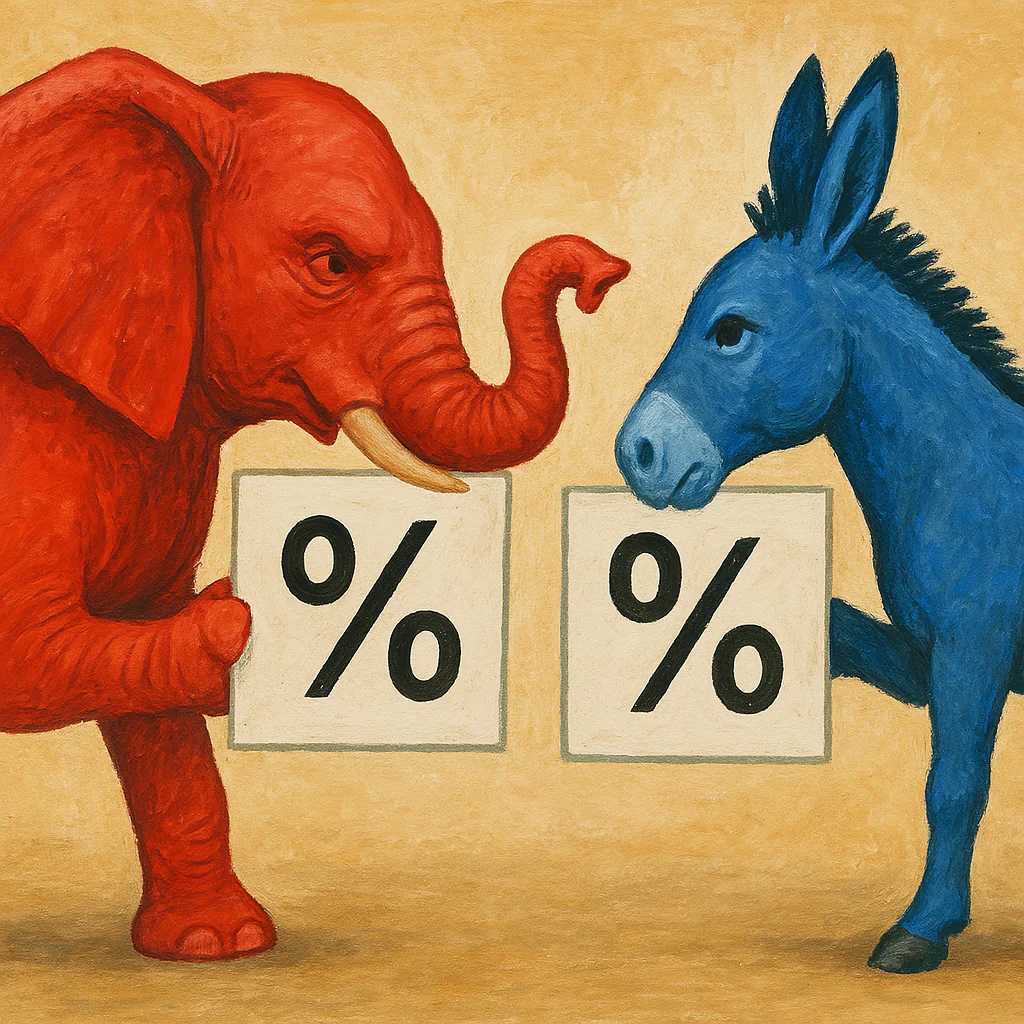 Make those numbers and those trends part of a regular sharing process. I dare you to e-mail me at least nuggets from waves as frequently as you do requests for donations. Once you agree to an upfront volume price for tracking research, you don’t necessarily have to add costs along the way to fine-tune in. At least the studies I did rarely involved such surcharges. Just sayin’.
Take this opportunity to start doing more things properly and impactfully. You’ve got both the moment and momentum. Use them.
Or don’t come crying to me when you’re still in the same place after six more months of running this playbook back. Consider yourself forewarned.
Until next time…