
I do try to stay on top of significant events that are happening in media, particularly in areas that are near and dear to my heart. Since I cut my eyeteeth in the rough-and-rumble world of broadcast syndication, whenever something of note does take place in that world it usually captures my attention–or at least that of a few of you that, like me, tend to (over)react to alerts and prompts our algorithms have learned to treat as significant.
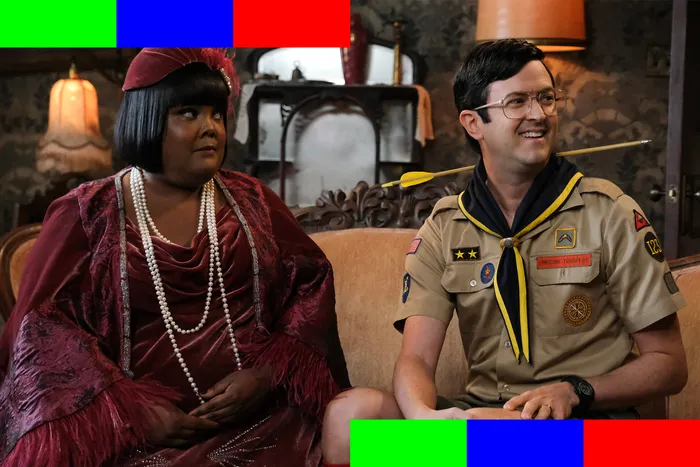 But even moi does miss things from time to time, and so while scanning the daily TV listings page of THE NEW YORK POST as I am want to do (believe it or not, it is now the ONLY one of the newspapers I regularly read that provides one) I noticed that GHOSTS turned up in the 7:30-8 PM block on CBS duopoly “independent” WLNY I first dismissed it as a typo. But more recently, while battling yet another one of my nightly dealings with insomnia I took note that my local duopoly independent KCAL has slotted a telecast in in the midnight hour amidst a host of schedule changes that the recent demise of their “plus” news extensions necessitated, it became more apparent that something was indeed going on. Turns out, I completely missed this boat. Fortunately, a veteran observer who I immensely respect, VULTURE’s Josef Adalian, didn’t. More than a month ago he authored this via his own eagle-eyed attentiveness (after all, he cut his own eyeteeth at the POST, so he likely suffers from the same addiction to what’s left of daily listings as do I):
(T)he companies behind Ghosts — CBS Studios, Lionsgate, and BBC Studios — are trying to see if Ghosts might have an afterlife in syndication. Earlier this month, with exactly zero advance hype, Ghosts began airing five nights a week on 13 CBS-owned TV stations across the country as well as Chicago’s WCIU-TV. A source tells me this is very much a test: For now, Ghosts is only scheduled to air on these stations for ten weeks, leaving their lineups in mid-December. The hope is that ratings for these local broadcasts will be strong enough to make a case to launch Ghosts into national syndication, most likely in the fall of 2026, when the show will have also built up a library of roughly 90 episodes.
 When I was able to tap into my own sources for clarification, what I learned was that this was orchestrated by the fine folks that have run Lionsgate’s domestic syndication company Debmar-Mercury, perhaps one of the last remaining vestiges of the syndication world where off-network rollouts were commonplace and typically trumpeted with significant ad and publicity campaigns that one couldn’t ignore. Co-presidents Mort Marcus and Ira Bernstein have run this company, partially named for Marcus’ wife, for nearly two decades at a time when the folks that they competed with as hired guns for the likes of Disney and a now almost forgotten pioneer in advertiser-supported syndication, LBS, that even employed me for a few months, were spearheading these efforts. And these two prime examples of Glengarry Glen Ross tenacity have frequently used the concept of limited-run tests as an inducement to motivate an otherwise overly cautious industry to at least attempt something else besides the fallback of expanded local news or, worse yet, infomercials as a way to fill time slots for short-term financial gains that concedes still more of their audience to other sources–which these days mostly means non-broadcast viewing sources.
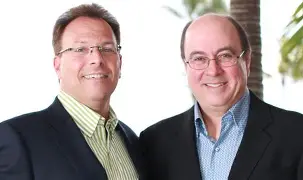 Bernstein and Marcus were even able to cajole another one of my former employers who typically pooh-pooh acquisitions besides movies on several occasions, most recently with efforts that I know I had forgotten about and I’d like to hope you did as well. It was more than a dozen years ago when the equally venerable Nellie Andreeva authored this for DEADLINE:
FX is quickly turning into the exclusive network partner of Lionsgate for its 10-90 sitcoms. The cable network has picked up a third series from Lionsgate’s Debmar-Mercury and Lionsgate TV, a buddy comedy starring Kelsey Grammer and Martin Lawrence. The marquee project, written/executive produced by comedy veterans Bob Boyett and Robert Horn, features Grammer and Lawrence as Chicago lawyers from vastly different backgrounds who develop a partnership after they unexpectedly meet in court on the worst day of their lives, forcing each other to find the balance between the ethical and the unscrupulous in both their professional and personal lives. FX has picked up 10 episodes of the untitled series which, in success, will be followed by a 90-episode back order.
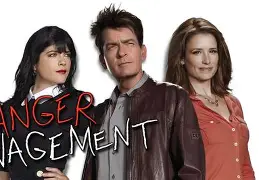 At FX, the Lawrence-Grammer series joins Lionsgate/Debmar-Mercury’s Anger Management, currently in the midst of its 90-episode back order and the upcoming 10/90 George Lopez sitcom Saint George. It comes as Anger Management, is going through rough times, plagued with soft ratings and behind-the-scenes turmoil, as star/executive producer Charlie Sheen just had his co-star Selma Blair let go.
Debmar-Mercury is in the unique position of having both resources and necessity to fund these kinds of risks. As the distributor of FAMILY FEUD, a franchise they saved through the casting of Steve Harvey and the redefining of how multiple daily runs are measured by Nielsen, they are raking in considerable cash and also have atypical gravitas with their grateful clientele. When they were in the process of making FX their voodoo doll with these 10-episode toe dips I was at gunpoint handing over significant dollars and literally dozens of daily runs that aggregated their barter to secure the cable rights to Harvey’s FEUD. As the Debmar brass reminded me, and as the ever-intrepid Andreeva pointed out at the time, there was a method to their madness that actually had a history of paying off:
Under Debmar-Mercury’s 10/90 template, the company sells sitcoms to mostly cable networks with an initial 10-episode straight-to-series order, which, if a ratings target is met, triggers a 90-episode order. The idea is for Debmar-Mercury to quickly amass enough episodes for the sitcom’s launch in broadcast syndication. The company first introduced that model with Tyler Perry’s House Of Payne followed by Perry’s Meet The Browns and Ice Cube’s Are We There Yet? — all on TBS.
So the idea of generating ratings stories as proof of concept isn’t all that new, and in the case of GHOSTS it was all the more necessary. Sure, it’s a relative hit for CBS, and as Adalian points out that was one of many arrows it already had in its bow:
Last season, Ghosts averaged 12.1 million multi-platform viewers, per Nielsen, making it network TV’s most-watched comedy (tied with CBS’s Big Bang Theory spinoff, Georg(I)e & Mandy’s First Marriage) and a bigger hit than streaming heavyweights such as The White Lotus and 1923. In addition to its strong prime-time numbers, Ghosts has a few things going for it which could help it get a national syndication rollout. While it’s a single-camera sitcom, it’s written like a traditional multi-cam, with tons of jokes and one-liners packed into every scene. And while the show does have some cliffhangers and callbacks, in general, each half-hour tells a self-contained story line — something critical for syndication, where the assumption is most viewers won’t watch every episode in order.
But in a world more risk-adverse than ever most of those bullet points are glazed over, especially so when one notes that the fact that it’s delivering practically the same audience as its lead-in is more of a sign of opportunistic scheduling as a “:30” show than not. And the spinoff that preceded GEORGIE AND MANDY in that lead-off slot, YOUNG SHELDON, was an outright bomb in its recent off-network syndication cycle, achieving little of the outsized success that both shows’ progenitor, THE BIG BANG THEORY, achieved for TBS or its broadcast licencees.
Local stations care first and foremost about what they consider as their demos of consequence–adults 18-49, 25-54 and 35-64, and primarily those that are 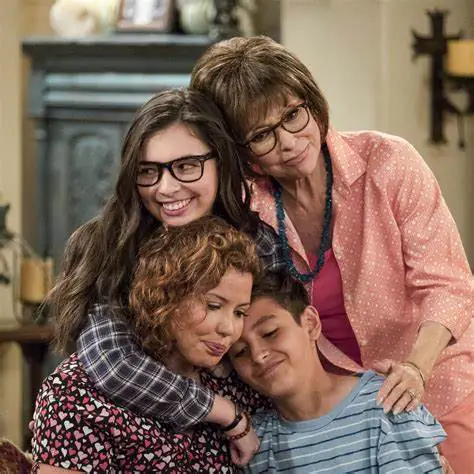 delivered day-and-date, so that 12.1 million brag doesn’t quite cut it. Moreover, the syndication pipeline for off-network comedies has essentially dried up with the advent of streaming, with studios more heavily invested in those areas prioritizing their platforms and valuing “exclusivity”. NBCUniversal has never offered SUPERSTORE to linear entities despite a track record that compares favorably to GHOSTS. Sony didn’t even bother kicking the tires beyond its first-run hail mary with CBS’ afterthought zombie network POP to prop up its ONE DAY AT A TIME reboot after they clawed rights back from Netflix. And I’d argue that their demographic profiles, both with age and multicultural components, match up far better with the likes of a show like THE NEIGHBORHOOD, which is serving as GHOSTS’ companion piece on a number of the CBS duopoly stations that previously made a left pocket/right pocket deal to license that.
Fortunately, there are still a handful of companies that do what I used to do–objectively parse those overnight markets’ deliveries via benchmarks of lead-in, lead-out and YAGO programming to see exactly what stories do and don’t exist. And I was able to get a glimpse at how GHOSTS’ trial is progressing. These days, using ratings is impractical–the numbers are too damn small to be statistically significant, so actual impressions are the currency. But when no single number anywhere in the CBS duopoly array exceeds five figures–and in many cases, not even four, it’s a sobering reminder of exactly how much the business has devolved over time.
In answer to your burning question, the verdict so far is–well, feel free to insert your favorite shrugging shoulders e-moji:
Overall: Mixed results — strong in select markets (Dallas, Seattle, SF) but weak in key metros (LA, Chicago, Philly, Pittsburgh).
And for the particularly curious New Yorkers like Adalian, it’s showing some decent results vs. LAST MAN STANDING benchmarks among viewers under 55–though I’m not all that sure that’s either overly surprising or meaningful.
Now it should be pointed out that these numbers reflect only the first half of the test run, and there’s certainly cause for hope that awareness and opportunity can grow over time. Hell, it’s taken me this long this notice the damn show was on in the first place. So out of respect both to my source and the process, I’ll eschew sharing with you the exact data points I was provided. Far be it me to overreact to anything (insert exclamation point e-moji).
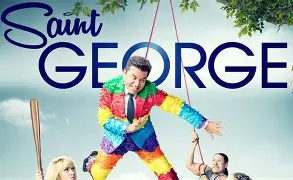 Besides, Mort, Ira and their seasoned compatriots have already more than proven their ability to optimally sell just about anything they get their hot little hands on. And take it from one who knows, they’ve got more meat on this bone than they had with SAINT GEORGE.
Until next time…
Steven, this is the most enlightening piece on how the syndication business has changed that I have read in ages. Kudos!