For as overjoyed as my parents were when I’d return home from college for a holiday weekend or summer break they actually weren’t the happiest people in my ‘hood. That distinction went to Mr. and Mrs. Lee, the longtime owners of the Chinese restaurant within walking distance who made a killing servicing a dedicated Jewish-centric community that zealotically believed it was legally mandated to patronize them at bare minimum every other Sunday. Hey, we were in an era of escalating detente anyway, so all the more reason to do so.
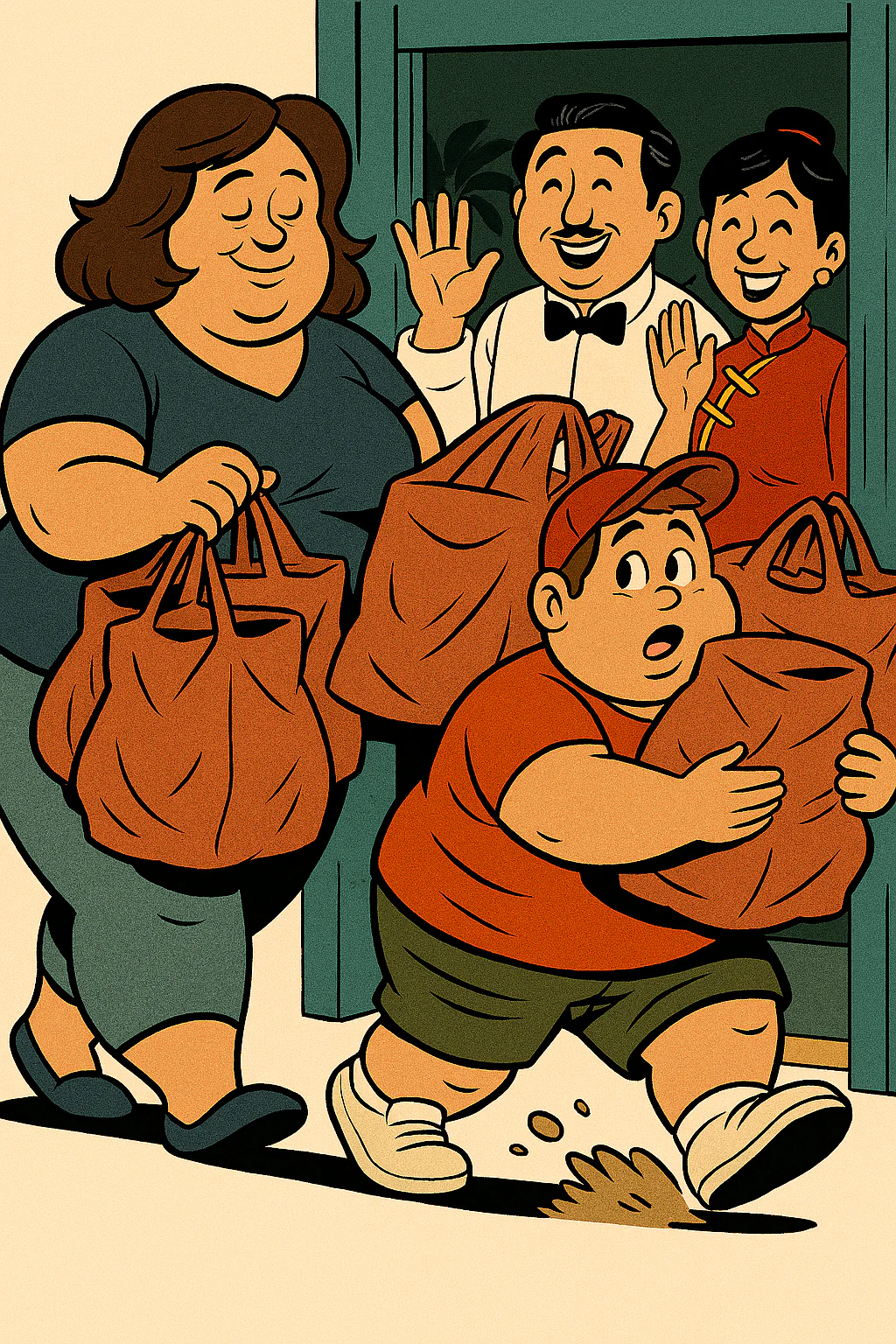 When they’d see the always welcome sight of my appreciative mom accompanied by me, sometimes after several weeks of existing in what can tactfully be described as an Asian food desert, Mr. and Mrs. Lee would beam even wider smiles than usual, knowing full well the path to affording their daughter’s impending nuptials got that much easier. “OOOH! JUNIOR BACK!!!” would say the owner, as his wife raced back and forth to the kitchen to fill our upscaled order. We always got details on how that was going; I honestly believe we were personally responsible for at least two of the tables plus her flowers.
So I can somehow relate a little better than most to the euphoria that resulted last week from this announcement covered by, among others, MACRUMORS’ Juli Clover:
 U.S. President Donald Trump today signed an executive order approving a deal that would see TikTok’s U.S. operations largely sold off, reports CNBC. The deal would allow TikTok to comply with U.S. law requiring the social media service to be sold to a non-Chinese company or be banned from operating in the country.
A joint-venture company that includes Oracle, Silver Lake, and Abu-Dhabi-based MGX investment fund will oversee TikTok’s U.S. operations, with TikTok parent company ByteDance retaining less than 20 percent of the company. The joint-venture group will control a 45 percent stake in TikTok, while ByteDance investors and new stakeholders will hold 35 percent. Oracle will oversee TikTok’s security operations and will provide cloud computing services for the U.S. TikTok company. The deal suggests that ByteDance will lease a copy of its algorithm to the U.S. TikTok shareholders, with the algorithm to be “retrained and monitored” by Oracle.
“It’s owned by Americans, and very sophisticated Americans,” Trump said of the deal, which still needs to be officially approved by China.
Very sophisticated and very VERY well off Americans, to be sure. A point reinforced by TECH STARTUPS’ Nickie Louise who noted in her reporting this little nugget: (T)he agreement gives TikTok a $14 billion valuation.
And as you can see, they’re all kinda mishpacha with each other already. 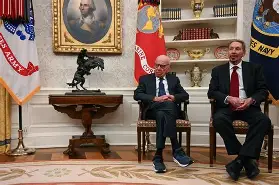

And just like the Lees, those fine folks at ByteDance sure have a lot of fans. THE GLOBAL STATISTICS reveals exactly how popular Tik Tok is–not that this is news unto itself, but the magnitude is nonetheless staggering:
TikTok reached 1.59 billion monthly active users in 2025, reflecting a 6.8% year-over-year increase. TikTok in the United States remains the platform’s largest market, reflecting deep integration into American digital culture and high monetization potential…TikTok ads were reaching 19.4% of the global population and 28.6% of internet users, a testament to the platform’s unparalleled digital footprint.
In other words, a helluva lot more folks who are engaging with Paramount Plus or FOX One, and a lot of upside for those who want them to get a few bags to go from their businesses. And as our trusty site reminds, they’re demographically in the sweet spot for impulse buys: Globally, the platform’s user base is split 54% female and 46% male. The dominant age group is 18–24, accounting for 39% of users. This demographic dominance emphasizes TikTok’s continued popularity among Gen Z, although other age segments are gradually growing as the app diversifies its content and utility.
So how do a bunch of aging gazillionaires best serve this newfound aggregated audience in ways a bit more parochial than relying exclusively on user-generated content–especially on a platform that’s mostly accessed in vertical video mode? Well, the Chinese have an answer for that as well, and it’s one that’s been expanding almost as fast as Tik Tok itself.
DEADLINE’s practically ironically surnamed Sara Merican updated her readers last week on exactly where this phenomenon now stands:
 Micro-drama revenues in China are set to surpass the country’s domestic box office this year, according to a report by Media Partners Asia (MPA).
The report focuses on the global serialized short-form drama economy, which also found that revenues in China for micro-dramas have climbed from $0.5B in 2021 to $7B in 2024, and are expected to exceed $16.2B by 2030, with a 11.5% compound annual growth rate (CAGR). Outside of China, the global micro-drama market generated $1.4B in 2024 and is forecast to reach $9.5B by 2030, with a 28.4% CAGR…In China, micro-dramas have become “mainstream,” with revenues set to exceed $9.4B in 2025, with more than 830 million viewers consuming microdramas. From this audience, nearly 60% pay or transact.
And earlier this summer WIRED’s
My partner recently confessed something to me about his screen-time habits: When he’s giggling at his phone, he’s often watching short English-language soap operas that have begun showing up on his social feeds. The plots are basic, the acting is exaggerated, and the performers are stereotypically good-looking, but the constant twists and turns keep him spellbound and wanting more.
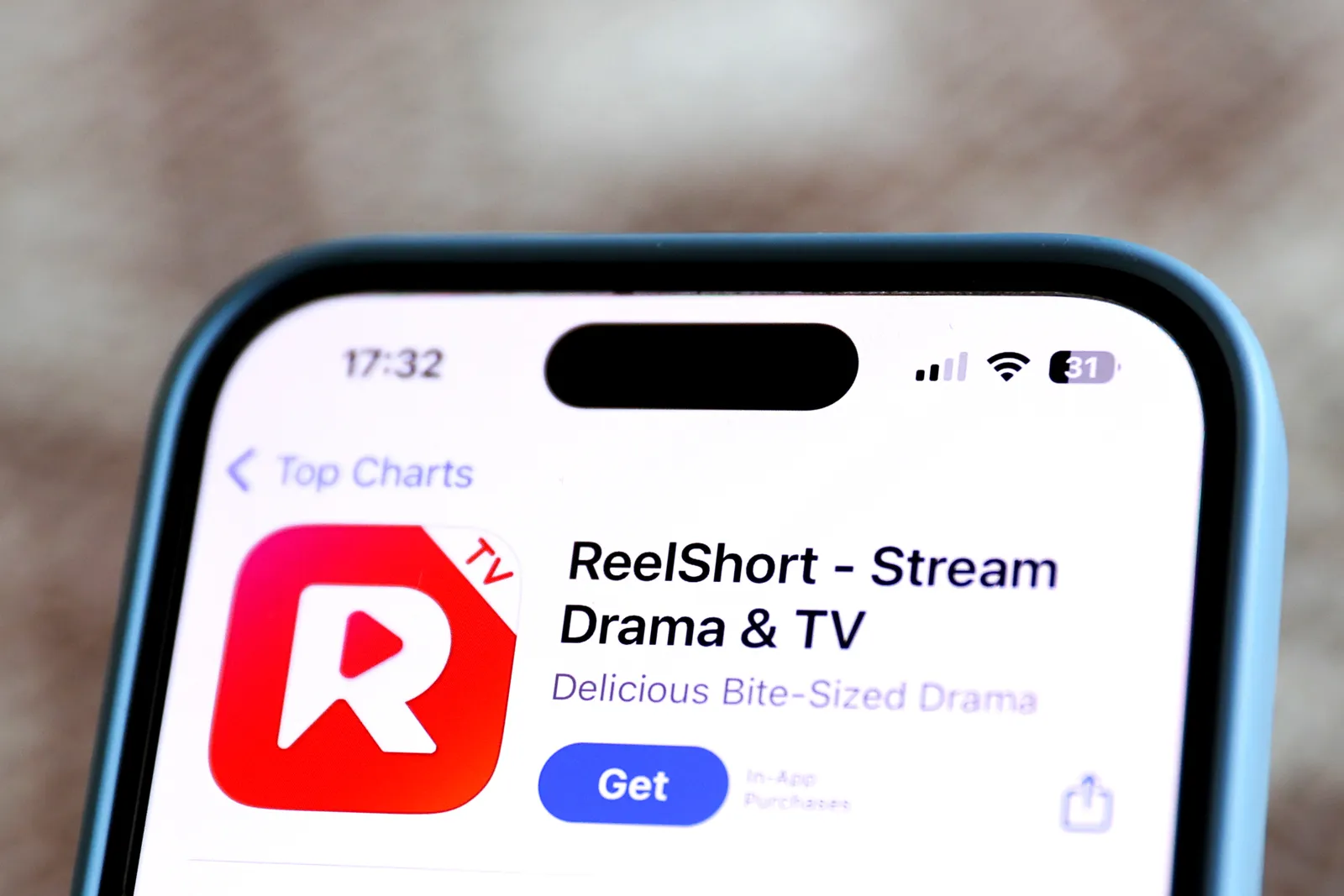 Remember the short-form streaming platform Quibi? It lasted only six months from start to finish. Compare that with three-year-old ReelShort, the first platform to export Chinese short dramas, which says it now has 55 million monthly active users. In the first quarter of 2025, ReelShort and similar apps like DramaBox, GoodShort, and DramaWave earned nearly $700 million from in-app purchases—either weekly subscriptions or one-time payments to watch an episode. That’s roughly 300 percent more than they earned during the same period last year, according to the market intelligence firm Sensor Tower. Globally, these apps were downloaded 370 million times in the first quarter, a 500 percent increase from 2024.
Ah, Quibi. Yes, we’ve mused about that ill-timed venture before, most recently late last year when we cited some observations from another well-respected media veteran about how they missed what they insisted was a golden opportunity. Well, it would seem that hurdle has now been overperched.
If the elder Ellison and Murdoch aren’t fully capable of seizing this moment, I dare say their respective nepobabies who shepherd creatives responsible for THE YOUNG AND THE RESTLESS and THE MASKED SINGER are. If you can make content that can captivate people for hours at a time, chopping it up into TikTok-friendly pieces is, well, as simple a recipe as is any stir fry.
There’s clearly as voracious an appetite for this as anything my family and our neighbors expressed for the Lees’ wonton soup and butterfly shrimp with bacon. Make as many of these microdramas as you can, folks, and sell them at volume. Remember what Doris Day was teaching us when we were paying for the younger Ms. Lee’s college tuition. With Six You Get Eggroll.
Until next time…