
Think of the annual cycle of pursuing cinematic success as seasonal. In the summer and for the last nine weekends of the year it’s all about box office and popularity–can we still get butts off their couches and at least sporadically get ghem into theatres to drop a couple of Hamiltons (Grants)? on some overly hyped reinvention of classic IP? For the balance of the year, and especially as summer turns to fall, it’s all about quality and finding something worth actually paying attention to on the screen of your choice. Getting some award nominations is gravy, at least from the studio perspective.
Which is why I tend to pay attention to documentaries that get unveiled at shindigs like the Toronto International Film Festival, which kicked off its golden anniversary confab this week on the shores of Lake Ontario. And from personal experience, I can assure you that there are few venues that provide lovelier backdrops than a Lake Ontario sunset just after Labor Day. And yes, I’m including Venice and Cannes.
So I was especially intrigued by the fact that one of TIFF’s most awaited screenings was a labor of love cobbled together by a A-list array of backers and producers that salutes one of the more beloved Canadian exports thsi side of All Dressed Ruffles and Egg McMuffin Bacon. Per yesterday’s MOVIBITE:
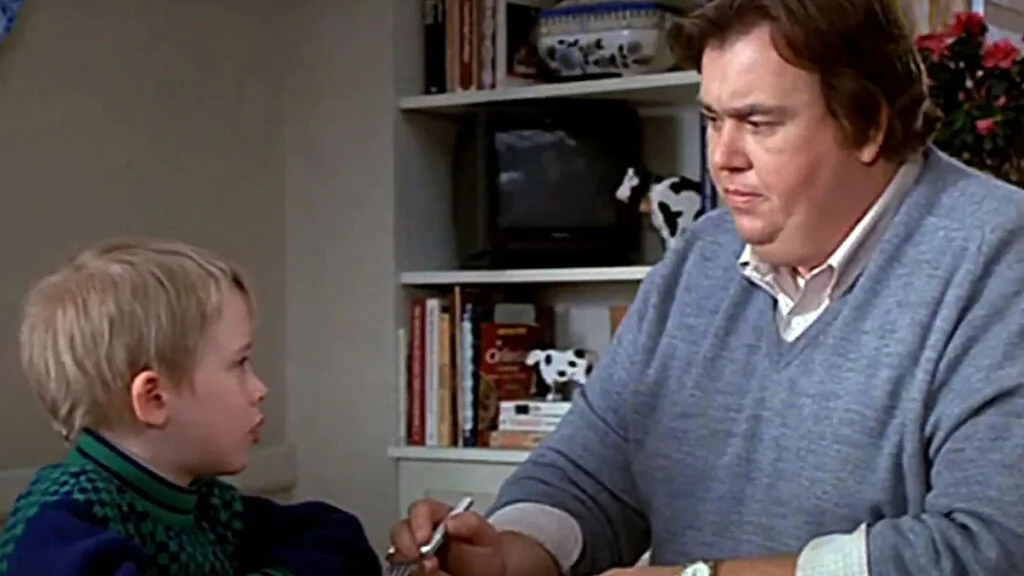 The world premiere of the documentary John Candy: I Like Me, directed by Colin Hanks and produced by Ryan Reynolds, opened the festival at Roy Thomson Hall, setting a celebratory tone for TIFF’s milestone anniversary. This film, a poignant exploration of Candy’s life, career, and personal struggles, has already generated buzz for its emotional depth and star-studded tributes, making it a fitting choice to launch the 11-day festival .
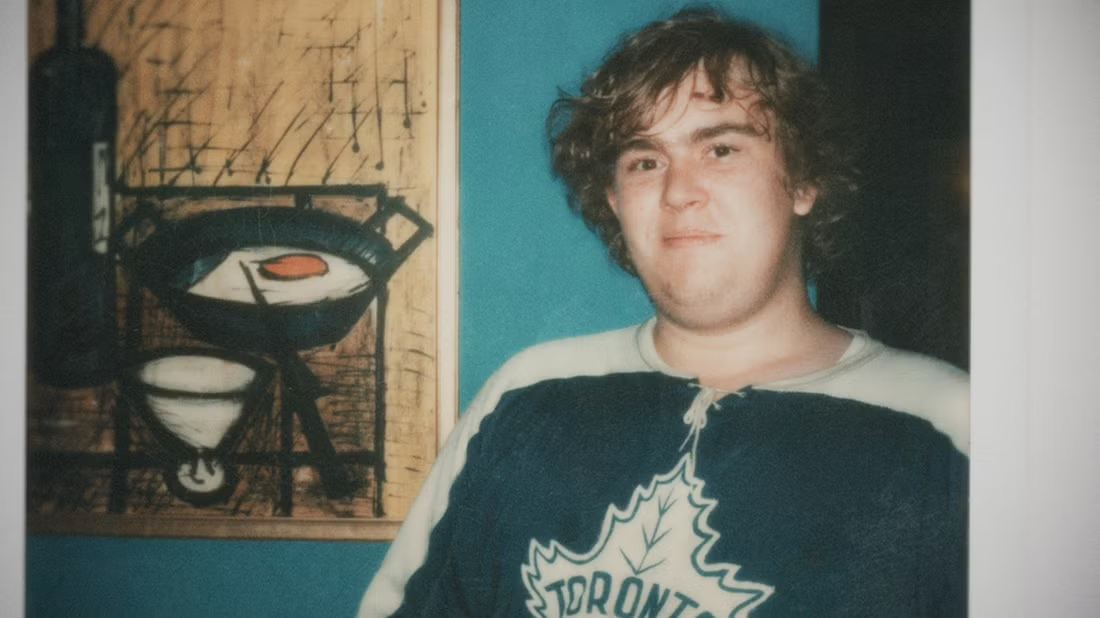 John Candy: I Like Me is more than a nostalgic look at a comedy star; it’s an intimate portrait of a man whose warmth and humor left an indelible mark on audiences worldwide. Born in Newmarket, Ontario, and raised in Toronto, John Candy rose to fame through his work with The Second City’s sketch comedy troupe and its television counterpart, SCTV, before becoming a Hollywood staple in the 1980s and 1990s. Films like Stripes (1981), Splash (1984), Planes, Trains and Automobiles (1987), Spaceballs (1987), Uncle Buck (1989), and Cool Runnings (1993) cemented his status as a comedic powerhouse known for his everyman charm.
The documentary, backed by Amazon MGM Studios, weaves together never-before-seen home videos, family interviews, and candid recollections from Candy’s collaborators, including comedy legends like Steve Martin, Bill Murray, Catherine O’Hara, Martin Short, and Macaulay Culkin. It explores not only Candy’s on-screen brilliance but also his off-screen struggles with anxiety, insecurity, and the pressures of Hollywood. The film delves into how these challenges were shaped by personal tragedies, such as the loss of his father to a heart attack when Candy was just four years old—a loss that haunted him, as he feared a similar fate. Tragically, Candy passed away from a heart attack in 1994 at the age of 43 while filming Wagons East in Mexico.
As someone who has had a weight problem since as far back as my memory will allow me to recall, I’ve always been attracted to performers who have found a way to rise above their physical struggles to find a way to make others laugh. Too often, as was the case with the likes of Fatty Arbuckle, Shemp Howard, Totie Fields, Jonathan Winters and, most tragically, Chris Farley, those performances were often overcompensations for troubled pasts and/or current demons. As I learned the hard way, one doesn’t obtain that kind of waistline without some sort of inner turmoil as a contributor. But Candy’s over-the-top screen presence was often one that emphasized a sweetness and love that made him all the more endearing to his considerable fan base, a point COLLIDER’sTania Hussain emphasized in her review which dropped yesterday:
There are some entertainers who never really leave us, even long after they’re gone. John Candy has always been one of those rare few, at least for me. Having grown up in the greater Toronto area, watching his films not only brings out the biggest smile in me each time, but also a sense of pride for someone who always felt like a friend holding my hand in every situation. His comedy might have been big and boisterous, but his warmth was even bigger. He maintained a presence that felt less like a performance and more like an invitation to join him for a few minutes to just laugh. Because of that, Candy was never just a movie star. He was a companion and a cornerstone of comfort that reminded us that the funniest people are often the kindest.
And as the unbylined MOVIBITE piece continued, even though it’s been more than three decades since Candy left these mortal coils, he’s still relevant and resonant, especailly among Canadians:
His ability to blend humor with heartfelt emotion made him a standout in films that have become cultural touchstones. From his role as the lovable Uncle Buck to the poignant Del Griffith in Planes, Trains and Automobiles, Candy brought authenticity and relatability to every performance. “John was a good person when no one was watching,” Reynolds said at a press conference at Toronto’s Second City, where Candy began his career. “He left in his wake a kindness and a joy.”
The film also addresses Candy’s vulnerability, particularly his struggles with mental health and his fear of mortality, which were exacerbated by his family history of heart disease. Colin Hanks noted the challenge of crafting a narrative that went beyond mere praise. “Everyone loved John Candy,” he told IndieWire. “But a film full of praise alone wouldn’t tell a compelling story.” Instead, the documentary balances nostalgia with raw honesty, using rare footage and interviews to paint a fuller picture of a man who brought joy to millions while grappling with personal demons.
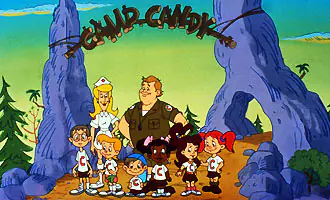 My own encounters with Candy the man and his legacy were brief but memorable. My one direct meeting occurred when repeats of his well-liked but modestly rated NBC Saturday morning cartoon series CAMP CANDY was being offered to local TV stations at a NATPE convention. Candy was there to take meetings along with his colleagues from producer Saban Entertainment and distributor Worldvision Enterprises, whose top executives were at the times among my more well-liked business buds. Atypical to the usual celebrity schmoozers, Candy elevated the pitch when he explained how the idea of portraying a dedicated camp counselor with a knack for getting into some sort of scrape where his adoring campers would inevitably help him get out of. My client was so taken with his candor and warmth they made what turned out to be a successful offer to carry the show, and I must say I was surprised by how relatively well those reruns performed. Later on, after Candy’s passing, it became one of the more recognizable elements of FOX Family’s early lineups, often paired with repeats of an animated show fronted by yet another funny and friendly “fattie”, LIFE WITH LOUIE. But as the creators of CAMP CANDY, still a part of the Saban management team would be quick to remind those of us FOX alumni who had dealt more directly with Louie Anderson on the latter show, dealing with Candy was a far more collaborative and less exhausting experience than dealing with the inevitable mood swings and “quirks” that defined Anderson for most of his life.
Hence it’s hardly a surprise that Candy’s omnipresence at such a milestone event as TIFF #50 brought out the best and he brightest, as YAHOO! NEWS’ Elizabeth Bianchini observed late yesterday:
It’s a notable achievement to have the opening night movie at the Toronto International Film Festival (TIFF), but it’s even more impressive to have two back-to-back screenings on the first night..(C)rowds at both screenings laughed out loud, and cried their hearts out during the film that looks back at the life of the Canadian legend.
At the 8 p.m. screening, Prime Minister Mark Carney made remarks about TIFF, Candy and Canadian identity. Carney stated that in many of the actor’s films there would be a scene where his character was “pushed too far” and would pivot, likening that scenario to current Canada-U.S. tensions.
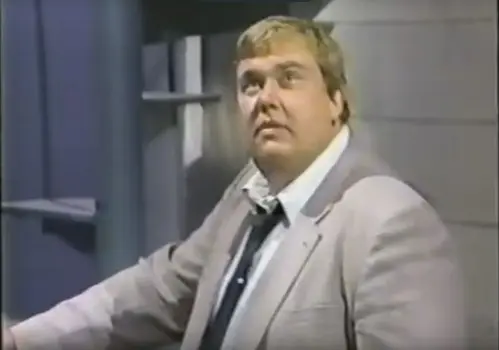 “Don’t push a Canadian too far,” Carney said, in a swipe at U.S. Prsident Donald Trump. “Somebody who’s richer, somebody who’s more powerful, maybe a little more arrogant.” “John’s stories, the stories he’d tell, the stories that TIFF platforms, our current times make them all the more precious. We’re in a more dangerous, divided, intolerant world. In Canada, our sovereignty, our identity has come under threat and when Canadians heard those threats they channeled their inner John Candy, stood up, elbows up.”
In relation to Canadian identity, Hanks and Reynolds, who showed up in a replica of the Planes, Trains and Automobiles car, stressed that it’s a “privilege” to be able to premiere the film in Toronto.
“There is no other place that we’d rather be than right here,” Hanks said at the earlier 6 p.m. premiere. “We had numerous conversations with many different people about, where would the dream place be to premiere this movie, and the truth is, the answer resides in the lyrics of John’s favourite song, ‘Oh, Canada, our home and native land.'”
As E! NEWS’
As Steve Martin said in the trailer, “You know, there’s some things that are just painful. That’s it. And you can’t make ’em not painful. But it’s the face you put on the world that defines who you are.”
JOHN CANDY: I LIKE ME will drop on Prime Video on Friday, October 10th. I humbly suggest you set a reminder as I will, and maybe a recipe for poutine to whip up while you savor it. Or something you like that won’t make you put on weight.
Until next time…