
I have only one complaint about the otherwise wonderful homage to what I’d contend was, appropriately, the second best late night comedy series to ever exist. Calling it SCTV: THE GREATEST SHOW YOU NEVER HEARD OF is an assumption I’d never make on a generation with far too much ability to Google any burning question that might arise, and anyone who has enjoyed any comedy whatsover over the last half-century had to have to at some point had some YouTube clip pop up to introduce them to it.
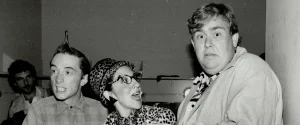 The CV of the cast that originally banded together as a way to pay bills while performing in GODSPELL in Toronto is remarkable. John Candy’s body of work in 80s comedies have endured thanks to cable and streaming over multiple generations despite his untimely passing more than 30 years ago. Martin Short, a relative late-comer to the program after it had already found its sea legs, later moved on to that other late night show and has been one of the most ubiquitous and enduring performers ever since. Eugene Levy and Catherine O’Hara are known to just about every 90s kid whose puberty was punctuated by AMERICAN PIE or whose holiday viewing has annually included at least one HOME ALONE movie and their cool Gen Z kids are even more familiar with them and their families thanks to SCHITT’S CREEK. Maybe you haven’t seen the actual series that gave all of these and other comic genuises their starts, but I’d contend if you appreciate comedy at all you’ve at least heard of it.
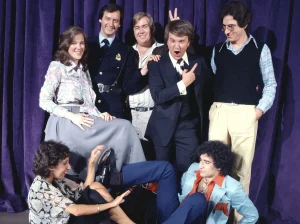 For those of us slightly more seasoned to remember what began as an obscure Canadian import in low-viewership environments (much like SCHITT’S CREEK) the memories are much warmer and vivid. Going to college in a border town meant there was somewhat of a geographic obligation for the NBC affiliates I had access to to carry SECOND CITY TV in a post-SATURDAY NIGHT LIVE time slot and given that I tended to call it a night slightly earlier than my far more dedicated drinking dormmates did I tended to have access to the TV lounge when it came on just after Don Pardo brayed his “g’nights” to the network. It’s not like we had many competitive choices–several available stations actually signed off for the night by that point. Richard Roeper, himself a veteran of late night syndication during his years partnering with Roger Ebert who now is appropriately a contributor to his eponymous website, filled in the details for those who never had to live with being awake to see a national anthem and fade to black:
 “SCTV” isn’t really a show “you’ve never heard of”—but it had a checkered history on Canadian, and eventually American, TV, and for younger generations, a series that concluded in 1984 is like “I Love Lucy” or “The Honeymooners” to me. Ancient history, but invaluable history nonetheless. The documentary proceeds largely chronologically, taking us back to Toronto’s comedy scene in the 1970s, which featured everyone from Dan Aykroyd to Gilda Radner to Martin Short to John Candy, to name just a few. When the Toronto native Lorne Michaels launched “Saturday Night Live” and tabbed Aykroyd and Radner to join the original cast, a group of young talents decided to create their own show before everyone scattered to New York City. (We’re told that John Candy, Joe Flaherty and Dave Thomas auditioned for “SNL,” and Lorne Michaels told them, “Don’t give up your day jobs.”)
Thus was born “SCTV,” a meta sketch show about a fictional TV channel that was “the pride of Mellonville.” Harold Ramis joined as head writer, the budget was $7,000 per show, and it featured behind-the-scenes sketches at the station, plus snippets from satirical soap operas, newscasts, talk shows, commercials, sitcoms, and dramas. Tom Hanks waxes rhapsodic about the “Leave it to Beaver 25th Anniversary Party” sketch with the Beaver and Wally et al. as adults, calling it “dark as all get out.” Fred Armisen and Kathryn Hahn say “SCTV” was cool precisely because the comedy was so edgy and not everyone knew about it. Armisen calls it “like a secret code,” while Hahn dubs it “Comedy from the wrong side of the tracks.”
The show eventually made it to the NBC network–and in a 90-minute format no less–but it was compromised by everything from airing on a Friday night with Johnny Carson as a lead-in and the equally quirky FRIDAYS as partial competition at a time when SNL was having its own challenges trying to establish a new cast and when VCRs were still in a minority of American households. Its final season was relegated to the outright obscurity of Cinemax when it was disrupting the firehose of soft-core pornography films that otherwise defined it. Again, you may not have seen it but for that reason alone I’d suspect you’d at have least heard of it.
But with Netflix recently acquiring the series–and this documentary opportunistically and finally coming to fruition after several years of limbo–there’s no longer any valid excuse for anyone of any generation to not allow themselves to giggle and guffaw. Roeper points to several good reasons why that got me to do both:
We’re reminded of brilliant bits like “20 Depressing Hits by Connie Franklin,” “The Sammy Maudlin Show,” and O’Hara’s vapid, over-the-top Lola Heatherton asking Andrea Martin’s Mother Teresa, “What do YOU get out of this?” Sure, the humor targets a bygone era, but it’s universal and timeless. (I loved the moment when Bill Hader is laughing uncontrollably just REMEMBERING the comedy.)
“SCTV” chronicles the friction within the team when the Bob and Doug McKenzie characters became a huge breakout hit, with Dave Thomas and Rick Moranis eventually exiting the show—but for the most part, it is a pure celebration of a legendary series. This is a no-frills film, relying on those golden-old clips, the warm, witty, and insightful memories of comic giants, and the sharp observations of modern-day talents. That’s more than enough.
That’s also more than enough endorsement in my book for those of you who have merely heard of SCTV to go one step further and actually see it. You younger folks deserved more respect going in that what this doc’s producers (ironically, one of them is Jimmy Kimmel, who knows more than a thing or two about low ratings in late night). assumed. Show us the way, kids.
Until next time…