
I was once as much of an unapologetic Aaron Sorkin supporter as anyone. Between the riveting dialogue and seminal casting of A FEW GOOD MEN, the hypnotic walk-and-talk and almost idyllic version of the White House captured in THE WEST WING and the brilliantly sardonic and spot-on lens on TV journalism that was offered in THE NEWSROOM I once considered anything with his name on it must-see to the highest order. When he’d merely put his name on scripts that resonated deeply with me such as the optimistic AMERICAN PRESIDENT and the right-down-my-alley MONEYBALL I eagerly anticipated his unmistakable imprinteur that would never fail to deliver a meaningful viewing experience. I became such a fan that more than a decade after it left ABC I bit the bullet for a DVD set of SPORTS NIGHT, kicking myself that I had been too distracted to discover it in its initial run. Between the mid-90s and the mid-2010s I would somewhat blasphemously consider him the closest to Steven Spielberg as a creative force.
 In hindsight, I realize that was an overreach. Sorkin did seem to have a redundancy streak in what he chooses to focus on–certainly the DNA of THE WEST WING was evident in AMERICAN PRESIDENT, as was THE NEWSROOM’s in SPORTS NIGHT. I’d even toss in to the latter his ill-fated STUDIO 60 ON THE SUNSET STRIP, which attempted to explore the behind-the-scenes world of a weekly comedy series at just about the same time that 30 ROCK did so with actual alumni of that world and in a far more upbeat and playful manner. Still, none of them was at de facto a sequel as is THE SOCIAL RECKONING, which takes another look into the world of Facebook that he took us into 17 years earlier with THE SOCIAL NETWORK, winning an Academy Award for Best Adapted Screenplay in the process. It was admittedly a high bar for anything to aspire to recapturing, but one he vehemently defended in his aggressive promotional tour as this being a storyline he felt needed to be told.
But the fact he was out there hocking this at all was a reminder of two reality checks at once–that he’s kept a very low profile since THE NEWSROOM left HBO, taking ondirectorial roles for passion projects like TRIAL OF THE CHICAGO 7 and BEING THE RICARDOS, and that 17 years may have been far too long a gap between visits to Menlo Park. It was a point that THE WRAP’s Jeremy Fuster astutely rose just before the balance of his argument was hidden behind a paywall:
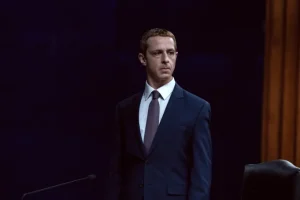 “The Social Reckoning” marks the latest example of audiences rejecting a film that tackles tough issues that are already monopolizing real-life headlines. Just as last week’s “Digger” is a punishing satire that focuses on the bleak potential future brought by climate change and art’s insufficiency to tackle it, “The Social Reckoning” focuses on the deleterious effects of social media on democracy and the psyches of teenagers, both issues that have been in the news as recently as this past month, when Facebook’s parent company Meta reached a $17 billion settlement in a multi-state lawsuit regarding social media addiction.
And as also recounted, THE SOCIAL RECKONING proved to be as much of a box office flop as the film that will forever be known as the nail in the coffin that was Warner Brothers:
With a $5.5 million domestic opening, it has earned a quarter of the $22.6 million that “The Social Network” earned. Its trailers have gone largely ignored on TikTok and Instagram, the sites that have eclipsed Facebook in terms of youth relevance, and reception has been lukewarm at best, with a B- on CinemaScore and Rotten Tomatoes scores of 55% critics and 73% audience.
At least nobody at Sony got fired over this. But it does serve as a reminder that Sorkin’s works have by and large never proven to be populist by traditional measures. None of his TV shows were highly rated; even at its peak THE WEST WING was typically a top 30 show and as essentially a soap opera had virtually no monetizable back end. THE NEWSROOM was tepidly received even by the liberal standards of HBO and saw its third season order shrunk to a mere six-episode coda to what became a three-season Roman candle. And now this sort of non-reception–especially from outside the core audience of male, educated coastal tastemakers that Sorkin self-identifies with.
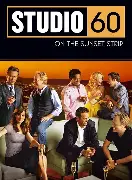 He’s made a habit over the span of his career for being exceptionally judgmental and dismissive of third party verdicts. That was especially true when STUDIO 60 crashed and burned and he blamed, as THE CHICAGO TRIBUNE’s Maureen Ryan reported at the time, “unemployed comedy writers and bloggers” as well as an overly enabling trade press for amplifying the negative vibes. He also was initially combative with an uberfan named Kevin T. Porter who compiled a series of YouTube videos in 2012 and 2013 called “Sorkinisms” which detailed his penchant for reusing snippets of dialogue in his works–practically an inevitability given the sheer volume of his output.
I’ve felt much the same way with his most recent works, and since I’m technically a blogger myself I can’t imagine anything I point out would matter one bit. I do know how the folks at Tom Rothman’s level and above think, however, and a $5.5 million dollar opening for a sequel with a presumed pre-existing awareness and fan base isn’t going to motivate them to go back to the Sorkin well anytime soon. And there’s no longer a Warner Brothers other than in name for Sorkin to be embraced in and buttressed by, either.
It now leaves me pretty sure Sorkin’s no Spielberg–not today and not ever. Sorry if that might offend you, Aaron. But I do assume you can handle the truth.
Until next time…