
The 90s were a great time for television. Thanks to the outsized success of THE COSBY SHOW at a point when NBC and situation comedies were both in dire straits, the genre was resurrected and became prolific both in prime time and in rerun syndication. There was an explosion of newly signed on and maturing stations whose growth curve was accelerated by the rapid rise of FOX to a true network–getting rights to the NFL and MLB didn’t hurt. And the ones who weren’t yet aligned bellied up to the bar that the emulative aspirations of The WB and UPN provided for their respective studios and happily became affiliates.
What those neophyte networks and their affiliates (many of which they had direct financial interest in) all noticed was how FOX was dealing with competing with THE COSBY SHOW and NBC’s now-commanding “must see TV” Thursday night lineup. There were apparently two vulnerable demographic cells within the massive and broad swath the Peacock network cut–non-adults and Blacks. And while it was the bold move of THE SIMPSONS from its comfy Sunday night perch that proved to be most directly impactful, the balance of the lineup was buttressed by shows like LIVING SINGLE and MARTIN. Both The WB and UPN then went aggressively after that demo, filling out the other weeknights with blocks so targeted and with nominal thresholds of success that it was eventually possible for those stations to program their key early and late fringe dayparts with their repeats–especially true in cities with significant African-American populations.
It was in those environs that Martin Lawrence and his Detroit-centric hang had its greatest success and became as beloved to Black adults 18-49 as shows like FRASIER and SEINFELD were to their Caucasian-heavy audiences. BET and its sister networks have aired its reruns almost ubiquitously as Lawrence became a true movie star thanks in part to the BAD BOYS franchise. And we are indeed knee deep in 90s revival appreciation times–the Thirty Year Itch is most def a thing.
That’s likely what has propelled Paramount Plus to resurrect that world, this time focusing on a beloved bit player as a series lead. As THE WRAP’s Ronda Racha Penrice explained yesterday:
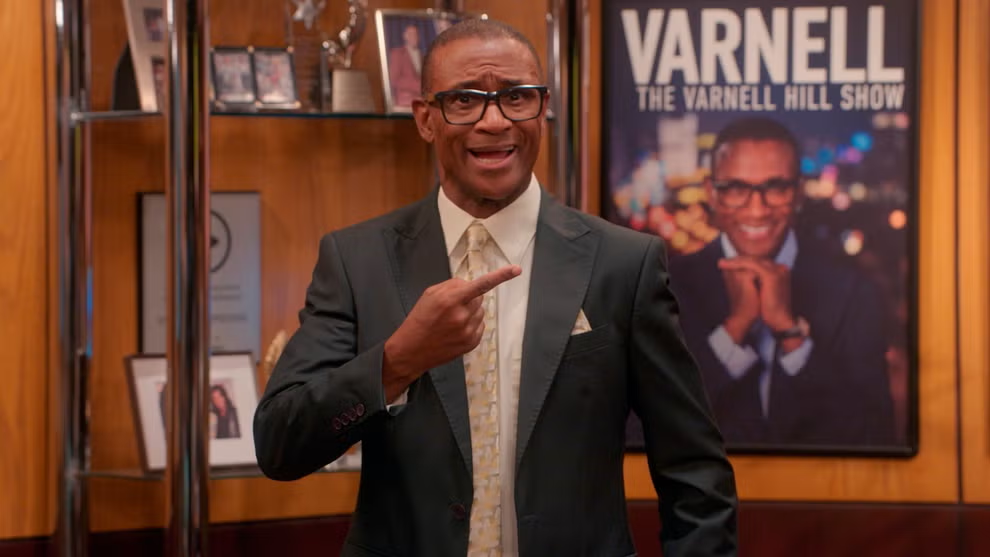 “In Living Color” legend Tommy Davidson parlaying his two-episode appearance on the ‘90s sitcom “Martin” into “The Varnell Hill Show” three decades later is an odd television milestone. Greenlit last year for streamer BET+, whose content is now being folded into Paramount+, the series, which counts Martin Lawrence among its executive producers and cast in a recurring role, bets heavily on nostalgia.
Decades later, Varnell Hill is not who viewers were first introduced to on “Martin.”. “Did you miss me?” is still his catchphrase, but his late night show is lukewarm at best with Varnell teetering on becoming a has-been. And nepo exec Jonah Michaelson (Nick Cafero) is ready to pounce. Driven more by daddy issues than business acumen, Jonah sees getting rid of Varnell, whom his father David champions, as the way to make his mark and brings in whip-smart Rachel Perkins. (Wendy Raquel Robinson of “The Game” and “The Steve Harvey Show” fame) as the show’s executive producer.
Right there is a trove of other 90s Black nostalgia to draw from. IN LIVING COLOR, of course, was the cultural zeitgeist that at the time was way cooler and hipper than SATURDAY NIGHT LIVE and complimented the more traditional sitcoms with similar appeal. THE GAME and THE STEVE HARVEY SHOW were among the more enduring and impactful attempts for UPN and The WB, respectively, and each have proliferated on BET in reruns. And as Penrice elaborated there’seven more behind-the-scenes connections to the complicated world of Black-appeal comedy:
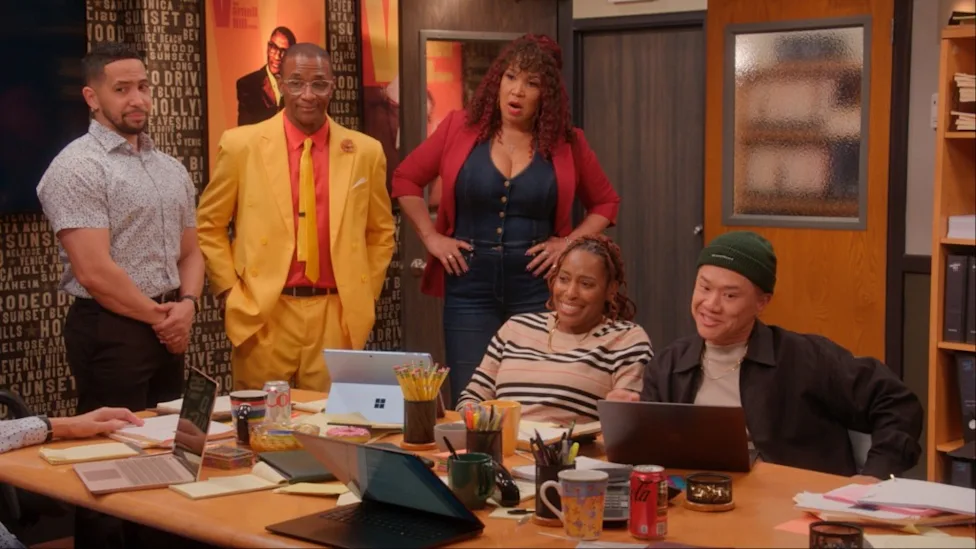 Best known for “Martin” and “The Jamie Foxx Show,” this Bentley Kyle Evans show, created with two of his peers — Kevin G. Boyd and Sherri McGee McCovey, hits or misses. Like “Mind Your Business” starring Columbus Short and actress Drew Sidora, from “Real Housewives of Atlanta” fame, and some of his other 21st century series, “The Varnell Hill Show” serves up humor that’s nostalgic to some and dated to others…Clearly inspired by “The Arsenio Hall Show” and presumably handled by executive producers Jesse Collins and Dionne Harmon known for the BET Awards, Varnell’s version frequently delivers here with in-studio guests that include Davidson’s “In Living Color” co-star Damon Wayans, Mike Epps, Ms. Pat, and former NBA player and “All the Smoke” podcaster Matt Barnes. Hip hop legend Doug E. Fresh serves as Varnell’s musical hype man while Kirk Franklin and Omarion deliver solid musical performances.
It is in those moments, where an actual studio audience and a stylistic homage to yet another 90s icon–THE LARRY SANDERS SHOW–are in play that THE VARNELL HILL SHOW is at its most watchable. Davidson/Hill is more than believable as an interviewer, and the additional nods to the realities of today’s worlds with his revamped writing room (one DEI hire came from Colbert; others bring back the vibes of generational conflict seen in HACKS) are where the show shines. Penrice astutely noted that the Sanders connection is especially beneficial:
One bright storyline…is Varnell and Rachel breaking the fourth wall. Here, Rachel sheds her corporate speak revealing her rougher pre-Ivy League roots, while Varnell shares his true feelings mockumentary style about everything going on, especially around both Regina and Marshay.
But when the action shifts away from the soundstage and the canned laughter escalates the energy is sucked out almost entirely. While I’m clearly not the target audience, I’ve heard from enough who were in countless test groups through the years that overreliance on exaggerated and stereotypical characters and “oh, snap” humor that tended to be a fallback from those many 90s Black comedies were not all that appreciated by their audiences then–and even less so now. And as THE AV CLUB’s Shannon Miller opined, while nostalgia in small doses is fine, too much of it can be downright stifling:
Just beyond the midway point of its first episode, The Varnell Hill Show delivers its thesis via Rachel Perkins, an exasperated studio exec played by Wendy Raquel Robinson. “Your show is stuck in the past and your ratings are down,” she tells Varnell (Tommy Davidson). “It’s dated, it’s stale, and nobody wants to tell you this to your face.” She’s referring to the fictional talk show Rachel’s been tasked with whipping into shape. She could just as easily say the same about the very Paramount+ spin-off she exists within.
The flat bright wash of the lighting, the broad physicality and exaggerated character archetypes, the raucous, canned laughter liberally deployed at every attempt at a joke. It’s all rendered with real affection and fluency from two men who helped define a whole era of TV comedy. But a sendup implies distance from the thing it’s sending up, and Varnell Hill has none. It isn’t commenting on the ’90s multi-cam or saying anything new about late-night culture. It’s just a ’90s multi-cam, arriving 30 years too late.
Comedy has changed drastically since Martin signed off in 1997, and in nearly every aspect, Varnell Hill rejects the notion that it has any reason to keep up. The protest goes beyond throwaway jokes about pronouns and queerness—though there’s a steady drip of both, including the return of “PAUSE,” the memeified disclaimer meant to ward off any perceived homosexuality, which The Boondocks already lampooned as regressive back in 2010. It runs throughout the show’s most heavily revisited devices… The self-awareness gets most egregious whenever Rachel relaxes her own code-switching for the audience, rarely with any insight into why the switch from polish to barely concealed cheek is necessary.
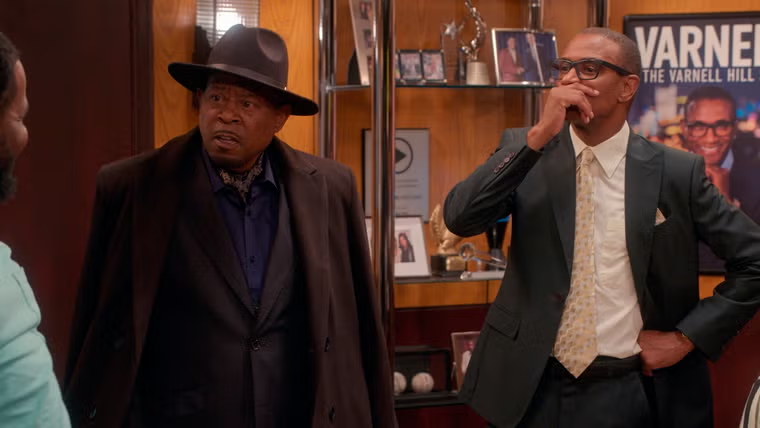 I’m not qualified to weigh in on those sorts of issues (I’d welcome debate if Miller is) but I am qualified to observe that Paramount Plus already went down the 90s comedy resurrection path with FRASIER three years ago. Despite my gushing enthusiasm–admittedly buoyed by actually being back on an actual lot.–a show that set a modern broadcast network record with 264 episodes produced for NBC limped through 20 before the economic realities of lack of broad global appeal and tepid KPIs doomed it. Even though it’s not a de facto reboot, I see many of the same obstacles and missteps in evidence with THE VARNELL HILL SHOW. And much as the younger generation of comedy fans I interacted with couldn’t get as stoked about the return of Kelsey Grammer I suspect that seeing Lawrence not as Martin Payne the aspiring DJ but as his gangster cousin Mr. Dupree will be yet another letdown.
With that framing and, of course, the prevailing uncertainty surrounding the parent company, I’m reluctantly predicting a similar quick and forgettable exit for what will likely be seen as another missed opportunity for all of the previously cited reasons. Another chance to resurrect and contemporize pre-existing IP–the Holy Grail of corporate media these days–come and gone. Indeed, Paramount, whazzzzzzzup with that?
Until next time…