I have been fortunate enough to have been able to call exceptionally talented and auspiced people colleagues and sometimes friends. But through an extremely convoluted set of events that I would need a 23-and-me expert to parse a few years ago I learned that one of them was also a cousin, albeit many times removed.
So I’m more than a little positively biased toward Ken Levine, a name you might know either from his prolific career as an Emmy Award-winning writer (with his partner David Isaacs) or as a play-by-play broadcaster for four different major league baseball teams. He also had a long run as a blogger and podcaster with his HOLLYWOOD AND LEVINE franchise–indeed, inspirations for this effort. Hey, he even allowed me to be a guest on one of his episodes.
Perhaps the quality I admire about him most is his directness and candor with how he recalls his less enjoyable career moments. And whenever one would bring up the subject of AFTERMASH, the spin-off to the all-time hit M*A*S*H that immediately inherited its cushy Monday night CBS time slot which returned him and Isaacs to the franchise where they built the foundation to their impressive careers from, he would never fail to confess that it was as much of a misfire as they had ever been associated with. It was built on the backs of secondary characters Corporal Klinger, Father Mulcahy and Colonel Potter, now stateside with their families (including Klinger’s Korean War bride) in the heartland of America. Characters who may have been recognizable to the show’s fan base but hardly ones whose storylines were integral to the series–and proved not be to interesting enough for a majority of viewers to care about over time.
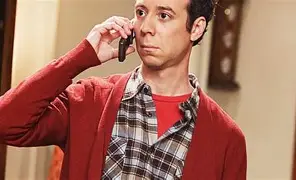
It is with that caution flag that I’m at best leery about the prospects for STUART FAILS TO SAVE THE UNIVERSE, the latest spin-off of THE BIG BANG THEORY which drops tonight on HBO Max and the first not to feature a character with the surname Cooper as the lead. Its hero is the much maligned comic book store owner and frequent fifth wheel to the Sheldon-centric cadre of friends and lovers Stuart Bloom, portrayed with endearable schmendrickness by Kevin Sussman. Also back are the familiar faces of fellow fanatics and foiblers Bert Kibbler (Brian Posehn), who popped in a cameo where he bonded with Sheldon over their mutual obsessive love for trains, and Barry Kripke, Sheldon and Leonard’s nemesis colleague in the physics department of Cal Tech who was memorably “pawtwayed” by John Ross Bowie in what often came off in a style akin to a house band tribute to Elmer Fudd. For balance, this Fantastic Four is rounded out by Lauren Lapkus’ return as Denise, the answer to his prayers for companionship that, as was the case with Amy Farrah Fowler, Bernadette Rostenkowski and, of course, Penny No-Surname, proves there is ultimately someone for everyone. But besides being sweet and above Stuart’s pay grade even the most ardent BBT fans never learned all that much more about her.
And we’re not gonna learn all that much about her in this series, either, because while it’s indeed a spin-off the characters we were familiar with are only tangentially connected with this uber-quirky effort, a point LOOPER’s Dominic Griffin glommed onto in his preview piece from yesterday:
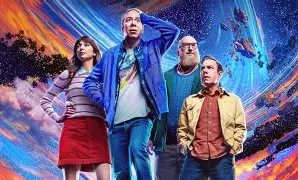 “Stuart Fails to Save the Universe” is not titled hyperbolically. It is, for better and for worse, exactly what it says on the tin — a kaleidoscopic, sci-fi action comedy about…Bloom (Kevin Sussman) being tasked with preventing the end of all reality and not quite measuring up in that noble pursuit. Lorre, alongside co-creators Bill Prady and “The Last Action Hero” scribe Zak Penn, attempts to thread the needle between the multiversal genre-hopping that has become so central to the zeitgeist in the years since “Everything Everywhere All at Once” and the kind of “nerds from the mother ship” show who love to debate the intricacies of that type of world.
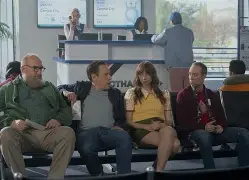 In the opening moments of the pilot, we’re introduced to a variant of the supporting players we know from “The Big Bang Theory.” In this world, Stuart is still the owner of the Comic Center of Pasadena, and geologist Bert Kibbler (Brian Posehn) is still a loyal customer, but everything surrounding the familiar set is in disarray. When Bert tries to haggle with Stuart for a copy of Batman #608, the first issue of Jeph Loeb and Jim Lee’s iconic “Hush” storyline, he does so with some lima beans instead of legal tender. There are zombies, giant killer moths, and a small wormhole in the store, the other end of which remains a mystery even to the customers who interact with it. This world is a haunting and fantastical mess until another Stuart from a neighboring timeline arrives, telling this Stuart that he’s the only one who can set things right.
What we apparently get from those who have been privy to the full series of episodes–which thanks to HBO Max’s anti-binge strategy we won’t have the benefit of digesting all at once–is a season of quantum leaping back and forth and different iterations of the Core Four. It sounds frenetic; reminiscent of what MCU fans relish. If one falls into that category, I suspect there will be a heightened tolerance and appreciation. The LOS ANGELES TIMES’ veteran critic Robert Lloyd may or may not be one of them, but he did bring to light a few things that he liked that resonated with me:
 It’s the small details, which we could be here all day enumerating, and the delivery, rather than the big concepts, that bring the show alive. More important, no small part of the fun is in discovering each new universe alongside the travelers, and in the transformation of familiar environments. (The Warner Bros. back lot gets a workout.) If you don’t find one alternate reality funny, there’ll be another one along soon. This is not a problem I had. But here are two jokes from a place where magic is real. Kripke: “Stuart, the people here think science is evil.” Stuart: “How is that different from our world?” And Doctor Strange, the comic character, is a colorectal surgeon.
It’s dialogue like that eventually made me a yuge BBT fan–one obsessive enough that I actually binged the first few seasons when they originally charged into off-network syndication with the kind of impact (especially for TBS) that we used to see in the days of, well, M*A*S*H. Coming from characters I got to know and identify with and to this day still love to check in on. But such connection is apparently not germane to this effort. We’re not even getting the chance to get to know a little more about their back stories or even their current siches.
 There’s probably no one alive who knows how crucial it is to incorporate that into a spin-off than Cousin Ken. As comedy fans know he and Isaacs later found their way to FRASIER, which took a secondary character from CHEERS and fully built out a world and a new cadre of memorable cohorts that duplicated the former show’s 11-year run on NBC, which also happened to be how long M*A*S*H ran. We had many Gigi salads and perfectly done steaks contrasting how that spin-off strategy worked as opposed to what he experienced on AFTERMASH. The outsized residuals he still gets from FRASIER allowed him to graciously pick up the tab.
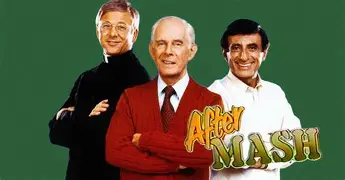 AFTERMASH? I tried like hell to formulate a pitch for it when the old guard at 20th Century FOX realized there was a burgeoning cable market for off-network shows with fewer than the traditional 100 episodes. Many far less well-intentioned and even lower-rated shows somehow got sold. We couldn’t even package it with something else they actually wanted. So sorry, Cuz, I tried.
STUART FAILS seems to be a bit more enticing than that but it sure as heck ain’t FRASIER. Hence I kinda feel whomever may ultimately be tasked with crafting a sales story for it might encounter similar challenges to mine. But at the rate syndication and indeed Warner Brothers are both going these days, that’s only likely to occur in an alternate universe.
Until next time…