
This was supposed to be yet another slow day lament about something that was once was that didn’t quite last. In this particular case, today is the anniversary of my first wedding, one I don’t often reference since it was far shorter and ultimately less lethal than my second was–or at least could have been. I swore a forever promise in front of God and roughly 200 celebrants/mourners in the shadow of the Whiskey-A-Go-Go if only because my spouse’s otherwise abusive pop lost a bet that she would never find anyone dumb enough to actually marry her. While our marriage did not survive, we both ultimately survived that misoygnist prick. Last I heard, which was admittedly a while ago, she had relocated with a far more appropriate life partner and her Dad was terminally ill. I can only hope those trajectories continued in the same manners.
But yesterday the ever-diligent keeper of TheDesk.net flame Matthew Keys usurped that game plan when he dropped this breaking news into his timeline from the fingers of TECHCRUNCH’s Sarah Perez that triggered another somewhat less personal slew of memories:
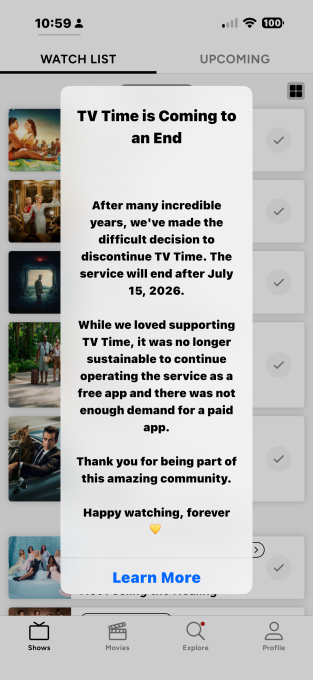 TV Time, a popular app for tracking the shows you’re watching and engaging in community discussions, is shutting down. The company announced via in-app messages that TV Time’s app will be discontinued, no longer offering service after July 15, 2026. The company blamed the expense of running the platform as a reason behind the decision, but a shift to a more AI-focused business seems to be the real culprit.
TV Time’s shutdown marks the end of one of the larger TV fan communities online, and underscores how the growth of the AI industry is shifting companies’ priorities. As businesses race to build AI products, consumer apps are sometimes shuttered, even if they have active user bases…While we loved supporting TV Time, it was no longer sustainable to continue operating the service as a free app, and there was not enough demand for a paid app,” the message read.
 Owned by Whip Media, TV Time’s app has north of 26.4 million lifetime installs, per data from app intelligence provider Appfigures, and saw nearly 29,000 new downloads over the past 30 days. (Whip Media itself often referred to TV Time’s more than 25 million users in marketing materials.) Under Whip Media, TV Time’s data helped power a business intelligence ecosystem for the media industry. That meant the app alone didn’t have to be profitable as a consumer product, because the data it generated was the real value
Given how research-savvy and on the ball Keys tends to be, I was honestly surprised by the confession and subsequent shaming he offered as an accompaniment:
Until this week’s news dropped, I had never heard of the TV Time app. Turns out, hundreds of people on Facebook and Reddit used it on a regular basis — and they’re heartbroken about the app’s demise…Executives at TV Time said the decision to shut down was due to their inability to sustain a free app and lack of demand for a premium service. What this says to me is, they lacked the vision to figure out how to lean into revenue-generating opportunities that should have been very obvious — the same ones that connected TV platforms have embraced with their home screens and menus, from promoting services to sponsored content listings for shows.
Well, Matt, the best thing I can tell you Matt is that–well, at least I and a few other foresightful folks who founded the company at least tried to have that vision. But as I’m sure you’re aware even if you know you have a better mousetrap if those who ultimately make the call don’t seem to care all that much about how many mice there are or how rat-infested your house might be even those with vision are ultimately blindsided.
In my waning days as a Sony research executive I took a meeting with an energetic TV Time account executive who was well aware we were perpetually seeking viable alternatives to what we knew was at best were at best incomplete and at worst fatally flawed legacy third party measurement platforms. As the largest independent purveyor of global content serving more networks and platforms than anyone else we were uniquely positioned and movivated to lead such a charge. And it was common knowledge that we had already put our money where our mouth was with a Nielsen competitor called Symphony that was being headed up by seasoned veterans of that and similar legacy companies like Arbitron. Symphony was capable of better measuring viewership beyond merely a connected screen, which meant an awful lot of actual viewership particularly to streaming services and especially among young adults and multicultural viewers was being left uncounted. TV Time utilized similar opt-in methodologies but went one step beyond by offering sizable panels beyond the U.S. in key territories like Latin America and countries in Central Europe where Sony not only sold shows but operated struggling linear networks. We were monetizing the world and moving more toward platforms servicing all of it. So yeah, we were more than a little interested in what TV Time was offering. 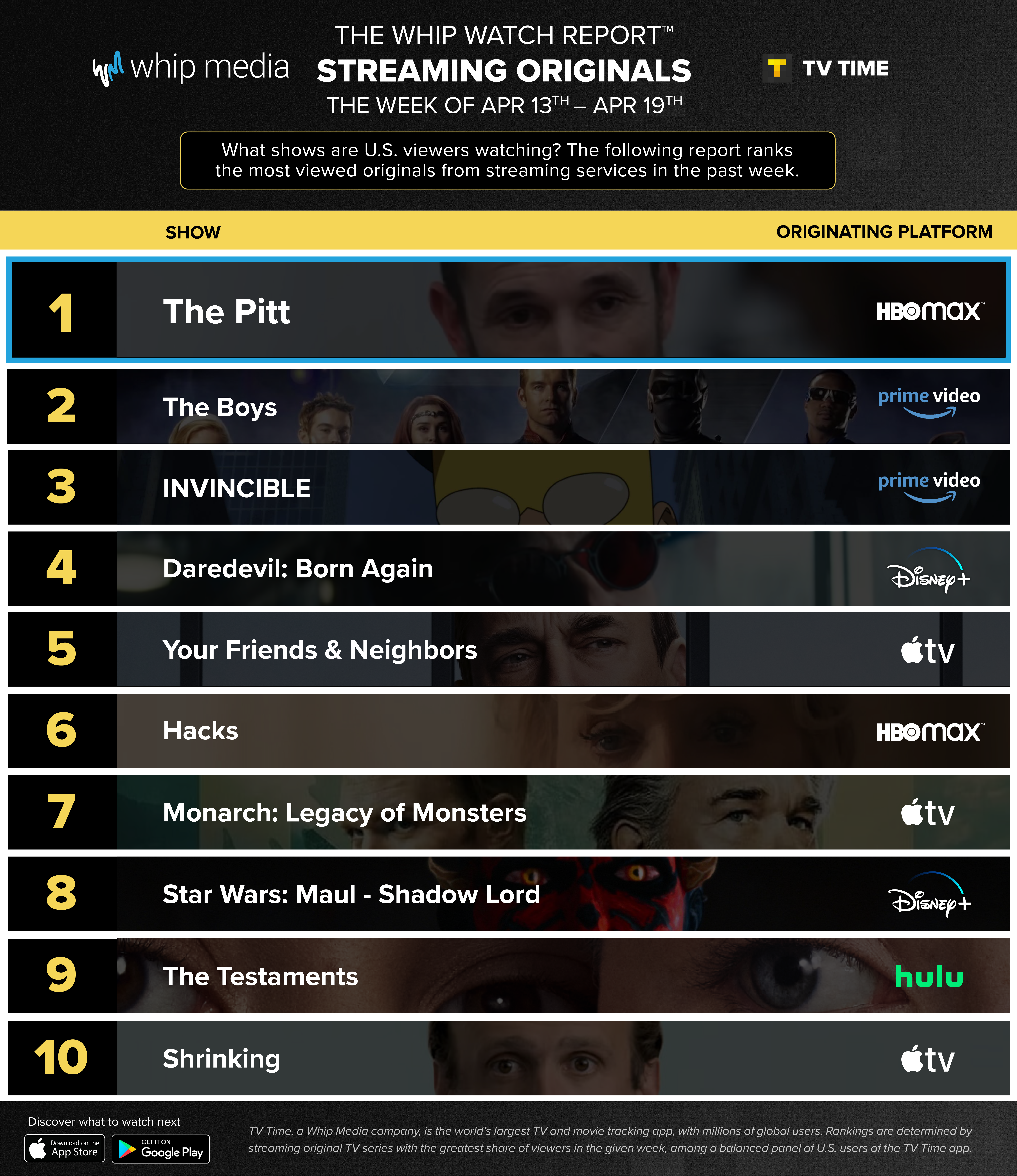
Even after I was deemed unnecessary by those controlling Sony’s research budget and had moved into a senior analytics position with the otherwise green and then-rudderless marketing division we continued conversations with TV Time. They were simultaneously creating a product called The Anticipation Report that was competing with traditional tracking study panels that similar teams at our clients and competitors would regularly use as proof of performance for their outsized and often perceived wholly ineffective promotion campaigns. With their global scale and ongoing maintenance they not only were eclipsing their competitors in size but also had the unique capacity to demonstrate how many of those aware of a show actually watched. The kind of results-oriented metrics that these days advertisers increasingly demand of their digital partners and that content providers are under constant pressure to provide to keep their market shares intact. 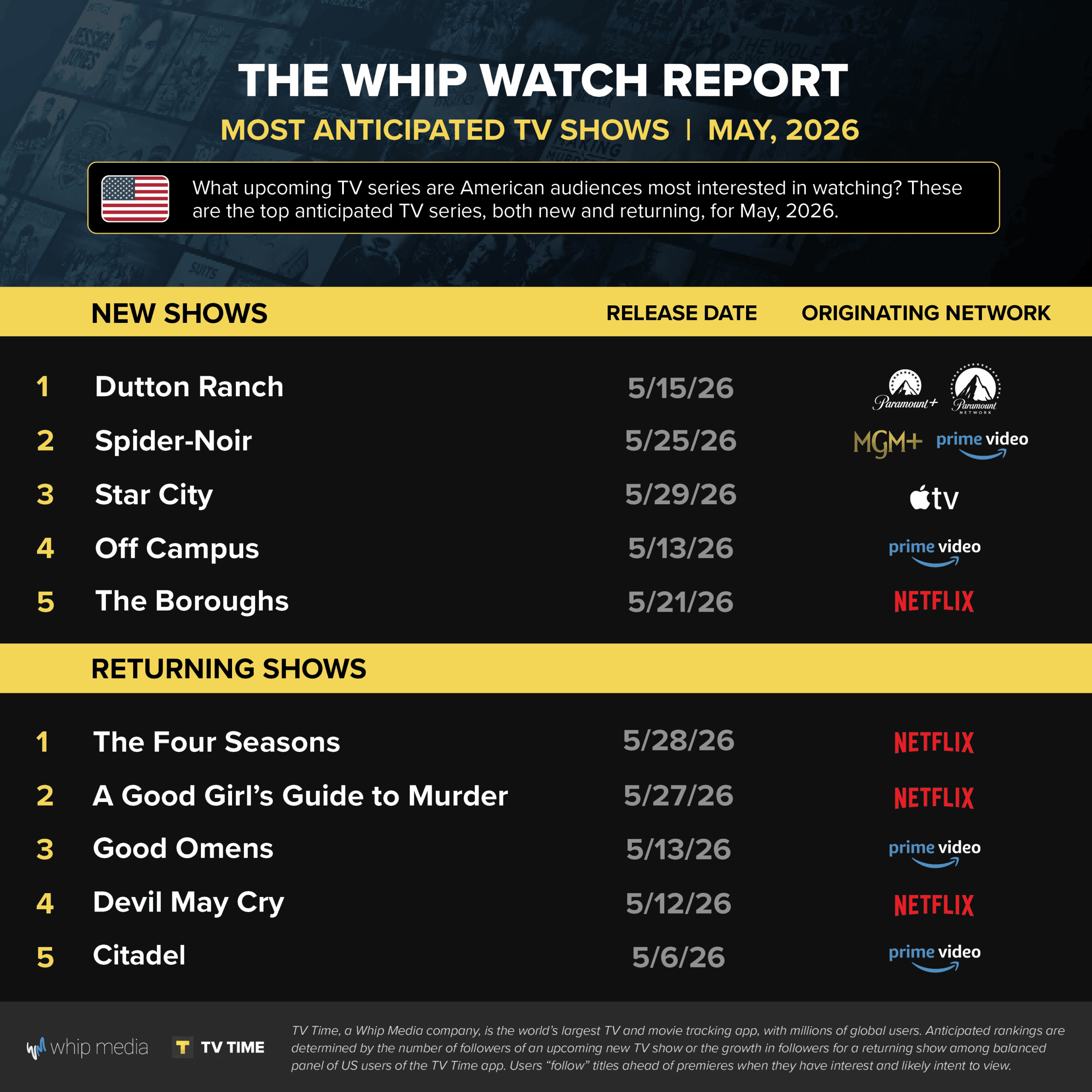
I was able to leverage my pre-existing relationship into an ever deeper one . We were offered a free beta trial to run their data against our existing suppliers and were invited to be part of a client committee that was assisting them with building out both offerings. And when the founder threw a Super Bowl watch party at his gated community mansion that was next door to one owned by Tom Brady I grabbed the chance to have some face time with him and his brass. Turned out Brady was out of town leading his New England Patriots to victory in an otherwise forgettable game so we all had more time to schmooze. As I learned, the founder and I had a few mutual friends whose opinions he respected immensely. When he learned of my thoughts to co-mingle his offerings he was impressed enough to offer me a side hustle to assist his team directly and develop a few trial studies to help pitch the industry at large. Since at the time I was getting no long-term assurances from Sony and my second wife was well on the way to spending every last dime I was earning I felt I was more than justified in taking him up on the chance to see how he was making this particular sausage and if we could possibly make it more digestible.
Alas, once the same genius who deemed me expendable in research had appointed a data-averse toadie to be my direct supervisor and both took the first opportunity they had to permanently oust me Sony’s involvement disappeared. And shortly after I left the scene the TV Time team, which had since been taken over by the Whip management group with the founder bowing out of day-to-day operations they chose to bring on full-time another top-notch research executive who was part of that trial advisory group who himself had been unceremoniously let go by his employer. He did his best to take those pieces and try to build out the stories and learnings we both knew were out there somewhere. But his contact list and even his rolodex was no more capable of moving any needles than his sales team’s so his tenure was almost as short-lived as mine.
It made practically inevitable the end result which Perez reported on yesterday:
Things have changed at the company in more recent months. Whip Media was acquired by direct lender Blue Torch Capital in early 2025, which envisioned more of an AI-focused future for the company. Under its new ownership, Whip Media pivoted from providing the sentiment analysis, ratings predictions, content optimization, and other data that could be informed by TV Time, to instead focus on more potentially profitable paths. This now includes its AI-powered automation and workflow management tool, Helix, which is used to enhance streaming analytics and supply chain orchestration.
Matt, I’ll let you react to that mission statement yourself. I suspect you can guess what side of the Polymarket proposition of “potential profitability” I’d recommend putting whatever spare farthings I might someday have on.
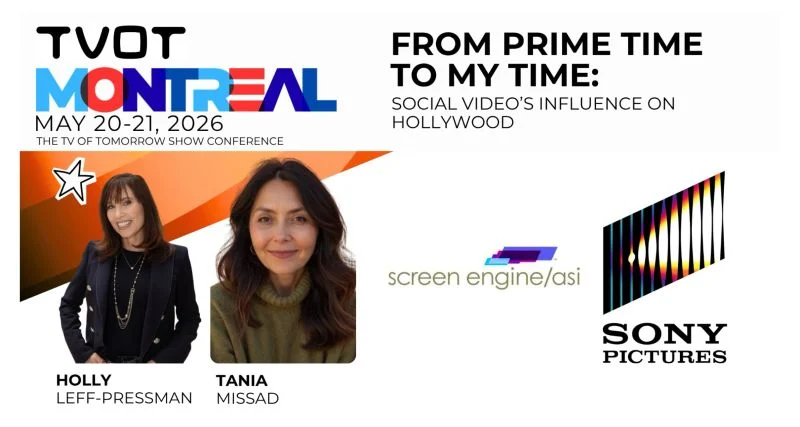 And I can’t speak for any appetite I’m aware of that might have made Whip’s decision all that questionable in the first place. Last I heard, the current Sony research leadership is a lot more interested in optimizing their internal website’s aesthetics and blathering at industry conferences than even wanting to know how their shows and the marketing efforts that accompany them are performing. And again, they’re arguably one of the remaining entities of scale that actually could benefit from it.
 At least we were all willing to give it a go at one point. I did also mean my choice of vendors as well as my choices “for better or worse” . All in due time, I guess.
Until next (ahem) (T)ime…