
If you’re one who believes that hype, zeitgeist and faint praise is the be-all and end-all, you’re probably of the mindset that Apple TV’s the only platform that anyone should spend any time on that doesn’t have a subway train stopping on it.
 There are a few somewhat objective markers out there to give some credence to the theory that despite losing the plus sign at the end of its official title last year they merit one in front of it this year. The resource TelevisionStats.com, which ranks series from 40 destinations around the world, has the current Apple crop.far and away the highest-ranked of all on the basis via what they deem BuzzScore, which per their template measures a whole buncha online activity and chatter. And two of the top five shows overall as of Friday are shows worthy of their own “Prestige” TV feeds from the gossipy yentas at The Ringer that self-designate what they think we all should be watching since they are. So being the easily influenced sap that I tend to be, yesterday I checked out both the newly released CAPE FEAR and the about-to-conclude WIDOWS’ BAY while I battled what I’m praying isn’t plantar fascitis.
For even this modest fan of scary stuff, they both proved to be welcome distractions from the discomfort my right foot was causing me. WIDOWS’ BAY isn’t horror per se, but it struck a similarly positive nerve with FORBES’ ever-attentive Paul Tassi late last week:
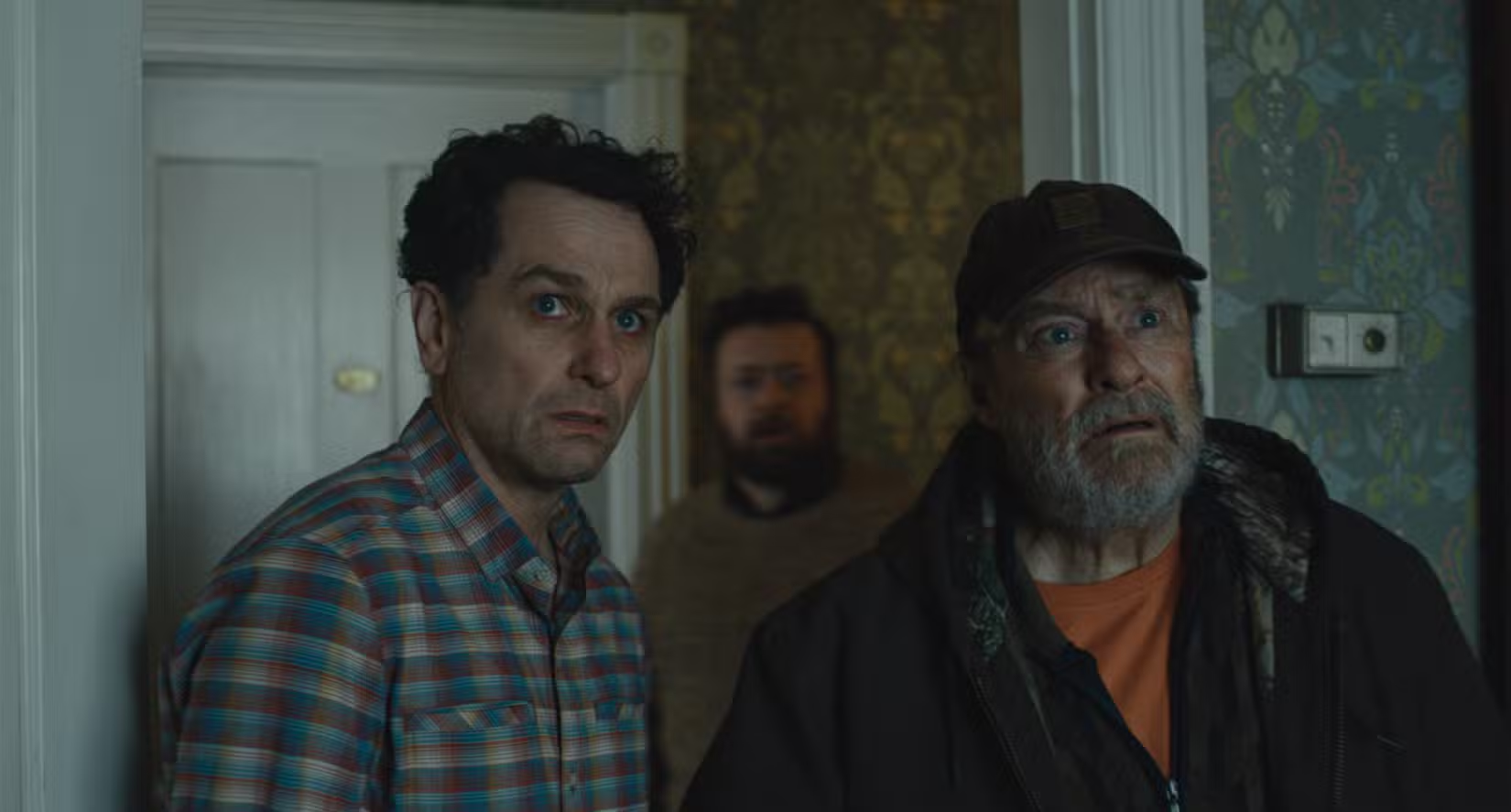 With a 97% Rotten Tomatoes score, Widow’s Bay lets star Matthew Rhys be hilarious for once after his years-long spy turn in The Americans or his recent murderer role The Beast in Me, Netflix’s biggest new show of the year….Rhys plays Tom Loftis, the mayor of a small island community that’s trying to attract tourists. Unfortunately, the island is haunted and the week-to-week curse rolls out horror tropes from ghost hotels to cult sacrifices to most recently, slasher films. In addition to Rhys, the show has made Kate O’Flynn’s Patricia a huge standout, taking point in two of those aforementioned episodes, one of which doesn’t feature Rhys at all…
Critics and audiences aren’t the only ones who are loving Widow’s Bay. The show has just gotten an endorsement from horror director legend Guillermo del Toro, most recently of Frankenstein. Here’s what he tweeted: “If I may – in my estimation – Widows Bay may very well be the best streaming series in a long time… and hands down one of the most mesmerizing acts of narrative prestidigitation in Horror.”
I laughed more than I cringed, which prepped me for my nightcap with CAPE FEAR. MOVIE WEB’s James Melzer dropped a ringing endorsement of that late Friday:
It hasn’t taken long for Apple‘s remake of a 1991 Martin Scorsese and Robert De Niro classic to make its presence known on streaming, as after just one day, the new crime thriller is already a hit. Based on the novel The Executioners by John D. MacDonald, the series also serves as a reimagining of the 1962 film adaptation that starred Gregory Peck and Robert Mitchum.
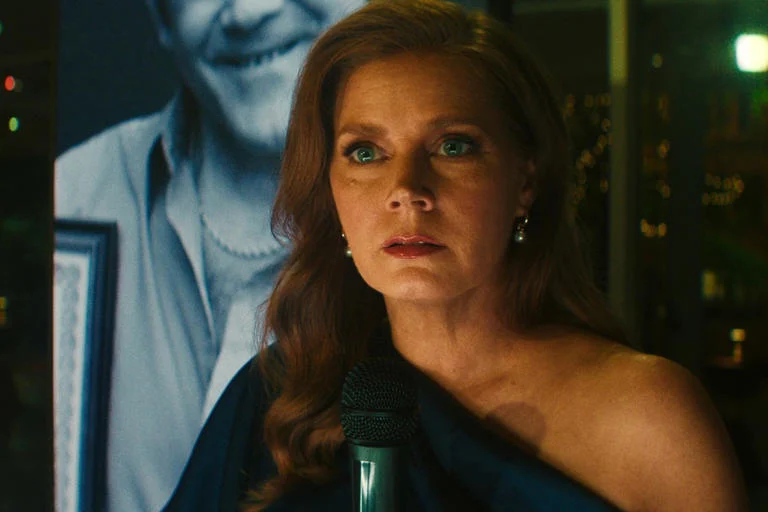
 Starring Javier Bardem, Amy Adams, and Patrick Wilson, Apple’s latest hit, Cape Fear, follows Tom and Anna Bowden (Wilson and Adams), a wealthy power-couple of attorneys living in Savannah, Georgia, who are terrorized by a recently released psychopath that Anna sent to prison 17 years earlier named Max Cady (Bardem). As Cady inserts himself into their lives, the series shapeshifts into a mystery about a dark secret the Bowdens are hiding, leaving the audience to question who the real monsters are.
It’s when these culturistas start doing their best to back up their definitions of what constitutes a hit that I begin to get a tad testy. The typically thorough Tassi dismissively threw out the afterthought datecdote that Widow’s Bay is also #1 on Apple’s top 10 list, currently. Melzer devoted an entire paragraph to what I suspect he thought was significant:
 Premiering its first two episodes on June 5, Cape Fear has already become a hit for Apple TV after entering the Top 10 in the United States. The 10-part series debuted at #6 on the Top 10 list (per Flix Patrol), but we expect it to climb even higher as the weekend rolls on.
Perhaps most surprising of all is that Cape Fear managed to overtake the sci-fi spin-off, Star City, whose flagship show, For All Mankind, remains a favorite that currently holds the #3 spot on Apple TV following its Season 5 finale a week ago. Star City premiered on the same day, and while it did enjoy success immediately following its debut, it has struggled to find its footing on the streamer, losing ground instead of gaining it.
Maybe as more episodes air each week it will manage to regain some of the higher ground, but it’s obvious that the sci-fi show will be in direct competition with Cape Fear despite being in a totally different genre, as the two both air their respective episodes on the same day.
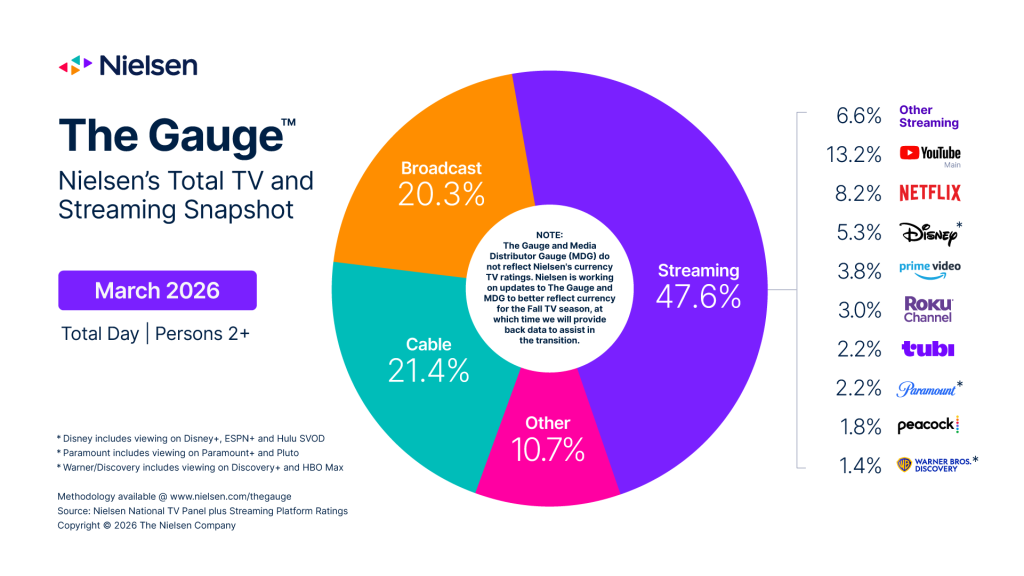 Melzer has likely never seen a Nielsen Gauge report or even the TelevisionStats.com home page if he’s basing his “analysis” on what he sees on a platform’s home page. Those merely measure what is occurring at a moment in time within a walled garden. In the case of Apple, that garden is tantamount to a window sill when it’s stacked up against the scales of its less “buzzy” competition. You don’t see an Apple logo anywhere on this chart, do you?
As I continue to remind my aspirationally aware roomie, those home pages most prominently act as a recommendation engine to encourage one to stay within their ecosystems, not as a statistically reliable measure of overall behavior. But he’s merely watching in a daze on most days, not attempting to objectively cover the industry, so he gets a pass. Not so much for the Melzers of this world.
 And as Apple is about to get a new chief executive in John Ternus–whose CV advertises him as senior vice president of hardware engineering since 2021–who possesses even less appetite and star-struck aspirations as either his current boss Tim Cook or company founder Steve Jobs did. Having some sort of proof of performance that being even competitive when it comes to one’s competition would now seem to be all the more necessary. After all, Apple actually got to be a trillion dollar company by making IBM all but forgotten among PCs and Android the Avis of smartphones. Not by strictly comparing themselves against themselves.
Apple is still a holdout in ad-supported content, which makes the absolute need for objective third-party measurement nominal. But Apple TV very much creatively aspires to be HBO, and with HBO’s impending acquisition by the Midas-touched Ellisons the opportunity to actually eclipse them is all the more possible. You know how HBO got to attract the best in class among creators and showrunners when it had no pure business reason to get ratings? By biting the bullet to get that data, following Turner’s lead in referencing “coverage area ratings” that were all the more overstated given that roughly one in three U.S. households were in its coverage area. When they claimed something was getting a 12 rating it was really getting a 4. These days, that amount of audience is only acquired in aggregate over a 28 or 35 day period, but the concept of making the most relative hay within your footprint is a playbook that Apple TV, which when it last reported them had far fewer subscribers than any of its competitors, would be savvy to replicate. It would be a language that a more scientific mind like Ternus’ would be able to better process, and it might secure the fates of more than a few of its highly-priced executives that traditional ROI metrics don’t fully support.
Meanwhile, I’ll take some solace that I’m at least in a seemingly “cool kid” subset that found something worthwhile to watch. Now if one of them could give me a recommendation for how to ease my pain…
Until next time…