
Unlike most who are as seasoned as moi, I get particularly motivated by novelty and the chance to try something different. When the balance of one’s life is reduced to remarkably redundant and empty experiences and a Sisyphusian series of results to build up one’s bank account, you take your chances for wins whereever you can get them.
Which is why I’m lavishing praise on the braintrusts of Sony and Prime Video for at least trying to inject life into an otherwise forgotten platform like MGM+ by giving it the first premiere window for the latest ambitious efforts of the keepers of the Spider-Verse–Miami’s very own Phil Lord and Christopher Miller and the ultimate Sony golden parachute beneficiary Amy Pascal. SPIDER-NOIR debuted on said network on Memorial Day two days ahead of its global release on Prime with a good old-fashioned marathoning of its eight episodes. And that’s somewhat fitting, since in many ways it can be defined as a throwback itself. As the almost increduously bylined Juan Diego Arriola Wundram of  shared last night:
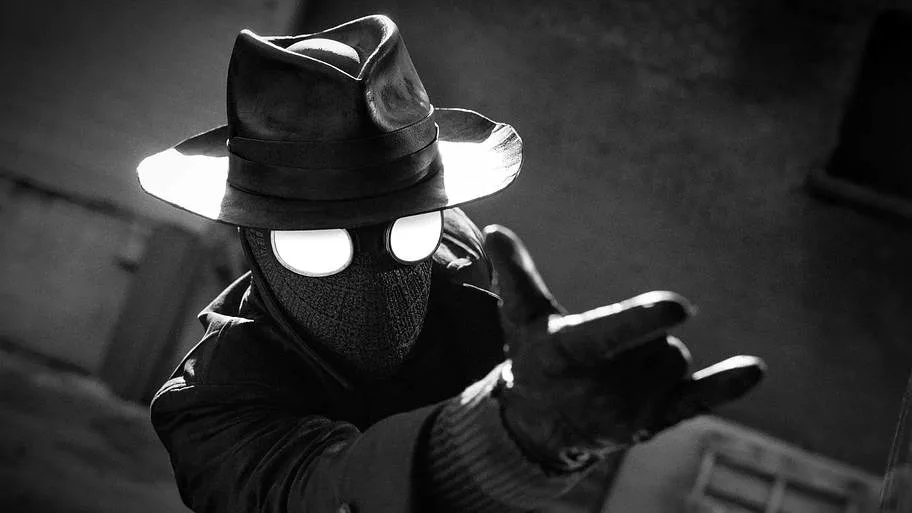 It may be hard to believe, but December 2026 will mark eight years since the release of Spider-Man: Into the Spider-Verse. Back in 2018, audiences worldwide were introduced to a new universe where multiple Spider-Man variants could work together towards a common goal. Not only did this project mark the big-screen debut of Miles Morales, but it also featured other iconic heroes such as Spider-Gwen, Spider-Ham, and, of course, Spider-Man Noir.
In the Spider-Verse franchise, Spider-Man Noir is an alternate-reality version of Peter Parker who lives in New York during the Great Depression era, drinks egg cream, and fights Nazis. Furthermore, he wears a fedora, his world is black and white, and he isn’t afraid to use guns to solve some of his biggest problems. Spider-Noir stars Nicolas Cage as a seasoned and weary version of the wall-crawler. Furthermore, audiences are able to watch the whole show in black and white.
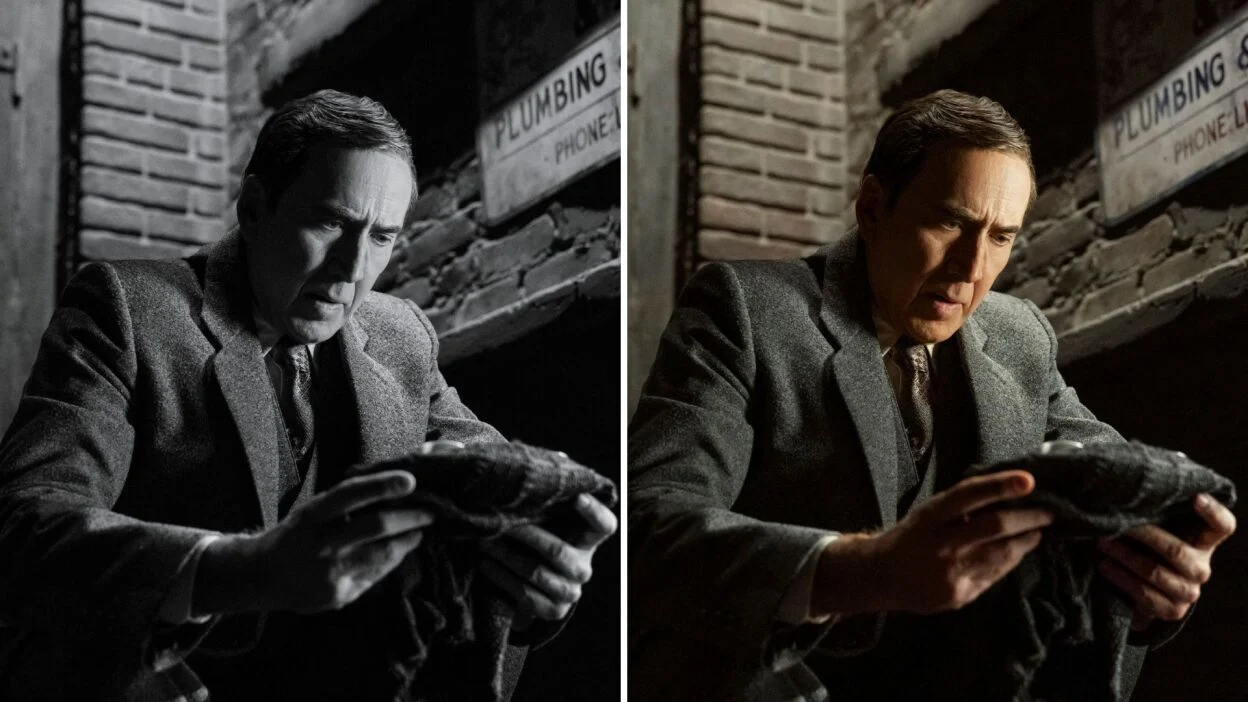 That’s what motivated me to discover that I actually had been already been paying for a satellite subscription to MGM+ for several years without realizing it. I’m a big fan of Cage, who can seamlessly move from drama to dark comedy with the aplomb of, well, a spider. And his spirited interview with the New York Times’ unabashed fanboi David Marchese that dropped over the weekend was revealing and impassioned enough to have me eager enough to seek out the network and this iteration ahead of today’s wider binge release on Prime’s global platform and its simultaneous availability in a color version. It was a concession to the realities of today’s audiences that Cage made that seemed both apolgetic and insightful all at once:
(W)hat I’m doing with “Spider-Noir” is taking the reverence I have for the actors that I cherish, like Bogart or Cagney, and trying to make a collision in such a way that I’m taking television, which is a mass tool that many people ingest, and I’m saying, Look at this! The hope is that a young person would go: “Oh, wow, what is that? That’s black-and-white. I’m not too familiar with black-and-white. I can watch it in color, but I can also watch it in black-and. … What is black-and-white? Oh, my gosh, there’s this immense volume of beautiful art that all these early actors were in. Let me check that out.” And oh, and by the way, he’s Spider-Man.
Well, sorta, as NETFLIX JUNKIE’s Pritha Debroy explained:
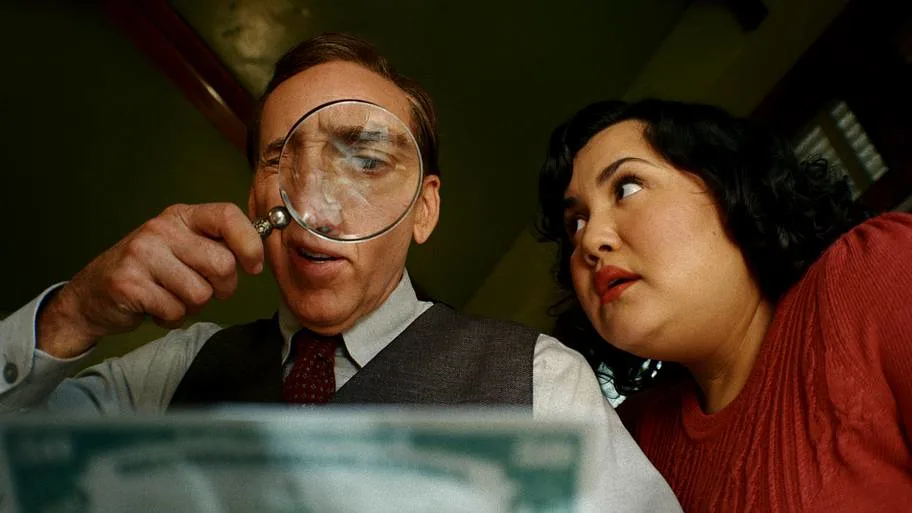 Spider-Noir is not Peter Parker(.) Spider-Noir is Ben Reilly in the comics, which is a major deviation from the events in the comics. Ben Reilly was originally introduced as a genetic clone of Peter Parker during the famous “Clone Saga” storyline, created by Jackal. After discovering he was the clone rather than the original Peter Parker, he created a new identity using Uncle Ben’s first name and Aunt May’s maiden name, becoming “Ben Reilly.” Adopting the identity of the Scarlet Spider, he later returned to New York, eventually taking up the mantle of Spider-Man himself.
The Prime series, however, reimagines him as an older noir-era vigilante and private investigator rather than a clone. Another difference is in their age and personality. Peter Parker in Spider-Noir is a young man in the 1930s. He has a boyish charm and is full of hope. However, Cage’s character is seemingly someone who is old, tired, and has already gone through many painful experiences and lost his optimism.
Per Wikipedia, Cage describes his depiction as “70 percent Humphrey Bogart, and 30 percent Bugs Bunny“, believing Ben was “a spider trying to cosplay as a human”. I’ll offer that the homages are as much to Roger Rabbit and Anthony Hopkins’ grizzled and befuddled Eddie Valiant as anything else–they, too, were inspired by such works as THE BIG SLEEP that were obviously on the minds of those in charge:
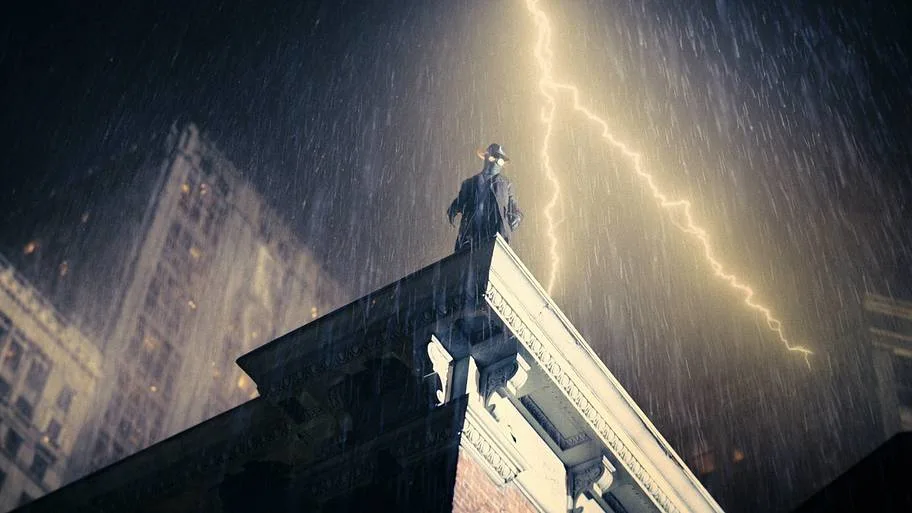 Executive producers Phil Lord and Christopher Miller described Ben as “older and jaded, and not afraid to punch a guy in the face drunkenly” and someone who “already had his Chinatown disillusionment moment” many years prior, with co-showrunner Oren Uziel saying despite trying to move beyond his past, it keeps returning “to haunt him”.
I found it to be satisfying and surprisingly bingeable–though I’ll confess that I was savvy enough to record it and thus watch the later episodes as a way to better deal with my ongoing insomnia issues. How this all nets out for the invested parties remains an open question. MGM+ is not publicly rated by Nielsen–given when it was rebranded from Epix in 2023 it was only reaching 45 million homes on its own and has likely dropped commensurately with cable itself since then the odds that it would have any measurable audience of consequence would be a longshot. Prime Video is seeking to build it out as a tile akin to what it previously attempted with Freevee, in this case as an “artsier” and more prestige destination. Certainly, relative to the array of buzzy but little-seen shows MGM+ has introduced to this point such as FROM and GODFATHER OF HARLEM SPIDER-NOIR is immediately more recognizable and appealing. It got me to find it, so that’s an accomplishment. But considering both the non-exclusivity and esotericness of the balance of its catalogue, I kinda wonder how the spinmeisters are gonna find pearls of wisdom to tout success–assuming it’s even achieved. That might remain as Ben Reilly’s biggest unsolved mystery yet .
Until next time…