
For as much as the people I admire so much on the creative side of the entertainment industry may try to contend that they deal with more rejection than anyone else I would merely ask them to visualize themselves in my role, since the ones skilled in the Strasberg method tend to be able to do that really well. They might be able to tap into the feelings of learned helplessness that has often accompanied the occasions when I’ve been forced to provide bad news to people who were otherwise hell-bent on advancing their personal goals or agendas. When these verdicts were delivered to particularly arrogant and disbelieving executives I’d often be cursed at and frozen out–until, of course, the next wave of results would be released and all of a sudden I’d somehow be in demand again. Thank goodness I tended to deal heavily with surveys and polls that would get updated daily or weekly; that did wonders to extend my career trajectory.
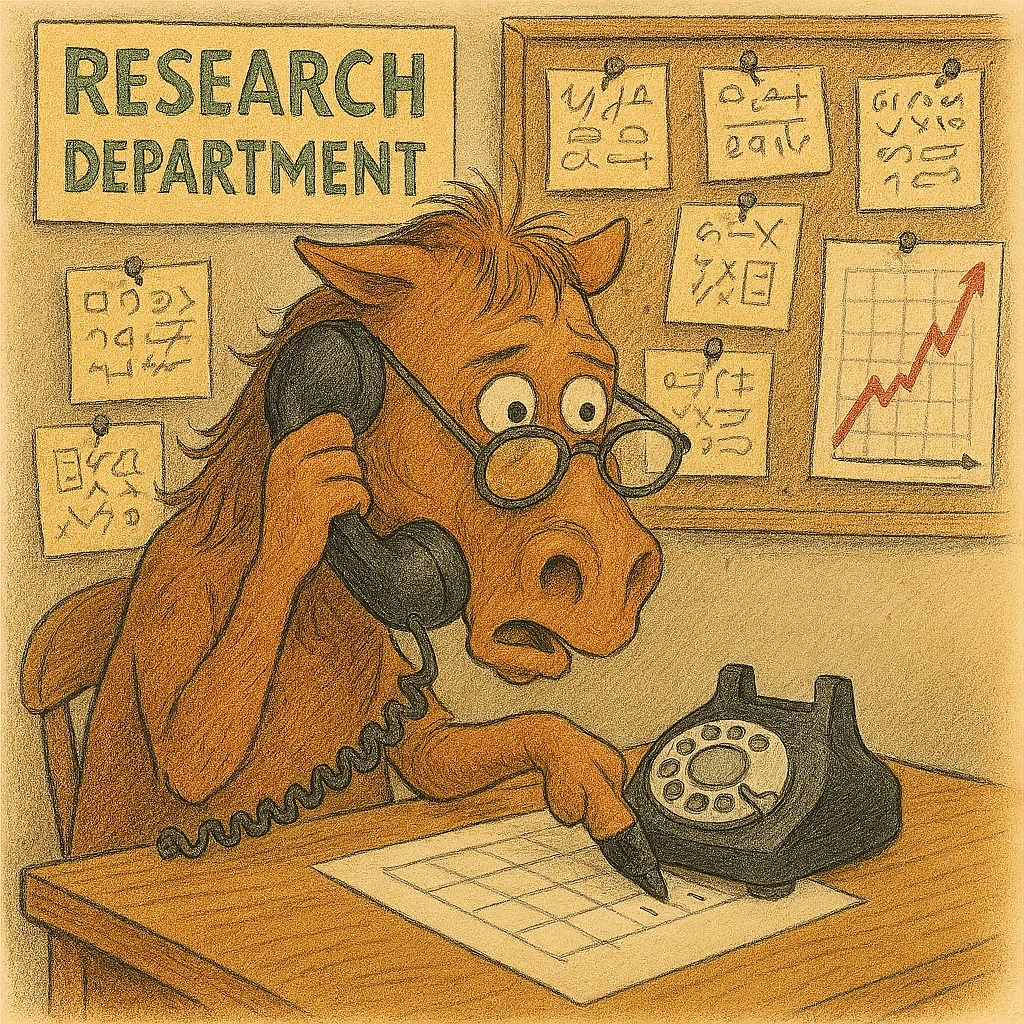 Occasionally when I’d be castigated by superiors for doing nothing more than the job I was hired to do anyway some more empathetic colleagues would attempt to defend me by offering up the parable “don’t shoot him; he’s only the messenger”. Even more occasionally, the ones that inflicted those insults would take that to heart and at least feign an apology. The ones that knew the Strasberg method themselves were slightly better at it. Those that merely were sleeping with spouses that were– far less so. You know who you are (cough cough), Mr. “Mayor”.
So naturally I was intrigued by the story that dropped yesterday that seemed to have all the signs of yet another dictorial move by perhaps the thinnest-skinned “executive” any one of us has ever encounted. Per CNN’s Jennifer Agiesta:
 Gallup, one of the country’s most well-known polling firms, announced Wednesday that it will no longer track presidential approval or favorability of political figures. The move ends the longest-running continuous effort to track US opinion of the nation’s president, dating back to the tenure of Franklin D. Roosevelt in the late 1930s. The company attributes the change to a shift toward research on “issues and conditions that shape people’s lives.” Gallup has some of the longest trend data in polling on public opinion about prominent issues and the nation’s mood, which it plans to continue, and says that it will no longer “publish assessments of individual political figures.”
THE NEW YORK TIMES’Ruth Igielnik shone a bit more light on how the seeds for this had already been sown:
Gallup’s move has echoes of its 2015 decision to discontinue presidential election polling, also known as horse race polling, that measured which candidates were ahead, leading up to elections. At the time, Frank Newport, who was then Gallup’s editor in chief, stressed that the decision was about reallocating resources to figure out Gallup’s role in “keeping the voice of the people injected into the democratic process.”
And she was practically eulogistic with this nugget:
Gallup’s approval ratings went far beyond what many other pollsters can provide. Its 88 years of data give historical context to what amounts to a monthly snapshot of Americans’ views. Political and news media analysts have come to rely on the poll to understand shifting trends in the country over time.
That date also coincided with the beginning of the era where candidates with zero political experience descended from golden escalators like sermons on the mount and began to produce results that few of the established polling companies were measuring. And now that the same person is back in charge, even more thin-skinned and disbelieving than ever, it naturally led to the type of speculative opinions that THE NEW REPUBLIC’s Malcolm Ferguson flippantly tossed out in the wake of this “shift in strategy” with the pointed clickbaitable headline Coincidence? :
 This decision comes as President Trump has recently experienced some of the lowest approval ratings for a president in decades. While Trump has made no public threat to Gallup, he has threatened other pollsters multiple times in the recent past. In December 2024, he sued The Des Moines Register, its parent company Gannett, and pollster Anne Seltzer for her poll findings that Kamala Harris would win Iowa (she didn’t). And in January, he verbally attacked the New York Times after a poll that found independent voters have turned against Trump. The president’s current approval rating sits at a meager 38 percent.
This viewpoint was amplified on a number of my social media feeds as yet another mind-numbing example of another great American institution bending the knee. I’m here to tell you that for as tempting as it may be to blame him, in this particular case I’m gonna say no way. A fetlock, perhaps, but not a knee.
For one, Gallup’s methodology was as outdated and out of touch as any of the references and dance moves of the farter-in-chief, a key point Igielnik touched upon:
Gallup’s polls are also conducted over the phone using live interviewers, an increasingly rare but robust methodology that has a record of accuracy.
But Agiesta pointed out that that “track record” and history was proving to be more of an albatross than an advantage for a legacy brand like Gallup:
Changes in the ways people communicate made it harder, more time-consuming and more expensive to conduct polling by telephone, long the gold-standard of survey methodology and the methodology Gallup has used for its presidential approval tracking. That’s led to major shifts in how public pollsters do their work.
And long-running, prominent public polling partnerships – such as CNN’s former partnership with Gallup and USA Today, the partnership between CBS News and the New York Times, and between NBC News and the Wall Street Journal – have ended or changed…CNN’s most recent tracking of polls on President Donald Trump’s approval rating includes 134 high-quality polls on that metric conducted by someone other than Gallup since the start of his second term in office.
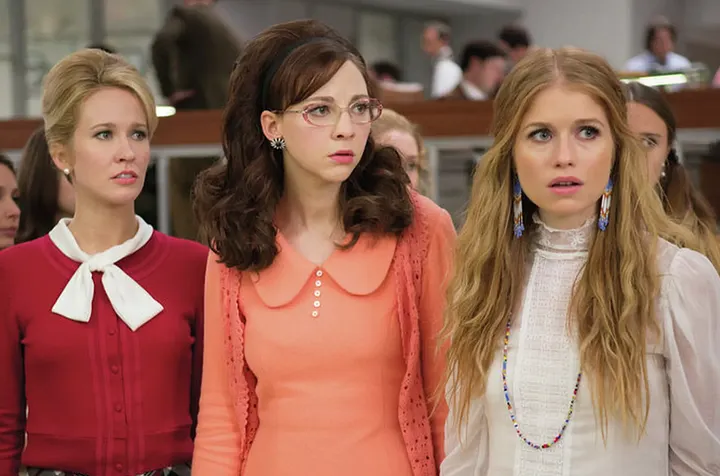 CNN’s researchers discovered that there were more robust alternatives to something more than merely a familiar name just like I did along the way with emerging competitors that I willingly embraced. In the case of Nielsen, I was a charter client of a more inclusive and less lagging measurer of streaming services called Symphony, which I championed so much at Sony that we wound up in the midst of a nasty public argument about using their ratings to lobby Amazon to renew a critically acclaimed but based upon their internal KPIs underperforming series called GOOD GIRLS REVOLT. But I also embraced Nielsen’s more innovative methods at program testing that allowed us to get 200 same-day dial tests from 40 different venues around the country rather than relying upon a couple of groups a day in a particular city. When you’re in a competitive business where the ultimate goal is to get better information quicker and cheaper, your ultimate loyalty is to your bottom line.
 And for as petty and uninformed as our current chief executive indeed is, I’ve frequently pointed out that he has had the benefit of very shrewd and innovative evil genuises surrounding him. Nowhere was this more in evidence than how they were able to use the resources of Cambridge Analytica, a company that employed many of those new technologies to reach respondents in ways firms like Gallup steadfastly refused to embrace, to target swing states as the 2016 election was reaching its conclusion, enough so that it produced enough late shifts to allow Trump to pull off his wholly unexpected upset. Cambridge’s approaches was also instrumental in helping Boris Johnson pull off a similarly shocking surprise in the UK. There’s a wonderful documentary that has been for years been buried deep in Netflix’s catalogue called THE GREAT HACK that I can’t encourage you more passionately to track down that in the wake of Gallup’s decision is just as relevant as ever. Cambridge Analytica ultimately went belly up due in part to changing political pressures, but their methodologies have been embraced by companies that have since emerged to replace them.
This isn’t the actual end of Gallup, despite what our Fearless Leader might otherwise desire. Igielnik made sure to leave her readers with that ray of hope:
The company will also continue to conduct the annual Gallup World Poll, which measures public attitudes in about 140 countries around the world. “We’re focused on providing analytics that inform and drive meaningful change,” Justin McCarthy, a spokesman for Gallup, said.
I’m very familiar with that offering. Sony would regularly invite research vendors into staff meetings where we’d at least give vendors the chance to pitch us en masse. We heard Gallup pitch that very study. Between the lazy methodology and the price tag they put on it, it was an easy and hard pass. I suspect in the economic climate most businesses now find themselves in, particularly when it comes to research studies, they’re more challenged than ever to maintain whatever relationships they may have had.
So sorry, followers of Ferguson. This smoking gun doesn’t lie in the grizzled hand of America’s most prolific hand-shaker. In this particular case, this was far more an example of a Gallup that merely slowed to a trot.
Until next time…