
NOTE: This musing also appears today on our sister site Double Overtime. Please visit it regularly for coverage of sports of all sorts plus occasional essays on business and technology.
Turns out there is something to the concept that you can get too much of a good thing. Not that I didn’t already realize that the other night when I foolishly gave in to an impulse purchase of limited edition salted caramel Lays’ that at least sounded like a good idea when I gassed up after a rare night of self-indulgence at a retro-themed rave. I’m still paying for that rash decision.
It was a lot different when the advent of expanded cable ushered in the era of channels and networks dedicated to expanded local coverage of professional and college teams. The New York City I grew up in was one of the rare exceptions where over-the-air channels provided extensive schedules of baseball, basketball and football. At one point in the early 1980s WOR-TV was home to not just the Mets but two basketball teams, three hockey teams, both indoor and outdoor soccer and the early days of the real Big East. But as my career unfolded and I began to buy commercial time in local markets around the country I learned how much of an outlier this was. Hence when the business that eventually became known as regional sports networks mushroomed to provide similarly comprehensive offerings advertisers both national and local enthusiastically embraced these opportunities. I personally got more useless swag from the Sportschannels, Sportsvisions and PASSes than any other channel, and I was merely a fill-in buyer while the majority of my female-dominated department all seemed to take maternity leaves one after the other.
And Lord knows I spent an awful lot of time watching these RSNs, especially when FOX allowed me the chance to work just about every non-sales research study about them at a time when they had the bright idea of aggregating them into an unwired and euphemistically defined “network”. For the record, Nielsen couldn’t figure out a way to measure them in aggregate in real time since the shoulder programming it created to surround local sports all aired at different times depending upon time zone and market. We called that syndication, and since that was my background it often fell upon me to break that news to strategic planners that hadn’t counted on that reality check.
So it’s due to that history that I winced more than once at the latest flurry of reports that emerged over the past few days that indeed the days of RSNs are numbered. SPORTS BUSINESS JOURNAL’s Tom Friend had the latest and some exclusive details in the piece he dropped yesterday afternoon:
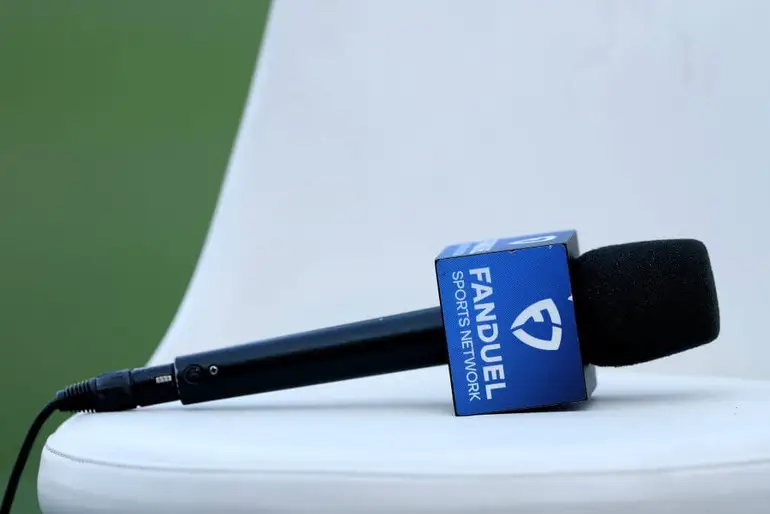 All nine MLB teams whose games are broadcast on FanDuel Sports Network are officially departing the parent company Main Street Sports Group, with eight of the nine potentially migrating to MLB Media, SBJ has learned.
The…Braves, are expected to launch their own network, perhaps to air on a national streaming platform such as Amazon or Apple or with a template similar to the Rangers Sports Network — which has direct-to-distributor deals with cable and satellite providers, a local over-the-air partner and a streaming outlet in Victory+. Five of the other eight teams — the Cardinals, Brewers, Royals, Reds and Marlins — will strike deals with local distributors in their respective home markets and, according to sources Monday afternoon, have their games produced by MLB and streamed on the league’s app. Sources said the remaining three teams — the Tigers, Rays and Angels — are leaning toward joining the other five. The Cardinals and Brewers have already made their transition to MLB Media official. 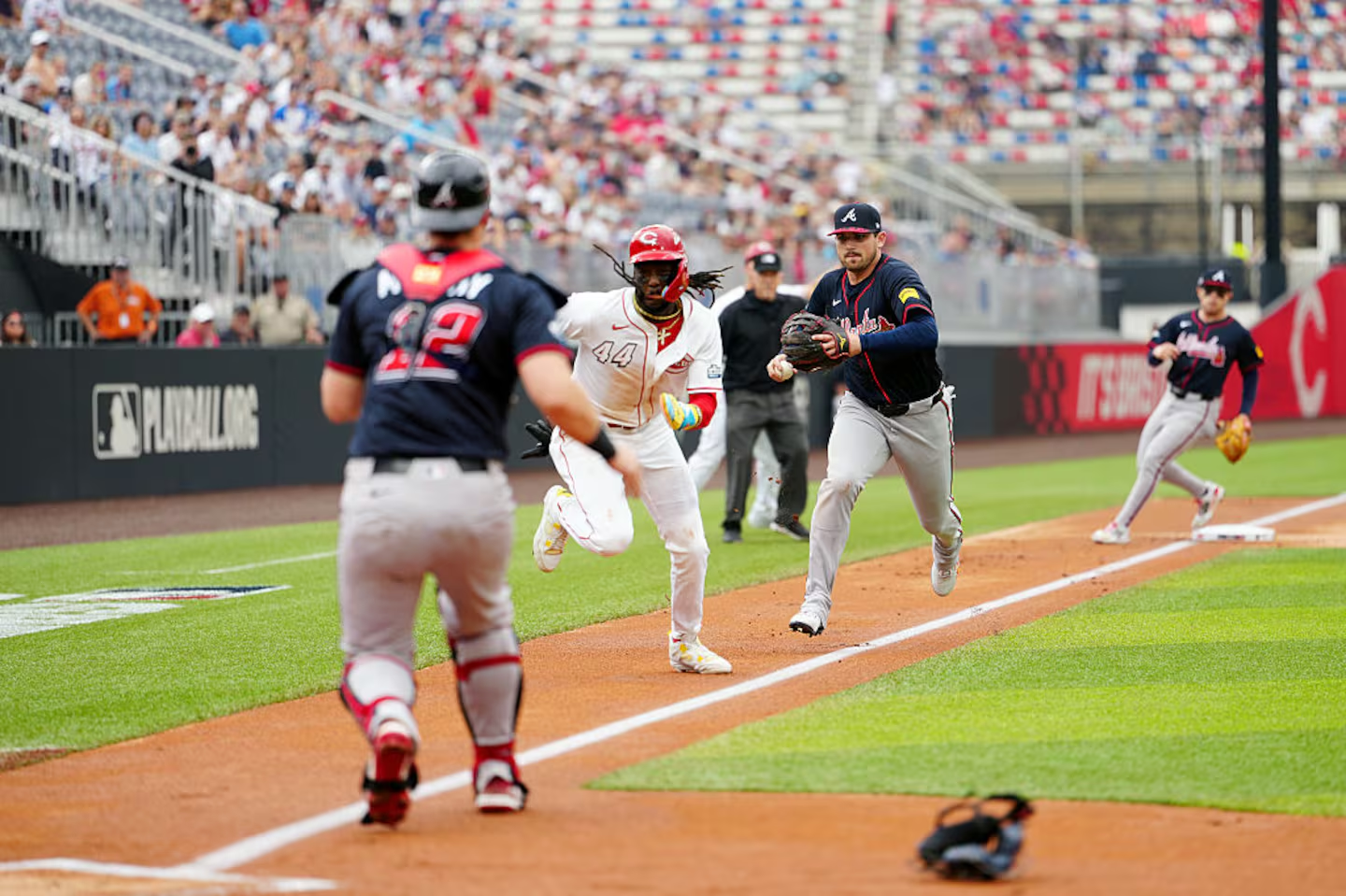
But as the day unfolded the death knells multiplied. Both the Royals and Rays issued statements on their various social media platforms that confirmed Friend’s exclusives. And THE ATHLETIC’s Evan Drellich and Katie Woo added their own four cents on the possibilities that a lot more could soon follow:
Main Street, which operates regional sports channels throughout the U.S. that are branded as FanDuel Sports Network, has thus far been fruitless in a search for a buyer it needs to stay afloat. As recently as December, nine MLB teams were in line to be carried by Main Street in 2026. But the company that month began to miss scheduled rights-fee payments, including to the Cardinals. All nine MLB teams subsequently terminated their agreements with the company…The broadcaster carries 13 basketball teams and seven hockey teams as well.
And on Saturday FORBES’ Nicole Kraft had already thrown out some very real possibilities that those nuclear options may soon be exercised as well:
(F)ans of more than 20 NBA and NHL teams may lose local broadcast access just as the playoff races start to heat up if the company behind FanDuel Sports Networks files for bankruptcy…If that collapse occurs, NBA and NHL games also carried by FanDuel Sports Networks could go dark midseason, leaving teams without local broadcast partners and fans with limited viewing options.
Thirteen NBA teams air on FanDuel Sports Networks and entered 2026 facing uncertainty over missing media rights payments from Main Street. The teams that either did not receive payments on time or were asked to accept lower fees were the Atlanta Hawks, Charlotte Hornets, Cleveland Cavaliers, Detroit Pistons, Indiana Pacers, Los Angeles Clippers, Miami Heat, Memphis Grizzlies, Milwaukee Bucks, Minnesota Timberwolves, Oklahoma City Thunder, Orlando Magic and San Antonio Spurs.
The NHL may face the most significant challenges if FanDuel Sports Networks shuts down. The league folded NHL.TV digital distribution into ESPN+ and no longer has its own local streaming replacement option. That could leave 10 teams facing the possibility of losing their local television presence just as playoff races heat up, including the Columbus Blue Jackets, St. Louis Blues, Detroit Red Wings, Nashville Predators, Minnesota Wild, Tampa Bay Lightning, Florida Panthers, Anaheim Ducks and Los Angeles Kings.
And Friend’s update on those teams, while it attempted to assuage some immediate fears, reinforced how dire the sich is with those teams:
(S)ources said NBA and NHL teams are in a business-as-usual holding pattern, with the sense that Main Street still plans to air their games the rest of the regular season and simultaneously attempt to negotiate deals beyond this year. A resolution with those leagues is expected to play out over the next two weeks. At the same time, sources said those NBA and NHL teams did not receive their recent February rights fee payments on Sunday, and it is unclear whether future payments will be reduced by 20% or more — or even arrive at all. The NBA is likely in negotiations to ensure their teams receive at least a portion of this season’s rights fees, though nothing has been formalized.
If the past is indeed prologue–and sports fans more than most acknowledge that is more often than not the case–the script is most certainly in place for some additional scrambling. Both the San Diego Padres and Arizona Diamondbacks’ histories with FanDuel in their past incarnation as Bally Sports Networks resulted in mid-season switches to MLB-controlled channels. Most of the major MVPDs in their markets eagerly found room for carriage; on-air personalities attached to the teams seamlessly transferred, and in this case Nielsen was better equipped to handle change and continue measurement rather easily. And with extended breaks about to occur thanks to the upcoming NBA All-Star Game and the Winter Olympics featuring NHL players for the first time in 12 years, a natural inflection point is coinciding with these economic realities. With a template already in place, it’s easy to visualize several of the teams with more to lose exercising those options sooner than later.
And there could be a true silver lining. The Victory+ plus model is already in place here in Los Angeles where a significant number of Ducks games now air on over-the-air stations, including a handful on FOX O & O KTTV–the first time the station has carried a local team’s schedule since they lost the rights to air the Dodgers more than 35 years ago. In Dallas, Miami and New Orleans over-the-air stations are now respectively carrying select games for the Mavericks, Heat and Pelicans. The Vegas Golden Knights, Utah Mammoth and the Stanley Cup champion Florida Panthers all have schedules involving digital OTA channels that surround their live broadcasts with a slew of shoulder programming that’s not all that different to what the RSNs pre-FanDuel provided, and the more successful team-owned ventures like the Yankees’ YES Network and the Dodgers and Lakers’ Spectrum SportsNets still provide. To their respective fan bases, there’s essentially no difference. And if you’re a cord-cutter or cord-never with a digital antenna, you’re right back where I was during my WOR-loving days.
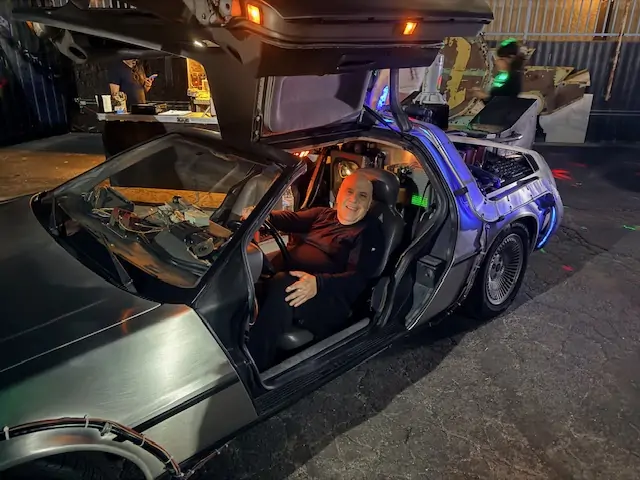 We’ll soon see how this latest wrinkle unfolds, but I’ll assure those of you who could be worried to take it in stride. Take it from me–going back to the future isn’t all that bad.
Until next time…