
There are many adjectives that one could justifiably apply to Disney’s venerable czar Bob Iger, now four years into a board-requested second act after a 15-year that outlasted most of his peers. That run began with a groundbreaking deal that VARIETY’s equally seasoned Andrew Wallenstein recently revisited that he teed up thusly:
On Oct. 12, 2005, Apple and Disney stunned the media world with an unprecedented deal to make primetime TV programming available on mobile device for digital purchase without needing an antennae or multichannel subscription to watch it.
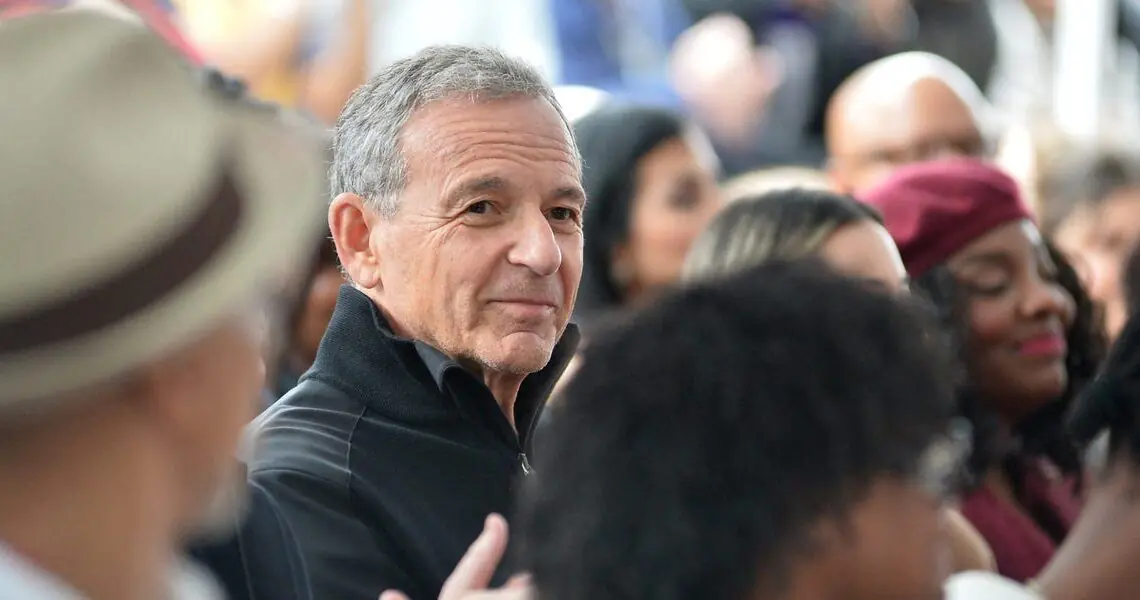 CAMPAIGN’s Daniel Farey-Jones added some colorful British context to the story he authored at that time:
Disney chief executive Robert Iger, who joined Apple boss Steve Jobs on stage in Silicon Valley for the launch, said it was the beginning of a “long and prosperous relationship” and “the first giant step in terms of making content available to more people in more places”.
For an industry that was just beginning to come to grips as to how to optimally monetize and accurately measure time-shifted viewing of merely hours, the idea of extending such a window to infinity–especially coming from a company whose home video strategy was to selectively release library produce on physical media in limited windows at exaggerated prices–this was a seismic event. Yet at the time was not exactly being lauded. Farey-Jones could barely contain the skepticism of the reactions he chose to include in his story:
…Iger, who joined Apple boss Steve Jobs on stage in Silicon Valley for the launch, said it was the beginning of a “long and prosperous relationship” and “the first giant step in terms of making content available to more people in more places”. Current episodes of ‘Lost’ and ‘Desperate Housewives’ will be available the day after they are shown on TV, with no ad breaks, although they will take up to 20 minutes to download. The video quality will be lower than it is on DVD. Analysts were unsure about how much demand there will be for watching TV on the iPod’s screen. Nitin Gupta, an analyst at Yankee Group, said: “The market is likely small for people who want watch a portable video on a little screen. That will not be the main reason people buy the iPod. It is just an enhancement.”
Well, here we are two decades later, and while the IPod itself is history, we’ve had an entire generation reach maturity, and two emerging ones never know a world, without such convenience. And per STATISTA’s most recent data from 2023, 70 per cent of American digital video content consumers watch via a smartphone, while a mere 59% watch on a more conventional smart TV.
Sure looks to me that Iger’s foresight and reputation has endured a lot better than Gupta’s.
Hence the news that broke yesterday about the latest example of such struck me as at least equally seismic. Per DEADLINE’s Jake Kanter:
 Disney has put its chips in on AI. The Hollywood giant has signed a major deal with OpenAI, investing $1B in the artificial intelligence giant and handing over characters from Frozen and Star Wars to generative AI app Sora. The three-year licensing agreement will allow Sora users to create bespoke fan videos with the likes of Captain America, Yoda, and Moana. A selection of these videos will stream on Disney+. Disney will also become a major OpenAI customer, using its tech to build new products, tools, and experiences, including for Disney+, and deploying ChatGPT for its employees.
DYNUZ reported how Iger justified this move to his favorite pulpit of parishoners–the limited but highly influential audience of business-centric morning TV:
 Iger says his company’s major licensing deal with OpenAI is all about establishing a foothold in a new realm of entertainment and engaging younger audiences. Speaking on CNBC about the deal with OpenAI’s Sam Altman on Thursday, Iger said it gives Disney a chance to get in on a fast-growing area of tech. “It gives us an opportunity, really, to play a part in what is really a breathtaking, breathtaking growth in essentially AI and new forms of media and entertainment,” Iger said.
Iger said the deal also fulfills a longtime desire by Disney to put user-generated content on its Disney+ streaming platform. Disney initially plans to put select videos created on Sora onto Disney+ to increase engagement with users, especially younger ones. Ultimately, Iger wants to let Disney+ users create such videos within the platform itself. That’s a big step for us,” he said.
Quelle surprise, not everyone is all that thrilled with this bold step, either. The byline-shy ASSOCIATED PRESS–or perhaps the artificial intelligence they are employing to compile many of their stories–took special note of such reactions:
Children’s advocates, however criticized the move. Josh Golin, executive director of Fairplay, said Disney’s decision to partner with OpenAI “is a betrayal of countless children around the world who adore Mickey Mouse, Frozen, and Toy Story. OpenAI claims children are prohibited from using Sora, yet here they are luring young kids to their platform using some of their favorite characters.” Disney, he added, is “aiding and abetting OpenAI’s efforts to addict young children to its unsafe platform and products.”
And as GIZMODO’s Cheryl Eddy noted in her piece this morning:
As Hollywood lets this unsettling latest step into dystopia sink in, both of the industry’s major labor unions have released statements in response. SAG-AFTRA, which made a point of addressing AI concerns during its 2023 strike and has continued to be vocal on the issue, still sounds rightfully worried and includes a promise to stay vigilant in its message. You can read the union’s full statement on its website, as well as below:
SAG-AFTRA will closely monitor the deal and its implementation to ensure compliance with our contracts and with applicable laws protecting image, voice, and likeness. We acknowledge Disney’s and OpenAI’s independent outreaches to us on this matter and their assurances that they will meet their contractual and legal obligations to performers and continue to implement systems to ensure ethical and responsible use of this technology.
The Writers’ Guild of America, which was also part of the 2023 strike and has long had its own AI concerns, released a statement on its website, which you can read below:
“This morning, Disney announced a three-year deal with OpenAI to license hundreds of Disney-owned characters to OpenAI’s Sora, an artificial intelligence model that generates audio-visual material, and to include at least some of these user-generated videos on Disney+. The deal is reportedly specific to masked, animated, or creature characters. Disney also announced a significant investment in OpenAI and has stated it will be developing additional AI tools both for internal and consumer use.”
I suspect another emergency podcast from the clickbait-chasing folks at THE ANKLER isn’t far off that will give further voice to these panicked creators. But to those who may choose once again to whine before they think, I might offer that they do a little bit homework on the plane that it sure appears Iger has. DYNUZ pointed that detail out:
Disney has long been highly protective of its famous characters and storylines, and Iger is widely seen in Hollywood as a champion of the creative set. But like other entertainment players, Disney has an engagement problem. The time people spend on streaming has stayed essentially flat over the past few years, despite increased spending on content. Social media and user-generated content, in contrast, continue to rise. The bet with OpenAI is that the deal can get people to spend more time on Disney platforms by giving them new ways to play around with its famous franchises.
And as FORTUNE’s Nick Lichtenberg detailed:
Nicholas Grous, director of research for consumer internet and fintech at Ark Invest, told Fortune tools like Sora effectively recreate the “YouTube moment” for video production, handing professional‑grade creation capabilities to anyone with a prompt instead of a studio budget. In his view, that shift will flood the market with AI‑generated clips and series, making it far harder for any single new creator or franchise to break out than it was in the early social‑video era. His remarks echoed the analysis from Melissa Otto, head of research at S&P Global Visible Alpha, who recently told Fortune Netflix’s big move for Warner Bros.’ reveals the streaming giant is motivated by a need to deepen its war chest as it sees Google’s AI-video capabilities exploding with the onset of TPU chips.
As low‑cost synthetic video proliferates, Grous said he believes audiences will begin to mentally divide entertainment into “pre‑AI” and “post‑AI” categories, attaching a premium to work made largely by humans before generative tools became ubiquitous. “I think you’re going to have basically a split between pre-AI content and post-AI content,” adding that viewers will consider pre-AI content closer to “true art, that was made with just human ingenuity and creativity, not this AI slop, for lack of a better word.
Certainly, there is downside risk even with the attempts at guardrails that Iger insists are in play. It’s not like this necessarily bodes to be a financial windfall for Disney–it’s not immediately known how or if OpenAI plans to compensate Disney in a traditional sense. But do consider that those that Disney touch do have a history of reaping benefits. VARIETY! reported that Apple experienced a +368% year-over-year increase in net profit in 2005, with a 75% increase in iPod sales paralleling the release of Disney’s content on those lamented tiny screens. If OpenAI can realize something close to similar lift in utility and deployment, Disney’s ROI will be favorable, and Iger’s supposed farewell tour will be off a to spectacular start.
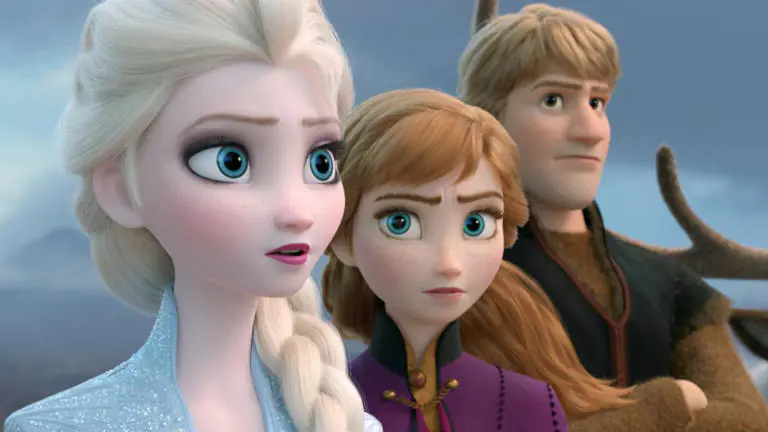 There is absolutely reason for creatives and their union reps to be apopletic. If YouTube’s rise to being the dominant single destination for video consumption even as archiacally measured by Nielsen is a signpost, we’re likely to be seeing a lot more Sora on our feeds going forward, and if we’re trading off horribly generated deepfakes of someone who barely looks like Bob Barker cursing out classic PRICE IS RIGHT contestants for a birthday wish from Elsa, I for one won’t be as quick to scroll by without at least clicking on it for a second or two. And in a world that’s simplistic enough to consider that a measurable interaction, I can’t blame Iger for heading headfirst into this maelstrom.
My message to those mimicking Chicken Little this morning: Be slightly better than those who are merely your fans. And learn how to use to harness AI to help you get there.
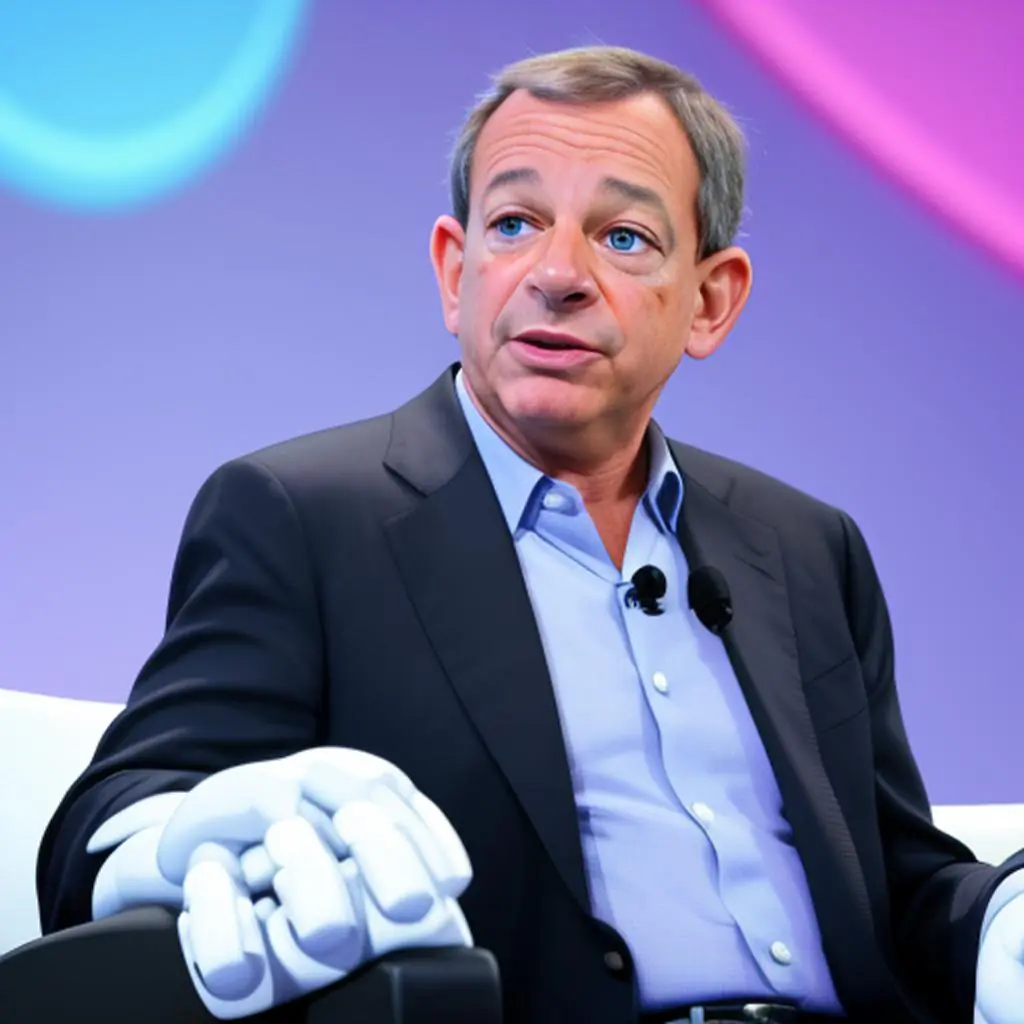 I can’t draw to save my life and my Photoshop skills are admittedly weak. But even I’ve been able to master a way to make my own observation about Bob Iger. After yesterday, I’m retiring it. He’s proven he’s a lot more human in his reaction to reality than the majority of his competitors. Now it’s time for the rest of us to step up.
Until next time…