For all the hype and hyperbole that surrounded last night’s Monday Night Football showdown between the Green Bay Packers and the green-clad World Champion Philadelphia Iggles, the game was sadly a stinker. No frozen tundra. Scoreless at the half, only a modest Jake Elliott field goal giving Philly a precarious 3-0 lead going into the final quarter. The teams traded touchdowns in the fourth quarter, the Pack mustered a meh late drive that left their kicker, Brandon McManus, with a near-impossible 64-yard attempt to try and send it into overtime. He missed, which spared us the ignominy of potentially ten more minutes of this underwhelming football.
 If you’re one of the ten million-ish subscribers to YouTube TV, you may have been spared this snorefest entirely, as a second consecutive weekend without access to ESPN and ABC has now come and gone. Once again, Disney is at loggerheads with an MVPD–considering they’ve waged similar wars against Comcast and Spectrum, the two leading cable providers, in recent years, this is more dog-bites-man news than ever on the surface. Disney values its content and they believe–with justification–that content is king and wants fair value. And when a lot of that content is football–including a plethora of college games that when you factor in the plusses make up pretty much every alma mater of every executive of consequence–that’s a powerful bargaining chip. Let’s not forget that even the threat of missing out on that ultimately calmed down the saber-rattling of Sinclair and Nexstar and restored both sanity and a nightly dose of Jimmy Kimmel to our lives.
But now it’s Google at the bargaining table, a company large enough to dwarf those Luddite broadcasters and even be able to stand toe-to-toe with anyone who will eventually get on the invite list for the White House ballroom. And as THE ATHLETIC’s resident expert Andrew Marchand reported heading into the weekend, their resolve and determination is even superior to say, Chuck Schumer’s:
(T)he sides appear no closer to a resolution… The intractable issue? Money, of course. In the most basic terms, as The Athletic laid out earlier this week, they are arguing over the difference between what Disney wants YouTube TV to pay for access to Disney’s programming (including ABC and the entire ESPN system of networks) and what YouTube TV wants to pay Disney for access to Disney’s programming.
To oversimplify, they are haggling over price — imagine two stubborn, ornery folks at a weekend flea market. But dig a little deeper, and this standoff becomes a singular exhibition of media power dynamics in 2025.
(I)n the eight years of its existence, YouTube TV has grown into the third-largest cable-like provider behind Spectrum and Comcast. Those two behemoths have around 12 million subscribers, while YouTube TV has around 10 million. YouTube TV wants to be treated like the big boys, which means getting a little better pricing because of its comparable subscriber base, plus projections that it could eclipse Spectrum and Comcast in the years ahead. YouTube TV would also like a “Favored Nation” clause, which means that if someone else negotiates a more beneficial agreement, YouTube TV would also get the same better pricing. This protection may or may not be a red line for either side, but it is very valuable because of how it impacts future agreements for both of them.
And in a spirited and extremely enlightening debate with his sports business-centric colleague Dan Shanoff that’s most def worth a full read, Shanoff underscored exactly how titanic this standoff is:
Shanoff: I don’t think this can be overstated: YouTube TV’s parent, Alphabet, has a market cap of $3.4 trillion. Trillion. Disney’s market cap is around $200 billion. Disney is used to pushing around relatively similar-sized companies. How much does the difference in this nontraditional power dynamic fit into this?
Marchand: I think it is important, as YouTube TV is not Alphabet’s main business. Alphabet (which people probably know better by its former corporate name, “Google”) is a massive business. Alphabet did around $350 billion in revenue in 2024, and it’s a decent estimate that YouTube TV accounted for somewhere from $5 billion to $10 billion of that revenue. Alphabet doesn’t need your $80 per month.
So you’d think Disney and ABC are at risk, no? After all, losing access to ten million subscribers–plenty of whom watch at least a little football this time of year–ain’t nothing, right? In the words of the recently retired College Gameday pundit Lee Corso, “not so fast, my friend”. Shanoff more than earned his NYT paycheck with an enlightening education that encompasses an awful lot of the reality checks that I spent decades attempting to educate my saber-rattling colleagues with:
 Did the absence of ESPN’s games on YouTube TV this past weekend impact ESPN’s TV viewership for popular live sports such as college football last Saturday or “Monday Night Football” earlier this week? That question is noisy with confounding factors, opaque correlation does not imply causation details and a possibly unsatisfying, if reasonable, answer: Likely a bit. Not nearly as much as you might think. At least not yet.
ABC had its third-lowest combined audience of the season for its powerful triple-header lineup. Notably, Oklahoma-Tennessee at 7:30 p.m. ET had the lowest audience for a primetime ABC college football game this season.
Before you try to assign that to the absence of some portion of YouTube TV’s 10 million subscribers who might have tuned in previously but couldn’t this week, change the channel over to Fox, which was airing arguably the most compelling baseball game of the decade and delivered staggeringly high TV ratings.
Replying to an industry social media post about Saturday night’s primetime ratings, ESPN content honcho Burke Magnus reasonably pointed out: “Maybe … just maybe … Game 7 of the World Series had an impact on the primetime audience for College Football … or maybe that didn’t fit the conclusion you were trying to create?”
Meanwhile, ABC’s 3:30 p.m. game — Florida-Georgia — was the most-watched college football game of the day, but down 5 percent from the average 3:30 game on ABC. Is that 5 percent dip attributable to the absence of some portion of 10 million potential viewers via YouTube TV? Possibly, but it is well within the margin of error of simply could be lots of things.
A new set of numbers for this weekend where ABC’s primetime competition was merely more less compelling football (honestly, did YOU stay awake for the Nebraska-UCLA titt that merely put a deep dent in the Bruins’ chances to make the Las Vegas Bowl?) are hours away, so we’ll be able to reopen that file. Were this the most mitigating factor, this might otherwise have already devolved into a battle of nerds rather than nerves.
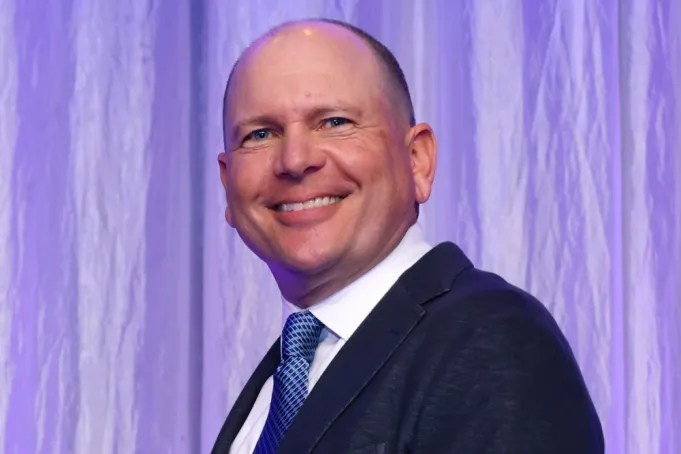 But this is indeed battle of nerves. mostly because of the presence of a very distinct personality in the middle of all of this. His name is Justin Connolly, and you may have already seen this recent update on HIS negotiations which, among others, DEADLINE’s Dominic Patten dropped last week:
“A Notice of Settlement of Entire Case has been filed in this case,” said an order placed in the LA Superior Court docket Wednesday. By this “entire case,” Disney and YouTube mean the breach of contact suit that the Mouse House filed in June to stop YouTube from poaching distribution exec Justin Connolly. Today’s order follows a filing late-ish on October 28 from Disney’s Mitchell Silberer & Knupp lawyers first announcing a deal over the clearly much in demand Connolly had been reached, sort of. “The settlement agreement conditions dismissal of this matter on the satisfactory completion of specified terms that are not to be performed within 45 days of the date of the settlement,” Tuesday’s document stated. “A request for dismissal will be filed no later than (date): January 5, 2026.”
As is almost always the case in such cases, details of the settlement are under lock and key. Yet, with Judge James C. Chalfant back in June rejecting Disney’s motion for a restraining order against Connolly actually working at YouTube, clearly Disney blinked here. Contacted by Deadline Wednesday, all the company would say is that “the parties have settled their dispute.”
Read Todd Spangler’s recap in VARIETY! of the tsurris Disney put Connolly through. It’s eerily similar to what I observed a good friend of mine had to endure years earlier when he tried to move on from Mousechwitz. It put him under so much stress that his weakened immune system was compromised, triggering a cancer that ended his life before 50. So you know what side of that issue I net on on.
And you’ll know why I’m more than a little skeptical of how THE ATHLETIC’s informed observers attempted to mitigate Connolly’s impact on this:
Shanoff: Who is at the negotiating table? It was very notable earlier this year when YouTube poached longtime ESPN executive Justin Connolly to run its sports efforts. There was even a lawsuit, which was settled. Is that relationship in play?
Marchand: It’s kind of a weird situation, as Connolly used to report to ESPN chairman Jimmy Pitaro. Connolly has to recuse himself from the negotiations, but his team is a part of the negotiations. Disney/ESPN’s negotiation team is led by Sean Breen and Jimmy Zasowski, both executive vice presidents within a division called Disney Platform Distribution. They replaced Connolly when he left for YouTube. It is hard to say how the shift is changing the dynamics behind the scenes, but it is an odd wrinkle in the showdown.
 You can practically see Marchand’s eyes roll with that “odd wrinkle” reference. Let me spell it out in a manner his previous NEW YORK POST personality might have been more inclined to offer: No way in hell Connolly’s not aware of exactly what’s going on, and no way he doesn’t have at least some access to someone on a team he once led, legal threats be damned. Mets manager Bobby Valentine once figured out a way to keep managing in a game he was ejected from. I know a fan like Connolly knows that story. Maybe Breen and Zasowski should ask for cameras on on their next Zoom call?
But if we are to believe the latest from THE STREAMABLE’s David Satin, this impasse may at long last be moving toward resolution:
(O)ver the weekend, things have gotten awfully quiet between the two sides, suggesting a deal might be on the way at last. Disney circulated an internal memo on Friday that eventually leaked out to the press. In the communication, Disney told its employees about some of the deal terms it has offered YouTube TV, and shamed the streamer for trying to overreach with its demands. In response, YouTube TV accused Disney of leaking the memo intentionally to try to rally public support.
Since that last round robin, however, there has been nothing but silence from the two sides, which could be an indication that they are more focused on talking to each other than sniping at each other through the press. Deadline reports that YouTube TV submitted a new carriage deal proposal to Disney over the weekend, and that the sides are still negotiating.
Goody. Next Monday night’s game features the 2-7 Raiders and 3-5-1 Cowboys. No one should be denied that experience. I’m expecting white smoke to be eminating from Burbank and Mountain View very,very soon. If Chuck Schumer can cave, Bob Iger shouldn’t be far behind.
Until next time…