
Rarely have the generational and ideological gaps that define today’s America been more on display than it was last night. For a beleaguered and heretofore overwhelmed sector of several coastal battlegrounds that were holding what would otherwise be deemed as “off-year” elections, last night was for the younger and/or more diverse end of these populations their V-J Day. Witness the degree of jubilation that accompanied the seeming inevitable announcement of a truly momentous sea change in the leadership and direction of New York City that the NEW YORK TIMES’ Emma Fitzsimmons captured last night:
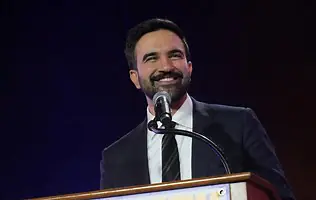 Zohran Mamdani, a once unheralded state lawmaker from Queens whose affordability platform and charisma fueled a meteoric political rise, was elected on Tuesday as the 111th mayor of New York, according to The Associated Press.
The victory by Mr. Mamdani, 34, a democratic socialist, placed a final stamp on the astonishing ascent of an assemblyman who rose from anonymity to defeat better-known rivals like former Gov. Andrew M. Cuomo, first in the Democratic primary and now again in the general election.
His win represents a major triumph for progressives, empowering a new coalition of younger voters and immigrants who volunteered for his campaign, filled its coffers with thousands of small donations and flocked to the polls to elect the city’s first Muslim mayor.
And as her colleague James Barron noted in this morning’s New York Today newsletter, his campaign brought on a degree of passion in numbers not seen since when I was too young to vote myself but aware enough of the significance:
Turnout surged past two million votes, the most in a municipal election in New York City since 1969, when John Lindsay won his second term. Some of those casting ballots on Tuesday were probably among the 107,000 first-time voters who had registered in New York City since the primary. Letitia James, the attorney general of New York, took note of that at Mamdani’s victory party, saying that his success was about “the sleeping giant” — people who had never before been involved in politics who came out to vote for a young and exciting candidate.
 I vividly recall that election–the parallels between then and now, save for how the Mets’ season ended–are startling. A deeply divided race featured the incumbent running as a third-party candidate at a time when a Republican conservative was taking over Washington and the politics surrounding an unpopular war were surging. And the displeasure was centralized in the outer boroughs where an overlooked bluer-collar and immigrant-heavy community rose up against the traditional choices and voted with their hearts. Lindsay may have been the defending champion but he represented a youthful vigor and yes, sex appeal that his opponents simply did not possess. To a Tik Tok-defined generation where “Hot for Zohran” could rank right up there with “Six-Seven”, he clearly struck a nerve. And those nerves were amplified by his steadfast and to many radical vows to overhaul a system that for them was soul-crushingly insufficient. As Barron expounded:
 Mamdani built his campaign around promises to make buses free, to freeze rents on rent-stabilized apartments and to provide universal, free child care. But he was also unsparing in his opposition to Trump. Perhaps one of the most confounding twists in the campaign came when the Republican president gave a double-edged endorsement to a lifelong Democrat — Cuomo, who ran as a third-party candidate. The Republican candidate, Curtis Sliwa, refused to drop out despite what he said were offers of up to $10 million to do so.
But make no mistake–while the bottom line was the very definition of a statistical majority (roughly 50 per cent of all votes cast)–, it was anything but a pure rainbow colation. JNS’ Anna Rahmanan pointed out several stark differences:
Henry Olsen, senior fellow at the Ethics and Public Policy Center and host of the Beyond the Polls podcast… wrote …Mamdani wins every racial and ethnic group, but really wins on the college-plus vote. He beats Cuomo among them by 20% while losing the non-college vote by only 5,” Olsen wrote. “He loses white non-college voters big, but carries non-white non-college voters by 7.” Olsen added that Cuomo “wins the Jewish vote by only 60-31.”.
And TIME’s Miranda Jeyaretnam pointed out other demographic concentrations that reaffirm where Mamdani’s strengths played out:
Cuomo did better in areas with mostly white residents, according to the Times, while Mamdani did better in areas with mostly Asian, Black, or Hispanic residents. Mamdani also did better in precincts where former Vice President and Democratic candidate Kamala Harris won in the 2024 election, while Cuomo did better in precincts where President Donald Trump, who endorsed Cuomo on the eve of the election, won last year. According to an analysis by non-profit New York news outlet The City, which broke down the candidates’ performances among different demographics, Mamdani outperformed his competitors across income levels, winning 50% or more of the vote in election districts where most households were below the median income level as well as in districts at or above the median income level. And Mamdani also did significantly better in election districts with more public transit riders, mostly renters, or more public housing projects, while Cuomo did better in districts with more drivers and mostly homeowners.
For anyone deeply familiar with New York City on a granular level, the balance of Jeyaretnam’s analysis is a fascinating and worthwhile read. And if you’ve driven through or been driven through any of these neighborhoods in recent years, you can visualize exactly who and what drove this victory. It’s most definitely a different picture than the one I had being driven around during 1969.
And the polarization of reactions reinforce such visualizations. ABC NEWS’ Emily Chang and Rajeev Tyagi captured the celebratory mood among particularly disenchanted constituencies:
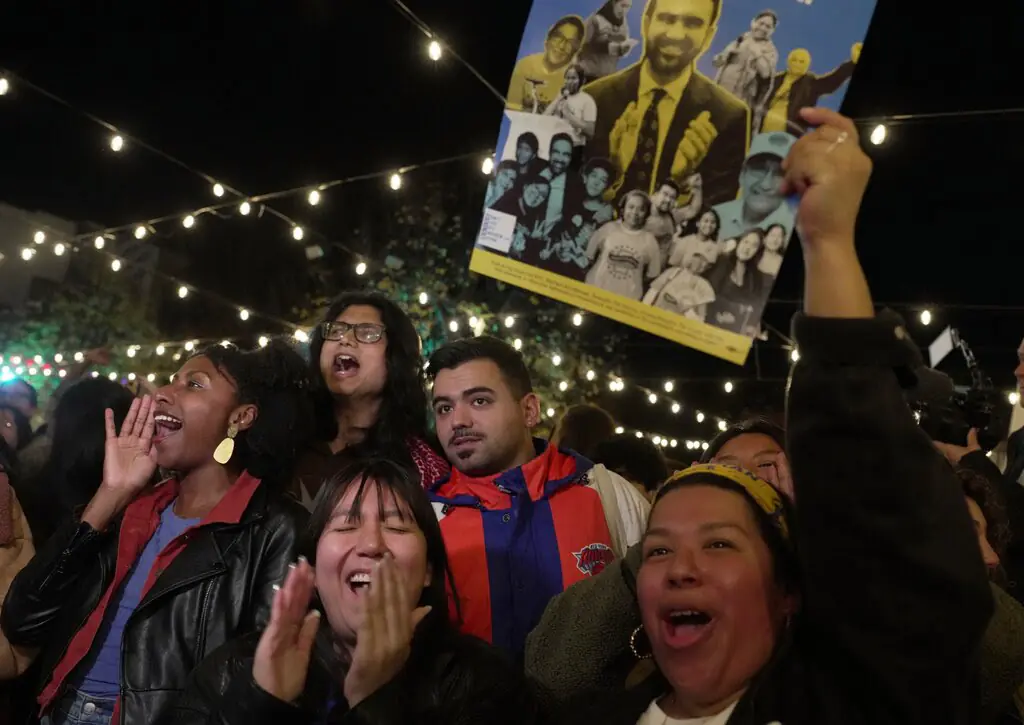 Democratic candidate Zohran Mamdani’s projected victory as New York City’s first Muslim and South Asian mayor marks a historic moment, that could galvanize those communities, some voters and experts tell ABC News. “It is going to make a big difference for our people — South Indians, Muslims, people who are immigrants like me. They will also think … there’s a place for them in this country,” Asif Mahmood, a Democratic bundler who helped fundraise for Hillary Clinton and Kamala Harris and ran for Congress himself, told ABC News ahead of Election Day.
But yet another TIMES scribe, Liam Stack, gave voice to the other side of the coin:
The election of Zohran Mamdani as the mayor of New York City on Tuesday was celebrated by some Jewish leaders and met with alarm by others, reflecting the continued divide that has split families and synagogues and persisted throughout the monthslong mayoral campaign. The Union for Reform Judaism, a major Jewish movement in the United States, urged the Jewish community “to help lower the temperature, listen generously and take steps to promote healing” in the wake of Mr. Mamdani’s victory. “Reasonable people across the political spectrum — and across the Jewish community — must aspire to respectfully disagree, and we will do our part to bring people together without erasing real differences,” it added.
But many mainstream Jewish groups responded to his victory with wariness and caution. Jonathan Greenblatt, the chief executive of the Anti-Defamation League, a staunch pro-Israel organization, released a rueful statement decrying “Mayor-elect Mamdani’s long, disturbing record on issues of deep concern to the Jewish community.” “We will approach the next four years with resolve,” he wrote. “We expect the mayor of the city with the largest Jewish population in the world to stand unequivocally against antisemitism in all its varied forms and support all of its Jewish residents just as he would all other constituents.”
And BUSINESS INSIDER’s Madeline Berg pointed out some prominent dissenters:
Former New York City Mayor Mike Bloomberg, Bill Ackman, Joe Gebbia, and Barry Diller were among the billionaires who collectively poured millions of dollars into outside groups that backed Cuomo and opposed Mamdani, who, for his part, has said billionaires should not exist. Cuomo also won the support of two other major billionaires on the eve of the election: President Donald Trump and Elon Musk. “Whether you personally like Andrew Cuomo or not, you really have no choice,” Trump wrote on Truth Social on Monday night. “You must vote for him, and hope he does a fantastic job. He is capable of it, Mamdani is not!”
On Tuesday night, Mamdani spoke to the president directly: “Hear me, President Trump, when I say this: to get to any of us, you will have to go through all of us.” During the speech, Trump wrote on Truth Social, without naming Mamdani: “…AND SO IT BEGINS!”
It was anything but a good night for the farter-in-chief and his minions as Fitzsimmons had also noted:
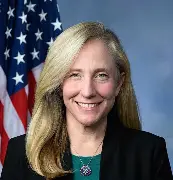 In the Virginia governor’s race, Abigail Spanberger, a moderate Democrat who served three terms in Congress, defeated Lt. Gov. Winsome Earle-Sears, a socially conservative Republican. In New Jersey governor’s race, Representative Mikie Sherrill, a Democrat, prevailed over Jack Ciattarelli, a Republican. And in California, voters approved a ballot measure that will allow the redrawing of congressional districts to create more Democratic seats and help offset Republican-led redistricting efforts in Texas and elsewhere.
Depending upon where you specifically fit in, you’re likely to deeply identify with at least one of these groups. You might actually be like moi and identify with several–and not necessarily ones that would lead to mutually exclusive options. But as Fitzsimmons further summarized, the deciding factors were ironically as base as those that drove many into the Trump camp last fall:
Mr. Mamdani ran on simple pledges to make buses free, to freeze the rent on rent-stabilized apartments and to provide universal free child care.
You’ll recall that a goodly number of folks were ultimately driven to the dark side by the price of eggs last fall. DATA PANDAS provided a recent update on that count:
After several months of record highs, driven by avian flu outbreaks, increased feed costs, and supply chain disruptions, the national average price for a dozen Grade A eggs fell to $2.52 in June 2025, according to USDA data. This was more than 60% lower than the peak of $6.22 in March, which was the highest price in recent history.
Mind you, that’s come in concert with tariff-driven increases on a whole bunch of other stuff. Not to mention a lot of other anxiety-inducing policies. I can’t wait to see a post-mortem analysis that granularly tracks who voted for Trump in 2024 and who voted for Mamdani in 2025. I for one would see this as as much of a leading indicator for next fall as anything–assuming, of course, those elections are even held at all. And based on the diarrhea that spewed out of Fat Orange Jesus in the wake of last night’s results, it’s easy to speculate such thoughts are already crossing what little is left of his mind.
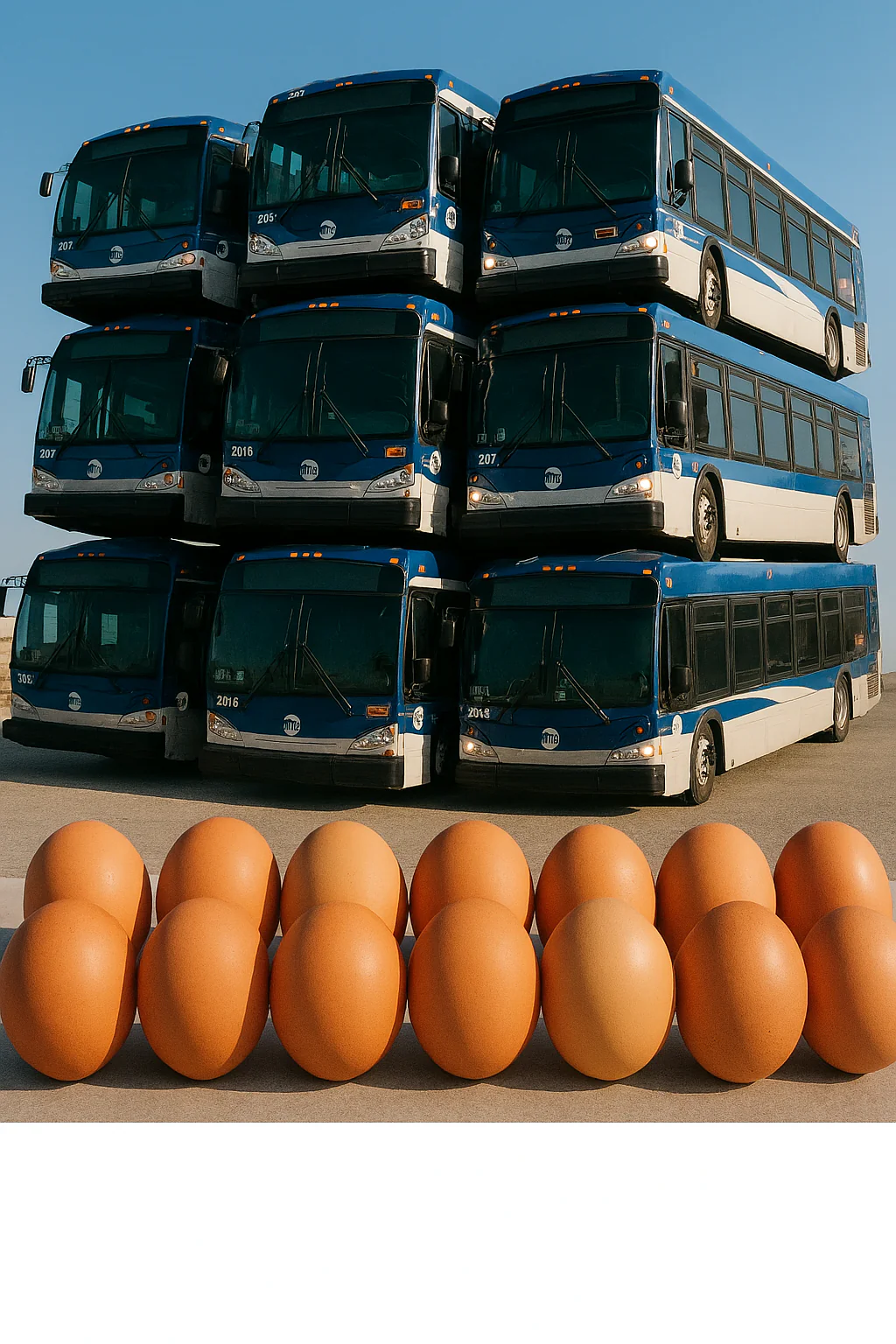 But free buses carry a LOT more weight than cheap eggs. So get your popcorn ready. Or, more appropriately, go make yourself an omelet.
Until next time...